
Looking for a Rook Piercing? What to Expect at Our London Studio

In the sophisticated and ever-evolving world of ear curation, certain piercings emerge as markers of true connoisseurship. They are the choices that signal a deeper appreciation for the art form, a move beyond the common and into the realm of the truly unique. The rook piercing is, without question, one of these coveted placements. Nestled vertically in the anti-helix fold of the upper ear, it is a statement of subtle defiance and intricate beauty. It doesn’t scream for attention; it confidently commands it.
This unique combination of edginess and elegance has made the rook piercinga firm favourite among London’s most stylish individuals. It is the perfect anchor for a minimalist ear project or a stunning centrepiece in a more maximalist constellation. However, its unique placement and vertical orientation make it one of the more technically challenging and anatomy-dependent piercings available. The difference between a beautifully healed, perfectly straight rook and a painful, irritated, and ultimately failed piercing lies almost entirely in the hands of the artist performing it.
This is your ultimate guide. If you are considering a rook piercing London, we have created this comprehensive resource to demystify the entire journey. We will provide an expert-level breakdown of the crucial anatomical assessment, a transparent step-by-step walkthrough of what to expect during the procedure at our studio, a realistic guide to its long healing process, and a look into the beautiful world of styling this unique piercing. Our goal is to empower you with the knowledge to make a safe, confident decision.
rook piercing London
Deconstructing the Rook: Anatomy, Aesthetics, and Appeal
Before you can even begin to dream about jewellery, it is essential to understand the unique characteristics of this piercing. This foundational knowledge will help you appreciate the skill involved and the importance of choosing a true professional.
What is a Rook Piercing, Anatomically Speaking?
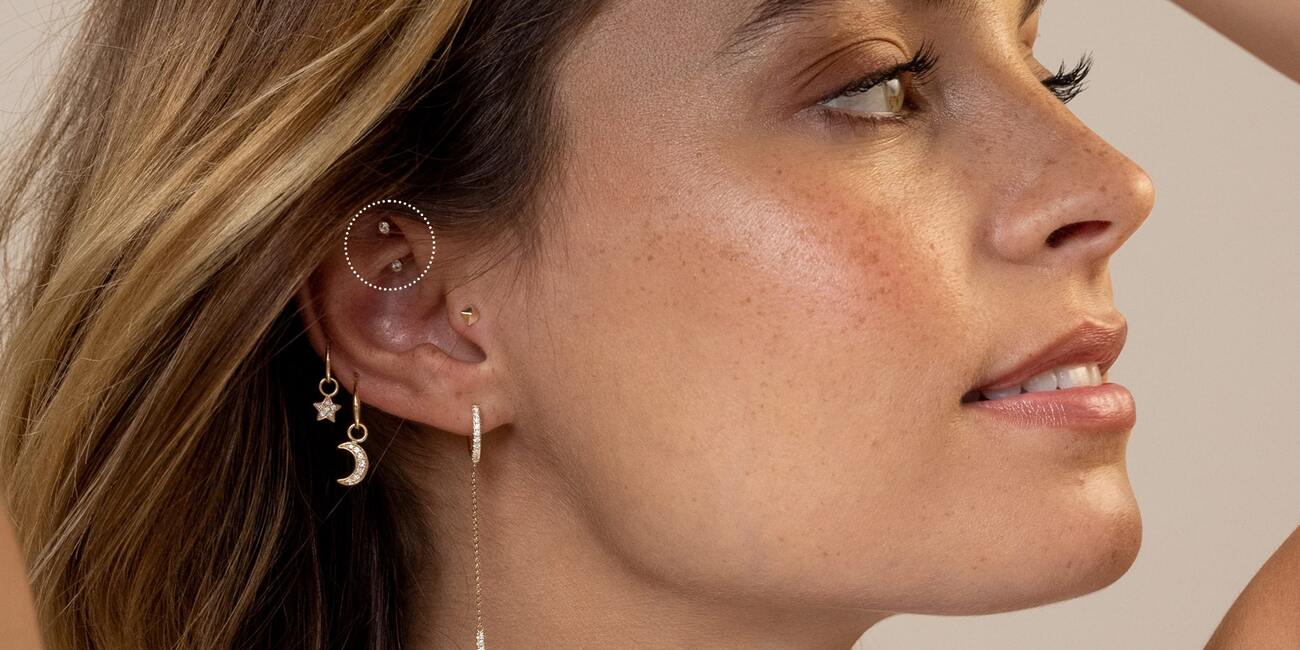
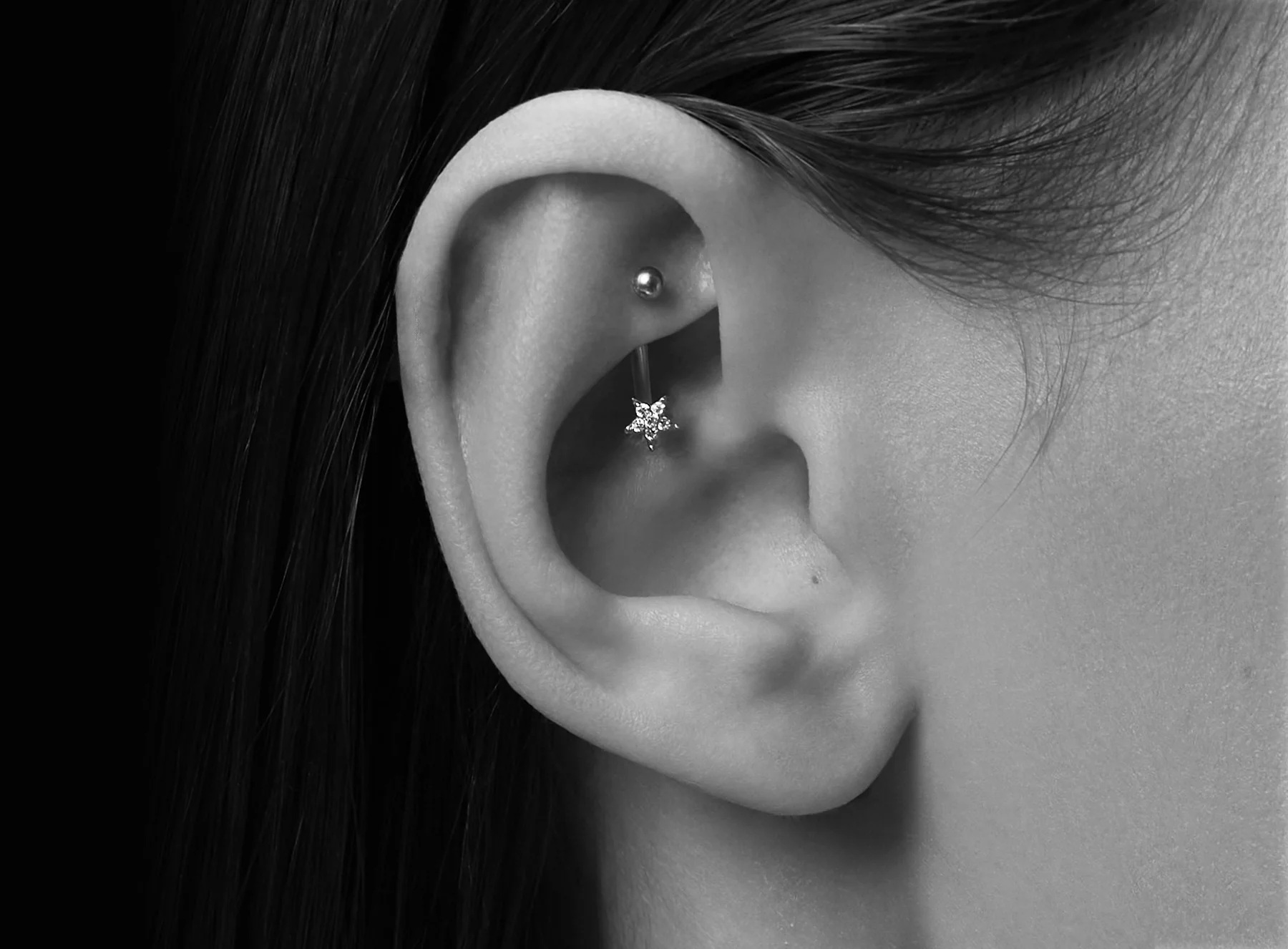
A rook piercing is a vertical piercing that passes through the ridge of cartilage that sits between the inner and outer conch of the ear. This ridge is technically called the anti-helix. The piercing is performed from the bottom of this ridge to the top, so the jewellery—typically a curved barbell—emerges vertically, with one end peeking out at the top and the other at the bottom of the fold. This vertical orientation is what makes it so distinct from the horizontal nature of a helix or conch piercing.
The Unique Aesthetic: A “Hidden Gem” with an Edge
The allure of the rook piercing lies in its unique presentation.
- Subtle yet Striking: Because it is tucked inside the ear’s architecture, it isn’t always immediately obvious from a face-on view. It reveals itself as you turn your head, offering a flash of sparkle or the clean line of a metal curve. This “peekaboo” quality gives it a sophisticated, intriguing feel.
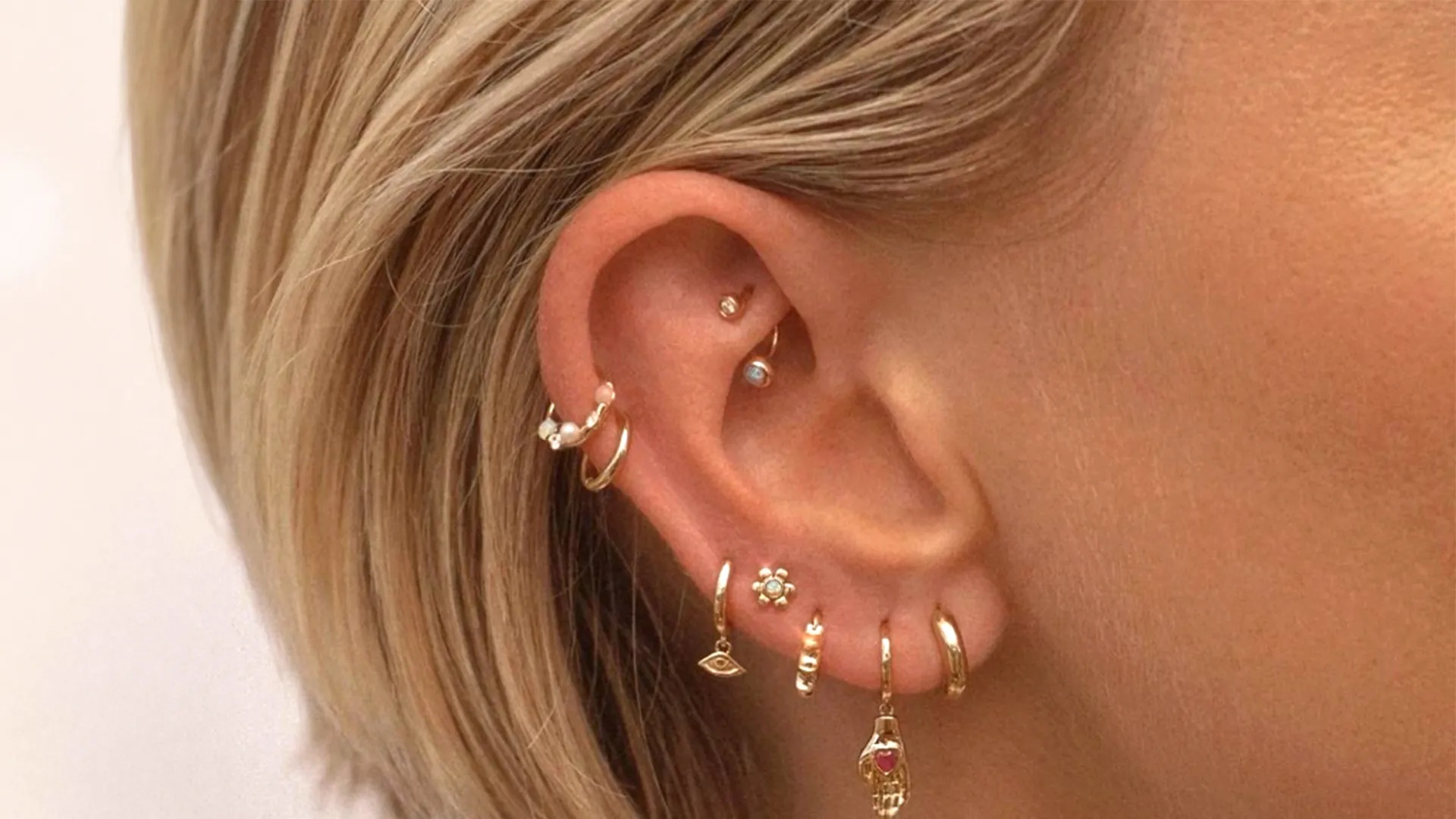
- A Framework for Curation: A well-placed rook acts as a stunning central point in a curated ear project. It draws the eye inwards and upwards, providing a beautiful anchor that can be balanced by piercings on the helix, flat, and lobe.
- The Beauty of the Curve: The rook is almost always initially styled with a curved barbell. This gentle curve perfectly complements the natural folds of the ear, creating a look that is both architectural and organic.
The All-Important Anatomy Check: Are You a Suitable Candidate?
This is the most critical conversation you will have with your piercer, and the point where a true professional’s expertise is invaluable. Not everyone has the right anatomy for a viable rook piercing. An ethical, professional piercer will always begin with a thorough anatomical assessment.
- What a Professional Piercer is Looking For: For a rook piercing to be performed correctly and have the best chance of healing, the anti-helix ridge needs to be a well-defined, sufficiently pronounced “shelf” of cartilage. It needs to be substantial enough to support the piercing channel without being too thin or shallow. If the ridge is very flat or underdeveloped, there simply isn’t enough tissue to safely or successfully hold the jewellery.
- The Consequences of Piercing Unsuitable Anatomy: An inexperienced or unethical piercer might ignore this and attempt the piercing anyway. This is a recipe for disaster. A piercing in an underdeveloped ridge is almost certain to be too shallow. This leads to a high risk of migration (where the body slowly pushes the jewellery out) and eventual rejection, which can leave a significant and permanent scar. It will be prone to chronic irritation, will likely never heal, and will never sit correctly.
An honest piercer who tells you that your anatomy is not suitable is not disappointing you; they are protecting you. This integrity is the ultimate hallmark of a professional studio and a key reason clients seek us out for their rook piercing London.
rook piercing London
The “Faux Rook”: A Beautiful and Smart Alternative
If you are told that your anatomy isn’t right for a traditional rook, it doesn’t mean you can’t achieve a similar aesthetic. This is where a creative, knowledgeable piercer can offer a brilliant alternative: the “faux rook.”
- What It Is: A faux rook is not a rook piercing at all. It is actually a flat piercing that is very precisely placed on the flat plane of cartilage directly behind where the rook ridge would be.
- The Illusion: When a small, decorative stud is placed in this location, it creates the stunning visual illusion of the top of a rook piercing. It gives you that same beautiful, central sparkle in the upper ear.
- The Advantages: For many, the faux rook is an even better option. It is generally less painful than a true rook, often has an easier healing process as it’s in a more open and easy-to-clean area, and opens up a world of larger, more ornate decorative studs that wouldn’t fit in a traditional rook. Suggesting this alternative is a clear sign you are working with an expert who cares about giving you the best possible result for your ear.
Finding Your Specialist: How to Choose the Right Artist in London
The rook is not a piercing for a generalist or an apprentice. Its tricky, internal location and the precision required for a perfectly vertical channel demand a piercer with a significant amount of experience and a steady, confident hand.
Reading the Portfolio: What a Great Rook Piercing Looks Like
When you are vetting potential artists for your rook piercing London, their Instagram portfolio is your primary evidence. Scrutinise their work with a critical eye.
- Look for Healed, Healed, Healed: We cannot stress this enough. Anyone can post a photo of a fresh piercing. The true test of skill is how it looks 6, 9, or 12 months later. A great piercer will be proud to showcase their healed work. Look for photos of healed rooks where the skin is calm, there are no irritation bumps, and the jewellery is sitting perfectly.
- Check the Vertical Alignment: The piercing must be perfectly vertical. Look at the top and bottom ends of the curved barbell. Do they form a straight line that is perpendicular to the overall flow of the ear? Or is it tilted at an awkward angle? A tilted rook is a sign of a poorly executed piercing.
- Assess the Placement: Is the piercing placed neatly within the ridge? Is it too deep, or too shallow and close to the edge? A specialist will know the exact right spot to ensure both aesthetic beauty and long-term viability.
rook piercing London
The Professional Consultation: An Interview for a Position of Trust
The consultation is your opportunity to interview the artist. A great piercer will welcome your questions. They should be able to confidently discuss their experience with rook piercings, show you examples of their work, and, most importantly, perform that critical anatomical assessment with a knowledgeable eye.
The Procedure: What to Expect When You Get Your Rook Piercing at Our Studio
Knowing exactly what will happen can significantly reduce anxiety. A professional procedure is a calm, meticulous, and transparent process from start to finish.
- The Final Consultation and Jewellery Selection: Your appointment begins with a final confirmation of your anatomy and a discussion about jewellery. For a rook, the initial jewellery must be a curved barbell made from implant-grade material. A ring is not suitable for initial healing as its curvature puts uneven pressure on the vertical channel. You will select a piece from our collection of sterile, implant-grade options, choosing the decorative ends for the top and bottom.
- The Sterile Setup and Meticulous Marking: You will be taken to a clinical-grade procedure room where you will lie down comfortably. The piercer will set up a sterile field with all their single-use equipment. They will then thoroughly disinfect your ear. Using a sterile skin marker, they will place a small dot for the top entry point and another for the bottom exit point, taking great care to ensure they are perfectly aligned vertically. You will be shown these marks in a mirror for your final approval.
- The Piercing Moment: Your piercer will coach you through your breathing, asking you to take a deep breath in and then a long, slow exhale. On the exhale, they will pass the single-use, sterile needle through the cartilage from bottom to top in one smooth, controlled motion.
- The Sound: Be prepared for the “crunch.” Because the rook is in a dense part of cartilage close to the ear canal, you will almost certainly hear a distinct crunching or popping sound as the needle passes through. This is completely normal and is not a sign of anything going wrong.
- The Jewellery Transfer: Immediately following the needle, the threaded or threadless post of your curved barbell is inserted into the new channel. The decorative ends are then securely fastened. The area is cleaned one final time, and the procedure is complete.
An Honest Assessment of the Pain
The rook has a reputation for being one of the more painful cartilage piercings. Most clients rate the pain at a 6 to 7 out of 10. The sensation is less of a sharp pinch (like a helix) and more of an intense, deep pressure. The intensity is very brief, lasting only for the few seconds the needle is passing through. Afterwards, it will subside to a dull, throbbing ache for a few hours.
The Healing Journey: Your 9-12 Month Commitment to Patience
The rook is a notoriously fussy and long healer. You must be prepared for this marathon, not a sprint. Its enclosed location is a double-edged sword: it’s protected from accidental snags but also traps moisture and is difficult to clean, which can lead to complications.
The Rook Healing Timeline
- Month 1 (The “Swollen” Phase): Expect your ear to feel very full, swollen, and tender. The piercing will be red and will produce “crusties” (dried lymph fluid). Your job is to keep it clean and not touch it.
- Months 2-6 (The “Fussy” Phase): This is when the majority of healing challenges occur. The initial, dramatic swelling will subside, but the piercing is still incredibly fragile. It is very common for irritation bumps to form on the top or bottom hole during this period. These are almost always caused by moisture, pressure (from sleeping or earbuds), or movement. They are not infections.
- Months 7-12+ (The Maturation Phase): Your piercing will likely start to look and feel healed from the outside. However, the internal fistula is still strengthening. It can still get angry if you sleep on it, wear an earbud, or get sick. You should not attempt to change the jewellery yourself until it is at least 9 months old, and ideally only after a final check-up with your piercer.
The Ultimate Rook Aftercare Routine
- Cleaning: Cleaning a rook can be tricky because you can’t see both sides easily. The best method is to use a sterile saline solution spray. Twice a day, tilt your head, generously spray the solution so it can flush through the piercing, and let it soften any crusties.
- Drying (The Most Important Step): A damp rook is an unhappy rook. After every cleaning and every shower, you must dry your piercing thoroughly. The best way to do this is with a hairdryer on its lowest, coolest setting, held at a distance. This is more effective than trying to get into the tight space with gauze.
- The Earbud Embargo: This is a non-negotiable rule. You cannot wear an earbud in the ear with a healing rook piercing. The pressure and bacteria from an earbud will almost certainly cause severe irritation and bumps. You must commit to not using an earbud in that ear for the entire 9-12 month healing period. Over-ear headphones that do not touch the ear are the only safe alternative.
- Sleeping: Avoid sleeping on the pierced side at all costs. A travel pillow is a lifesaver—place your ear in the hole to avoid any pressure.
rook piercing London
Frequently Asked Questions (FAQ)
1. When can I start wearing an earbud in my ear again?
You must wait until the piercing is fully, completely healed. This means a minimum of 9 months, and for many people, closer to 12 months. Attempting to wear an earbud before this will almost certainly cause a painful and frustrating setback, leading to bumps and prolonging the healing process even further.
2. I was told my anatomy isn’t right for a rook piercing. Should I get a second opinion from another studio?
While you are always free to seek a second opinion from another reputable, high-end studio, you should take the first piercer’s advice very seriously. An honest piercer who turns you away is doing so to protect you from a piercing that is destined to fail. They are prioritising your well-being over their profit, which is the mark of a true professional. Ask them about the “faux rook” option!
3. I have a big bump on my rook piercing. Is it infected?
While infection is possible, it is far more likely that you have an irritation bump (granuloma). These are extremely common with rook piercings, usually due to moisture or pressure. The first steps are to be extra diligent with your saline cleaning and, most importantly, your drying routine, and to ensure absolutely nothing is putting pressure on it. Book a check-up with your piercer so they can assess it in person.
4. How much does a high-quality rook piercing cost in London?
Due to the technical skill and anatomical knowledge required, a rook is considered an advanced piercing. In 2025, you should expect to pay a service fee of around £40-£60 for a rook piercing London, plus the cost of the initial implant-grade jewellery, which typically starts around £30-£45 for a basic titanium curved barbell.
5. I’ve heard daith piercings can help with migraines. Does a rook piercing help with anything?
No. Like the daith piercing and migraines, any claims about a rook piercing helping with anxiety or other ailments are purely anecdotal and are not supported by any scientific or medical evidence. The perceived benefit is believed to be a placebo effect. You should only get a rook piercing for its aesthetic beauty.
6. Can I get pierced with a ring in my rook?
No, a reputable piercer will not use a ring for an initial rook piercing. A ring’s curvature puts uneven pressure on the straight, vertical piercing channel, which can cause it to heal at an angle and lead to significant irritation. A curved barbell is the only appropriate initial jewellery. You can switch to a snug-fitting ring once the piercing is fully healed and mature.
Conclusion
The rook piercing is a true jewel in the crown of any ear curation project. It is a piercingthat speaks of style, confidence, and a commitment to the art of body modification. While it demands respect for anatomy and a significant investment in patience during its long healing journey, the result is an unparalleled piece of personal art. A successful rook piercing London is a testament to the partnership between a skilled, knowledgeable artist and a dedicated, well-informed client.