
The Amazing History of Tattoos: From Early Humans to Modern Art.

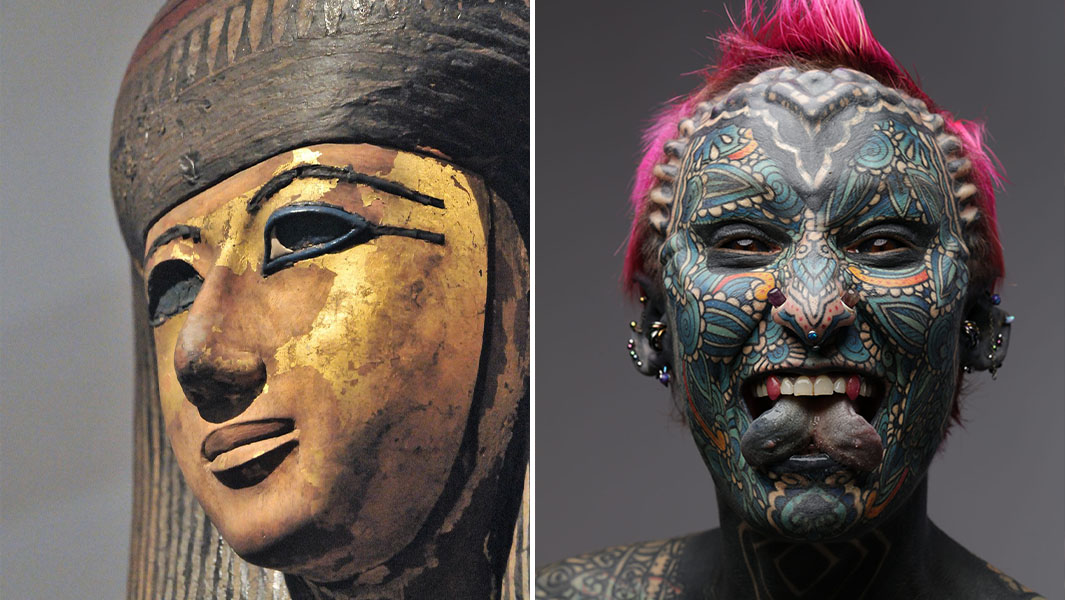
Before the written word, before the pyramids were built, before the forging of iron, there was ink on skin. The tattoo is one of humanity’s oldest, most enduring, and most profoundly personal forms of art, communication, and ritual.1 It is a story etched not on stone or papyrus, but into the living canvas of the human body, a story that spans more than 5,000 years and touches every inhabited continent on Earth.2
To truly understand the tattoo you might get in our London studio today—whether it’s a delicate fine-line flower or a powerful, full sleeve—you must first appreciate this incredible legacy. The modern tattoo machine’s buzz is but an echo of the rhythmic tap of a bone comb in Polynesia, the slice of a sharpened tool in ancient Egypt, and the prick of a soot-covered needle by a fireside thousands of years ago.
At PinkTatPier, we see ourselves as inheritors of and contributors to this amazing history. We believe that every artist who holds a machine is holding the sum of this global heritage in their hands. Every line we put into skin is a continuation of a story that began with ancient hunters, revered priestesses, formidable warriors, and intrepid sailors. This guide is our tribute to that story. Join us on a journey through time as we explore the amazing history of tattoos, from the earliest known human markings to the vibrant, high-art studios of the 21st century.
The Amazing History of Tattoo
The Dawn of Ink: Tattoos in the Ancient World
The desire to mark the skin is a primal human instinct, and its roots run deeper than recorded history. For decades, the origins of tattooing were shrouded in mystery, but modern archaeology has uncovered breathtaking evidence that pushes the timeline back thousands of years.3
Ötzi the Iceman: The World’s Oldest Tattooed Canvas
In 1991, a stunning discovery was made in the Ötztal Alps on the border of Austria and Italy. A perfectly preserved human body, frozen in ice for approximately 5,300 years, was found by hikers. This Stone Age man, named Ötzi the Iceman, is the oldest known tattooed human.4 His body is adorned with more than 60 distinct tattoos, but they are not the pictorial images we might expect. They are simple, dark lines and crosses, grouped together in various locations.
For years, their meaning was a mystery. However, analysis revealed that the placement of these tattoos corresponds with areas of the body where Ötzi suffered from degenerative diseases, such as arthritis in his joints and back. The tattoos are located on or near traditional acupuncture points. This has led to the prevailing theory that Ötzi’s tattoos were not decorative, but therapeutic. They were likely a form of prehistoric pain relief, a 5,000-year-old example of using skin marking for healing and wellness. This discovery profoundly shifted our understanding of the history of tattoos, revealing its origins may lie in medicine and ritual as much as in art.
Egypt and the Pazyryk Mummies: Ritual, Status, and High Artistry
While Ötzi provides the earliest evidence, other ancient cultures developed tattooing into a sophisticated art form.5 In Ancient Egypt, tattoos were once thought to be a mark of the lower classes, but evidence suggests a more complex reality. Many tattoos have been discovered on the bodies of female mummies, often priestesses or women of high status.6 The patterns—dots, dashes, and images of the household god Bes—are often concentrated on the abdomen, thighs, and breasts, leading archaeologists to believe they were connected to fertility, protection during childbirth, and female-centered ritual practice.7
Perhaps the most stunning examples of ancient tattooing come from the Pazyryk people, nomadic iron-age tribes who lived in the Altai Mountains of Siberia around the 5th century BCE.8 Perfectly preserved in the permafrost, the Pazyryk mummies are covered in incredibly intricate and artistic tattoos.9 One notable figure, the “Siberian Ice Maiden,” is adorned with flowing, fantastical designs of mythical creatures, deer, and other animals in a distinct, curvilinear style.10 These are not simple markings; they are masterpieces of ancient art, demonstrating a profound level of skill and a deep, animistic worldview.
A Global Tapestry: The Flourishing of Tribal Tattooing
While some European cultures came to view tattoos with suspicion, in many parts of the world, tattooing flourished as the highest form of art and a cornerstone of cultural identity.
The Amazing History of Tattoo
Polynesia and the Birth of the Word “Tatau”
The very word “tattoo” is a gift from Polynesia.11 When Captain James Cook and his crew arrived in Tahiti in 1769, they were astonished by the islanders’ extensive body markings. They recorded the Tahitian word for it, “tatau,” which means “to strike” or “to mark,” and it entered the English language as “tattoo.”12
But for Polynesians, tatau was far more than decoration. It was a sacred visual language that told the story of a person’s life.
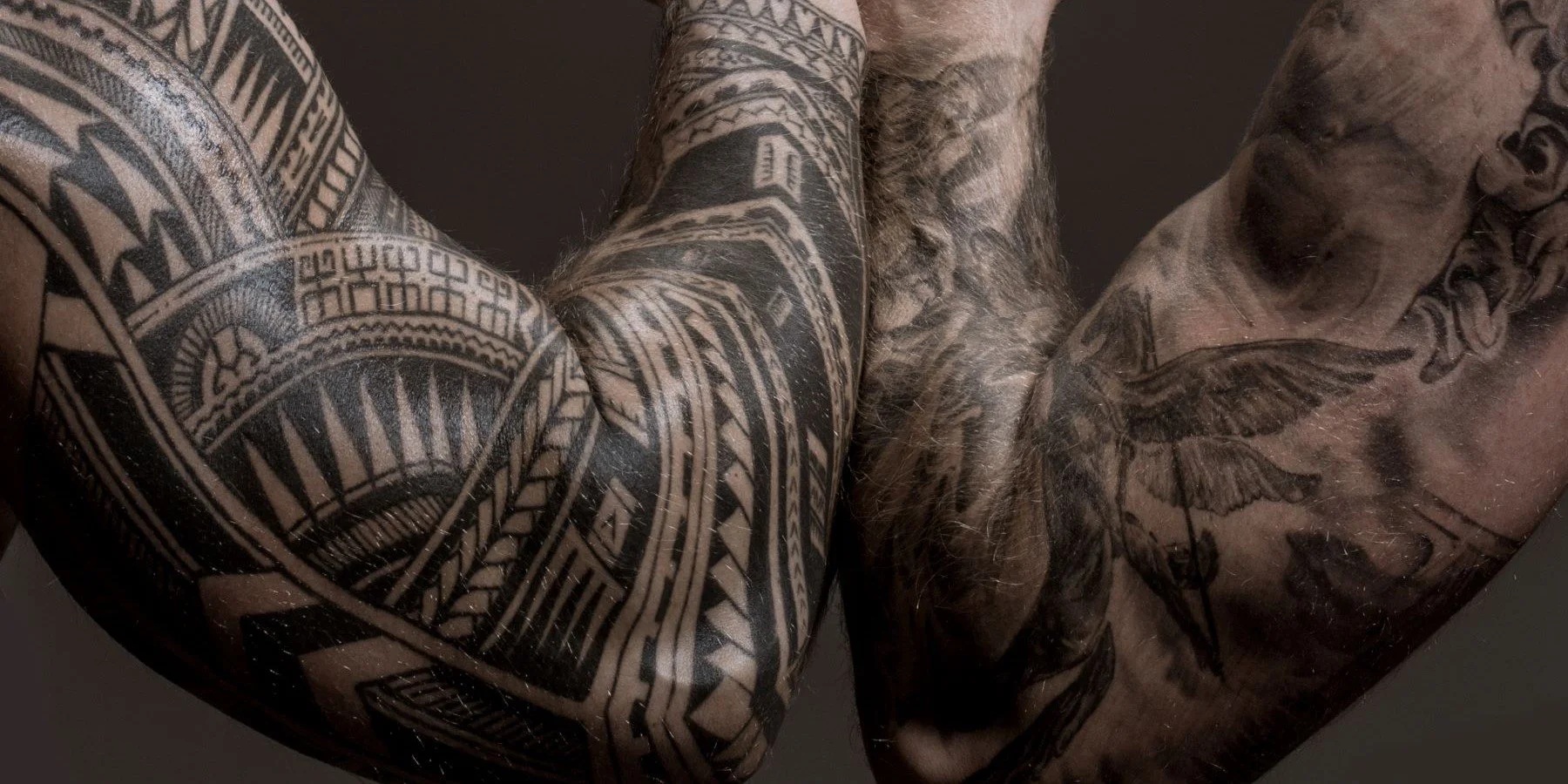
- Genealogy and Status: The intricate, geometric patterns of a Maori Ta Moko (facial tattoo) or a Samoan Pe’a (a dense tattoo from the waist to the knees) recorded a person’s lineage, social standing, tribe, and personal achievements.13
- Spiritual Armour: The process was a deeply spiritual rite of passage, performed by revered masters (tufuga) using hand-tapped tools made of bone and turtle shell. The pain endured was a mark of endurance and commitment, and the finished tattoo was believed to provide spiritual protection and strength. To be without tatau was to be “naked,” a person without status or identity.
Japan’s Irezumi: From Punishment to Ukiyo-e Masterpieces
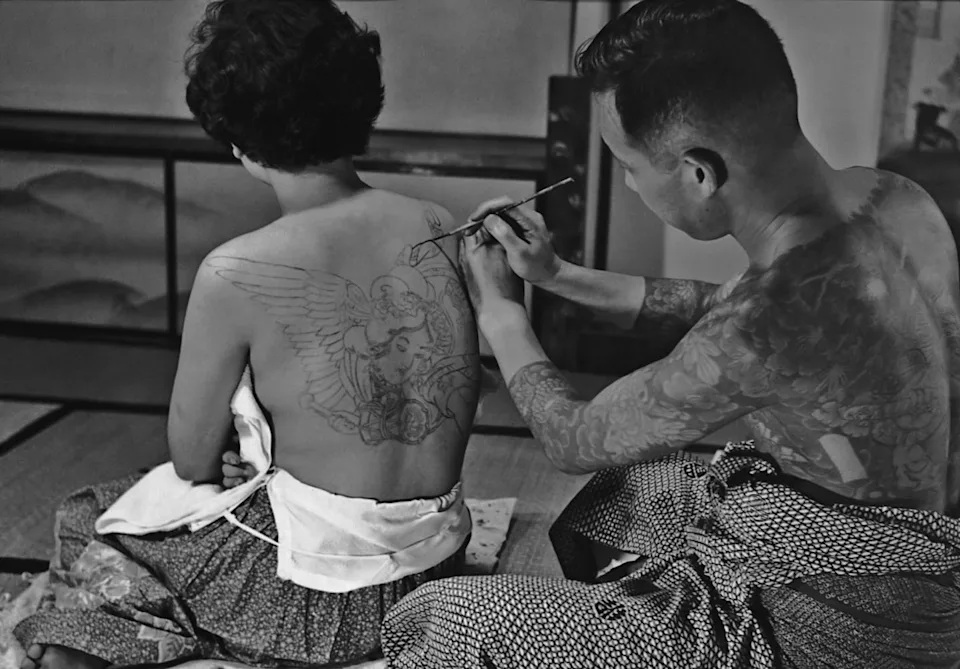
The history of tattoos in Japan is a fascinating story of shifting perceptions. In its early history, it was sometimes used as a form of punishment (bokkei), with criminals being marked on their faces or arms.14 However, during the Edo period (1603-1868), a new form of elaborate, pictorial tattooing known as Irezumi flourished among the working classes, merchants, and firefighters.15
These artists drew their inspiration from the heroic tales and mythical creatures depicted in ukiyo-e woodblock prints.16 They created breathtaking, full-body suits (horimono) featuring dragons, koi fish, tigers, and samurai warriors, all set against a backdrop of wind, water, and clouds.17 It was a form of art for the people who were often forbidden from wearing ornate clothing. In the late 19th century, the Japanese government, seeking to appear more “civilised” to the West, outlawed tattooing, which inadvertently pushed it underground and fostered its association with the Yakuza (Japanese organised crime).18 Despite this, the artistic tradition survived and is today celebrated as one of the world’s most beautiful and complex tattoo styles.
The Western Revival: From Seaports to the Electric Revolution
While tattooing was being suppressed in Japan, it was experiencing a vibrant revival in the West.
Captain Cook, Sailors, and the Souvenir Tattoo
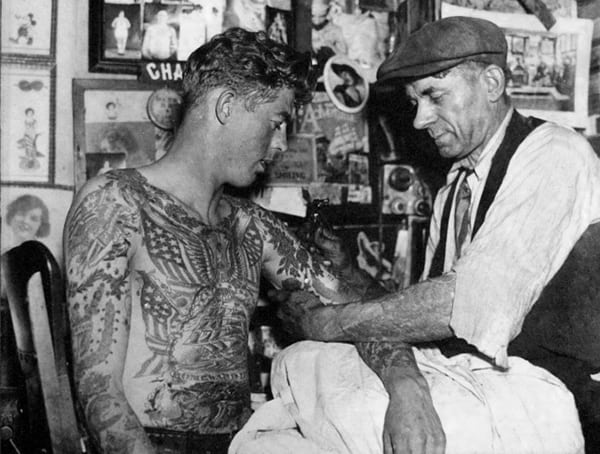
The return of Captain Cook’s sailors from the Pacific, adorned with the “tatau” of the islands, sparked a new wave of tattoo culture in European seaports.19 For sailors, tattoos became the ultimate souvenir, a permanent record of their travels to exotic lands.20 An anchor showed they had crossed the Atlantic; a turtle, that they had crossed the equator; and a dragon, that they had served in China. These tattoos were a personal logbook etched into their skin.
The Electric Revolution: Samuel O’Reilly and the Modern Tattoo Parlor
For centuries, tattooing was a slow, manual process. That all changed in 1891. A New York City artist named Samuel O’Reilly filed a patent for the first electric tattoo machine.21 His invention was a clever modification of Thomas Edison’s electric pen, an engraving device.22 O’Reilly adapted the mechanism to use a needle and an ink reservoir, creating a machine that could puncture the skin with incredible speed and consistency.23
This invention was the single most important technical development in the history of tattoos. It revolutionised the craft, making it faster, more precise, and more accessible than ever before.24 It allowed for finer lines, smoother shading, and dramatically reduced the time and pain involved.25 This innovation led directly to the birth of the modern street-side tattoo parlor, making tattooing a viable commercial trade in cities across America and Europe.
The Amazing History of Tattoo
The Modern Era: From Subculture to Mainstream High Art
The 20th and 21st centuries saw tattooing complete its journey from the fringes of society to the heart of mainstream culture and the world of fine art.
The Mid-20th Century and the Perfection of a Style
The mid-20th century was the golden age of American Traditional tattooing. Artists like Norman “Sailor Jerry” Collins, based in Honolulu, took the foundations of sailor tattoos and refined them into a powerful, iconic style.26 They used bold, black outlines, a limited but vibrant colour palette (red, green, yellow, black), and timeless, symbolic imagery.27 They designed tattoos that were meant to be read from across a room and, most importantly, to last a lifetime. This is the era that cemented the “flash” system, where clients could choose from sheets of pre-drawn, proven designs.
Table: A Comparison of Major Historical Tattooing Styles
| Style | Key Characteristics | Historical Roots & Philosophy |
| Polynesian (Tatau) | Bold, black, geometric patterns (lines, triangles, swirls) that follow the body’s contours. | Ancient Polynesia. A sacred practice denoting genealogy, status, and spiritual strength. |
| Irezumi (Japanese) | Large-scale, flowing designs covering the body, featuring mythological creatures, historical tales, and natural elements. | Edo Period Japan, Ukiyo-e woodblock prints. A form of art for the common people, often with narrative meaning. |
| American Traditional | Bold black outlines, a limited and saturated colour palette, and iconic, symbolic imagery (eagles, skulls, roses, ships). | Early 20th Century Western sailors and military. Designed for speed, clarity, and extreme longevity. |
| Fine-Line Black & Grey | Delicate, thin lines, often using a single needle, creating detailed and subtle images with soft, realistic shading. | Emerged from Los Angeles prison culture in the 1970s and was refined into a high-art form in professional studios. |
The 21st Century (to 2025): The Explosion of Styles
The advent of the internet and social media, particularly Instagram, has caused a Cambrian explosion of tattoo styles.28 The last two decades have seen the rise and popularisation of:
- Photorealism: Tattoos that aim to replicate a photograph with breathtaking detail.29
- Watercolour: Tattoos that mimic the soft, blended, and often translucent look of watercolour paintings.30
- Geometric & Dotwork: Styles that use precise lines, shapes, and thousands of tiny dots to create intricate patterns.
- Micro-Realism: Tiny, hyper-detailed tattoos, often no larger than a coin.31
Today, in cities like London, the tattoo scene is more diverse, artistic, and accepted than ever before. Tattoos are no longer the mark of any single subculture but are embraced by people from all walks of life.
Your 5 Most Important Questions Answered (FAQ)
1. What were the very first tattoos for?
The oldest confirmed tattoos, found on Ötzi the Iceman, are believed to have been therapeutic, placed on areas of his body to relieve pain from ailments like arthritis. This suggests the origins of tattooing may lie in healing and ritual.
2. Did women get tattoos in ancient history?
Absolutely. In fact, in some cultures like Ancient Egypt, the majority of tattooed mummies discovered have been female, suggesting a strong link between tattooing and female-centered rituals, spirituality, and protection during childbirth.32
3. How did tattoos become associated with sailors and criminals?
Sailors were among the first Westerners to have extensive contact with the heavily tattooed cultures of the Pacific, and they adopted the practice as a way to document their travels.33 The association with criminality is more complex, stemming in part from the use of tattoos to mark criminals in some cultures (like ancient Rome and historical Japan), and later, its adoption by prison populations as a form of identity.34
4. When did tattoos become “mainstream”?
The “Tattoo Renaissance” began in the 1960s with the counter-culture movement, but the true explosion into the mainstream happened in the late 1990s and 2000s. The rise of tattoo-focused reality TV shows and the visibility of tattoos on celebrities, musicians, and athletes played a huge role in destigmatizing the art form.35
5. What was the single most important development in the history of tattoos?
While the deep cultural significance developed in Polynesia is arguably the “soul” of tattooing, the single most important technical development was the invention of the electric tattoo machine by Samuel O’Reilly in 1891.36 It transformed tattooing from a slow, manual craft into a fast, precise, and commercially viable trade, paving the way for the modern tattoo studio.
The Amazing History of Tattoo
Conclusion: Taking Your Place in an Ancient Story
The history of tattoos is the history of humanity itself. It is a story of our desire to heal, to protect, to remember, to belong, and to express who we are. It is a tradition that has been passed down through thousands of generations, evolving and adapting but never losing its fundamental power.
At PinkTatPier, we are humbled to be a small part of this amazing, ongoing history. Every tattoo we create, whether it’s a bold Japanese dragon echoing the art of the Edo period or a delicate, single-needle flower, carries the echo of these thousands of years of human expression. When you choose to get a tattoo with us, you are not just getting a design; you are taking your own, unique place in one of humanity’s oldest and most beautiful stories.