
How to Find a Professional and Reputable Piercing Artist in London

You wouldn’t choose a surgeon based on who is cheapest or happens to be closest to your home. You would research their qualifications, their experience, their safety record, and their patient reviews. You would seek out an expert you can trust implicitly. While getting a piercing is far less invasive, the underlying principle is exactly the same. A piercing is a cosmetic procedure that involves creating a wound in the body, and the person holding the needle has a profound and lasting impact on your health, safety, and the final aesthetic outcome.
In a city as vast and dynamic as London, the sheer number of piercing studios can be overwhelming. With the art of piercing reaching new heights of popularity and sophistication in 2025, it has never been more important for clients to be able to distinguish between a mediocre practitioner and a truly professional artist. This is your definitive resource on how to find a piercing artist in London who meets the highest global standards of safety, skill, and professionalism.
This guide is designed to empower you. We will break down the essential qualities that define a reputable piercer, show you exactly where and how to look for them, provide a checklist of crucial questions to ask during a consultation, and highlight the red flags that should make you walk away. By the end of this article, you will have the confidence and knowledge to choose an artist you can trust completely
find a piercing artist
Defining “Professional”: The Core Qualities of a Reputable Piercer
Before you can begin your search, you need a clear benchmark. What does “professional” truly mean in the context of the modern piercing industry? It’s a combination of technical knowledge, practical experience, and a specific professional attitude.
A Foundation of Knowledge: Anatomy and Aseptic Technique
A professional piercer is, first and foremost, a student of the human body.
- Anatomical Expertise: Their knowledge goes far beyond simply “ear cartilage” or “nostril.” A reputable artist understands the nuances of different tissue types, the location of major blood vessels and nerve clusters, and how the unique folds and curves of an individual’s anatomy will affect a piercing’s placement and ability to heal.1 They know that not every ear is suitable for an industrial piercing, and not every navel can support a traditional barbell. This expert anatomical assessment is the first and most critical step in a successful piercing.
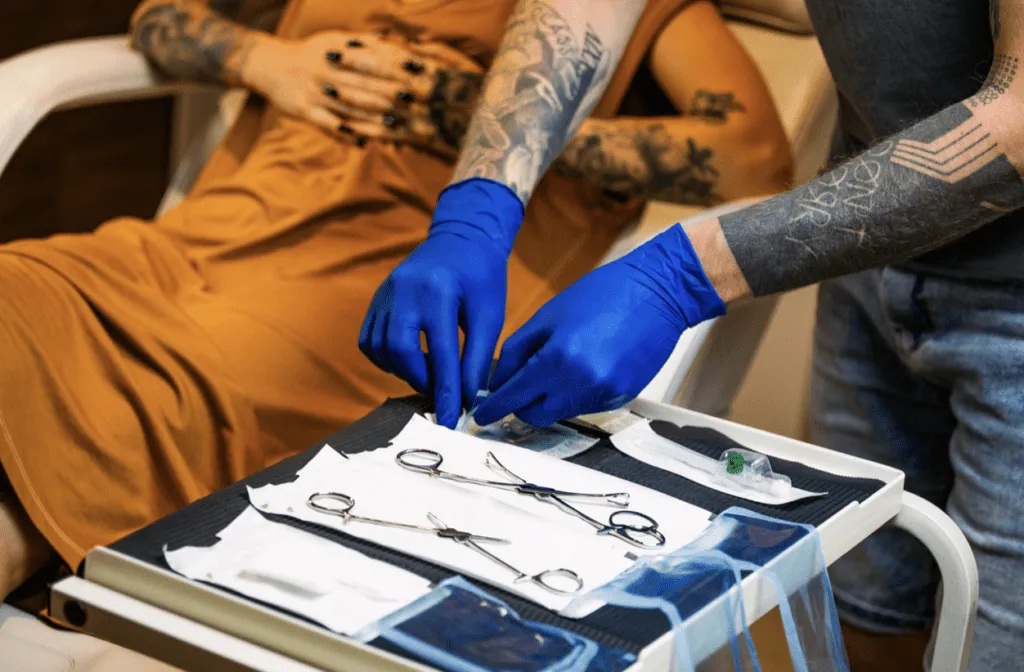
- Mastery of Aseptic Technique: This is a clinical concept that is central to professional piercing. It refers to all the practices and procedures used to prevent contamination of the sterile field and the piercing site. It’s more than just wearing gloves; it’s a disciplined process of ensuring that only sterile items ever come into contact with the client’s skin. A professional who has mastered this technique works with the precision and care of a healthcare practitioner.2
The Importance of a Formal Apprenticeship
In the UK, the piercing industry is not as strictly regulated as medicine, which makes the artist’s background even more important. Professional piercing is a skilled trade learned over years, not in a weekend course or from online videos. A reputable artist will have completed a thorough, formal apprenticeship, typically lasting 1-3 years, under the direct supervision of an experienced and respected mentor. During this time, they learn not just how to perform piercings, but also about sterilisation, anatomy, client care, and how to troubleshoot healing issues. Always favour an artist who is proud to discuss their training and apprenticeship background.
Professional Affiliations: The UKAPP Mark of Excellence
One of the most reliable shortcuts to find a piercing artist in London who is committed to excellence is to look for membership in a professional organisation. In the UK, the most respected body is the UK Association of Professional Piercers (UKAPP). The UKAPP is a non-profit health and safety organisation dedicated to disseminating vital information about body piercing.
For a piercer to become a UKAPP member, they must meet stringent requirements, including:
- Proving their studio meets the highest standards of hygiene and sterilisation.4
- Submitting a portfolio of work to be judged by their peers.
- Demonstrating a thorough understanding of modern safety protocols and aftercare.
- Committing to ongoing education to stay current with industry best practices.
Choosing a UKAPP member provides an invaluable layer of assurance that you are in the hands of a dedicated and vetted professional.
The Right Attitude: Empathy, Patience, and Professionalism
Beyond the technical skills, the “soft skills” are what separate a good piercer from a great one. A piercing can be an anxious experience for many. A top-tier professional is a calm, confident, and reassuring guide. They will:
- Patiently answer all of your questions, no matter how small or silly they may seem.
- Make you feel comfortable and respected at all times.
- Prioritise your consent at every single step of the procedure.
- Communicate clearly what they are doing and what you can expect to feel.
find a piercing artist
The Search: Where to Find a Piercing Artist in London
With your benchmark for professionalism established, it’s time to begin the practical search.
Your Primary Tool: A Strategic Instagram Search
In 2025, Instagram remains the most powerful visual portfolio for piercing artists. A strategic search is your best first step.
- Start with Location-Based Hashtags: Begin your search with broad, location-specific tags. Good starting points include:
#londonpiercing,#londonpiercer,#piercinglondon, and#ukpiercer. - Narrow Down with Style-Specific Hashtags: If you have a specific piercing in mind, get more detailed. For example, search
#earcurationlondon,#septumpiercinglondon, or#daithpiercinglondon. This will help you find artists who specialise in the aesthetic you’re looking for. - Use Instagram’s Location Features: Don’t just rely on hashtags. Use the “Places” search function on Instagram to find piercing studios in specific London boroughs or neighbourhoods that are convenient for you.
The Power of Portfolios: How to Critically Analyse Their Work
Once you find some potential artists, it’s time to become a critic. A portfolio is more than just a collection of pretty pictures; it’s a record of an artist’s skill and consistency. Here’s what to look for:
- LOOK FOR HEALED WORK: This is the most important rule. A fresh piercing is almost always swollen and can hide a multitude of sins (like bad angles). A portfolio that proudly showcases a large volume of perfectly healed piercings—straight, flush with the skin, and with no irritation bumps—is the number one sign of a skilled and confident artist.
- Check the Angles and Placement: Look closely. Is the piercing straight? Does a septum hang evenly, or is it crooked? Are the two holes of an industrial piercing perfectly aligned? Is the jewellery sitting flush against the skin, or is it at an odd angle?
- Assess the Jewellery Quality: What kind of jewellery do they use in their photos? Do you see high-quality, implant-grade pieces from reputable brands? Or do you see cheap, externally threaded barbells and low-quality materials? The jewellery an artist uses is a direct reflection of their professional standards.
- Look for Consistency: Is every piercing in their portfolio of the same high quality? Or are there only a few “hero” examples mixed in with mediocre work? You are looking for an artist who is consistently excellent.
Beyond Social Media: Using Studio Websites and Google Reviews
Once you have a shortlist from Instagram, do some cross-referencing.
- Visit the Studio Website: A professional artist will work at a studio with a professional website. The site should have clear information about their services, their artists, their hygiene standards, and their contact details.
- Read Google and Trustpilot Reviews: Look for recurring themes. Are multiple clients praising the studio’s cleanliness? Do they mention the piercer’s professionalism and patience? Do they talk about receiving great aftercare support? A consistent pattern of positive reviews is a very strong signal.
The Consultation: Your Interview with a Potential Piercer
You’ve done your research and found a promising artist. The final and most critical step is to book a consultation. Think of this not just as an appointment, but as an interview. You are interviewing them for a position of trust.
A Checklist of Questions to Ask Your Piercer
A reputable piercer will welcome your questions. Go prepared with a list.
About Their Experience and Qualifications:
- “How long have you been piercing professionally?”
- “Where did you complete your apprenticeship, and who was your mentor?”
- “Are you a member of the UKAPP or any other professional piercing organisations?”
find a piercing artist
About Their Hygiene and Safety Protocols:
- “Could you please walk me through your sterilisation process for reusable tools?”
- “Do you use an autoclave, and do you conduct regular spore tests to ensure it’s working correctly?” (A true professional will be impressed and happy you asked this).
- “Can I see the sterile pouch for my needle opened in front of me?” (The answer should always be an enthusiastic “Yes!”).
About the Procedure and Materials:
- “What material will the initial jewellery be made of? Can you confirm it is certified implant-grade titanium or solid, nickel-free gold?”
- “I’ve heard about the importance of downsizing. Is that a service you offer, and is it included in the price?”
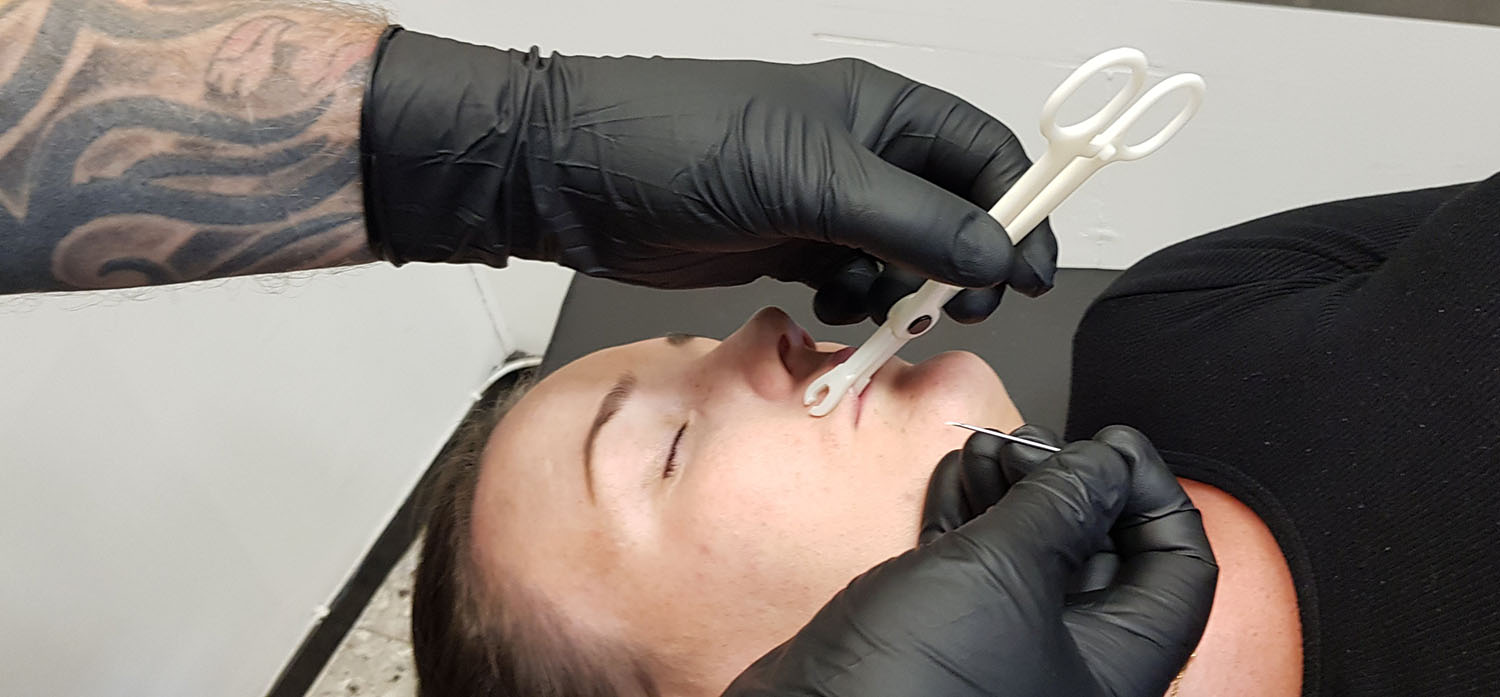
- “Will you be using a needle for this piercing?” (This is a test question. If the answer is anything but “Yes, always,” you should leave).
What the Piercer Should Ask You
A consultation is a two-way street. A great piercer will also have plenty of questions for you. They should ask about:
- Your Anatomy: They will need to physically look at the area to ensure you are a suitable candidate.
- Your Lifestyle: They might ask if you play contact sports, wear headphones or helmets regularly, or sleep on a particular side, as this can affect the healing of certain piercings.
- Your Medical History: They should ask about any allergies, medical conditions, or medications you are taking.
This thoroughness shows that they are a true professional who cares about the long-term success of your piercing.
Red Flags: When to Walk Away Immediately
Knowing when to say “no” is just as important as knowing when to say “yes.” If you encounter any of the following red flags during your search or consultation, you should walk away without hesitation.
- The studio appears untidy, dusty, or generally dirty.
- They use a piercing gun for anything other than a standard earlobe (and even then, it is a sign of an outdated and unsafe practice).
- They cannot or will not answer your questions about their sterilisation process.
- They become defensive or dismissive when you ask about their qualifications or safety protocols.
- They offer to pierce you with “surgical steel” but cannot specify the exact grade or material composition.
- They pressure you into making a decision or make you feel uncomfortable in any way.
- The price seems “too good to be true.” A very low price is almost always a sign that they are cutting corners on hygiene, jewellery quality, or both.
Remember, when you find a piercing artist in London, your safety and comfort are paramount. Never feel obligated to go through with a procedure if you have any doubts.
Frequently Asked Questions (FAQ)
1. What’s the difference between an ‘experienced’ piercer and a ‘reputable’ one?
Experience is about time spent in the industry. Reputation is about the quality of that time. A reputable piercer is not just experienced; they are also committed to the highest modern standards of hygiene, using the best quality materials, and engaging in continuous education. You can be experienced and still use outdated, unsafe practices. Always choose reputation over simple experience.
2. Is it rude to ask a piercer a lot of questions about their hygiene process?
Absolutely not. In fact, it’s the opposite. A professional, reputable piercer will be happy and proud to answer your questions. They have invested heavily in their equipment and training and will welcome the opportunity to show you how seriously they take your safety. If a piercer ever seems annoyed or defensive about these questions, that is a major red flag.
3. Should I trust a piercer just because they have a huge number of followers on Instagram?
Not necessarily. While a large following can indicate popularity, it is not a guarantee of professional standards. Some highly followed accounts may excel at marketing but have subpar safety practices. Always use the full checklist: critically analyse their portfolio (especially for healed work), check for professional affiliations like the UKAPP, and conduct a thorough in-person consultation.
4. Do I have to go to a specialist for a simple piercing like an earlobe?
While a lobe piercing is the most common piercing, it can still be done badly. Getting it done by a professional piercer with a needle ensures it is placed correctly, is symmetrical, heals faster, and is done in a sterile environment. It also sets you up to wear a wide variety of high-quality jewellery in the future. We believe even the “simplest” piercing deserves professional care.
5. What is the best way to check if a piercing studio is licensed in London?
All legitimate piercing and tattoo studios in London must be licensed by their local council. They are required to display their license certificate publicly in the studio. When you visit for a consultation, you can and should ask to see it.
find a piercing artist
Conclusion
The journey to a new piercing is an exciting one, but the most important decision you will make is choosing the person who will perform it. The time you invest in your research—carefully analysing portfolios, asking critical questions, and listening to your intuition during the consultation—is the single greatest guarantee of a safe, beautiful, and well-healed piercing that you will love for a lifetime.
When you find a piercing artist in London who meets these high standards, you are not just paying for a procedure; you are investing in expertise, safety, and peace of mind.