
Tattoos as a healing tattoos: covering emotional and physical wounds

Our skin is a living diary, a canvas that bears the marks of our journey through life. Some of these marks are chosen—beautiful tattoos that express our joy, our passions, and our identity. But many are not. Scars from surgeries, from accidents, from self-harm, or from the simple act of living, tell a story of a past we may not have chosen, a narrative of pain or survival that is etched permanently onto our bodies. Similarly, the deepest wounds we carry are often invisible—the silent scars of grief, the lingering shadows of trauma, the emotional weight of a hard-won battle.
What if you could rewrite those stories? What if you could take a mark of pain and transform it into a symbol of resilience? This is the profound and beautiful power of healing tattoos. They offer a unique and potent form of alchemy: the ability to transform these wounds, both visible and invisible, into something beautiful, intentional, and entirely new.
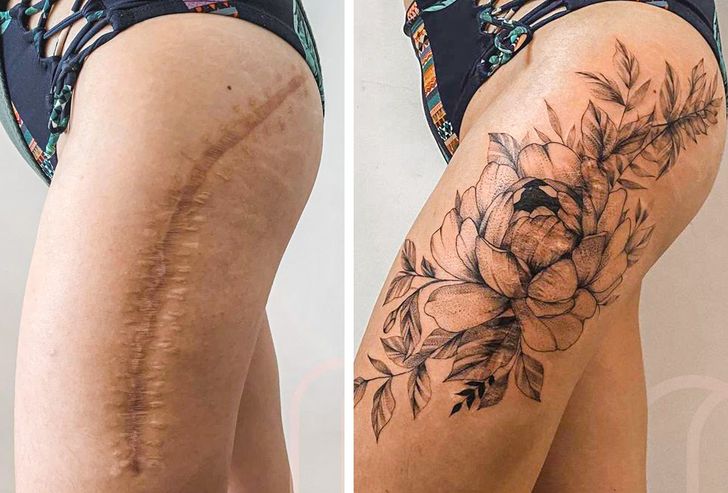
At PinkTatPier, we are privileged to be a part of these deeply personal transformations every day. We recently had a consultation with a client, Emily, who had a long, faded surgical scar across her abdomen from a life-saving operation years ago. “I’m grateful to be alive,” she explained, “but every time I see this scar, I’m reminded of being a patient, of being fragile.” She didn’t want to just hide the scar; she wanted to change its meaning. Our specialist artist didn’t see an imperfection to be covered, but a foundation for a new story. They worked with Emily to design a stunning botanical piece where the scar tissue itself became the strong, elegant stem of a blooming lily, a flower symbolizing rebirth. The tattoo didn’t erase her past; it made her story of survival blossom into a work of art.
In the same week, we sat with another client, James, who was navigating the deep waters of grief after losing his father. He didn’t want a name or a date. He wanted to honour his father’s spirit. They had shared a love for the ancient oak trees in Richmond Park. Our consultation was a quiet, therapeutic conversation about his memories. Together, we designed a tattoo of a single, powerful oak leaf, placed over his heart. The act of getting the tattoo, he later told us, was a ritual—a way of making his love and his grief tangible, a permanent anchor in a sea of loss.
These stories are the heart of why we do what we do. This guide is a deep, respectful exploration of the world of healing tattoos. We will delve into both the technical artistry of the scar cover-up tattoo and the profound psychology of using ink to process grief, overcome trauma, and celebrate personal growth.
Tattoos as a healing tattoos
Reclaiming the Narrative: The Powerful Psychology of Therapeutic Tattoos
The therapeutic power of a tattoo goes far beyond simply covering a mark on the skin. It is a deep psychological process of reclaiming one’s own story and taking control of one’s physical form.
From a Passive Mark to an Active, Empowering Choice
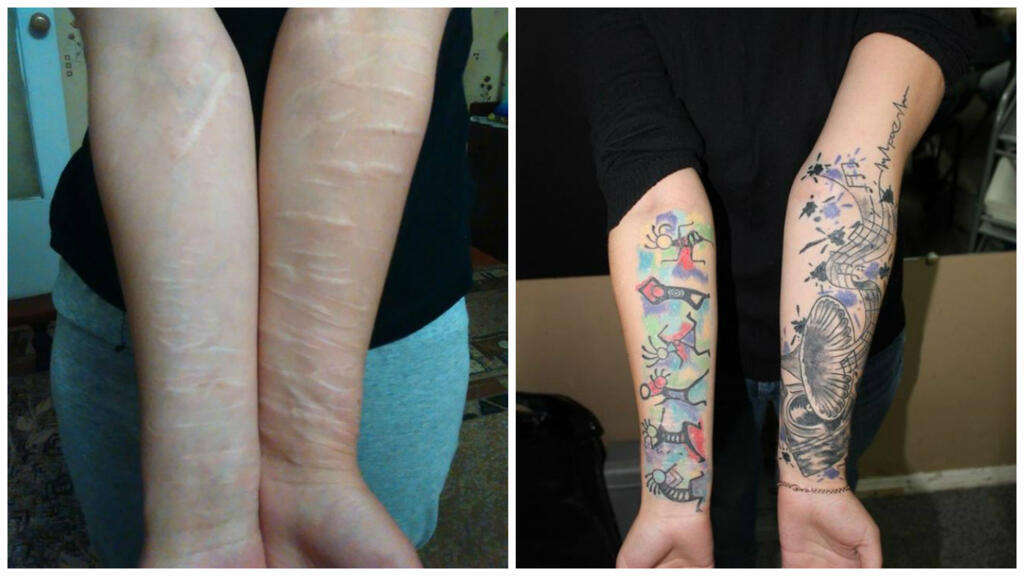
A scar, whether from an accident, surgery, or self-harm, is a passive mark. It is something that happened to you. It is a permanent reminder of a moment when you may have felt powerless, afraid, or in pain. It can feel like a brand, an identity you did not choose.
A tattoo is the complete opposite. It is a radical act of active choice. When you decide to get a healing tattoo, you are taking control. You are the one who chooses the artist, the design, the placement, and the meaning. You are consciously and deliberately altering your body on your own terms. This powerful shift in agency—from being a passive recipient of a wound to being the active author of a new mark—is profoundly healing. The tattoo transforms the site of the wound from a place of trauma to a place of empowerment, beauty, and personal authority. It is a declaration that says, “My story does not end with this scar; I decide how this chapter is illustrated.
Externalising the Internal: Giving Form to Feeling
For emotional wounds like grief, trauma, or depression, the pain is abstract, internal, and often overwhelming. There is nothing to see, nothing to touch. This can make the healing process feel directionless. A tattoo can serve as a powerful anchor for these invisible wounds.
- Making Grief Tangible: For someone grieving, a memorial tattoo gives their love and their loss a physical form. It creates a specific place on their body that they can touch, a focal point for their remembrance. This act of externalising the emotion can make it feel more manageable, a part of them they carry with love, rather than an overwhelming force within.
- Symbolising Growth: For those healing from trauma or mental health struggles, a tattoo can serve as a permanent, visible reminder of their strength and resilience. The semicolon tattoo is a world-renowned example of this, a simple symbol that declares the wearer chose to continue their story. These tattoos become a form of armour, a personal sigil of a battle won.
Our Studio’s Philosophy on Healing Tattoos:
“When a client comes to us for a healing tattoo, they are not just asking for a picture. They are asking for a transformation. They are entrusting us with a part of their story that is often deeply vulnerable. Our role as artists immediately shifts from being a simple illustrator to something more akin to a compassionate scribe or an artistic alchemist. We must listen with our hearts, design with profound empathy, and tattoo with a deep understanding of the profound trust they are placing in our hands. This is, without question, the most meaningful and honourable work we do at PinkTatPier.” – The Philosophy of the PinkTatPier Team
Tattoos as a healing tattoos
The Art and Science of the Scar Cover-Up Tattoo
Tattooing over scar tissue is one of the most technically demanding skills in the tattooing world. It requires a specialist artist with a deep understanding of skin, a masterful control of their machine, and an ingenious artistic eye.
Is My Scar Ready to Be Tattooed? The Essential First Step
This is the first and most critical question, and it can only be answered during an in-person consultation with an experienced artist at our London studio.
- Age of the Scar: The scar must be fully healed and mature. This means it is no longer pink, red, or purple, and has settled into its final, faded colour (usually whitish or silvery). This process typically takes a minimum of one to two years, and sometimes longer. Tattooing over an immature scar is dangerous, can cause extreme pain, and may lead to a very poor heal and further skin damage.
- Type of Scar: Not all scars are created equal. Some types of scars, particularly keloid scars (which are thick, raised scars that grow beyond the original wound’s boundaries), are often not suitable for tattooing.1 Tattooing a keloid can risk aggravating it and causing it to grow larger.2 A consultation with both your doctor and one of our specialists is essential if you have keloids.
The Technical Challenges of Tattooing Scar Tissue
An experienced artist knows that scar tissue is a completely different canvas from healthy skin.
- Variable Texture and Ink Absorption: Scar tissue is fibrous and lacks the normal layered structure of healthy skin. It can be raised and hard (hypertrophic), or thin and indented (atrophic). It absorbs ink unpredictably. Some dense areas may resist the ink entirely, while some softer, more porous areas might absorb too much ink, causing it to “blow out” or spread, resulting in blurry lines.
- The Artist’s Skill and Adaptability: A specialist in scar cover-up tattoo work must have an incredibly sensitive touch and a masterful control of their needle depth. They must be able to feel how the needle is reacting to the different textures of the scar and constantly adapt their technique. This is a level of skill that takes years of dedicated practice to acquire.
Tattoos as a healing tattoos
Design Strategies for an Effective and Beautiful Cover-Up
A successful scar cover-up is not about simply blasting black ink over an area. It is a sophisticated art of camouflage, distraction, and integration.
Table: Design Approaches for Different Scar Types
| Scar Type | Description of Scar Tissue | Best Design Strategy & The “Why” | Common & Effective Motifs |
| Flat, Faded Scars (e.g., old, clean surgical incisions) | Smooth, pale, and relatively flat lines that are level with the surrounding skin. | Direct Coverage. These are the easiest scars to work with. The design can often be placed directly over the scar, treating it like a normal piece of skin, although the artist still needs to be mindful of slight texture changes. | Almost any design is possible, from detailed portraits to delicate script and fine-line work. |
| Raised, Textured Scars (Hypertrophic) | Thick, often rope-like, raised lines that stay within the boundaries of the original wound. | Integration, not Obliteration. The key here is to work with the scar’s texture. A skilled artist will use the raised lines of the scar as a fundamental element of the design itself, rather than trying to flatten it with ink. | Flowers and Botanicals (the scar becomes the stem of a flower or the branch of a tree), Snakes or Dragons (the scar becomes the spine of the creature), Feathers (the scar becomes the central quill). |
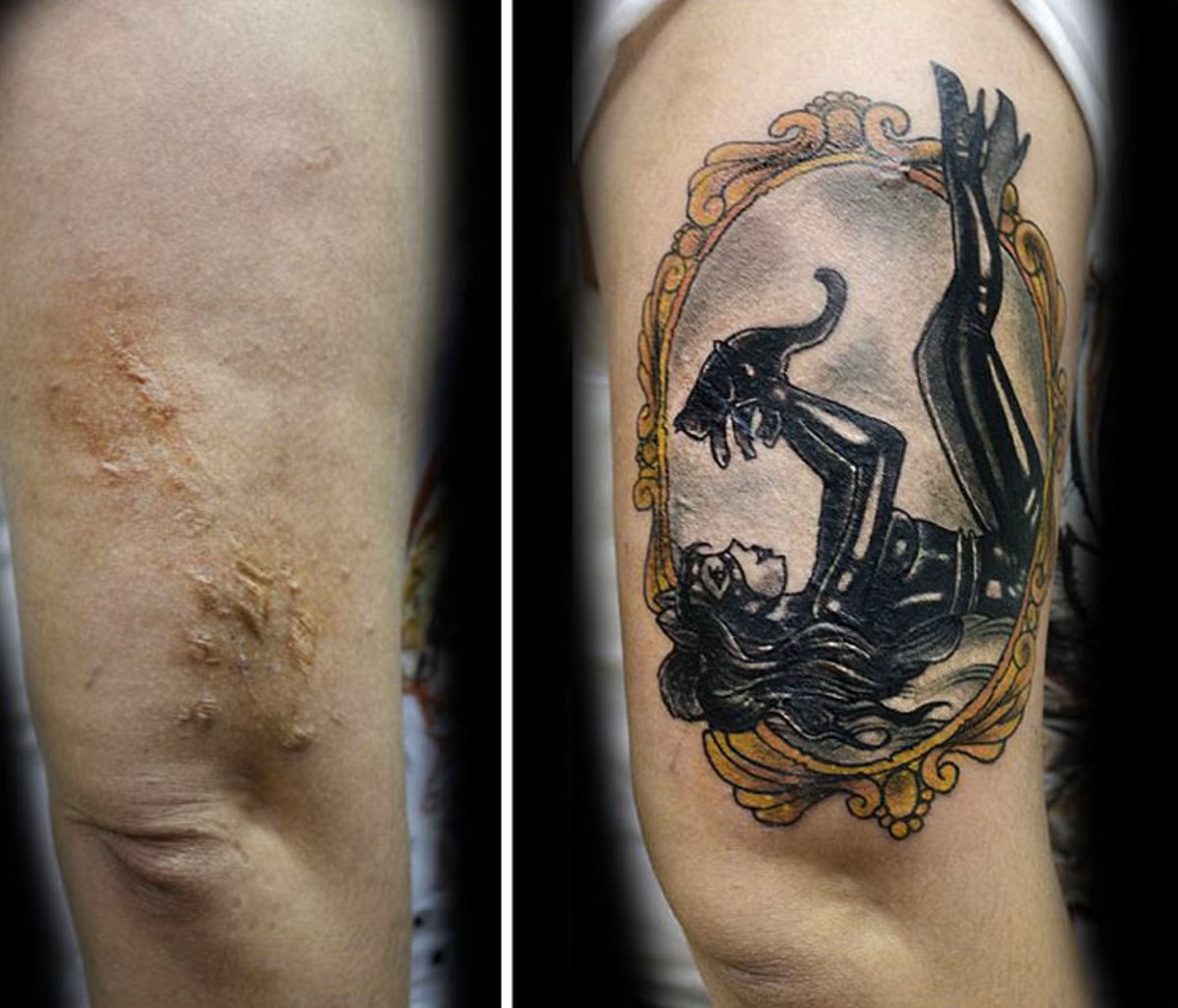
| Indented or Sunken Scars (Atrophic) | Depressed or sunken lines or patches, often from acne, chickenpox, or certain injuries. | Illusion and Distraction. The goal is to use clever shading and texture to trick the eye and create an illusion of an even surface. Designs with a lot of depth, heavy blackwork, or complex patterns are ideal. | Geometric patterns, mandalas, traditional blackwork, and pieces with deep, soft shading can effectively mask the indentations. |
| Wide, Uneven Areas of Scarring (e.g., skin grafts, burns) | Large patches of skin with a very uneven, often mottled or shiny texture and inconsistent thickness. | Large-Scale Distraction and Flow. This requires a large, dynamic, and complex tattoo. The design should have a lot of movement and texture to draw the eye away from the underlying skin variations and create a new, cohesive visual. | Japanese-style backgrounds (water bars, wind bars, clouds), large-scale floral pieces (like peonies or chrysanthemums), and flowing organic or abstract patterns. |
Ink as an Anchor: Tattoos for Emotional Wounds and Milestones
While a scar cover-up tattoo provides a physical transformation, tattoos for emotional wounds offer a different, but no less powerful, form of healing.
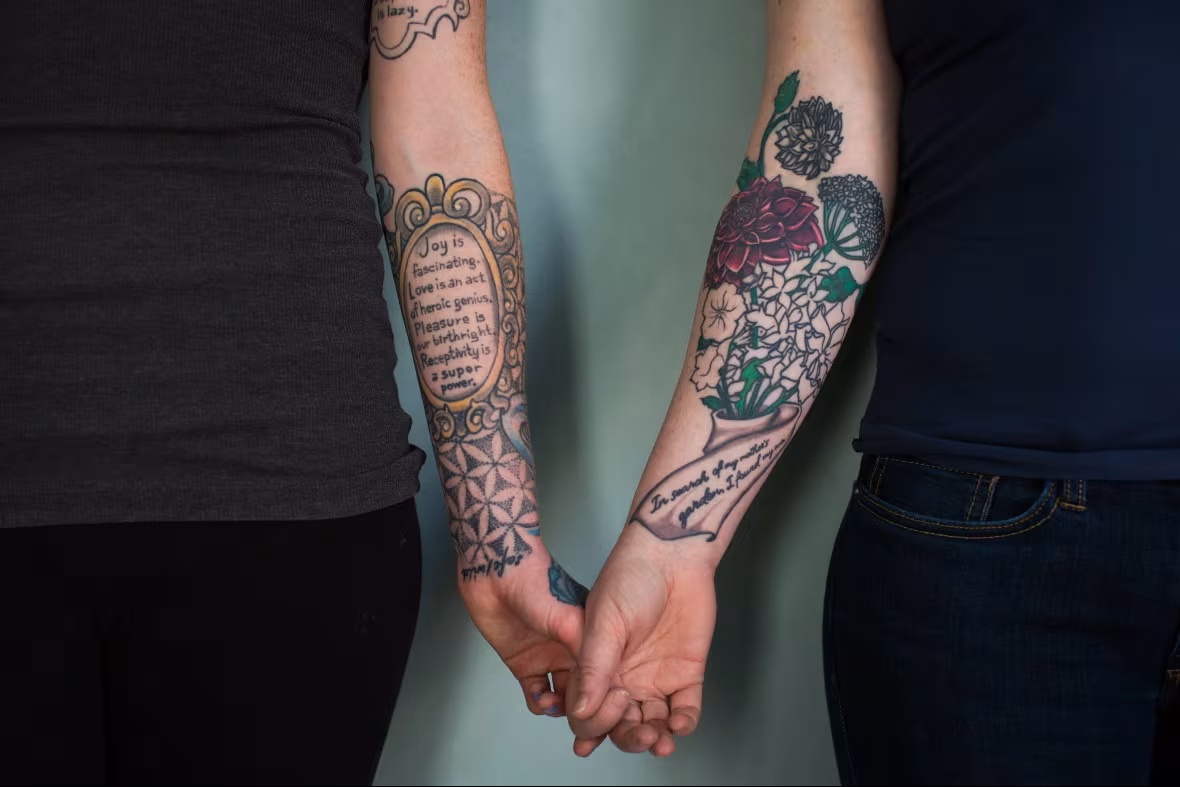
- The Memorial Tattoo: As discussed, this is a way to create a continuing bond. Beyond names and dates, our artists at PinkTatPier specialise in creating deeply symbolic memorials. We have tattooed the unique soundwave of a loved one’s laugh, a map of a constellation that was visible on a special night, or a beautifully rendered image of a favourite teacup. These subtle, personal symbols can be even more powerful than a portrait.
- The Milestone Tattoo: These are tattoos of triumph. They celebrate personal victories, big and small. We have had the honour of creating tattoos for clients celebrating years of sobriety, the end of chemotherapy, achieving a lifelong career goal, or finally leaving a toxic situation. These healing tattoos are not about remembering pain, but about celebrating the strength it took to overcome it.
Your 5 Most Important Questions About Healing Tattoos (FAQ)
1. Does tattooing over a scar hurt more than tattooing on regular skin?
This is a very common question, and the answer is complex. Scar tissue itself has fewer nerve endings, so the scar line itself might feel dull or numb. However, the skin around the scar can be hypersensitive. Furthermore, scar tissue can be very dense, requiring the artist to work on it more intensely, which can be uncomfortable. Most clients report the sensation is “different” rather than necessarily “more painful.”
2. Will the tattoo completely hide my scar?
The goal is typically camouflage and integration, not complete obliteration. While a tattoo can dramatically reduce the visibility of a scar, the texture of the scar will likely remain. A skilled artist will use the design to make the texture a seamless part of the artwork, but if you run your hand over it, you will still feel the difference. We believe in being honest about this from the start.
3. How old does my scar really need to be before I can get a scar cover-up tattoo?
We are very strict about this for your safety. A minimum of one year is the absolute baseline, but for significant surgical scars, we strongly recommend waiting at least two years. The scar tissue needs to be fully settled, no longer pink or red, and stable. Tattooing too early can cause excessive trauma and lead to a poor heal.
4. I have keloid scars. Can I get them tattooed?
Keloid scars are a specific type of raised scar that grows beyond the boundaries of the original wound. They are notoriously difficult and risky to tattoo. There is a significant risk that the trauma of the tattoo needle can trigger the keloid to grow even larger. In most cases, we will ethically decline to tattoo directly over a keloid. A consultation with your dermatologist and one of our lead artists is essential to even begin to explore any possibility.
5. I’m not sure what design to get for my memorial or milestone tattoo. Can you help?
Absolutely. This is at the heart of what we do. You do not need to come to us with a finished design. You only need to come with your story, your memories, and your feelings. Our consultation process is a creative and compassionate dialogue. We will listen to you and help you translate your emotions into a powerful, beautiful, and deeply personal symbol.
Tattoos as a healing tattoos
Conclusion: Transforming Your Canvas, Reclaiming Your Story
Tattoos, in their most profound form, are a tool for transformation. They offer a unique and powerful way for us to take ownership of our bodies and our stories. They allow us to transform physical marks of pain into symbols of strength and beauty, and to give invisible emotional wounds a tangible, meaningful anchor. A healing tattoo is a declaration that our past does not define us, but it is a part of the beautiful, complex masterpiece that we are.
Your Next Step: Begin Your Transformation
Whether you are looking to artistically reclaim a physical scar or to honour a deep and personal emotional journey, our compassionate and highly skilled experts are here to guide you.
Contact our London studio to book a private, in-depth consultation. Let’s begin the conversation about creating your powerful and personal healing tattoo.