
Tattooing, in its purest and most ancient form, is a language. It is a way to tell the story of a life, a lineage, and a culture, etched permanently onto the living canvas of the skin. Long before tattoos were a mark of modern fashion, they were a sacred text, a visual representation of a person’s place in the world. The Tribal / Polynesian / Maori / Celtic Tattoo Style is a direct connection to this powerful, primal heritage.1 It is an art form built from bold black patterns, repetitive lines, and symbolic motifs from ancient cultures, a style that speaks of history, identity, and a deep, spiritual connection to the ancestors.
The overall vibe of this style is undeniably cultural, spiritual, and powerful. It is a choice for the individual who seeks a tattoowith weight, with history, and with a profound, resonant meaning. From the flowing waves and sharp warrior symbols of Polynesia, to the sacred spirals and genealogical storytelling of the Maori, to the endless, interwoven knots of the Celtic regions, this is a genre of immense depth and beauty. However, it is also a style that must be approached with the utmost respect and understanding.
At PinkTatPier, we are not just tattooers; we are students of the craft and its rich, global history. Our pinktatpier studio services are designed for the discerning collector who seeks an authentic and respectful interpretation of these ancient art forms. This is your definitive guide to the Tribal Tattoo Style. We will delve into its fascinating origins, deconstruct its key aesthetic principles, and explain how our expert artists in London can work with you to create a powerful and deeply personal masterpiece that honours these timeless traditions.
Tribal / Polynesian / Maori / Celtic Tattoo Style
Understanding the “Tribal” Umbrella: More Than Just a Single Style
The term “Tribal” is a very broad and often misunderstood category in the modern tattoo world. To approach this style with the respect it deserves, it is essential to understand its history and the nuances that define its different forms.
The Modern Revival and the 1990s “Tribal” Trend
In the 1990s, there was a massive explosion in the popularity of what became known as “American Tribal.” This style took the bold, black shapes of traditional Polynesian and Bornean tattoos but often stripped them of their cultural context and meaning. The result was a very graphic, often spiky, and generic style. While it was an important part of tattoo history, the modern approach to the Tribal Tattoo Style, and the philosophy we practice at PinkTatPier, is very different. The modern revival is about moving away from this generic interpretation and returning to a place of respect, research, and an appreciation for the specific cultural origin of each pattern.
The Core Philosophy: A Language of Symbols
The fundamental principle that unites all authentic forms of the Tribal Tattoo Style is that they are a language. These are not just random, decorative patterns. Every line, every shape, every spiral, and every knot is a word or a phrase in a complex visual lexicon. These tattoos were used to tell the story of a person’s life:
- Their Genealogy and Ancestry: Who they were and where they came from.
- Their Social Status and Rank: Their position within the tribe.
- Their Personal Achievements: Their accomplishments as a warrior, a leader, or a member of the community.
- Their Spiritual Beliefs: Symbols of protection, power, and a connection to the gods and the natural world.
When you choose to get a tattooin this style, you are participating in this ancient tradition of storytelling.
Exploring the Great Traditions: Polynesian, Maori, and Celtic
The “Tribal” umbrella covers many distinct and beautiful styles. At PinkTatPier, we have artists who specialise in interpreting the three great traditions that have most influenced the modern Tribal Tattoo Style.
| Style | Origin | Key Visual Characteristics | Core Theme / Vibe |
| Polynesian (Tatau) | The islands of Polynesia (Samoa, Tonga, Marquesas, Hawaii, etc.). | Bold black patterns and repetitive lines, often geometric. Uses motifs representing the natural world like waves, shark teeth, and turtle shells. The patterns are designed to flow with and accentuate the muscles of the body. | Cultural and Powerful. Tells a story of social status, rank, personal achievements, and tribal identity. |
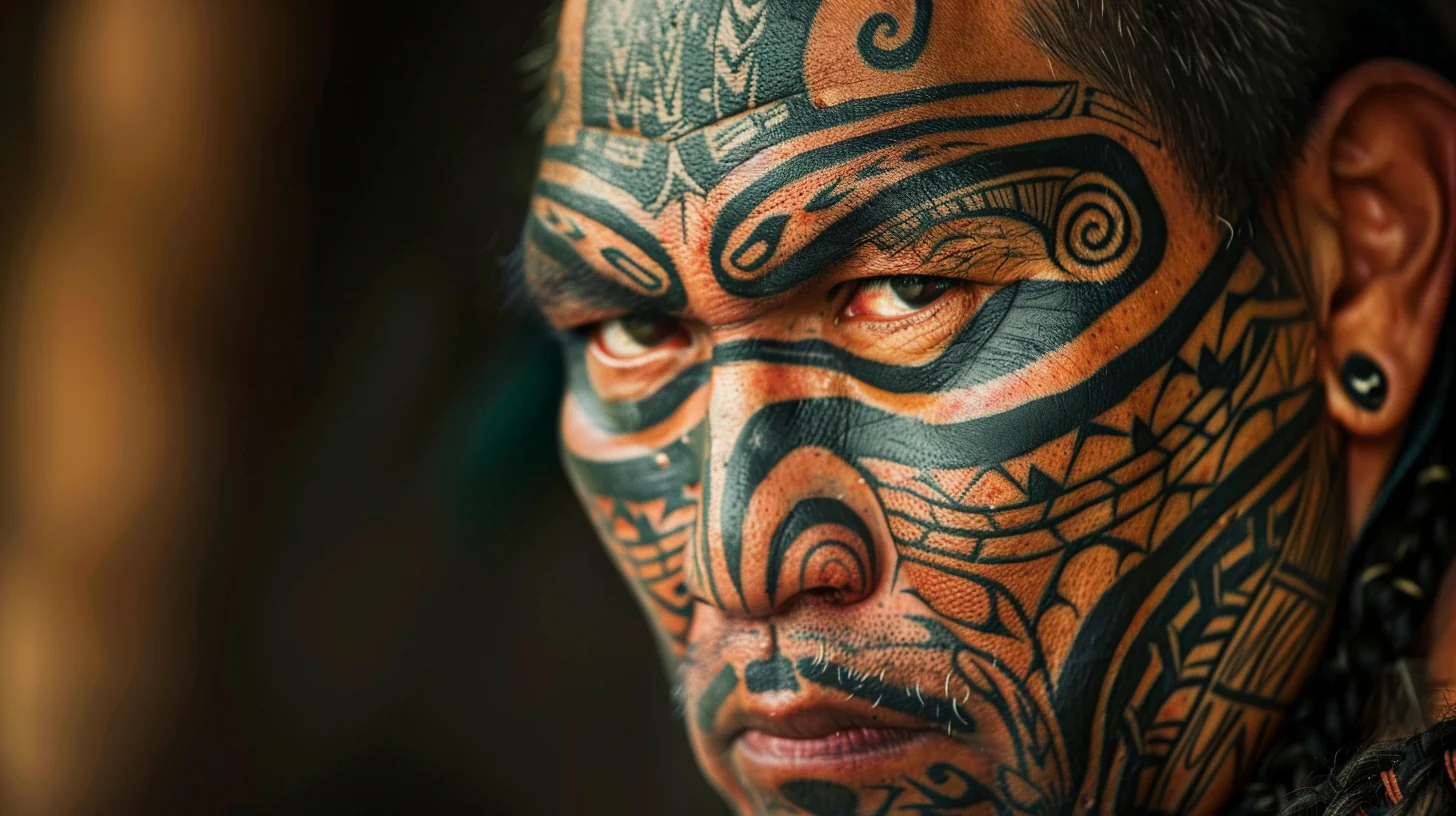
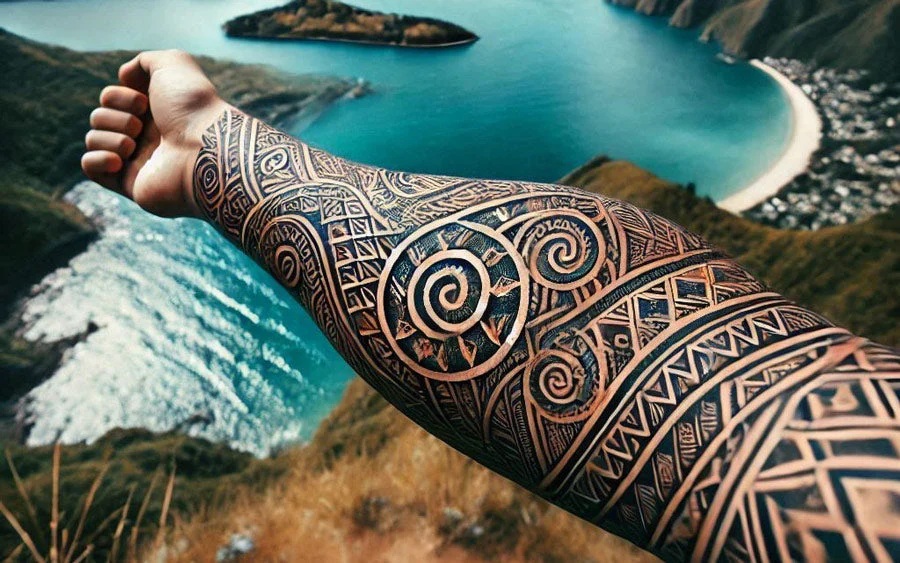
| Maori (Tā Moko) | The Maori culture of New Zealand. | Curvilinear designs, intricate spirals (koru), and flowing lines that are custom designed to fit the specific contours of the wearer’s body and face. It is a deeply personal and sacred art form. | Spiritual and Cultural. A direct visual representation of a person’s ancestry (whakapapa), tribe (iwi), and personal story. It is not just a tattoo; it is a statement of identity. |
| Celtic | The Celtic regions of Europe (Ireland, Scotland, Wales, etc.). | Interwoven knots, endless loops, spirals, and zoomorphic (animal-shaped) patterns. The designs are continuous and have no beginning or end. | Spiritual and Symbolic. Represents eternity, interconnectedness, the cyclical nature of life and death, and the union of the physical and spiritual worlds. |
A Deeper Dive into the Polynesian Style (Tatau)
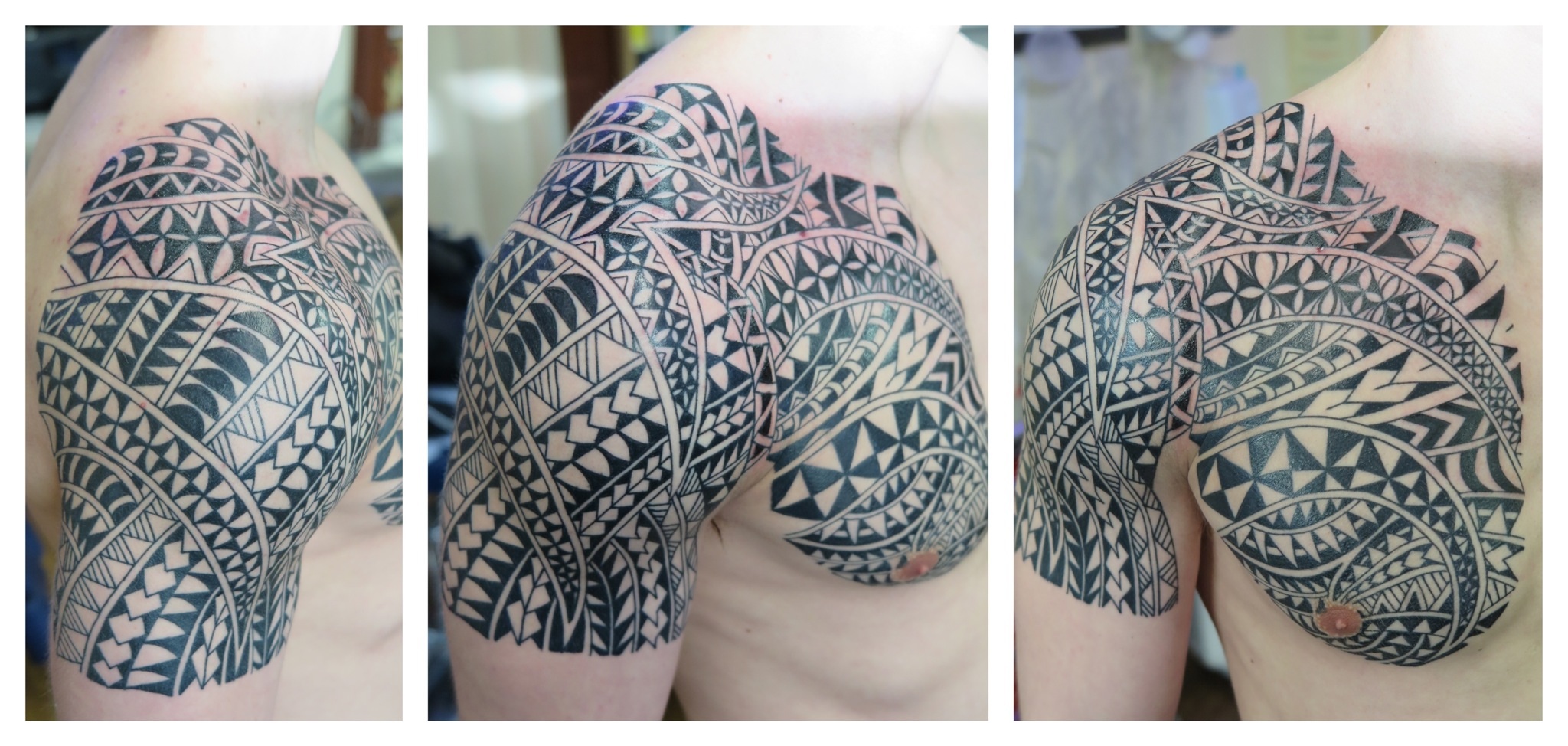
The Polynesian style is what most people think of when they imagine a classic “tribal” tattoo. It is known for its bold, geometric patterns that are designed to fit the body like a piece of armour. Each island group has its own unique stylistic variations and motifs, but they are all united by a common visual language. The Samoan Pe’a (for men) and Malu (for women) are some of the most famous examples, covering large areas of the body from the waist to the knees.2 The common motifs are all drawn from the natural world and carry deep meaning: shark teeth for protection and power, waves for life’s journey, and turtle shells for family and longevity.
Tribal / Polynesian / Maori / Celtic Tattoo Style
The Sacred Art of Tā Moko (Maori)
It is crucial to understand that traditional Maori tattooing, Tā Moko, is a deeply sacred cultural practice, not just a “style” to be copied.3 Each moko is a unique and personal statement of a person’s genealogy (whakapapa) and is considered a living part of their identity.4 A non-Maori person cannot have a true moko. However, one can get a tattoo that is created in the style of Maori art, known as kirituhi. A respectful artist will create a custom design that uses the beautiful, curvilinear forms and spirals (koru) of Maori art to tell the client’s own story, without copying sacred, ancestral designs.
The Endless Knots of the Celtic Style
The Celtic style is a world away from the Pacific. Its origins lie in the intricate, illuminated manuscripts created by monks in Ireland and Scotland, such as the famous Book of Kells. The style is defined by its complex, interwoven knots and patterns that have no beginning and no end. This “endless loop” is a powerful symbol of eternity, the cyclical nature of life, death, and rebirth, and the interconnectedness of all things. Common motifs include the Trinity Knot (Triquetra), the Celtic Cross, and zoomorphic designs where the knots morph into stylised animals.
The Vibe & Placement: Creating a Powerful Composition
The unique combination of these elements creates a very specific and powerful overall vibe that is designed to make a significant and lasting impact.
The Feeling of Tribal Art: Cultural, Spiritual, Powerful
The Tribal Tattoo Style is, above all, cultural. It is a direct link to the ancient traditions and stories of the cultures from which it originates. It is often a deeply spiritual choice; the use of sacred symbols, totems, and patterns that represent the natural world imbues the style with a meditative and philosophical quality. And finally, it is undeniably powerful. The bold black patterns and the way they are designed to flow with and accentuate the muscles of the body create a visual weight and density that is unmatched. A well-done tribal tattoo looks like a piece of living armour, a permanent statement of strength and identity.
The Ideal Canvases: Best Placements for Tribal Tattoos
The Tribal Tattoo Style is a genre of commitment, and it requires a significant amount of space to be truly effective and to do justice to the complexity of the patterns.
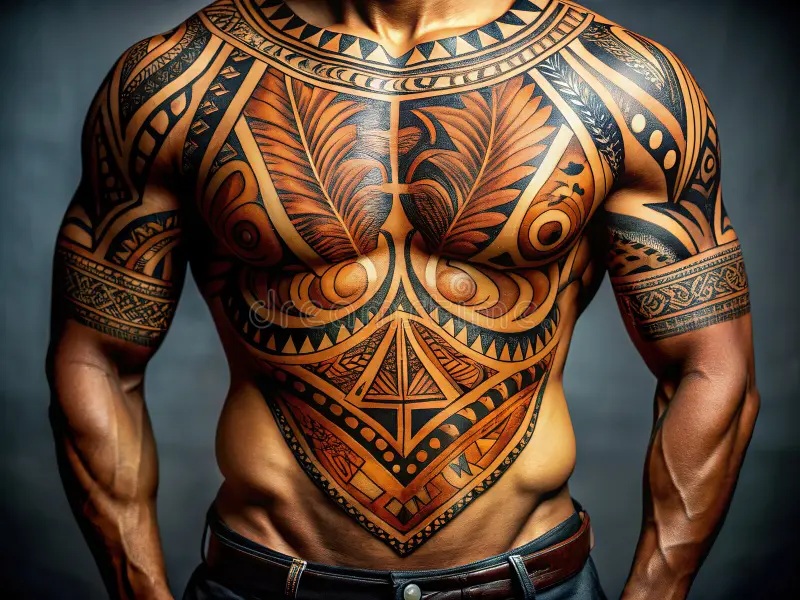
- The Best Placements: For this reason, the best placement options are the larger canvases of the body that can accommodate the flowing, wrapping nature of the designs. The shoulder, arm, chest, and leg are the ideal locations. The shoulder and upper arm are perfect for a classic Polynesian-style piece that wraps around the deltoid and bicep. The chest offers a powerful, symmetrical canvas for a large central piece that can extend over the shoulders.5 The full leg is an excellent canvas for a large-scale Celtic or Polynesian design that can spiral down the limb.
The PinkTatPier Experience: Respectful Interpretation and Modern Execution
A perfect tribal tattoo is a testament to the artist’s skill, their respect for the culture, and their ability to create a design that flows with the client’s body. At PinkTatPier, our pinktatpier studio services are designed for the client who seeks an authentic, respectful, and masterfully executed piece.
Our Specialist Artists and the Importance of Research
Our studio is a curated collective of artists, and our specialists in the Tribal Tattoo Style are not just tattooers; they are students of these cultures. They have dedicated years to studying the history, the symbolism, and the compositional rules of Polynesian, Maori, and Celtic art. This deep well of knowledge is what allows them to create truly authentic and powerful pieces. They do not just copy designs from a book; they research and create completely custom pieces that are inspired by these traditions but are unique to the client.
Tribal / Polynesian / Maori / Celtic Tattoo Style
The Custom Design Consultation: A Storytelling Session
Your journey begins with an in-depth, collaborative consultation. A Tribal Tattoo Style piece is a personal story. Our process is designed to help you tell it. The artist will work with you to understand your own story, your heritage (if any), and the qualities you want the tattoo to represent (e.g., strength, family, a journey, protection). They will then use the authentic visual language of your chosen style to create a unique, modern tribal piece that is entirely personal to you.
The Crucial Conversation on Cultural Appropriation
A studio like PinkTatPier has a strong, ethical stance on this important issue. We believe in appreciation, not appropriation. During your consultation, we will have an honest conversation about this. We will not, for example, copy a sacred, specific Maori moko that belongs to another person’s genealogy. Instead, our artists will create a custom kirituhi design for you in the style of Maori art that tells your own story. This commitment to respect is a cornerstone of our professional pinktatpier studio services.
Frequently Asked Questions (FAQ)
1. I’m not from any of these cultures. Is it okay for me to get a tribal tattoo?
This is the most important question, and the answer is about respect. It is absolutely possible to get a beautiful tribal-style tattoo as an act of genuine appreciation for the art form. The key is to work with a respectful artist who will not simply copy a sacred or culturally-specific design. Instead, they will create a new, custom piece for you that is in the style of Polynesian or Celtic art, telling your own story with that visual language.
2. How well does the Tribal Tattoo Style age?
It ages exceptionally well. The style is built on a foundation of bold black patterns and strong outlines. Solid black ink is the most durable and long-lasting pigment in tattooing.6 A well-executed tribal piece will remain bold, clear, and powerful for a lifetime.
3. Is a tribal tattoo more painful than other styles?
The pain level is comparable to the Blackwork style. The process of fully saturating large areas of skin with solid black ink can be very intense. The sessions are often long and can be a significant test of endurance. Most clients report that heavy black packing is more intense than standard shading or linework.
4. How much does a large tribal piece cost?
A large-scale tribal tattoo, like a half-sleeve or a chest piece, is a major undertaking that requires many hours of work from a specialist artist. You should expect the price to reflect this. These are significant investments, often charged at an artist’s hourly or full-day rate.
5. Is the Tribal Tattoo Style a good choice for a cover-up tattoo?
Yes, it is one of the absolute best styles for a cover-up. The use of dense, dark, solid black areas and complex, flowing patterns is perfect for completely obliterating an old, unwanted tattoo. An expert artist can cleverly design the new pattern to absorb the old tattoo completely.
Tribal / Polynesian / Maori / Celtic Tattoo Style
Conclusion
The Tribal / Polynesian / Maori / Celtic Tattoo Style is so much more than an aesthetic; it is a profound connection to the most ancient traditions of human storytelling. It is a powerful, spiritual, and deeply cultural art form. Choosing to get a tattooin this style is a commitment to wearing a piece of art with history, weight, and meaning. It is a journey that requires research, respect, and the skill of a true specialist who can honour these traditions while creating a piece that is uniquely yours.