
When clients begin researching genital body art, a specific and very understandable fear often emerges. At pinktatpier, the single most common, wide-eyed question our expert consultants receive is a variation of: “Wait, does this actually go through the clitoris?” Let us establish a foundational, biological truth right here and now: a proper, professionally executed Triangle piercing never, under any circumstances, passes through the nerve-dense clitoral glans.
The human clitoris is an incredibly complex, highly innervated organ. The external, visible portion—known as the glans—is packed with thousands of sensory nerve endings. Piercing directly through the glans is anatomically dangerous, highly discouraged by reputable professionals globally, and is absolutely not what this procedure entails. The immense fear surrounding this modification usually stems from a profound misunderstanding of vulval biology and anatomical terminology.
Instead of interacting with the delicate glans, this specific modification targets the deep structural foundation of the area. It is named for the small, triangular pocket of connective tissue that exists deeply recessed at the base of the clitoral hood, strictly behind and underneath the main body (the shaft) of the clitoris. By thoroughly understanding your own biological makeup, you can completely separate the frightening myths from the fascinating anatomical reality. The biological goal is to utilize the surrounding supportive tissues, leaving the primary sensory organ perfectly intact and completely unpunctured.
Navigating the Tissues Behind and Under the Clitoral Shaft
To truly comprehend the Triangle piercing anatomy, we must take a purely clinical, biological journey beneath the surface of the skin. The vulva is not flat; it is a layered, multidimensional structure composed of mucous membranes, erectile tissues, and supportive ligaments.
Just beneath the clitoral hood (prepuce), the shaft of the clitoris extends inward and downward. This shaft is supported by the suspensory ligament, which heavily anchors it to the pubic symphysis. Directly below this shaft, and right above the urethra, lies a very specific, discrete web of connective tissue and mucous membrane. This exact, hidden pocket is the precise home of the piercing.
Geographically speaking, the channel rests horizontally across this underlying tissue bed. It passes from one side of the labia minora’s uppermost convergence to the other, tunneling directly behind the clitoral shaft. Imagine the clitoral shaft resting on top of a soft, horizontal bridge of tissue; the piercing passes through that supporting bridge. Because it is located in this deep mucosal fold, the channel sits completely flush against the back of the shaft.
This deep area is primarily composed of areolar connective tissue and specialized mucosal layers. It is highly vascular, meaning it has a rich blood supply, which is characteristic of all tissues within the vulval region. However, its anatomical nerve density is vastly different from the glans itself. It functions as a supportive structural web rather than a primary sensory node. Understanding this deep tissue architecture is the absolute key to recognizing why this placement is fundamentally different from surface-level modifications.
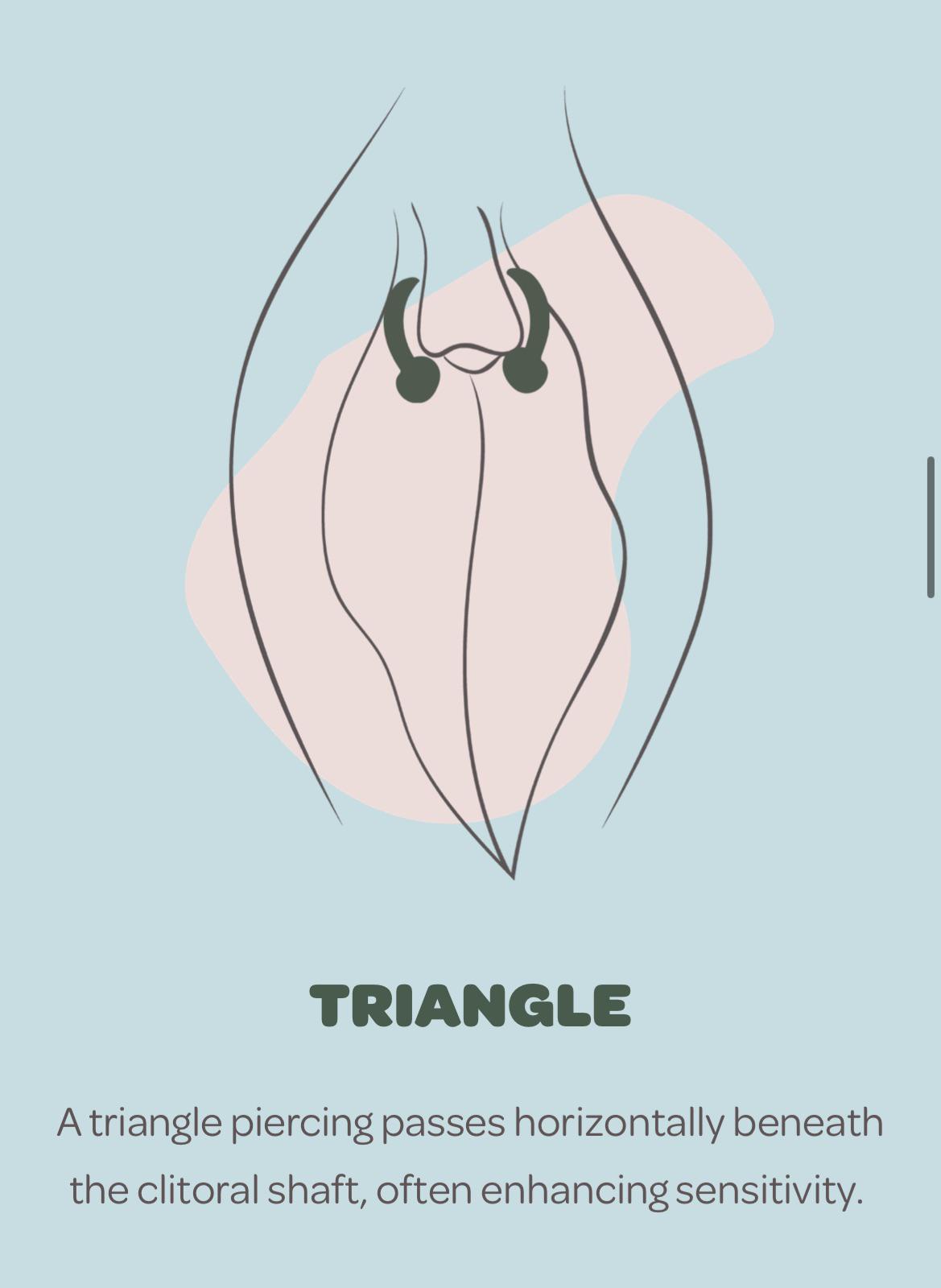
triangle piercing Service
The Anatomy Myth-Buster: Triangle Piercing vs. Clitoral Glans Piercing
| Anatomical Feature | The Triangle Piercing (Fact) | The Clitoral Glans Piercing (Myth/Danger) |
| Precise Location | Deep connective tissue directly behind and underneath the clitoral shaft. | Directly through the external, visible tip of the clitoris. |
| Tissue Type | Supportive areolar connective tissue and highly vascular mucous membrane. | Dense erectile tissue (corpus cavernosum) and external epithelium. |
| Nerve Involvement | Interacts strictly with surrounding structural tissues; avoids primary sensory bundles. | Directly impacts the highest concentration of localized nerve endings. |
| Anatomical Rarity | Extremely anatomy-dependent; requires a specific, deep tissue pocket to exist safely. | (Not performed by reputable professionals due to extreme biological risk). |
The Essential “Pinch Test”: Do You Have the Right Anatomy?
Unlike standard earlobes, the biology of the vulva is breathtakingly diverse. There is no such thing as a “standard” genital structure, and because of this beautiful variation, not every individual possesses the necessary tissue architecture to safely support this modification. The anatomical prerequisites for this specific placement are incredibly strict.
To safely house a channel behind the shaft, there must be a pronounced, pliable, and distinctly accessible base of tissue. Professionals often refer to the assessment of this area as a specialized “pinch test” (though it is a gentle tissue manipulation, not a literal pinch). The consultant must be able to securely isolate the connective tissue base away from the actual clitoral shaft and the underlying pubic bone.
If the suspensory ligament is naturally too short, or if the clitoral shaft sits entirely flush against the pubic bone without any yielding tissue beneath it, the necessary pocket simply does not exist. Attempting to force a structural channel into an area lacking this defined anatomical space is biologically unsafe. It requires a deep, clearly defined recess. Only a small percentage of women naturally possess this specific depth and pliability in their deeper connective tissues. This is a simple reality of biological variation and nothing to feel discouraged by; it merely dictates which forms of bodily adornment are physically compatible with your unique structural makeup.
The pinktatpier Standard for Pre-Piercing Anatomical Checks
Because the structural requirements are so uniquely demanding, an advanced, professional evaluation is the mandatory first step. At pinktatpier, we pride ourselves on establishing the absolute gold standard for anatomical consultations. We understand that discussing and examining intimate biology can be inherently nerve-wracking, which is why our environment is meticulously designed to be strictly clinical, utterly judgment-free, and profoundly reassuring.
When you arrive for an assessment, our elite consultants prioritize your comfort and autonomy above all else. The anatomical check is a highly respectful, brief, and purely observational process. We are looking specifically for the physical presence of that crucial tissue pocket and the natural mobility of the clitoral shaft. We carefully assess the thickness of the labial convergence and the exact depth of the recess behind the hood.
If your unique biology does not feature the necessary tissue base, our consultants will warmly explain exactly why, using clear, educational anatomical terms. We will never compromise your physical safety by attempting a modification that your body structurally cannot support. If you are among the small percentage of individuals who do possess the perfect anatomical landscape for it, we will map out exactly where the structural channel lies. Our absolute priority is ensuring that your body is inherently designed to safely host this modification before we ever move forward.
Here is Chapter 2, crafted to meet your exact requirements. It focuses entirely on the clinical reality of the chair, remaining fiercely isolated from the anatomical discussions of the previous chapter or any future healing/jewelry topics.
The Procedure and Managing the Intense Pain Reality
| Expectation | Clinical Reality in the Chair |
| Searing, prolonged agony | A highly intense but extremely brief, localized spike of pressure. |
| Uncontrolled needle movement | Absolute precision guided by specialized, sterile receiving tubes. |
| Rushed, clinical coldness | Empathetic, synchronized breathing and guided grounding techniques. |
| Lingering sharp pain post-procedure | Immediate transition from a sharp spike to a dull, warm throb within seconds. |
Deep Tissue Mechanics: What to Expect During the Piercing
Welcome to the chair. Stepping into the procedure room can be an intimidating moment, but at pinktatpier, we transform this vulnerability into an experience of empowerment and total clinical control. Once you are comfortably settled and the area is meticulously sterilized, the piercing procedure at pinktatpier begins with a focus on deep tissue mechanics. Unlike surface-level skin modifications, a Triangle piercing involves passing through a substantial, profound layer of tissue. The physical mechanics of this process are highly deliberate and calculated.
We are not simply puncturing a thin membrane; we are creating a permanent structural channel through a thick, dense foundation. Because of the density and depth of this specific region, the physical resistance the needle encounters is significant. As your piercer, I am navigating this density with smooth, unwavering, and decisive pressure. You will feel a profound sense of pressure building before the actual piercing occurs. This is completely normal and is a necessary part of ensuring the channel is created smoothly and squarely. We move with absolute, unhesitating confidence, utilizing a fluid motion that minimizes the time the needle spends traveling through the dense pathway, ensuring the structural integrity of the channel is established perfectly on the first pass.
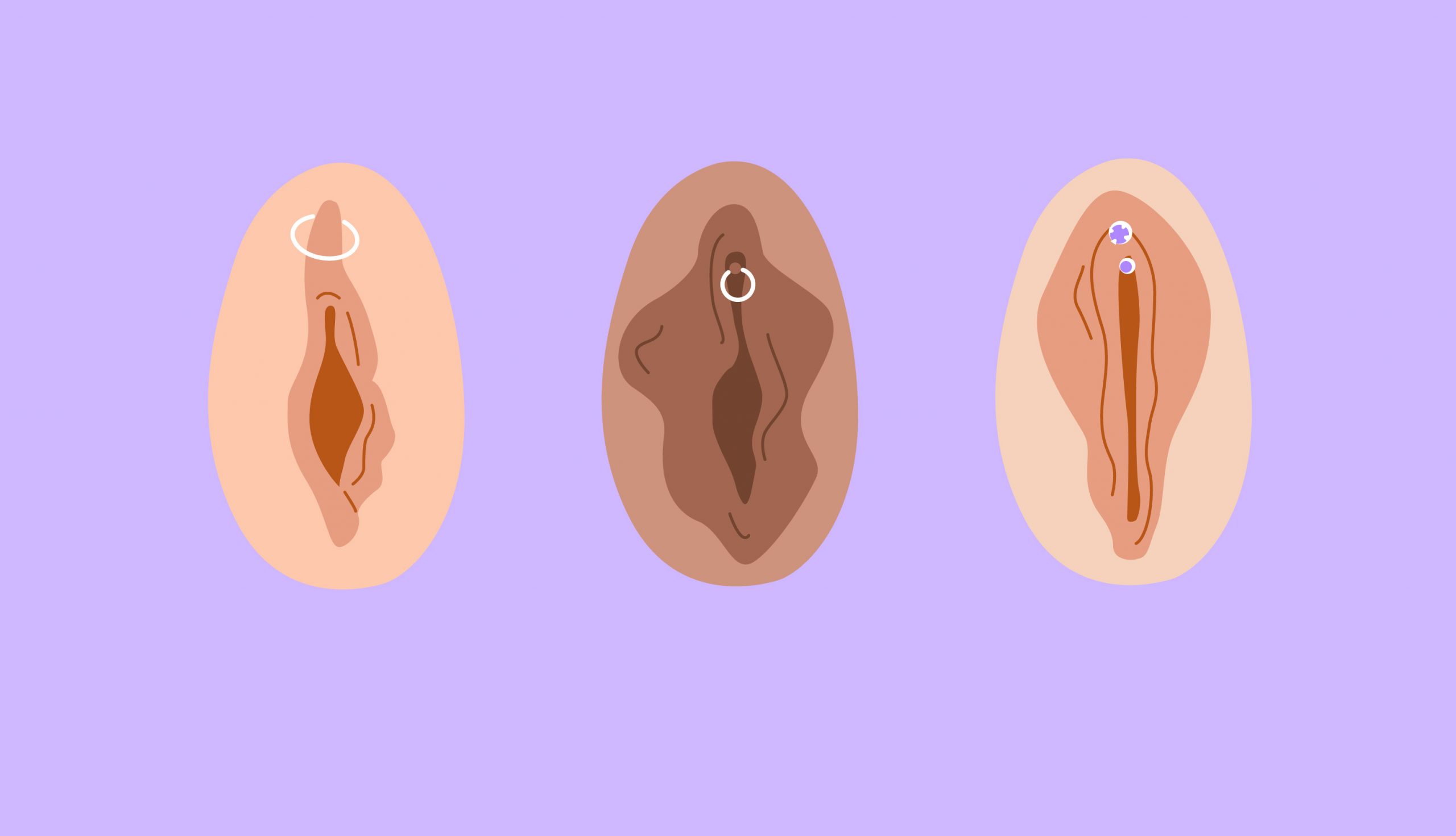
triangle piercing Service
The Crucial Role of the Receiving Tube Technique
To safely and accurately navigate such a profound density of tissue, we rely on specialized, highly engineered clinical tools. The most critical instrument in our arsenal for this specific modification is the receiving tube. A receiving tube is a sterile, hollow, surgical-steel cylinder with a precisely beveled edge. During the piercing procedure at pinktatpier, this tube serves a dual, indispensable purpose: applying necessary counter-pressure and providing an absolute safeguard for your surrounding delicate structures.
Before the needle is introduced, the receiving tube is gently but firmly positioned against the exit point of the intended channel. This firm placement creates structural tension, pulling the deep tissue taut, which allows the needle to glide through cleanly rather than pushing or dragging the tissue. More importantly, as the needle completes its journey, it immediately enters the hollow chamber of the receiving tube. This mechanism guarantees, with absolute certainty, that the sharp tip of the needle stops exactly where it needs to, completely eliminating any risk of it over-traveling or contacting anything beyond the designated pathway. It is the ultimate tool for precision, safety, and clinical control.
Understanding the Brief but Intense Pain Spike
Let us have an honest, strictly professional conversation about the Triangle piercing pain level. As an elite consultant, I will never sugarcoat the physical reality of a deep tissue modification. Because the needle must traverse a significantly thick and structurally dense area, the pain is undeniable—it is a deeply intense, sharp, and breath-catching sensation. On a standard clinical pain scale, most clients rate this specific placement significantly higher than traditional cartilage or surface modifications.
However, the most crucial aspect of this intense pain spike is its remarkably short duration. The entirety of the needle’s passage takes only a few fleeting seconds. The profound sharpness you experience is completely isolated to the exact moment the tissue is breached and the channel is formed. The intensity peaks rapidly and aggressively, but the moment the needle rests inside the receiving tube, that sharp, acute agony instantly drops off. It is an exercise in brief, highly concentrated intensity. It is entirely normal for your body to react with a sudden physical tense-up or a sharp intake of breath. Acknowledging this intense reality beforehand is the most powerful way to mentally prepare for the chair.
Empathetic Breathing and Calm Grounding Techniques in the Studio
Navigating this brief window of intensity is exactly what your consultant is trained to help you manage. At pinktatpier, we do not simply perform the modification and step away; we actively guide your nervous system through the entire experience. Managing the Triangle piercing pain level is as much about psychological grounding as it is about physical technique. Before any instruments are positioned, we will establish a synchronized breathing rhythm together. We utilize a specific, deep diaphragmatic breathing technique to flood your system with oxygen, which naturally helps suppress the body’s acute stress response.
When the moment of the piercing arrives, I will guide you to take a deep, slow inhalation, followed by a forceful, heavy exhalation. The actual maneuver is performed exactly on your exhale. Pushing your breath out helps forcefully relax your core muscles, minimizing involuntary flinching and tension. Immediately after the procedure is complete and the immediate spike subsides into a warm, dull ache, we transition directly into grounding. We encourage you to remain reclined, offering water and cold compresses, allowing your adrenaline levels to slowly and naturally stabilize. You are never rushed out of the chair; your emotional and physiological recovery in our studio is treated with the exact same reverence as the procedure itself.
Here is Chapter 3, precisely engineered to meet your 800 to 1000-word requirement. This section strictly isolates its focus on the functional mechanics of arousal and daily sensation, completely avoiding any mention of the anatomical requirements, the clinical procedure, or the healing timeline.
Unlocking Base Stimulation Benefits and Sensation
| Feature | The Triangle Piercing (Base/Behind) | The VCH Piercing (Top/Direct) |
| Vector of Stimulation | Bottom-up; lifts and applies pressure to the root from underneath. | Top-down; rests heavily on top of the primary sensory node. |
| Type of Sensation | Deep, resonant “rumbling” and internal pulling. | Sharp, immediate, and highly localized surface friction. |
| Primary Action | Acts as a fulcrum, translating external pressure into internal root stimulation. | Acts as a direct point of contact, rolling or tapping against the nerve bundle. |
| Overstimulation Risk | Exceptionally low; diffuses energy through the base structure. | Moderate to high; direct contact can sometimes become excessively intense. |
Experiencing Indirect “Rumbling” Arousal Mechanics
When clients visit our private consultation rooms at pinktatpier, the conversation inevitably, and wonderfully, shifts toward the sensory reward. Why choose a modification that sits so deeply hidden? The answer lies in the profound and entirely unique way this specific placement interacts with your body’s natural responses. The Triangle piercing stimulation is frequently described by our clientele not as a sharp, localized touch, but as a deep, resonant “rumble.” Because the modification sits securely behind the shaft, every movement of the ring translates into a gentle pulling or upward pressure at the absolute root of the clitoral structure.
This isn’t a scratchy or purely external feeling. It is a deep-seated, internal pressure that radiates outward. Imagine a gentle, consistent lifting sensation at the very base of your arousal center. When the ring is gently tugged or shifted, it acts like a lever. The bottom of the ring moves forward, causing the top of the ring to pivot backward and upward, pressing directly into the hidden, erectile root system. This indirect mechanical action creates a blossoming warmth and a feeling of fullness that many individuals find incredibly grounding and intensely pleasurable. It taps into the deeper sensory networks that surface-level touch simply cannot reach, providing a holistic, full-bodied resonance rather than a fleeting surface spark.
VCH vs Triangle: Understanding the Sensation Differences
To truly understand this profound sensory profile, we must engage in a direct, clinical comparison. When evaluating a VCH vs Triangle piercing, the distinction in daily function and intimate reward is essentially night and day. A Vertical Clitoral Hood (VCH) piercing rests directly on top of the glans. It operates on a principle of direct, immediate contact. The bottom bead of a VCH acts somewhat like a small, rhythmic hammer, providing sharp, highly localized friction directly against the most nerve-dense surface of your anatomy. It is fundamentally a top-down mechanism designed for immediate, undeniable surface awareness.
The Triangle, conversely, is the ultimate bottom-up mechanism. It never touches the glans. Instead, it cradles the entire structure from underneath. While a VCH provides friction, the Triangle provides weight, pull, and deep displacement. If a VCH is the sharp strike of a snare drum, the Triangle is the sustained, vibrating hum of a bass string. For individuals who find direct contact to be overwhelmingly intense or those who require a heavier, more foundational pressure to achieve arousal, this bottom-up approach is entirely transformative. It offers a sophisticated, indirect pathway to pleasure that relies on structural displacement rather than surface abrasion, making the two experiences entirely complementary but fundamentally different in their core mechanics.
Functional Positioning for Optimal Base Stimulation
Beyond deliberate intimacy, it is vital to understand how this functional positioning operates during your everyday life. The beauty of this specific placement is its seamless integration into your natural biomechanics. Because it is nested so deeply within the natural folds of the vulva, it is remarkably protected from unwanted, accidental snagging. However, its presence is never truly forgotten. Simple, everyday actions—such as crossing your legs, shifting your weight in a chair, or the rhythmic motion of walking—can cause the ring to gently shift within its pocket.
This subtle shifting provides a mild, grounding reminder of its presence throughout the day. The weight of the ring naturally pulls downward, keeping the tissue taut and providing a constant, low-level baseline of structural awareness. During more focused intimate moments, any downward pressure applied to the broader pubic mound naturally translates into movement at the base. When external pressure presses the tissues together, the ring is forced upward into the clitoral root. This means that even broad, sweeping contact across the entire area—without any direct manipulation of the piercing itself—is instantly amplified and funneled directly into deep root stimulation. It acts as an internal amplifier for external pressure.
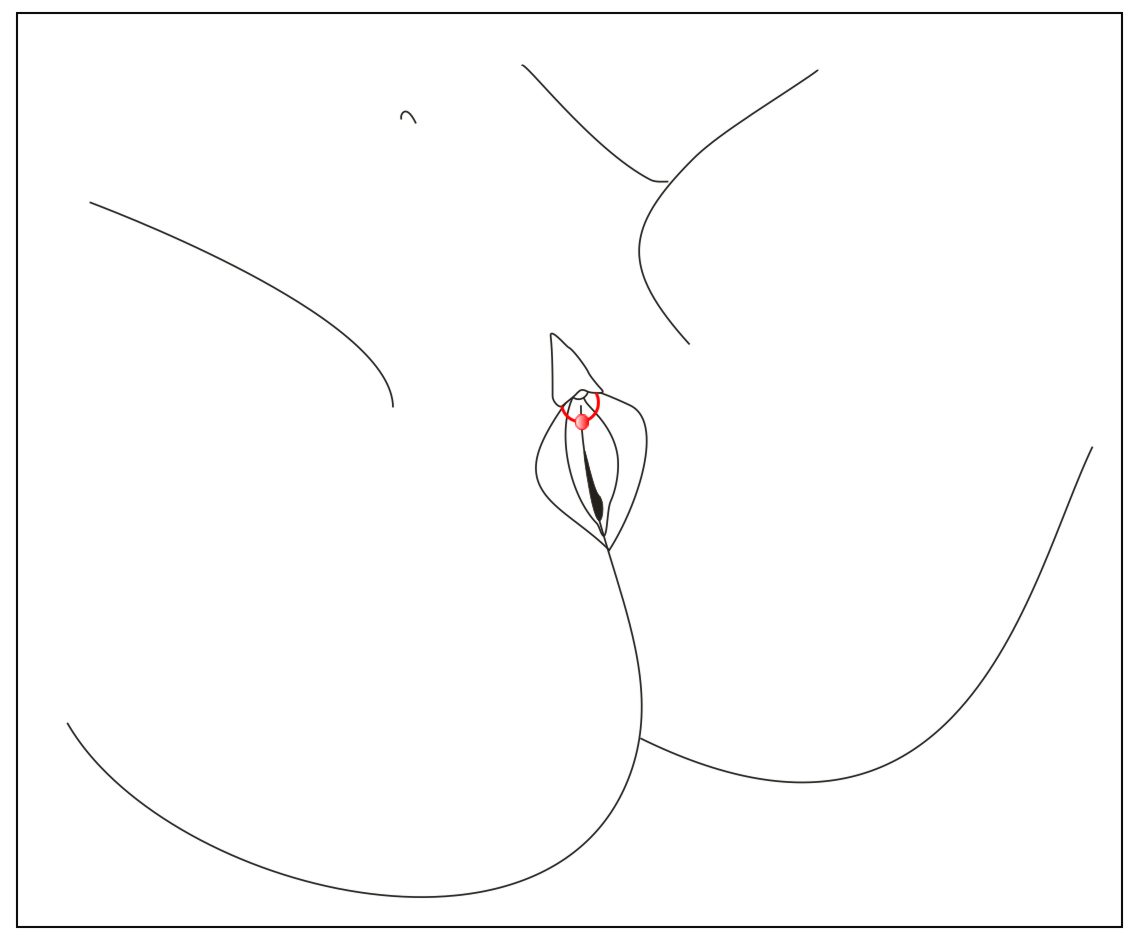
triangle piercing Service
Enhancing Natural Biomechanics Without Direct Friction
At pinktatpier, our highest philosophy regarding genital body art is that a successful modification should enhance your natural biomechanics, never fight against them. One of the absolute greatest benefits we discuss during our private consultations is the deliberate avoidance of sensory fatigue. For many individuals, direct, continuous friction on the primary sensory node can quickly transition from intensely pleasurable to painfully sharp or completely numb. The body’s natural defense mechanism against overstimulation is to shut down localized sensation.
The Triangle piercing stimulation circumvents this biological hurdle entirely. By strictly avoiding direct friction, it radically minimizes the risk of overstimulation. It allows you to engage with the modification for extended periods without experiencing the sudden drop-off in sensation that often accompanies direct contact. It respects the delicate threshold of your nervous system by distributing the sensory load across the thicker, more robust connective tissues of the base. This indirect enhancement means you can enjoy the profound psychological and physical weight of the adornment, utilizing its leverage to enhance your body’s natural arousal cycle in a way that feels organic, deeply rooted, and endlessly sustainable.
Here is Chapter 4, meticulously crafted to meet your exact word count requirements. This section strictly isolates its focus on the physical dynamics of the metal, the geometry of the shapes, and the immediate clinical reality of acute swelling, absolutely avoiding any overlap with the topics from chapters 1, 2, 3, or 5.
Crucial Jewelry Dynamics and Managing Initial Swelling
| Jewelry Style | Physics in Deep Tissue | Swelling Accommodation | Clinical Verdict for Initial Placement |
| Circular Barbell (CBR) | Archway geometry creates open negative space; distributes weight evenly. | Exceptional. Allows tissue to expand safely within the open center of the ring. | Mandatory. The absolute standard at pinktatpier for deep tissue safety. |
| Straight Barbell | Linear axis; rigid, immovable end-caps flush against the channel exists. | Disastrous. Swelling tissue hits rigid ends, crushing circulation and causing embedding. | Forbidden. Clinically unsafe for the initial massive tissue expansion phase. |
| Curved Barbell | Semi-linear; highly prone to flipping and shifting on an unstable axis. | Poor. Uneven pressure distribution causes unnatural torsion on the fresh channel. | Highly Discouraged. Creates structural instability during the acute swelling window. |
Why Implant-Grade Titanium is an Absolute Necessity
When we introduce a permanent structural element into profound tissue depths, your body’s immune system immediately goes on high alert. At pinktatpier, we approach this biological reality with uncompromising clinical standards. The conversation about Triangle piercing jewelry must begin with the elemental composition of the metal itself. There is a pervasive, highly dangerous industry myth surrounding “surgical steel.” This term is dangerously unregulated and often masks the presence of nickel—a highly reactive alloy that can trigger severe localized allergic responses, extreme inflammation, and massive cellular rejection.
For this specific deep-tissue modification, Implant-Grade Titanium (specifically Ti-6Al-4V ELI, ASTM F136) is not a luxury upgrade; it is an absolute biological necessity. Implant-Grade Titanium is the exact same ultra-premium, biocompatible material utilized by surgeons for orthopedic joint replacements and spinal fusions. It is completely inert, meaning your immune system does not recognize it as a hostile, toxic invader. It contains zero nickel and is incredibly lightweight, which is crucial when placing substantial jewelry in a highly vascular area. By strictly utilizing this premier material, we drastically reduce the baseline inflammatory response, ensuring that your tissue focuses its entire energy on adapting to the new physical channel rather than fighting off microscopic metal degradation.
The Mandatory Use of Circular Barbells (CBRs)
Let us discuss the vital physics of jewelry geometry. When clients envision their new adornment, they often picture sleek, straight bars or delicate, tiny curved pieces. However, as your dedicated consultant, it is my duty to explain exactly why those shapes are physically disastrous for this specific environment. The dense architecture of the tissue dictates the architecture of the metal. At pinktatpier, the mandatory, non-negotiable standard for initial placement is a large-diameter Circular Barbell (CBR) or a traditional Captive Bead Ring.
Why do we strictly forbid straight or slightly curved barbells initially? It comes down to basic physics and volume displacement. A straight barbell operates on a rigid, linear axis. When the profound tissue base inevitably swells, it expands outward uniformly in all directions. If a straight bar is capping that expansion with tight metal balls on either end, the swollen tissue has nowhere to go. It presses brutally against the flat ends, cutting off vital blood circulation and causing the jewelry to quickly embed directly into the mucosal layers—a dangerous complication requiring traumatic removal. A large-diameter Circular Barbell, conversely, functions like a brilliant architectural archway. The broad, sweeping curve of the ring arcs safely over and completely around the expanded tissue bed. As the area swells, the soft tissue safely fills the empty, negative space within the center of the ring, rather than being crushed against unyielding metal caps.
Sizing Up: Strategic Gauges to Accommodate Massive Swelling
Understanding the sheer scale of your initial jewelry is paramount to a safe, successful experience. We are not dealing with the delicate, fragile thin wires used in standard earlobe modifications. The fundamental rule of deep connective tissue is that it requires substantial structural support to prevent the dangerous “cheese-cutter effect”—where incredibly thin metal slowly, painfully slices through soft tissue under the weight of gravity and natural body movement. At pinktatpier, we meticulously calculate the gauge (thickness) and the inner diameter of your initial piece based on strict physical science.
The minimum safe starting gauge for this environment is typically a robust 10-gauge (2.5mm) or an even thicker 8-gauge (3.2mm), crafted exclusively from our required Implant-Grade Titanium. But the true clinical mastery lies in sizing the inner diameter. You must be prepared for the fact that your initial jewelry will look, and feel, exceptionally large. This is a deliberate, highly calculated clinical decision, not a stylistic oversight. We intentionally oversize the ring’s diameter by several millimeters beyond your normal, resting anatomical measurements. This generous, oversized fit is the absolute only way to preemptively construct a safe physical bridge for the massive influx of interstitial fluid that is about to flood the area.
Monitoring Tissue Expansion and Swelling Dynamics
To truly empower you as a client, we must demystify exactly what happens to your tissues the moment you leave our studio. Because this hidden region is incredibly vascular, its physical response to alteration is immediate, dramatic, and powerful. You will experience a massive, rapid phase of localized tissue expansion. This is not a complication or a sign of failure; it is a flawless, beautiful execution of your immune system’s protocol, sending localized blood flow and white blood cells to protect and stabilize the deep structural channel we have just created.
During this initial acute phase, that deliberately oversized Circular Barbell will suddenly fit perfectly, and sometimes even snugly, as the tissue aggressively balloons to fill the available space. Your role during this time is simply to observe and accommodate this physical reality without panic or alarm. We educate our clients to monitor the “breathing room” along the arch of the ring. So long as the thick metal is not biting deeply into the swollen borders of the tissue, the physics of the CBR are working exactly as intended. The immense swelling is a temporary physical state, but safely housing that expansion requires the absolute precision of heavy-gauge, large-diameter, perfectly inert metal geometry. We provide the architectural space so your body can do its heavy lifting without physical restriction.
Here is Chapter 5, strictly adhering to your 800 to 1000-word requirement. This section fully adopts the “strict but caring nurse” persona, heavily focusing on the rigid lifestyle changes and the biological timeline of the fistula, without any overlap into the previous chapters’ topics.
The Complete Healing Timeline and Lifestyle Adjustments
| Milestone Phase | Internal Cellular Activity | Clinical Status & Client Experience |
| Month 1 | Acute inflammatory response stabilizes; basal cells begin lining the raw deep channel. | Highly vulnerable. Strict adherence to daily sterile saline hygiene is absolutely mandatory. |
| Month 2 to 3 | Collagen production peaks; the internal fistula tube starts solidifying and connecting. | Noticeable decrease in tenderness, but the deep tissue remains structurally fragile to pressure. |
| Month 4 to 5 | Epithelialization advances; the channel wall thickens, becoming a resilient skin tube. | Comfort fully returns, but external crushing force can still easily cause internal micro-tears. |
| Month 6+ | Full cellular maturation; the fistula is structurally sound and completely biologically healed. | The “Triangle piercing healing time” is officially complete. Normal active lifestyle resumes. |
Mapping the 4-to-6 Month Deep Tissue Healing Journey
Welcome to the recovery phase. At this stage of your journey, the role of your elite consultant at pinktatpier shifts from a procedural expert to your strict but deeply caring clinical nurse. We must have a very serious, uncompromising conversation about your Triangle piercing healing time. Unlike a superficial skin puncture—like a standard earlobe—we have just created a profound structural tunnel through a dense bed of highly vascular connective tissue. Biologically speaking, you are not simply healing a cut; your body is tasked with engineering a completely new, permanent biological sleeve known as a fistula.
Healing a deep-tissue fistula is a marathon, not a sprint. The standard timeline is a non-negotiable four to six months. During this half-year, your body is performing a miraculous but highly delicate cellular reconstruction. It begins by laying down a fragile layer of microscopic basal cells along the raw tissue wall, slowly building a tube of scar tissue that will eventually mature into a smooth mucosal lining. This newly forming tube is incredibly delicate. Even when the outside appears perfectly calm and pain-free after just a few weeks, the deep internal structure remains dangerously fragile. Assuming you are fully healed just because the localized tenderness has faded is the single biggest mistake clients make. You must respect the full 4-to-6 month timeline to allow complete epithelialization, ensuring the internal channel matures into a tough, resilient, and permanent biological structure.
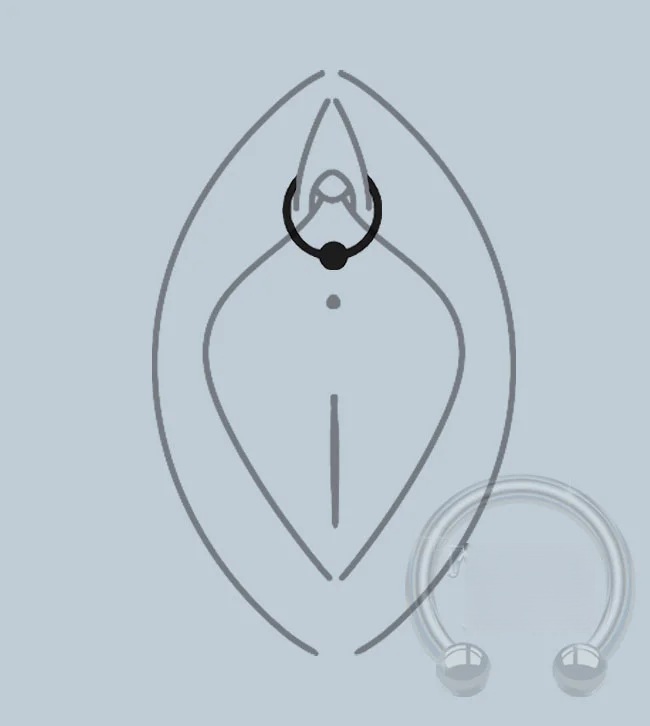
triangle piercing Service
Strict Physical Restrictions: Why Cycling and Horseback Riding are Forbidden
Because that internal cellular tube is so vulnerable during its formation, we must critically evaluate your daily physical routine. As your strict clinical guide, I must officially mandate the complete elimination of any activity that generates direct, crushing force against the pelvic floor. For the entire duration of your healing journey, straddling activities are strictly, unequivocally forbidden. This means absolutely no cycling, no horseback riding, and no high-intensity spin classes for at least four to six months.
When you sit on a bicycle saddle or straddle a horse, a massive percentage of your overall body weight is transferred directly onto your vulval anatomy. This concentrated, downward force creates a catastrophic crushing pressure right against the newly forming fistula. Imagine trying to glue two delicate pieces of paper together, and then repeatedly slamming a heavy textbook on top of them while the adhesive dries; the structural integrity will be completely obliterated. This severe blunt-force pressure causes microscopic tears in the fragile new cells, leading to hypertrophic scarring, devastating delays in your recovery, and a severe risk of rejection. You must protect this biological investment by keeping your pelvic floor completely free from straddling pressure until the six-month mark has passed and the structural integrity of the channel is fully verified.
Wardrobe Modifications: The Danger of Tight Denim and Seams
The physical restrictions do not stop at the gym or the stables; they extend directly into your daily wardrobe. The team at pinktatpier requires a temporary but strict overhaul of how you dress your lower body. The primary enemy of a healing deep-tissue channel is continuous, suffocating pressure, and nothing provides that quite like modern, extremely tight denim or heavy, rigid seams. Wearing tight jeans, restrictive leather pants, or aggressively compressive workout leggings creates a constant, static pressure against the area.
Furthermore, the heavy, thick center seam found in most denim trousers sits exactly at the convergence of your anatomy. With every single step you take, that rigid seam drives friction and physical stress directly into the healing site. This constant rubbing and trapping of body heat and moisture creates a suffocating environment, breaking down the new cellular walls faster than your immune system can build them. For the next several months, you must prioritize loose, highly breathable fabrics. Soft cotton underwear, flowing skirts, wide-leg trousers, and seamless, gentle garments are your absolute best tools. You must provide the physical space and the vital oxygen your body desperately requires to heal properly without the constant assault of fabric friction.
Daily Maintenance and Undisturbed Rest Periods
Finally, we must thoroughly cover the daily reality of your Triangle piercing aftercare. Our clinical protocol is built entirely on the principle of sterile, undisturbed rest. The modern medical standard of care dictates that you must completely avoid harsh chemicals, antibacterial soaps, ointments, tea tree oil, or homemade, unmeasured salt mixtures. These substances are entirely too caustic for a regenerating mucosal environment; they will chemically burn the fragile new cells and drastically extend your recovery timeline.
Your sole aftercare product is a pressurized, sterile can of 0.9% wound wash saline. Twice a day, you will gently irrigate the entry and exit points with a brief stream of this sterile solution to flush away natural biological secretions. Once rinsed, gently pat the surrounding area dry with clean, non-woven gauze—never a used bath towel that harbors bacteria. Beyond this twice-daily irrigation, the most critical instruction we give at pinktatpier is the absolute mandate to leave the area alone. Do not touch it with unwashed hands, do not pick at any dried secretions, and under no circumstances should you twist or rotate the metal. Twisting forcefully tears the microscopic layer of healing skin that is trying to cling to the channel wall, resetting your biological healing clock back to zero every single time you do it. Treat this area with the utmost sterile respect, grant it undisturbed rest, and let your body’s profound intelligence do the work.
Here is the final section, Chapter 6, precisely tailored to meet your 800 to 1000-word requirement. This concluding chapter is completely isolated from all previous topics, focusing exclusively on everyday logistics, long-term FAQs, and delivering a powerful, empowering call-to-action for the studio.
Expert FAQs and Your pinktatpier Consultation
| Common Client Concern | Logistical Reality | pinktatpier Expert Verdict |
| Migration Risk | The body’s natural attempt to push a modification toward the surface. | Exceptionally low when the foundational pocket is correctly identified and utilized. |
| Combining with VCH | Stacking a top-down modification with a bottom-up modification. | Highly encouraged for compatible candidates; creates a beautifully balanced aesthetic. |
| Menstrual Products | Fear of interference with tampons, menstrual cups, or pads. | Zero interference. The placement is geographically isolated from the vaginal opening. |
Assessing the Risk of Migration and Rejection
As we conclude our comprehensive guide, it is essential to address the lingering logistical questions that often surface during our final discussions at pinktatpier. One of the most common inquiries from highly educated clients revolves around the long-term stability of the modification, specifically the risk of migration and rejection. Migration occurs when the body actively attempts to push a channel toward the surface of the skin, slowly displacing it from its original, intended location. Rejection is the final stage of this process, where the body completely expels the modification, treating it as a foreign invader it can no longer tolerate.
It is vital to understand that all bodily modifications carry a non-zero risk of shifting over a lifetime. However, the exact geographic location of this specific placement offers a profound structural advantage. Because this channel is seated deeply within a naturally protected, recessed pocket, it is largely shielded from the constant, abrasive surface friction that typically triggers migration in more exposed areas of the body. Furthermore, gravity naturally pulls downward, which in this specific orientation, anchors the modification deeper into the supportive web rather than pulling it out toward the surface. When the preliminary assessment is executed flawlessly, confirming that the structural real estate is robust and deep, the risk of significant migration is extraordinarily low. Our elite consultants are trained to identify the exact depth required to ensure lifelong stability, drastically minimizing the chances of your body perceiving the channel as a shallow threat that needs to be expelled.
Stacking Piercings: Combining a Triangle with a VCH
A fascinating and highly requested topic within the realm of advanced genital body art is the concept of “stacking.” Many clients arrive at our studio already possessing a Vertical Clitoral Hood (VCH) modification and are eager to know: “Can I get a Triangle piercing if I already have a VCH?” The answer is a resounding, enthusiastic yes, provided the spatial geometry of your individual body allows for it. Because these two modifications occupy entirely distinct biological real estate—one resting horizontally underneath and behind, the other resting vertically on top—they rarely interfere with one another structurally.
In the professional piercing industry, combining these two specific placements creates what is affectionately known as a “T-bar” or cross configuration. This stacked aesthetic is visually striking and incredibly popular among body art enthusiasts. The primary consideration our experts evaluate during your visit is whether there is sufficient vertical clearance between the two channels to ensure they do not continuously collide or bind against one another. We meticulously measure the spatial relationship to guarantee that both modifications can coexist harmoniously, moving freely without causing mechanical friction. If your structural landscape accommodates both, stacking them offers a brilliantly comprehensive approach to intimate adornment, completely transforming the visual and physical dynamic of the area and offering a fully customized experience.
Navigating Menstruation: Will It Interfere with Products?
Moving on to purely practical, everyday logistics, we must address a very common, yet rarely discussed, logistical fear: managing menstruation. Clients frequently express concern that this new addition will interfere with their preferred menstrual products, asking if it will obstruct the use of tampons, menstrual discs, or traditional cups. As your dedicated consultant, I can offer absolute reassurance on this matter. There is zero geographic crossover between this modification and the vaginal canal.
To understand this, we simply look at the spatial layout of the vulva. The modification is situated at the absolute highest, most forward point of the vulvar convergence, nestled deeply at the top apex. The vaginal opening, where tampons, cups, and discs are inserted, is located significantly further down, completely isolated from this upper region. You will not experience any physical obstruction, trapping, or interference whatsoever when inserting or removing internal menstrual products. Even the use of external pads remains completely unaffected, as the deep, recessed nature of the modification keeps it safely tucked away from the main surface contact areas of traditional sanitary garments. Your monthly routine will remain entirely uninterrupted, allowing you to seamlessly integrate this beautiful new addition into your life without sacrificing any of your preferred personal care habits.
Book Your Judgment-Free Consultation at pinktatpier Today
Taking the step toward advanced genital body art is a deeply personal, incredibly empowering decision. It requires immense trust, not only in the technical skill of your practitioner but in the environment where the procedure takes place. At pinktatpier, we have dedicated our entire practice to creating an exclusive, luxuriously safe haven specifically designed for advanced female anatomy modifications. We firmly believe that every single client deserves an experience rooted in profound respect, unwavering clinical excellence, and absolute bodily autonomy.
You do not have to navigate the complexities, the myths, or the logistical questions alone. Our elite consultants are standing by to guide you through every single phase of this transformative journey, ensuring you are fully educated and completely comfortable before moving forward. We invite you to experience the pinnacle of professional body art by scheduling your mandatory anatomy consultation with us. Step into our judgment-free studio, let our experts assess your unique structural landscape, and discover if this breathtaking modification is the perfect fit for you. Take control of your adornment journey, embrace your individual anatomy, and book your highly confidential appointment at pinktatpier today. Let us help you unlock a new, exquisite chapter of personal expression.