
The challenges of tattoos on palms and feet: A London Specialist’s Guide

In the vast and imaginative world of body art, certain placements capture the imagination with their unique and rebellious spirit. The palm of the hand, the canvas for our every touch and gesture; the sole of the foot, the foundation of our every step. Tattoos in these locations are the ultimate personal statement—often hidden, deeply intimate, and symbolic of a profound commitment to the art form. The allure is undeniable, and the images of freshly done, intricate designs are visually stunning, driving a growing curiosity for tattoos on palms and feet London.
However, as London’s best specialists in the craft of tattooing, our first and most sacred duty is to the long-term health of your skin and the lasting beauty of your art. Our professional integrity is measured not just by the tattoos we create, but by the ones we advise against. When a client comes into our London studio, filled with excitement about a palm or foot tattoo, our first action is not to pick up a machine, but to sit down for a frank, compassionate, and deeply educational conversation. We recently had a consultation with a young graphic designer who brought in a beautiful, intricate geometric design he wanted tattooed on the palm of his hand. He understood it would be painful, but he was unprepared for the biological realities.
We spent thirty minutes with him, not discouraging his vision, but illuminating the path ahead. We explained the unique, resilient nature of palmar skin, using analogies of leather versus parchment. We showed him healed examples—not the fresh, perfect photos from Instagram, but the worn, faded, and patchy reality of these tattoos a year or two down the line. We discussed the near-impossible healing journey and the inevitability of multiple, costly touch-ups. He left our studio that day not with an appointment for a palm tattoo, but with a new plan to place his beautiful design on his inner forearm, where it would remain crisp, clear, and beautiful for a lifetime. He was grateful not for a service, but for the honest expertise that protected his investment and his art. This guide is that conversation, expanded for you. It is the unvarnished, expert truth about the profound challenges of tattoos on the palms and feet.
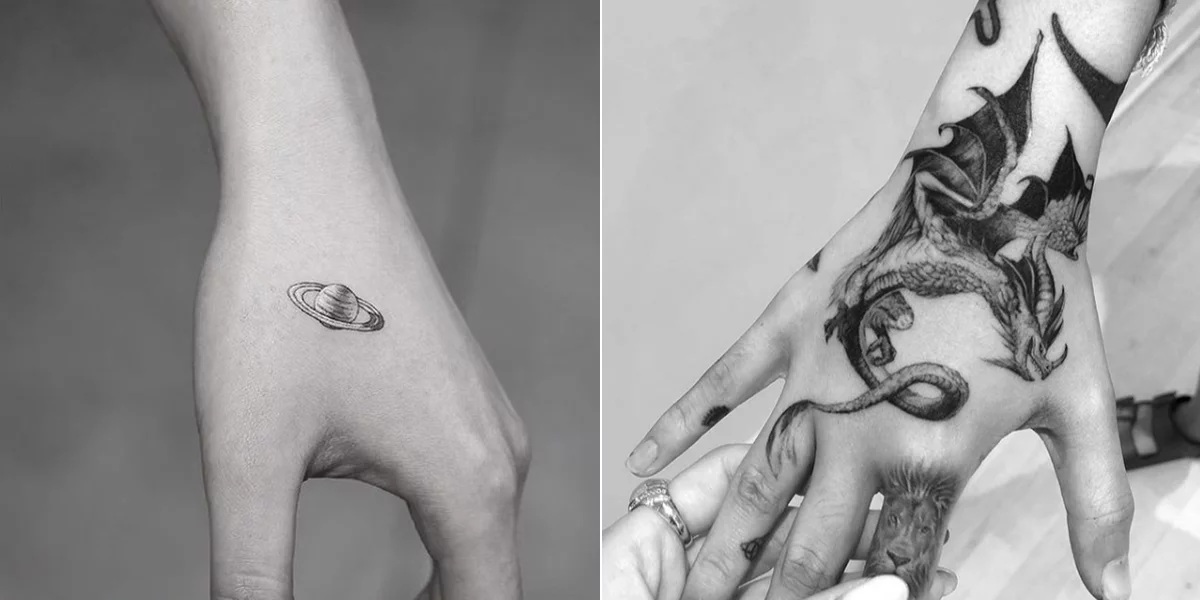
tattoos on palms and feet
The Fundamental Problem: Skin Unlike Any Other on Your Body
To understand why these tattoos fail, you must first understand the canvas itself. The skin on the palms of your hands and the soles of your feet—known as glabrous skin—is not the same as the skin on your arm, back, or leg. It is a biological marvel of engineering, designed for one purpose: to withstand a lifetime of extreme, relentless wear and tear. It is a shield, and it does not take kindly to being decorated.
The Fortress of the Stratum Corneum: A Tattooist’s Greatest Challenge
The outermost layer of your skin is called the epidermis, and its own outermost layer is the stratum corneum. On your forearm, this layer is relatively thin. On your palms and soles, it is a fortress. It is a massively thick, dense layer of dead skin cells, compacted to form a durable, protective surface akin to natural leather. This presents two immense problems for a tattoo artist. Firstly, the artist must penetrate this incredibly thick and tough layer to deposit ink into the stable dermis below. This requires a different machine setup, a different hand speed, and an intuitive feel for the tissue that only years of experience can provide. The line between depositing the ink deep enough to stay, and going too deep, causing a catastrophic “blowout,” is terrifyingly fine. Secondly, even if the ink is placed perfectly, it is still viewed through this much thicker, semi-opaque layer of skin, which can immediately make the tattoo appear less vibrant and crisp than it would on thinner skin.
The Engine of Regeneration: A Constantly Renewing Canvas
The second, and perhaps most critical, biological challenge is the rate of regeneration. Your body is programmed to constantly renew the skin on your hands and feet because it knows they are high-use areas. The cell turnover in the epidermis of your palms and soles is dramatically faster than almost anywhere else on your body. Think of it like a river that is constantly flowing faster at these points. While the tattoo ink is placed in the deeper dermis, the rapid shedding and regeneration of the thick epidermal layers above it has a profound effect. Over time, as layers of skin are shed, they can take microscopic particles of ink with them. This constant, accelerated process means the tattoo will inevitably fade, blur, and lose its integrity at a rate that is shocking to those who are unprepared for it. A tattoo that looks bold and black on day one can look like a soft grey, decade-old ghost of a design within a single year. This is a crucial reality for anyone considering tattoos on palms and feet London.
A Hostile Environment: The War Against Friction and Pressure
If the skin itself is the first challenge, the environment it lives in is the second. A healing tattoo craves a calm, clean, and friction-free environment to thrive. The palms and soles exist in the exact opposite of this ideal. They are in a perpetual warzone of friction, pressure, and contamination.
The Hand’s Daily Labour: A Life of Constant Abrasion
Consider, in detail, what your hands do in a single 24-hour period. You wake up and grip your bedsheets. You hold a toothbrush, a coffee mug, a steering wheel, or the handrail on the Tube. You type on a keyboard, use a mouse, and scroll on your phone. You put your hands in your pockets. You wash your hands multiple times with soap and water. You prepare food. You carry bags. Every single one of these actions involves friction, pressure, and abrasion. For a healing tattoo, this is torture. For a healed tattoo, this is the equivalent of taking a piece of fine-grit sandpaper to it, every single day, for the rest of your life. The constant wear and tear physically abrades the layers of skin containing the tattoo, accelerating the fading process that the body’s natural regeneration already started.
The Foot’s Unseen Battle: The Pressure Cooker Effect
The sole of the foot lives in an even more hostile environment. For most of the day, it is sealed inside a sock and shoe, creating a warm, dark, and moist “pressure cooker.” This is a perfect breeding ground for bacteria, which dramatically increases the risk of a serious infection in a fresh tattoo. But the primary enemy is pressure. With every single step you take, the entire weight of your body is focused onto the skin of your soles. This immense, repetitive pressure compresses the tissue, stresses the healing tattoo, and makes a proper, calm healing process a near-impossibility. The friction from your sock rubbing against the skin with every movement of your foot inside your shoe adds another layer of constant, damaging abrasion. It is an environment fundamentally incompatible with the needs of a healing piece of art.
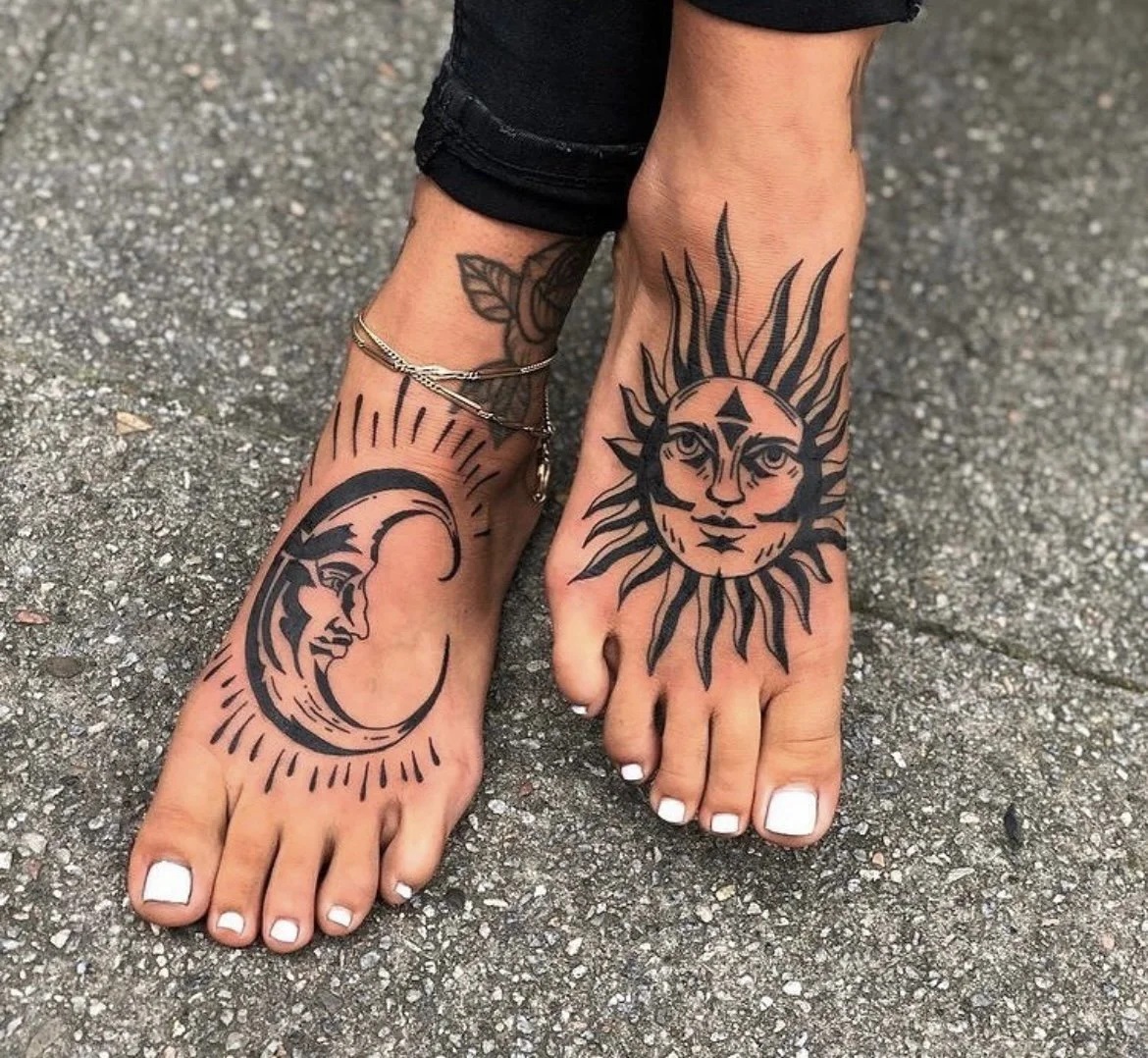
tattoos on palms and feet
The Healing Journey: A Near-Impossible Commitment of Care
The initial healing period for a tattoo, typically 2-4 weeks, is the most critical phase for locking in the ink and ensuring a good result. For tattoos on palms and feet London, this period is not just difficult; it is a logistical and hygienic nightmare that is often doomed from the start.
The Paradox of Palm Healing: The Impossible Balance of Hygiene vs. Health
A healing tattoo needs to be kept clean, but it also needs to be kept protected and properly moisturised with a breathable barrier of ointment. For a palm, these two needs are in direct conflict. For basic hygiene, you must wash your hands multiple times a day, especially in a city like London. But every time you wash, you are stripping away the protective ointment, and the soap itself can be harsh and drying to the delicate, healing skin. You are then faced with the impracticality of reapplying ointment and trying not to touch anything for the next hour. It becomes a frustrating, unwinnable cycle that often leads to a tattoo that is either not clean enough, or too dry and cracked to heal properly.
The Peril of Foot Healing: The Bacterial Gauntlet and the Pain of Existence
Healing a foot tattoo is a profound commitment that most people cannot realistically make. To give it the best chance, you would need to stay completely off that foot for at least two weeks. This is a level of incapacitation that is simply not feasible for most individuals with jobs, families, or daily responsibilities. The alternative is to walk on it, subjecting it to constant pressure and friction, and sealing it in a sweaty, bacteria-rich environment. This not only guarantees a poor artistic result with massive ink loss, but it also carries a very real and serious risk of a nasty infection that could have significant health consequences beyond just a bad tattoo.
The Artist’s Dilemma: Technical Skill vs. Predictable Failure
From a professional tattoo artist’s perspective, these placements are a source of both technical challenge and ethical dilemma.
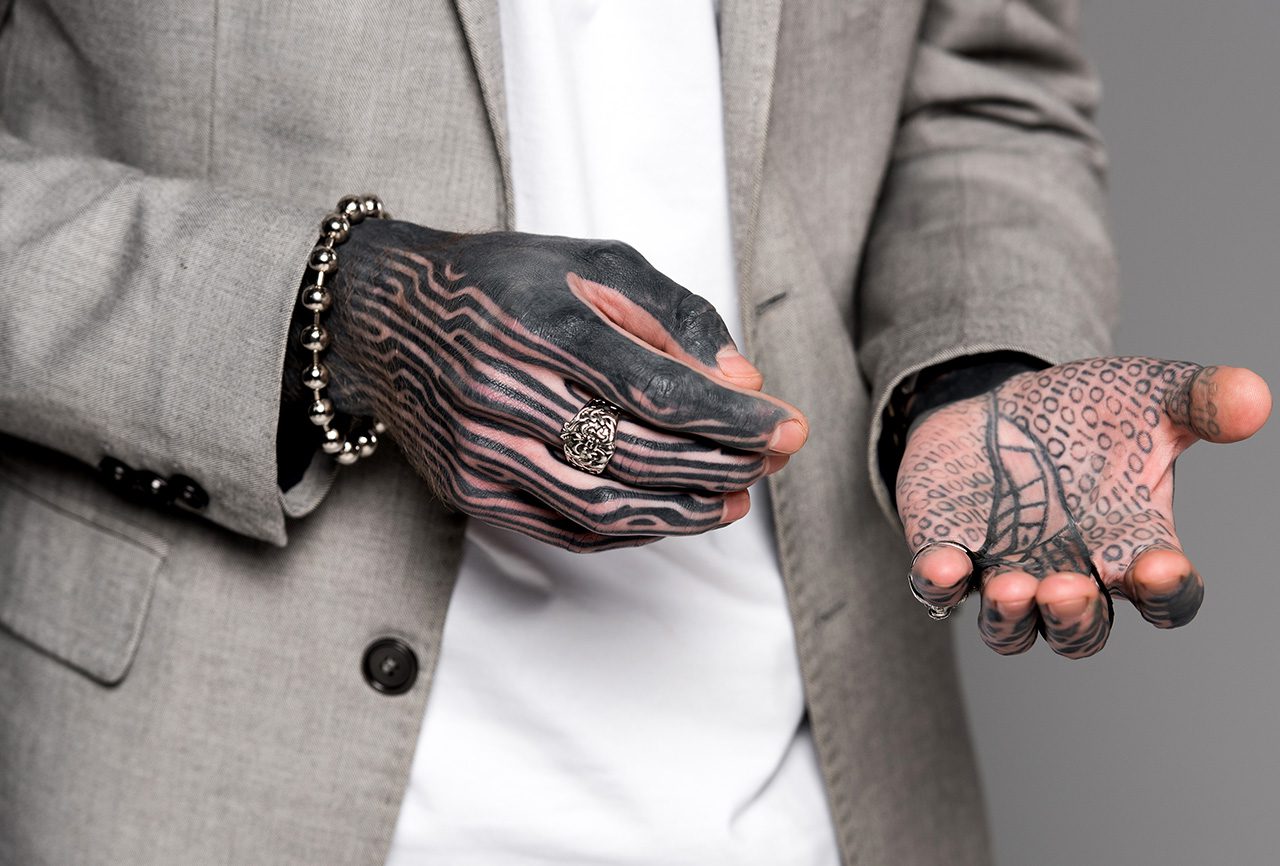
tattoos on palms and feet
The Pain Factor: A True Test of Endurance
We are always honest with our clients about pain, and the truth is that the palms and soles are two of the most intensely painful places on the body to be tattooed. The sheer density of nerve endings in these areas is immense. While our specialists are trained to be swift and efficient to minimise time under the needle, the client must be prepared for a very high level of pain during the procedure.
The Tightrope of Technique and the Permanent Risk of “Blowout”
The unique, thick, and calloused nature of the skin on the palms and feet makes it incredibly difficult for an artist to judge the correct needle depth. It’s a technical tightrope walk. If the needle is too shallow, the ink will be deposited in the rapidly shedding epidermis and will simply fall out within weeks. If the needle goes too deep, it penetrates past the stable dermis layer and into the subcutaneous fat below. Ink in this fatty layer does not hold its shape; it spreads out over time in an uncontrolled, blurry pattern known as a “blowout.” This turns what should be a crisp line into a permanent, bruise-like smudge. It is an irreversible mistake, and the risk of it happening is significantly higher on palms and feet than anywhere else on the body.
Table: A Realistic Comparison of Tattoo Longevity by Placement
| Feature | Inner Forearm (Ideal Placement) | Palm of Hand / Sole of Foot (Challenging Placement) |
| Skin Type | Thin, stable epidermis; low friction. | Extremely thick, rapidly regenerating epidermis; high friction. |
| Healing Process | Straightforward, easy to keep clean and protected. | Extremely difficult, constant friction, high risk of infection (foot). |
| Pain Level | Low to moderate. | Very High. |
| Risk of Blowout | Very low with a skilled artist. | High, due to the difficulty of judging needle depth. |
| Longevity & Fading | Will last a lifetime with good care, with minimal fading over decades. | Guaranteed to fade significantly and rapidly. Will likely experience major ink loss (“fallout”) during healing. |
| Touch-Up Requirement | Rarely needs touch-ups unless damaged. | Almost always requires multiple, frequent, and paid touch-ups to maintain any semblance of the original design. |
The PinkTatPier Professional Stance: Honesty is Our Policy
As a studio whose reputation is built on creating high-quality, beautiful, and lasting works of art, we have a professional and ethical responsibility to be transparent about the predictably poor outcome of tattoos on palms and feet London. While the final decision always rests with the client, we would not be London’s best specialists if we did not provide our honest, expert guidance.
We will always perform these tattoos for a client who demonstrates a complete and total understanding of all the risks, who accepts the certainty of fading and imperfection, and who is willing to sign a specific waiver acknowledging this. However, in almost every case, we find that a collaborative conversation leads to a better solution. Our goal is to work with you to find a placement that honours your creative vision while guaranteeing a beautiful result that you will be proud to wear for the rest of your life.
Beautiful and Lasting Alternatives
If you love the idea of a hand or foot tattoo, we strongly recommend considering placements with much better longevity, such as:
- The top of the hand or the tops of the fingers.
- The top of the foot or the ankle area.These areas have more stable skin and will hold a beautiful, detailed tattoo for a lifetime.
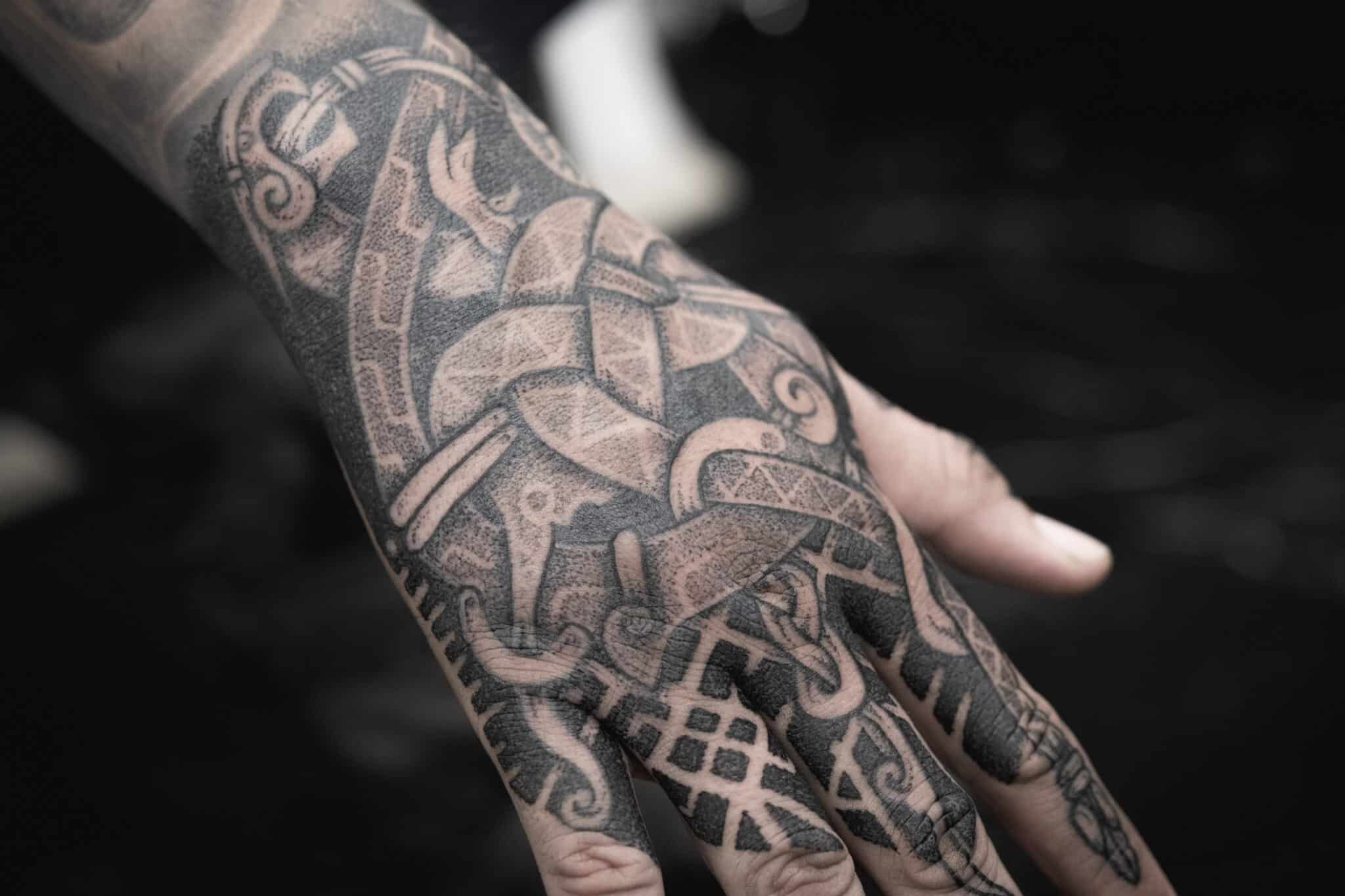
tattoos on palms and feet
Your 5 Most Important Questions Answered (FAQ)
1. But I saw an amazing, perfect palm tattoo on Instagram. Why can’t mine look like that?
What you are almost certainly seeing is a photograph of a tattoo that is either freshly done (within minutes or hours of completion) or, at most, a few days old. In this state, the ink is still packed into the very top layers of the skin, and it looks incredibly bold and crisp. These photos do not represent the healed reality. The same tattoo will look radically different and far more faded after one month, and often unrecognisable after one year.
2. Can’t a really good, experienced artist make the ink stay in?
While a master artist has a better chance of packing the ink correctly and minimising the risk of blowout, they cannot defeat human biology. No amount of skill can stop your skin from regenerating at an accelerated rate, nor can it prevent the daily friction that wears the tattoo away. Even the world’s best artists cannot guarantee a lasting result on these placements.
3. What about touch-ups? Can’t I just get it re-done every year?
You can, but you must understand what that entails. Each touch-up is essentially re-tattooing the area, which involves the same cost, pain, and difficult healing process each time. Furthermore, repeatedly tattooing the same area builds up scar tissue, which can make it progressively harder for the skin to hold ink at all, and can alter the texture of your skin permanently.
4. Is there any part of the hand or foot that is okay to tattoo?
Yes, absolutely! The tops of the hands and the tops of the feet are excellent places for tattoos. The skin is more stable, less calloused, and experiences far less direct friction. Ankle tattoos, wrist tattoos, and even tattoos on the tops of the fingers (while still prone to some fading compared to an arm) hold up infinitely better than a palm or sole tattoo.
5. So, should I just never get one?
That is a personal decision. Our professional advice is to choose a placement that will last. However, if you are a person who is deeply in love with the idea of a palm or foot tattoo and you are willing to embrace its ephemeral, imperfect, and faded nature as part of its character, then it is a choice you can make. You must simply go into it with a complete and total acceptance of the challenges and the predictably imperfect outcome. The trend for tattoos on palms and feet London may be visible online, but the healed reality is often hidden.
Conclusion: A Tattoo is Forever. Choose a Placement That Is, Too.
A tattoo is a permanent investment in a piece of art for your body. The success of that investment is measured in decades, not days. While the aesthetic of tattoos on palms and feet London is undeniably unique, the biological reality of the skin and the relentless friction of daily life make them a poor canvas for lasting art. Our mission at PinkTatPier is to ensure that the beautiful design you fall in love with is one that will remain beautiful for a lifetime.
We invite you to book a consultation with one of our London specialists. Let’s talk about your vision, and let us use our expertise to help you find the perfect placement on your body where your art can truly thrive.