
The world of tattoo art is a universe vast and ever-expanding. While certain styles achieve widespread popularity, becoming the familiar language of contemporary body modification, there exists a deeper, richer strata of artistry that speaks to the connoisseur, the historian, and the individual seeking a connection to something truly unique and profound. This is the realm of Cultural & Specialty Styles. It is a world where tattoos are not merely decorative images, but are imbued with the weight of history, the complexity of intricate symbolism, or the challenging vision of avant-garde artistic movements. These are the styles that demand more from both the artist and the collector—more research, more respect, more technical mastery, and often, a deeper personal commitment. In a city like London, a global crossroads where ancient traditions meet cutting-edge innovation, the appreciation for these sophisticated genres is rapidly growing, creating a demand for artists who possess not just skill, but true specialist knowledge.
At midnightt, our private, appointment-only atelier is conceived as a sanctuary for exactly this level of artistry. We are not a high-volume street shop catering to fleeting trends; we are a curated collective of master artists, dedicated to the preservation, respectful interpretation, and innovative execution of the world’s most significant and technically demanding tattoo genres. We understand that choosing a piece from the realm of Cultural & Specialty Styles is a profound decision, often involving a deep connection to heritage or a passionate alignment with a niche artistic philosophy. This is your definitive guide to navigating this complex and rewarding world. We will explore the crucial distinction between cultural homage and avant-garde speciality, delve into the histories and aesthetics of key genres, and provide a transparent look into the meticulous, expert-led process that defines our practice at midnightt.
Defining the Categories: Understanding Cultural vs. Specialty
Before embarking on an exploration of specific genres, it is absolutely essential to establish a clear conceptual framework. The umbrella term Cultural & Specialty Styles encompasses two distinct but sometimes overlapping categories, each requiring a unique approach rooted in respect and expertise. Understanding this distinction is fundamental to appreciating the nuances of the art form and the responsibilities that come with choosing such a significant piece.
Cultural & Specialty Styles
The Essence of a “Cultural” Style: Heritage, Symbolism, and Respect
A cultural tattoo style is one that is deeply and inextricably rooted in the specific history, traditions, spiritual beliefs, and visual language of a particular culture or ethnic group. These are styles with ancient origins, often predating modern tattooing by centuries or even millennia. Their primary function, historically, was not purely aesthetic but deeply functional within the society—serving as markers of identity, genealogy, social status, spiritual protection, or rites of passage. The defining characteristics of a cultural style include:
- Deep Historical Roots: Their origin stretches back generations, often with a rich oral or written history documenting their significance (e.g., Japanese Irezumi, Polynesian Tatau).
- Specific, Coded Symbolism: The common motifs are not merely decorative; they form a complex visual lexicon where every element carries a specific, culturally understood meaning (e.g., the meaning of different spirals in Maori Tā Moko, or the symbolism of animals in traditional Japanese art).
- Emphasis on Tradition and Rules: These styles often adhere to a strict set of unwritten rules regarding composition, placement, and the appropriate use of motifs, passed down through generations of practitioners.
- The Crucial Need for Respectful Interpretation: Approaching these styles requires profound cultural sensitivity. An artist working in this realm must be more than a technician; they must be a dedicated student of the culture, committed to honouring the tradition and avoiding disrespectful appropriation. This often involves creating custom pieces inspired by the style’s visual language, rather than directly copying sacred or culturally specific designs, especially for clients outside of that heritage. This respectful approach is paramount for any studio offering Cultural & Specialty Styles.
The Nature of a “Specialty” Style: Niche Aesthetics and Technical Mastery
A specialty tattoo style, by contrast, is typically defined not by its cultural heritage, but by its unique aesthetic philosophy, its niche appeal, or its extreme technical demands. These styles are often more modern in origin, sometimes emerging from specific artistic movements or even from the singular vision of individual pioneering artists. Their defining characteristics include:
- Focus on a Unique Aesthetic: They possess a distinct and often unconventional look that sets them apart from more mainstream styles (e.g., the chaotic collage of Trash Polka, the dreamlike logic of Surrealism).
- Technical Specialisation: They often require an exceptionally high level of specific technical skill from the artist, demanding mastery in areas like hyperrealistic shading, flawless geometric precision, or unique colour application techniques.
- Artistic or Conceptual Depth: These styles often engage with specific artistic theories or philosophical concepts, appealing to clients who seek a tattoo that is intellectually stimulating as well as visually striking.
- Niche Appeal: While respected within the tattoo community, these styles often appeal to a more specific, connoisseur audience rather than the broad mainstream.
It is important to note that these categories can sometimes blur. For example, a style like Geometric Blackwork draws inspiration from ancient tribal patterns (cultural) but is executed with modern precision and often focuses on purely aesthetic or abstract concepts (specialty). The key distinction lies in the primary source of the style’s identity and the specific responsibilities it places upon the artist and client.
Exploring Key Cultural Styles: A Journey Through Heritage
Let us delve into some of the most significant and respected cultural genres within the vast landscape of Cultural & Specialty Styles. At midnightt, we are privileged to have artists who are dedicated students and masterful interpreters of these profound traditions.
Cultural & Specialty Styles
The Art of the Floating World: Japanese (Irezumi)
Representing one of the oldest, most complex, and culturally profound tattoo traditions in the world, the Japanese style, known as Irezumi, is far more than just an aesthetic choice; it is a deep immersion into centuries of Japanese history, mythology, folklore, and artistic discipline. Irezumi is not concerned with small, isolated images; its philosophy revolves around the creation of a unified, narrative bodysuit, a “second skin” of art that flows seamlessly with the wearer’s anatomy and tells an epic story, often taking hundreds of hours and many years to complete. Its origin lies deep within Japan, centuries old, evolving from punitive marks in the Edo period into a breathtaking form of clandestine art embraced by the lower classes as a symbol of rebellion and status, inextricably linked to the heroic narratives depicted in Ukiyo-e woodblock prints. The style’s key features are defined by large-scale pieces, meticulously planned compositions often covering the full back, arms, or legs. It employs strong outlines to define the forms and ensure longevity, alongside intensely vibrant colors packed solidly into the skin.
A defining characteristic is the powerful background, or gakubori, typically composed of stylised waves, clouds, or wind bars, which serves to unify the entire composition and make the central motifs stand out dramatically. The common motifs constitute a rich pantheon drawn from mythological and nature-based subjects, including powerful dragons (representing wisdom and benevolence), ascending koi fish (symbolising perseverance and transformation), courageous tigers (warding off evil), legendary samurais (embodying honour and bravery), ephemeral cherry blossoms (representing the transient nature of life), peonies (prosperity), and other potent symbols from Japanese folklore and nature. The overall vibe is deeply spiritual, profoundly symbolic, and inherently focused on complex storytelling, carrying an immense weight of history and cultural significance that demands respect. Consequently, the best placement is invariably on the large canvases of the body: the full back, complete arms (sleeves), and full legs (body suits), allowing the intricate narrative and flowing background to achieve their full, breathtaking impact. An authentic Irezumi piece is a lifelong commitment, a wearable masterpiece of cultural art, requiring a specialist artist with deep knowledge and respect for the tradition.
The Soul of the Streets: Chicano Style
Emerging from the resourcefulness and unique cultural context of Chicano artists within the California prison system in the 1970s, the Chicano style has evolved into one of the most sophisticated, emotionally resonant, and globally respected genres in modern tattooing. It is a visual language born from resilience, faith, and an unbreakable connection to Mexican-American identity. Its defining feature is the exclusive use of black and grey shading with smooth gradients, often executed with incredibly fine lines reminiscent of its single-needle “jailhouse” origins. This technique, influenced by intricate ballpoint pen drawings on handkerchiefs (paño art), allows for a level of softness, realism, and detail that gives the style its unique, soulful quality. The style is deeply rooted in Mexican-American culture, serving as a powerful narrative tool.
Its common motifs form a rich lexicon, including hauntingly beautiful portraits of women (often stylised Payasas or incorporating Day of the Dead elements, representing strength, beauty, life, and death), delicate roses (symbolising love and fragility), potent religious icons like ornate crosses, praying hands, and Our Lady of Guadalupe (reflecting the centrality of Catholic faith), and intricate, highly stylised script lettering bearing names, dates, or meaningful phrases. The resulting overall vibe is profoundly spiritual, deeply emotional, and undeniably cultural, telling stories of struggle, pride, faith, and family. Due to its narrative depth and technical finesse, the best placement options are often the larger canvases that allow for full compositions, such as the chest, arm (particularly full sleeves), and the expansive back. A true Chicano tattoo is more than art; it is a piece of living history, demanding an artist with both technical mastery and cultural understanding.
The Ancestral Lines: Tribal (Polynesian / Maori / Celtic)
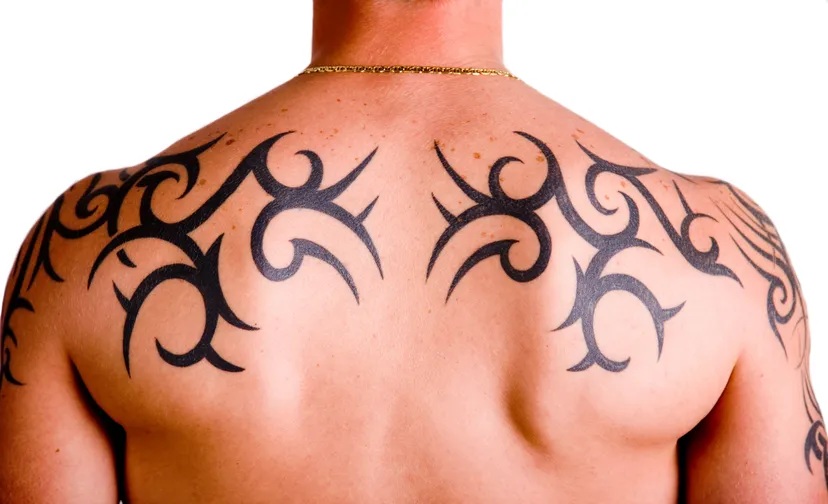
This broad category represents a modern connection to some of humanity’s most ancient forms of marking the body. The contemporary approach to the Tribal Tattoo Style moves beyond the generic trends of the 1990s, focusing instead on a respectful and researched interpretation of specific cultural traditions. The unifying feature across these diverse styles is the use of bold black patterns, repetitive lines, and symbolic motifs from ancient cultures. The origin is global, but the most influential styles in modern tattooing come from Polynesia, the Maori culture of New Zealand, and the Celtic regions of Europe. Polynesian tatau is characterised by its bold, geometric patterns (representing waves, shark teeth, warrior symbols, etc.) designed to flow with and accentuate the body’s musculature, telling stories of status and achievement.
Maori Tā Moko (and its respectful interpretation for non-Maori, kirituhi) is defined by its intricate, curvilinear designs, particularly the iconic spirals (koru), which form a unique visual map of a person’s ancestry and identity. Celtic tattooing is renowned for its complex, interwoven knots and zoomorphic patterns, symbols of eternity and interconnectedness. The overall vibe across these traditions is inherently cultural, spiritual, and powerful. The best placement is typically on areas that allow the patterns to wrap and flow organically, such as the shoulder, arm, chest, and leg. Approaching these styles requires immense respect; it is crucial to work with an artist who understands the cultural significance and avoids the appropriation of sacred or specific ancestral designs, instead creating a custom piece inspired by the tradition to tell the client’s own story.
Delving into Niche Specialty Styles: The Avant-Garde of Ink
Beyond the deep roots of cultural traditions, the world of Cultural & Specialty Styles also encompasses the cutting edge, the avant-garde genres born from modern artistic experimentation and a desire to push the boundaries of the medium. These styles often require an exceptional level of technical mastery and appeal to the collector seeking something truly unique and conceptually driven.
The Fusion of Flesh and Machine: Biomechanical / Bio-organic
This is a style born from the darkest corners of science fiction and the unsettling beauty of industrial decay, famously inspired by the nightmarish artwork of H.R. Giger (especially his designs for the Alien movie). Its core feature is the breathtaking, often disturbing fusion of human anatomy and mechanical parts or alien organic structures. The style creates the powerful illusion of the skin being peeled back to reveal a hidden reality beneath—complex gears meshing, hydraulic tubes pulsing, strange alien eyes blinking, or grotesque muscles intertwined with robotic details. The style branches into two main streams: Biomechanical,
which focuses on clearly artificial, machine-like components, and Bio-organic, which features more fluid, monstrous, and alien-like fusions of flesh and unknown technology. Both rely heavily on the techniques of hyperrealism, particularly flawless black and grey shading, to create a convincing three-dimensional illusion. The overall vibe is undeniably dark, sci-fi, and industrial, exploring themes of cybernetics, mutation, and the uncanny valley. Due to the need for designs to flow with the underlying structure of the body, the best placement options are typically the large, muscular canvases of the arms, legs, and back, allowing the art to appear integrated with the wearer’s form.
Cultural & Specialty Styles
The Landscape of Dreams: Surrealism
Drawing its origin directly from the revolutionary fine art movement of the early 20th century, the Surrealism tattoo style seeks to translate the illogical, bizarre, and profoundly psychological landscapes of the subconscious mind onto the skin. It is based on surrealist painters like Salvador Dalí and René Magritte, adopting their techniques of rendering realistic objects within impossible, dreamlike scenarios. The defining feature is this deliberate blending of reality and imagination in dreamlike ways. An artist might depict melting clocks draped over a landscape, misplaced eyes staring from unexpected places, distorted
faces hidden by mundane objects, or visual metaphors for abstract concepts like time or anxiety. Technically, the style often relies on the flawless execution of realism (either black and grey or colour) to make the unreal appear convincingly tangible. The overall vibe is inherently philosophical, mysterious, and deep, creating tattoos that are visual puzzles, inviting interpretation and contemplation. Because these pieces often depict full, complex scenes, the best placement tends to be on large, uninterrupted canvases like the back, chest, or thigh, allowing the dreamscape to fully unfold.
The Controlled Chaos: Trash Polka
A unique and highly specific genre with a definitive origin in Würzburg, Germany, created by Volko Merschky & Simone Pfaff, the Trash Polka style is a spectacular collision of opposites. It is a form of collage-style art defined by its strict, high-contrast palette—an exclusive mix of red and black ink—and its deliberate fusion of hyperrealistic imagery with chaotic, abstract elements. The features include a realistic anchor (often a portrait or skull rendered in black and grey) which is then overlaid and integrated with bold, graphic brush strokes, geometric lines, paint splashes (almost always in red), and stark typography. The common motifs reflect this duality: realistic faces, skulls, animals, contrasted with abstract shapes and impactful words or phrases. The overall vibe is incredibly bold, rebellious, artistic, and emotional, creating a sense of dynamic tension between order and chaos. Due to its large scale and complex, layered compositions, the best placement is invariably on the broad canvases of the chest, arm (full sleeve), or back. It is a style that demands attention and makes an immediate, powerful statement.
The Importance of Specialist Artists: The Midnightt Approach
The common thread uniting all Cultural & Specialty Styles is the absolute necessity of a true specialist artist. These are not genres for a generalist practitioner or an apprentice. Their successful execution demands a level of dedication, knowledge, and technical mastery that can only be acquired through years, often decades, of focused study and practice.
Why a Specialist is Non-Negotiable
- Cultural Styles: For genres like Japanese, Chicano, or Tribal, the artist must possess more than just technical skill; they need deep cultural literacy. They must understand the history, the symbolism, the unwritten rules, and the profound responsibility that comes with interpreting these traditions. A specialist ensures authenticity and, crucially, respect. They can guide clients away from disrespectful appropriation towards genuine, meaningful appreciation.
- Specialty Styles: For genres like Biomechanical, Surrealism, or Trash Polka, the artist must possess an exceptional level of technical mastery (often in realism) combined with a unique, highly developed artistic vision and conceptual understanding. They are not just applying a design; they are creating a complex work of fine art that pushes the boundaries of the medium.
The Midnightt Commitment: A Curated Collective of Experts
At midnightt, our entire studio model is built around this principle of specialisation. We are a curated collective of award-winning artists, each chosen for their proven mastery in a specific genre within the broader landscape of Cultural & Specialty Styles. When you approach us with a project, you are not assigned to a random artist. We engage in a process of “creative matchmaking,” pairing your specific vision with the resident artist whose unique skill set and artistic voice are in perfect alignment.
The Rigorous Consultation Process
Our consultation process for these advanced styles is correspondingly in-depth. It is a collaborative summit, a deep dive into your motivations, your inspirations, and the cultural or artistic nuances of your desired piece. For cultural styles, this includes a frank discussion about respect and authenticity. For specialty styles, it involves a complex conceptual brainstorming session. This meticulous planning phase is essential for ensuring the final piece is not just technically flawless, but also profoundly meaningful and perfectly realised.
Cultural & Specialty Styles
Frequently Asked Questions (FAQ)
1. How do I choose between all these different Cultural & Specialty Styles?
The choice should be deeply personal. Consider what resonates most with you. Are you drawn to the deep history and symbolism of a cultural style, or the avant-garde, conceptual nature of a specialty style? Research each genre that interests you, look at a wide range of examples, and most importantly, book a consultation to discuss your ideas with a specialist artist who can provide expert guidance.
2. Is it possible to combine elements from different Cultural or Specialty Styles?
Yes, but this requires an extremely skilled and versatile artist with a deep understanding of both genres. A fusion piece can be incredibly powerful if done well (e.g., blending Japanese motifs with Surrealist elements), but it can also easily become disjointed if not handled by a master. This is something to discuss in detail during a high-level consultation.
3. Are these styles significantly more expensive than mainstream tattoo styles?
Yes, generally they are. This is due to several factors. Firstly, the artists who master these styles are specialists with many years of dedicated training, and their rates reflect this expertise. Secondly, these styles often involve large-scale, highly detailed, custom-designed pieces that require many hours, often across multiple full-day sessions, to complete. You are commissioning a bespoke work of fine art.
4. How long is the waiting list to get tattooed by a specialist in one of these styles?
Waiting lists for true masters of Cultural & Specialty Styles can be very long, often ranging from 6 months to 2 years or even more for a new, large-scale project. This is a reflection of their skill, demand, and the time required to properly design and execute these complex pieces. Patience is a key part of the commissioning process.
5. How important is it to choose an artist who shares the cultural background of the style (e.g., a Japanese artist for Irezumi)?
While it can add an invaluable layer of innate understanding, it is not always essential, provided the artist is a dedicated, respectful, and deeply knowledgeable student of that specific cultural tradition. There are exceptional artists of all backgrounds who specialise respectfully in cultural styles. The key factors are their demonstrable skill, their portfolio of authentic work, and their respectful approach during the consultation.
Conclusion
The world of Cultural & Specialty Styles represents the deepest, richest, and most artistically ambitious dimensions of tattoo art. These are genres for the serious collector, the individual who seeks a profound connection to history, a challenging conceptual statement, or a breathtaking display of technical mastery. They are a testament to the boundless creativity of the human spirit and the power of the skin as a canvas for significant art. Choosing to embark on this journey is a major commitment, but the reward is a permanent masterpiece, a piece of living history, or a window into another world, executed with unparalleled skill and respect by a true specialist.