
The decision to receive a tattoo is a profoundly personal undertaking, an indelible mark upon the tapestry of one’s life. It signifies a moment, a belief, a transformation, or a connection, etched permanently onto the most intimate canvas we possess: our skin. Within the vibrant, ever-evolving cultural landscape of London, a city renowned globally for its audacious creativity and celebration of individuality, the desire for this unique form of personal expression resonates more powerfully than ever. Yet, once the fundamental choice to be tattooed has been made, a far more complex and artistically significant question looms large: which style will best articulate the intended message? The contemporary world of tattoo artistry in 2025 presents a dazzling, almost overwhelming panorama of distinct aesthetics, intricate techniques, and deeply rooted traditions. Navigating this rich terrain requires more than fleeting inspiration; it demands understanding, discernment, and often, expert guidance. Choosing the right style transcends the mere selection of an appealing image; it involves selecting the specific visual language, the artistic dialect, that will most effectively and enduringly narrate your personal story for the entirety of your lifetime. This choice informs everything from the artist you collaborate with to the way the final piece settles into your skin and ages gracefully over the decades.
Classic & Popular Styles
Successfully navigating this intricate world requires a reliable guide, an experienced perspective capable of distinguishing ephemeral trends from truly timeless traditions, and adept at translating the often-unspoken language conveyed by diverse artistic approaches. Here at midnightt, our exclusive, appointment-only atelier serves as a sanctuary for the discerning connoisseur of tattoo art. Our resident artists are not merely skilled technicians applying ink; they are dedicated masters of their craft, specialists who have devoted their careers to understanding and perfecting the nuances of distinct artistic genres. We comprehend the significant weight inherent in your decision, and our commitment lies in providing absolute clarity and expert counsel. Consider this document your definitive lexicon, an exhaustive, in-depth exploration meticulously designed to illuminate the Classic & Popular Styles that collectively define the sophisticated modern tattoo scene. We shall embark on a detailed journey, exploring the historical foundations of the craft, dissecting the specific aesthetic principles captivating London’s style arbiters today, and ultimately equipping you with the comprehensive knowledge necessary to make an informed, confident, and ultimately brilliant selection for your permanent, wearable work of art.
Classic & Popular Styles
Defining the Terms: What Makes a Style “Classic” vs. “Popular”?
Before embarking on our exploration of specific genres, it is absolutely essential to establish a clear and nuanced understanding of the distinction—and indeed, the significant overlap—between these two pivotal categories within tattoo art. Grasping this conceptual framework is fundamental to appreciating the rich, interwoven tapestry of modern tattooing and making choices that align with both enduring quality and contemporary relevance. It allows us to differentiate between foundational pillars and exciting evolutions within the craft.
The Hallmarks of a “Classic” Style: Pillars of Enduring Artistry
A classic tattoo style represents far more than just an older aesthetic; it signifies a genre that has rigorously stood the test of time, proving its resilience and relevance across generations. These are the foundational pillars of the craft, often emerging during the formative, pioneering days of modern Western or Eastern tattooing. Their core principles, forged through experience and a deep understanding of the medium, continue to exert a powerful influence on artists working across all contemporary genres. Classic styles are invariably defined by a constellation of specific characteristics. They possess established, often strict visual rules governing essential elements like linework (its weight, consistency, and application), the permissible colour palette (often limited but powerful), and compositional structure. These rules were rarely arbitrary aesthetic whims; they typically evolved as pragmatic solutions to the technical limitations of early equipment and pigments, and crucially, they were honed through generations of observation regarding how tattoos settle into and age upon living, dynamic skin. Consequently, classic styles boast proven longevity.
Their characteristic techniques, such as the ubiquitous bold outlines and solid, saturated colour packing found in American Traditional, have empirically demonstrated their ability to result in tattoos that remain remarkably clear, visually powerful, and immediately readable for decades, even fifty years or more after application. Furthermore, these styles possess profound historical significance, being inextricably linked to specific cultural narratives, traditions, or historical periods—consider the deep ties of American Traditional to maritime and military culture, or the rich tapestry of Japanese folklore woven into classic Irezumi. Finally, they maintain an enduring influence, serving as the revered “Old Masters” of the tattoo world. Their principles are constantly referenced, studied, and respected, providing a foundational vocabulary even for artists who innovate in radically different directions. A classic style is a benchmark of quality and durability.
The Characteristics of a “Popular” Style: Capturing the Zeitgeist
In contrast, a popular tattoo style is one that resonates powerfully with the current cultural zeitgeist, capturing the specific aesthetic sensibilities and expressive desires of the contemporary moment. It serves as a mirror, reflecting modern design trends, technological advancements, and the evolving ways in which individuals choose to articulate their identity and personal narratives through body art. Popular styles are frequently characterised by their immediate cultural relevance. They often explode into the collective consciousness, rapidly gaining visibility and desirability, frequently amplified exponentially by the visual nature of social media platforms like Instagram and Pinterest. These platforms create a feedback loop, showcasing the style on influencers and celebrities, thereby driving demand among a wider audience seeking to participate in the current aesthetic conversation. Furthermore, popular styles are often born from technical innovation.
Their emergence is frequently tied to advancements in tattoo technology—new machine types (like precise rotary machines enabling softer shading), novel needle configurations (such as single needles facilitating hyper-delicate lines), or breakthroughs in pigment chemistry (offering brighter, more stable colours or specialised effects). These innovations empower artists to achieve aesthetic effects that were previously technically impossible, thus birthing entirely new visual languages like hyperrealism or the ethereal quality of watercolor tattoos. Consequently, popular styles often exhibit greater evolution and flux compared to their classic counterparts. They may be less constrained by rigid historical rules, allowing for more experimentation and hybridization. However, this very fluidity means that some popular styles might prove to be more transient, potentially fading in desirability as cultural tastes inevitably shift over time, lacking the proven, multi-generational endurance of the classics.
Classic & Popular Styles
The Intersection: Where Classic Meets Popular in Modern Tattooing
It is absolutely crucial to recognise that these categories—”Classic” and “Popular”—are not mutually exclusive silos. Indeed, many of the most exciting, sought-after, and artistically significant Classic & Popular Styles thriving in London today are precisely those that exist at the dynamic intersection of these two concepts. They represent a masterful fusion, successfully blending the timeless, foundational principles of classic tattooing with a distinctly modern sensibility, technique, or subject matter. Consider, for example, the enduring appeal of the Black & Grey style; it possesses classic roots in Chicano culture and utilises the foundational principle of monochrome shading, yet it is executed today with hyper-realistic techniques enabled by modern equipment, making it both classic in its essence and incredibly popular in its contemporary form.
Similarly, the Neo-Traditional style consciously builds upon the unshakeable foundation of American Traditional—retaining the crucial bold outlines—but revitalises it with a vastly expanded colour palette, smoother shading, and intricate details drawn from modern illustration, creating a perfect synthesis of old and new. Understanding this vital intersection, recognising both the classic foundations that provide structure and longevity, and appreciating the popular evolutions that offer contemporary relevance and artistic innovation, is absolutely key to navigating the complex landscape of modern tattoo art effectively and making a choice that feels both enduringly beautiful and perfectly attuned to the present moment.
An Anthology of Ink: Exploring Key Classic & Popular Styles
Let us now embark on a detailed journey through the most significant Classic & Popular Styles available to the discerning London collector seeking exceptional artistry. Our specialists at midnightt possess deep expertise across this diverse and fascinating spectrum, allowing us to guide you towards the perfect visual language for your unique story.
The Unshakeable Pillar: American Traditional
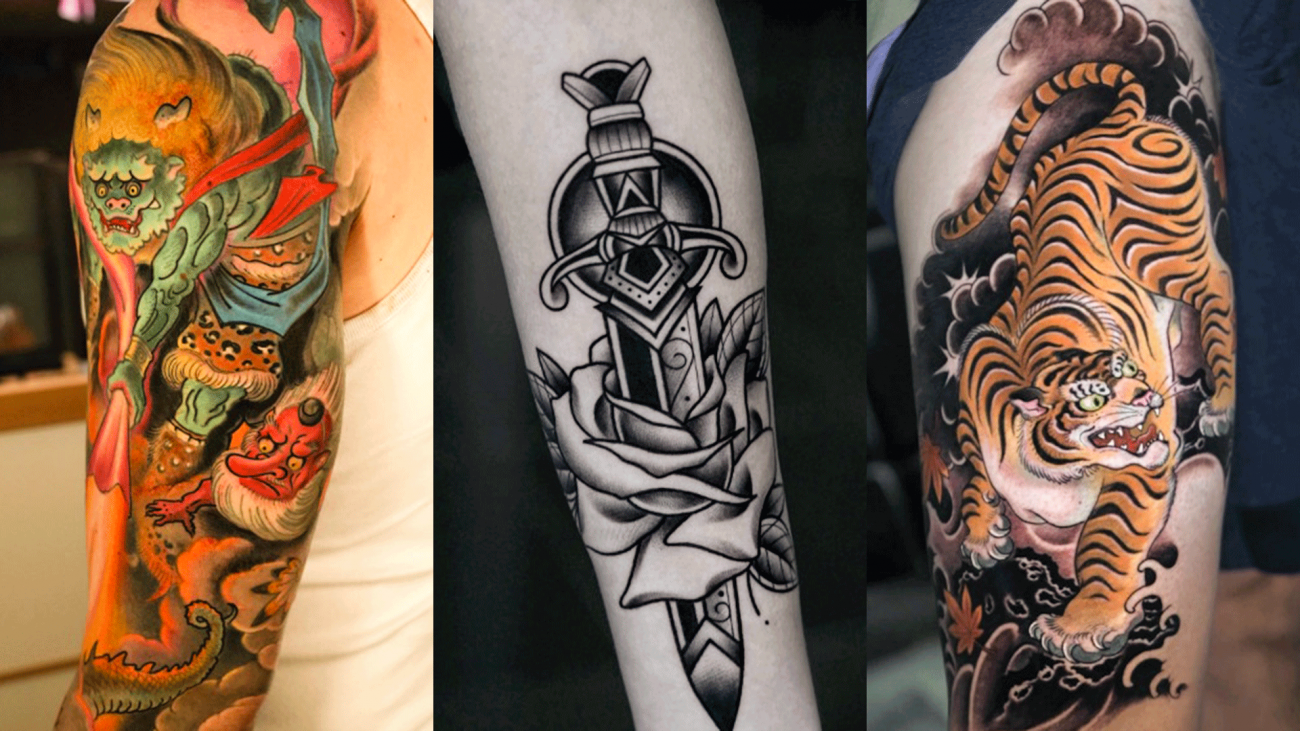
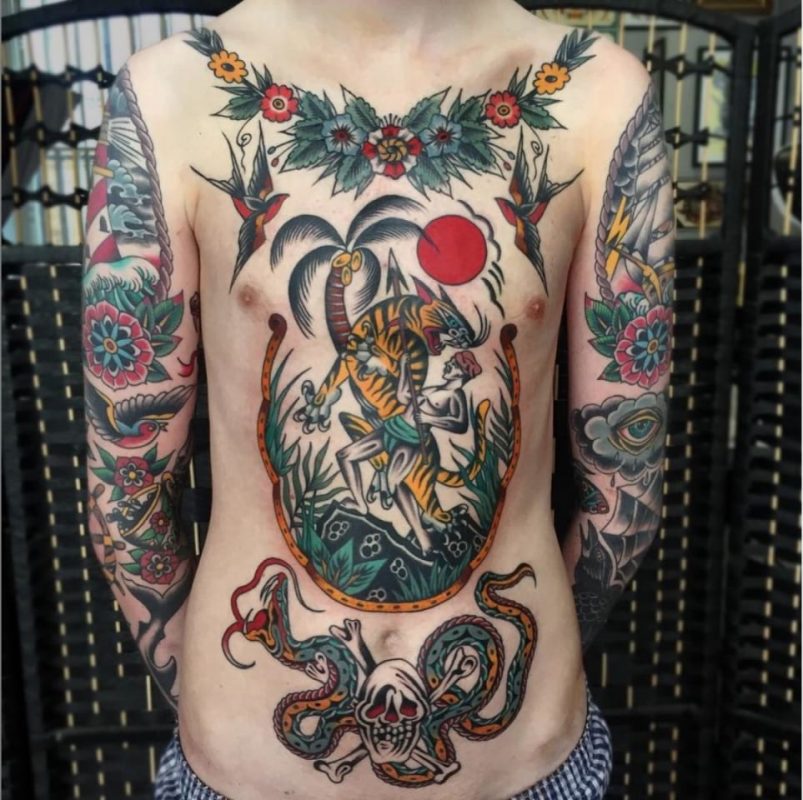
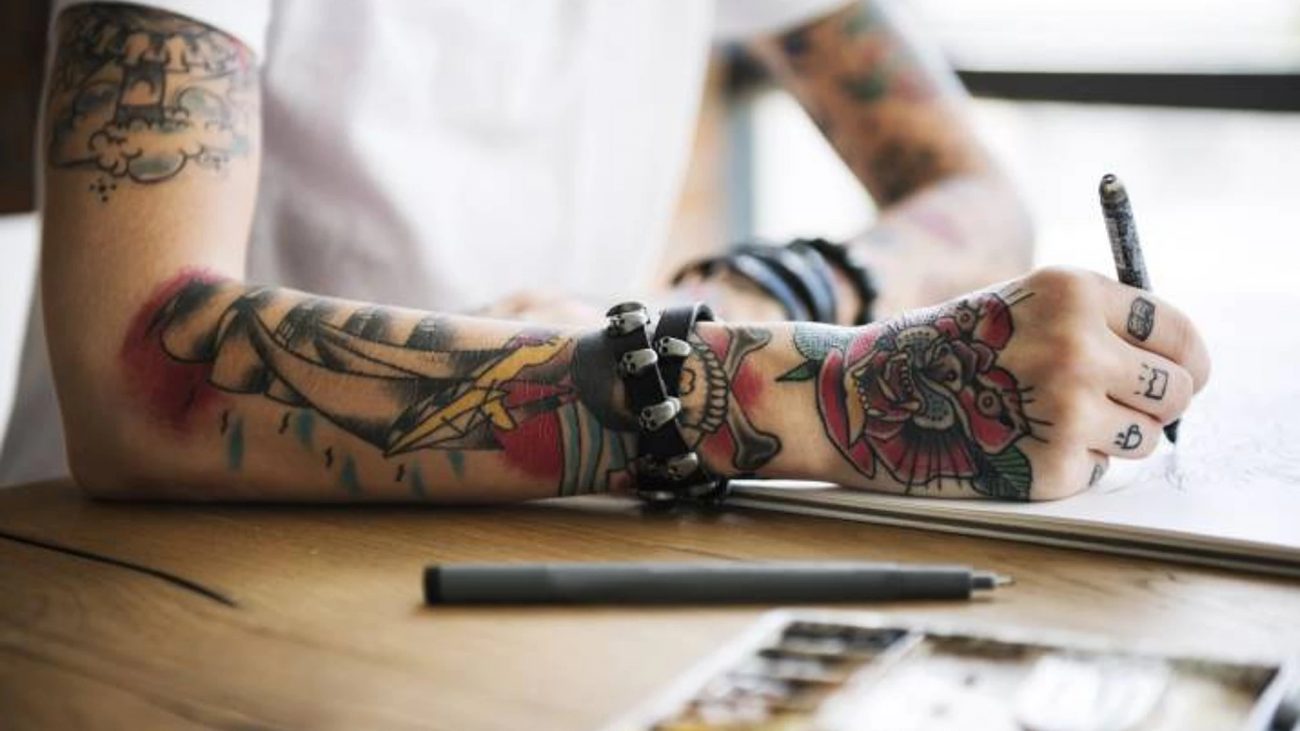
Standing as the undisputed bedrock of modern Western tattooing, the American Traditional style, born in the USA primarily from the 1930s onwards, represents a powerful aesthetic forged in resilience and defined by an absolute commitment to longevity and immediate visual impact. Its visual language was developed not in serene art studios, but in the bustling, often rough-and-tumble environments of port cities and military towns, catering to sailors, soldiers, and working-class individuals seeking bold, permanent markers of their identity and experiences. The style is characterised by its non-negotiable bold black outlines, acting as a powerful container for the design; a deliberately limited but strikingly vibrant palette of strong primary colors (predominantly bold reds, sunny yellows, deep greens, and rich blues); and limited shading, typically executed with solid, dense black ink to create stark contrast and dimensionality without sacrificing clarity.
Its lexicon of common motifs forms a rich tapestry of Americana and universally understood symbols, including patriotic eagles, hopeful swallows, steadfast anchors, passionate roses, defiant skulls, evocative daggers, and idealized pin-up girls, each carrying layers of specific historical and symbolic meaning. The resulting overall vibe is undeniably timeless, possessing a rugged, traditionally masculine energy (though now embraced by all genders for its power), steeped in nostalgia for a bygone era, and projecting an aura of pure, unadulterated boldness. Due to its graphic nature and self-contained designs, its best placement is on the classic canvases of the arms, legs, and chest, perfectly suited for building a traditional “patchwork” or “sticker” sleeve over time, each tattoo a distinct chapter in a larger narrative collection. This style is not merely decorative; it is a piece of living history.
The Art of the Floating World: Japanese (Irezumi)
Representing one of the oldest, most complex, and culturally profound tattoo traditions in the world, the Japanese style, known as Irezumi, is far more than just an aesthetic choice; it is a deep immersion into centuries of Japanese history, mythology, folklore, and artistic discipline. Irezumi is not concerned with small, isolated images; its philosophy revolves around the creation of a unified, narrative bodysuit, a “second skin” of art that flows seamlessly with the wearer’s anatomy and tells an epic story. Its key features are defined by large-scale pieces, meticulously planned compositions often covering the full back, arms, or legs. It employs strong outlines to define the forms and ensure longevity, alongside intensely vibrant colors packed solidly into the skin. A defining characteristic is the powerful background, or gakubori, typically composed of stylised waves, clouds, or wind bars, which serves to unify the entire composition and make the central motifs stand out dramatically.
The common motifs constitute a rich pantheon drawn from mythological and nature-based subjects, including powerful dragons (representing wisdom and benevolence), ascending koi fish (symbolising perseverance and transformation), courageous tigers (warding off evil), legendary samurais (embodying honour and bravery), ephemeral cherry blossoms (representing the transient nature of life), and other potent symbols from Japanese folklore and nature. The overall vibe is deeply spiritual, profoundly symbolic, and inherently focused on complex storytelling, carrying an immense weight of history and cultural significance that demands respect. Consequently, the best placement is invariably on the large canvases of the body: the full back, complete arms (sleeves), and full legs, allowing the intricate narrative and flowing background to achieve their full, breathtaking impact. An authentic Irezumi piece is a lifelong commitment, a wearable masterpiece of cultural art.
Classic & Popular Styles
The Soul of Monochrome: Black & Grey
Emerging from the resourcefulness and unique cultural context of Chicano artists within the California prison system in the 1970s, the Black & Grey style has evolved into one of the most sophisticated, versatile, and emotionally resonant genres in the entirety of modern tattooing. It is a style that deliberately eschews the potential distraction of colour to focus entirely on the fundamental elements of form, texture, light, and shadow, achieving a depth and realism that can be profoundly impactful. Its defining feature is the exclusive use of black ink diluted into various grey tones (known as grey wash) to create a complete tonal spectrum, from the deepest, richest blacks to the most subtle, whisper-light greys. The artistry lies in the application of incredibly soft shading and smooth gradients, meticulously built up in layers to create a sense of three-dimensional form, realistic texture, and atmospheric depth, often without the use of any hard outlines. This technique is perfectly suited for rendering a wide range of common motifs, including hauntingly realistic portraits of women (a hallmark of the Chicano sub-
genre), powerful religious images like crosses and praying hands, majestic animals, and hyper-realistic objects such as skulls, clocks, or statues. Intricate script lettering is also a frequently integrated and highly skilled element within this style. The resulting overall vibe is deeply emotional, capable of conveying a vast range of feelings through subtle expression and shadow; powerfully realistic (or a beautifully stylised realism in its Chicano form); often intensely cultural; and possesses a timeless quality, reminiscent of classic black and white photography or master charcoal drawings. Its versatility makes it suitable for almost any area, but its ability to render complex, seamless compositions makes it particularly stunning on the large canvases of the chest, arm, and back.
The Whisper on the Skin: Fine Line / Linework
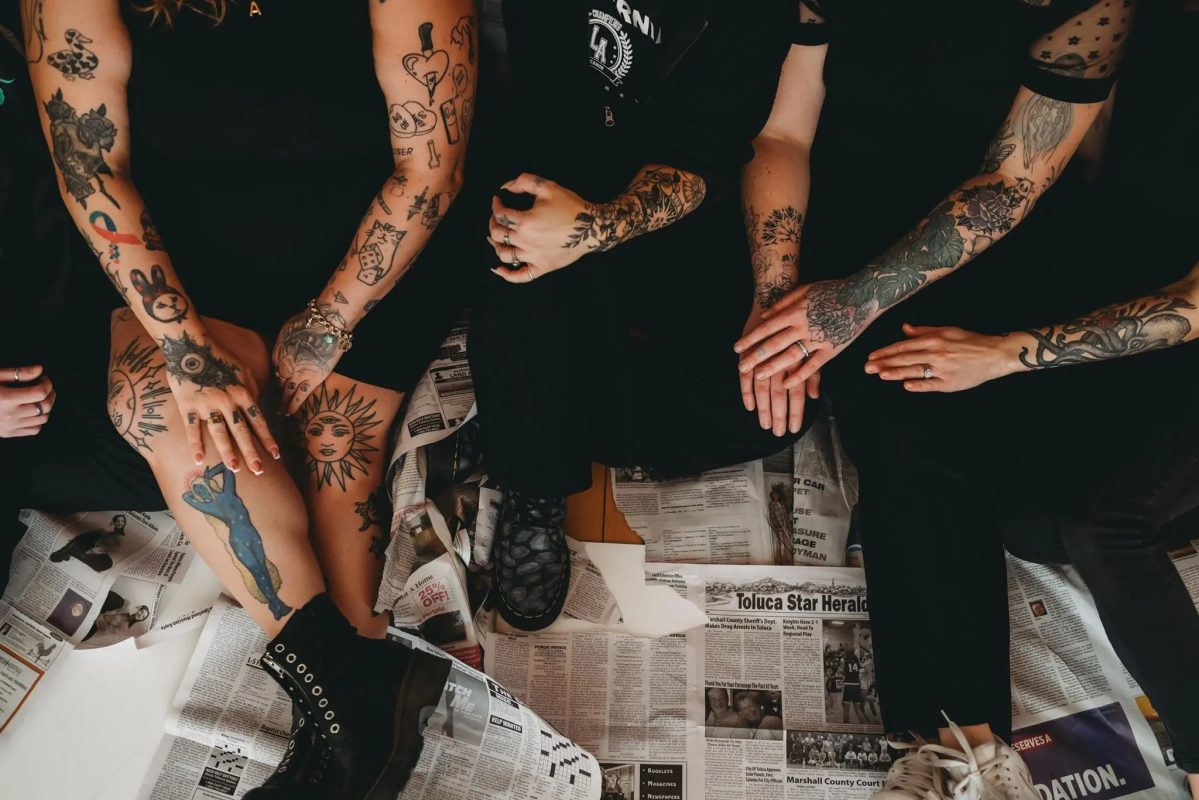
A distinctly modern phenomenon born from the minimalist art and design movements of the 2010s, the Fine Line or Linework style represents a paradigm shift in tattoo aesthetics, celebrating the profound power and elegance of subtlety and precision. It is a direct response to a contemporary desire for adornment that feels personal, discreet, and seamlessly integrated with a modern, often professional, sense of style. The defining feature of this genre is its reliance on extremely thin, clean lines, meticulously created using very small needle groupings (often a 3RL or even a single needle – “1RL”). This technique demands an extraordinary level of control and a flawlessly steady hand from the artist. Characteristically, the style employs little to no shading, instead using the purity of the line itself, along with the strategic use of negative space (the untouched skin), to suggest form, movement, and meaning.
This minimalist approach makes it perfectly suited for rendering delicate common motifs, including intricate florals and botanical illustrations, minimalist human figures often captured in a single continuous line, elegant animal outlines, personal symbols, celestial patterns, short words or initials, and small geometric shapes. The overall vibe is undeniably clean, possessing a crispness and clarity; inherently delicate, giving it a fragile, almost ephemeral quality; intentionally minimal, rejecting clutter in favour of focused simplicity; and profoundly stylish, aligning perfectly with contemporary fashion’s appreciation for understated elegance. Due to its subtle nature, the best placement options are often the more intimate areas of the body where a small detail can make a significant impact, such as the wrist, inner arm, behind the ear, the side or nape of the neck, and the ankle. It’s the art of the permanent whisper.
The Blueprint of Creation: Geometric / Ornamental / Mandala
This intellectually stimulating and visually captivating style represents a powerful fusion of ancient spiritual traditions and modern artistic precision. It is an art form built entirely from the universal, immutable language of mathematics, symmetry, and pattern, drawing inspiration from sources as diverse as Eastern and Hindu art, Islamic architecture, and tribal symbolism. The core feature is that every design is meticulously built from geometric shapes and symmetry. The artist’s toolkit comprises the purest forms—lines, circles, triangles, squares, hexagons—which are combined, repeated, and overlaid with mathematical precision to create intricate and often mesmerising patterns. Symmetry, whether radial (radiating from a centre, as in a mandala) or bilateral, is paramount, creating the style’s signature sense of balance and visual harmony. A fascinating and popular evolution of the style involves its ability to blend with nature or animals, creating a striking contrast between rigid geometry and organic forms, such as geometric animal outlines or natural scenes framed within perfect shapes. The execution
relies on flawless linework and often incorporates extensive, meticulous dotwork (stippling) for shading, adding a soft, ethereal texture. Common motifs include the powerful mandala (representing the cosmos), patterns derived from sacred geometry (like the Flower of Life), intricate lace patterns, symmetrical floral designs, and abstract compositions. The overall vibe is profoundly balanced, deeply spiritual, and relentlessly precise, appealing to those who seek order, harmony, and intellectual depth in their art. The best placement requires a stable, often symmetrical canvas, making the arms, chest (particularly the sternum for mandalas), back, and thighs ideal locations for these often large and intricate compositions.
The Mirror to Reality: Realism / Realistic
Standing perhaps at the pinnacle of technical skill in the modern tattoo world, the Realism or Realistic style represents a breathtaking attempt to create a perfect illusion, to render an image on skin with such fidelity that it becomes indistinguishable from a photograph or a hyperrealistic painting. It is a style that demands an absolute mastery of technique and an artist’s profound understanding of light, form, and texture. Its defining feature is the creation of highly detailed tattoos that look like photographs. This is achieved through an intense focus on shading and light, often completely eschewing the traditional reliance on outlines. The form, dimension, and texture of the subject are meticulously rendered using incredibly soft shading and smooth gradients, built up in countless subtle
Classic & Popular Styles
layers. An expert realism artist is essentially painting with needles, perfectly replicating the highlights, mid-tones, core shadows, and reflected lights observed in a reference image. This technique is perfectly suited for capturing the exact likeness and emotional nuance of common motifs such as human faces (portraits), the intricate details of animals, the atmospheric depth of landscapes, and the complex textures and reflections of still-life objects like skulls, clocks, or statues. The overall vibe is, by definition, realistic, profoundly eye-catching due to its trompe-l’oeil effect, and inherently elegant due to its smooth finish and fine art quality. Because the intricate details and subtle gradients require ample space to be executed effectively and remain readable over time, the best placement options are invariably the larger, broader canvases of the body, such as the arms (ideal for sleeves), the expansive thighs, the broad chest, or the ultimate canvas, the full back.
Navigating Your Choice: Selecting from Classic & Popular Styles
With such a rich and diverse tapestry of Classic & Popular Styles to choose from, the process of finding the one that truly resonates with you can feel like a significant undertaking. This is a deeply personal decision, one that should be approached with thoughtfulness and self-reflection. Here are some key factors to consider during your exploration, elements that our specialist artists at midnightt will delve into with you during your comprehensive design consultation.
Consider Your Personal Aesthetic and Long-Term Vision
Take a moment for genuine introspection regarding your overarching personal style, extending beyond your immediate wardrobe choices. What kind of art do you hang on your walls? What architectural styles resonate with you? Are you drawn towards bold, graphic statements that immediately command attention, or do you find yourself more captivated by subtle, intricate details that require a closer look to be fully appreciated? Consider your personality: are you seeking a design that feels dark, edgy, and rebellious, or one that projects an aura of brightness, vibrancy, and optimism? It is also crucial to think long-term. While your current aesthetic might be heavily influenced by contemporary trends, a tattoo is permanent. Try to envision yourself in ten, twenty, even fifty years. Will the style you choose still feel authentic to the person you become? Aim for a style that feels fundamental to your core identity, rather than one tied solely to a fleeting fashion moment. Be profoundly honest with yourself about the core aesthetic values you hold, as your tattoo should ultimately feel like an intrinsic and authentic extension of who you are at your essence.
Think About the Subject Matter and the Story You Want to Tell
The ‘what’ of your tattoo is inextricably linked to the ‘how’. The subject matter you wish to depict and the narrative or emotion you want to convey will naturally guide you towards certain stylistic choices. Different Classic & Popular Styles possess unique strengths in handling various types of content. For instance, if your primary goal is to immortalise the exact likeness of a beloved family member or a cherished pet, the technical precision of the Realism or Black & Grey styles is almost certainly the most appropriate choice, as these genres excel at capturing subtle nuances of expression and form. Conversely, if you wish to represent a deeply
held spiritual belief or create a visual metaphor for a personal journey, the symbolic language inherent in the Geometric/Mandala style or the rich, narrative potential of the Japanese (Irezumi) tradition might offer a more profound and resonant vehicle for your message. Consider the emotional tone you wish to strike: should the piece feel powerful and defiant (perhaps leaning towards American Traditional or Blackwork), or delicate and ethereal (suggesting Fine Line or Watercolor)? The synergy between your chosen subject and the artistic style used to render it is paramount in creating a tattoo that is not just visually appealing, but truly meaningful.
Reflect on Longevity, Placement, and Lifestyle Considerations
A tattoo is a living artwork on a living canvas, and practical considerations regarding its longevity and placement are crucial. How important is it to you that the tattoo remains perfectly crisp, sharp, and instantly readable fifty years from now? Classic styles like American Traditional and Japanese are specifically engineered for maximum durability, utilising bold outlines that resist the natural softening and spreading of ink over decades. Styles relying purely on very fine lines or delicate colour washes without a strong black structural foundation, while beautiful, will inevitably require more diligent lifelong sun protection and may need occasional touch-ups to maintain their initial clarity. Furthermore, consider the chosen placement on your body. Certain styles demand ample space; intricate Realism or
expansive Geometric patterns necessitate a large, relatively flat canvas like the back or thigh to be fully appreciated and technically feasible. Conversely, the delicate nature of Fine Line thrives in smaller, more intimate areas like the wrist or behind the ear. Finally, reflect honestly on your lifestyle. Do you work in a highly conservative professional environment? This might steer you towards more easily concealable placements or a more subtle style. Do you spend a significant amount of time outdoors in the sun? This requires a serious commitment to sun protection, especially for colour tattoos. These pragmatic factors must be weighed alongside the purely aesthetic considerations.
The Role of the Consultation at Midnightt: Your Expert Guide
This is precisely where the expertise of our specialist artists becomes your greatest asset in navigating the world of Classic & Popular Styles. You do not need to arrive at your consultation with a definitive answer or even knowing the precise name of the style you desire. Your role is to bring your ideas, your inspiration images (even if they are from different styles), your story, and your questions. Our artists are expert listeners, visual communicators, and artistic interpreters. They will engage you in a deep dialogue, helping you to articulate your vision and understand the nuances of different artistic languages. They will assess your anatomy, discuss the practicalities of placement and longevity, and guide you through the various stylistic options, explaining which visual approach will best translate your unique concept into a beautiful, lasting, and technically flawless tattoo that is perfectly suited to both your body and your personal narrative. The consultation is a collaborative journey of discovery, ensuring your final choice is one made with complete confidence and clarity.
Classic & Popular Styles
Frequently Asked Questions (FAQ)
1. Can I combine different tattoo styles in one piece?
Yes, absolutely, and this is often where some of the most exciting and unique contemporary tattoo art is created. Many of the most sought-after pieces today are sophisticated fusions of different genres. For example, an artist might frame a hyper-realistic portrait within an intricate geometric border, or combine bold Neo-Traditional linework with the soft, flowing gradients of a watercolor background. The key to a successful fusion, however, lies in the skill and artistic vision of the tattooist. It requires an artist who possesses a deep understanding of the fundamental rules and techniques of both styles and knows how to blend them harmoniously without creating a disjointed or visually confusing result. This is a complex undertaking, best entrusted to a highly experienced and versatile artist.
2. Which tattoo style lasts the longest / ages the best?
Generally speaking, tattoo styles that incorporate a strong foundation of bold black outlines and significant contrast tend to demonstrate the greatest longevity and age the most gracefully over many decades. Genres like American Traditional, Japanese (Irezumi), and well-executed Black & Grey or Neo-Traditional fall into this category. The robust black structure acts as a container, preventing the colours or softer shades from blurring excessively as the skin naturally ages and ink particles subtly migrate. Styles that rely purely on very fine lines (like minimalist tattoos) or soft colour washes without any black framework (like some forms of watercolor) are inherently more susceptible to softening, fading, and losing their initial crispness over time. While they can still look beautiful for many years with proper care (especially rigorous sun protection), they may require touch-ups more frequently to maintain their optimal appearance compared to their bolder counterparts.
3. Does the style of tattoo affect the price?
Yes and no. The primary determinant of a tattoo’s price is the amount of time it takes to complete. This time is influenced by factors like the size, the level of detail, the complexity of the design, and the specific artist’s hourly or day rate (which reflects their skill, experience, and demand). However, certain Classic & Popular Styles are inherently more time-consuming to execute than others. For instance, creating a hyper-realistic portrait or a large, intricate dotwork mandala requires significantly more hours of meticulous work than applying a simple, bold American Traditional design of the same physical size. Therefore, while the style itself doesn’t have a price tag, the technical demands and time commitment associated with styles like Realism, Geometric Dotwork, or complex Illustrative work often result in a higher overall cost compared to simpler, faster styles.
4. How do I find an artist who specialises in the specific style I want?
Finding a true specialist is absolutely crucial for achieving a high-quality result, especially for more technically demanding styles. The most effective method is thorough online research, focusing on artists’ individual portfolios. Start by looking at the websites and social media profiles (primarily Instagram) of reputable studios like midnightt. Then, delve into the portfolios of their resident artists. A true specialist will have a portfolio that is overwhelmingly dedicated to that one particular style. Don’t be swayed by an artist who has only one or two examples of the style you want mixed in with many others. Look for consistency, depth, and, most importantly, numerous high-quality photos of healed work in that specific genre. Reading client reviews and booking a consultation specifically to discuss your desired style and assess the artist’s expertise and passion for it are also essential steps in finding the perfect match.
5. I like elements from several different styles. Can you help me figure out what I really want?
Absolutely. This is a very common scenario and a huge part of what we excel at during our comprehensive design consultations at midnightt. We encourage you to bring all of your inspiration, even if it seems contradictory or comes from wildly different Classic & Popular Styles. Our artists are expert visual communicators and interpreters. They will engage you in a thoughtful dialogue, helping you to identify the core aesthetic elements, themes, or feelings that you are consistently drawn to across your varied inspiration. They can then guide you towards a specific style that encapsulates those core desires, or, even more excitingly, help you to conceptualise a unique fusion or hybrid style that perfectly captures your eclectic vision in a cohesive and artistically compelling way.
Conclusion
The world of Classic & Popular Styles in tattoo art is a rich, diverse, and deeply rewarding one to explore. It offers a vast palette of visual languages, each capable of expressing a different facet of the human experience. From the timeless power of American Traditional and the spiritual depth of Japanese Irezumi to the modern elegance of Fine Line and the breathtaking precision of Realism, each style provides a unique pathway for telling your personal story. Choosing the right style is undoubtedly a significant decision, but it is not one you need to navigate alone. By engaging in thoughtful self-reflection and, crucially, partnering with a specialist artist who possesses not only the technical mastery but also the artistic vision and dedication to understand you, you can ensure that your tattoo transcends fleeting trends to become a lasting, meaningful, and perfectly executed masterpiece.