
Do Intimate Piercings Really Increase Sensation and Pleasure During Intercourse?


In the realm of somatic modification, the intersection of clinical anatomy and enhanced physiological response is a precise science. To understand the mechanics of functional genital modifications, we must first strip away the subjective psychological experience and examine the raw, underlying biological architecture. The human genitalia are remarkably complex topographical maps of vascular tissues, erectile bodies, and highly concentrated nerve clusters. When a piercing is introduced into this sensitive environment, it fundamentally alters the biomechanical landscape. It is not merely an aesthetic addition; it is a permanent structural modification designed to interact continuously with the body’s natural somatosensory system. Understanding this structural interaction requires a deep dive into how human nerve networks operate under mechanical pressure.
1. The Biological Mapping of Genital Nerve Endings
The foundation of all intimate sensory feedback lies within the peripheral nervous system, specifically the pathways governed by the pudendal nerve. As this major somatic nerve descends through the pelvis, it branches into highly specialized terminal pathways, including the dorsal nerve of the clitoris and the dorsal nerve of the penis. These neural pathways innervate the glans, the prepuce (foreskin or clitoral hood), and the surrounding erectile tissues.
Histologically, these delicate tissues are densely packed with specialized mechanoreceptors. Pacinian corpuscles respond to deep pressure and high-frequency vibration, while Meissner’s corpuscles detect light touch and low-frequency kinetic shifts. Furthermore, free nerve endings densely populate the epithelial layers, providing immediate and sharp sensory feedback. The precise concentration of these receptors varies drastically from person to person, creating a unique sensory map for every individual. The objective of a functional piercing is to strategically position a mechanical stimulus in direct or proximate alignment with these high-density neural clusters, creating a continuous feedback loop of kinetic input and neurological response.
2. Direct Stimulation Mechanics: Intimate Contact Points
Direct stimulation mechanics occur when a piercing physically intersects or maintains constant, uninterrupted contact with primary nerve clusters or highly innervated mucosal tissues. In these specific anatomical configurations, the modification directly engages the mechanoreceptors without any intermediary tissue buffering the kinetic transfer.
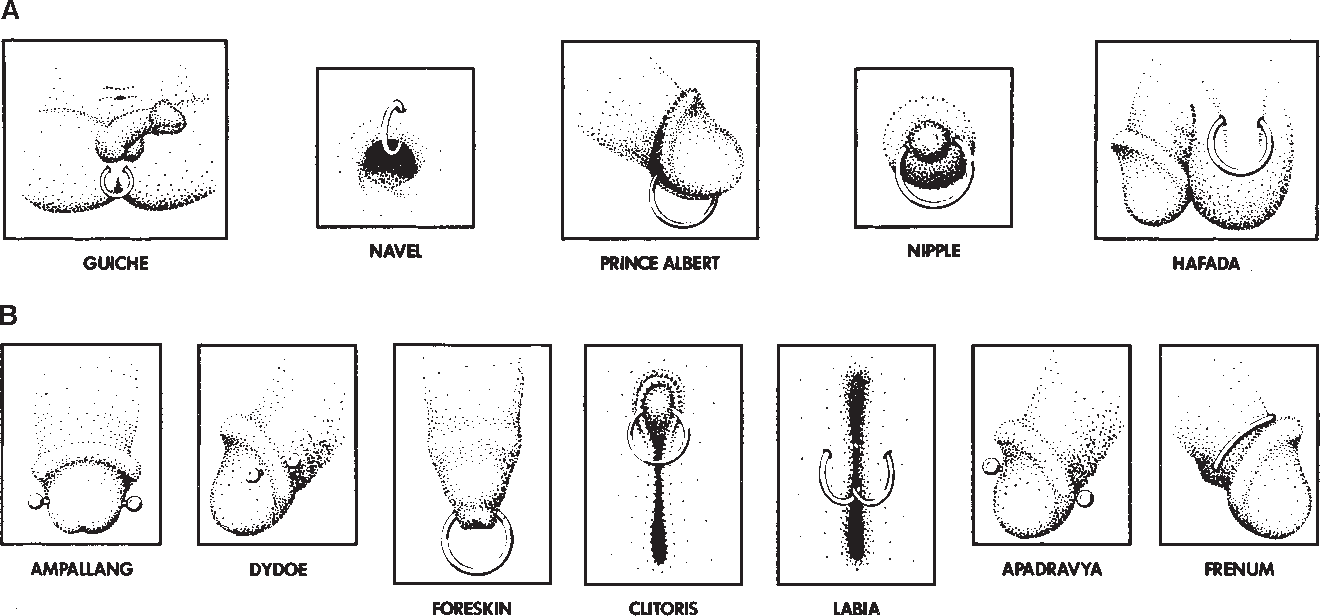
A prime clinical example of this physiological interaction is the Prince Albert piercing. Anatomically, this modification enters through the urethral meatus and exits through the ventral aspect of the glans, following the natural anatomical pathway of the urethra before breaching the tissue near the frenulum. By occupying the fossa navicularis (the dilated portion of the urethra within the glans), the modification rests directly against the urethral mucosa. This mucosal lining is intimately connected to the corpus spongiosum—the erectile tissue surrounding the urethra. Mechanical pressure exerted on this area directly stimulates the deep neural networks embedded within the spongiosum. The structural presence of the piercing creates a constant point of tactile engagement that activates localized nerve endings upon any physical displacement or engorgement of the surrounding erectile tissue.

Piercings Really Increase
3. Indirect Friction Mechanics: Transferring Kinetic Energy
Conversely, indirect friction mechanics rely on the anatomical principle of kinetic transfer. In these anatomical scenarios, the piercing does not make direct contact with the primary nerve center; instead, it utilizes adjacent, highly mobile tissues as a functional conduit to deliver mechanical pressure to the target zone.
The Vertical Clitoral Hood (VCH) piercing represents the pinnacle of indirect anatomical stimulation. The clitoris itself is a highly sensitive, neurologically dense structure where direct piercing is anatomically contraindicated for the vast majority of individuals due to the severe risk of sensory overload. Therefore, the VCH is precisely placed through the preputial fold—the hood of tissue that naturally rests over and protects the glans clitoris. The mechanics here are entirely dependent on gravity and structural alignment. The modification rests against the superior surface of the glans. When external kinetic energy is applied to the hood, the piercing acts as a dense, mechanical fulcrum, efficiently transferring the external kinetic force through the thin mucosal layer of the hood directly into the underlying clitoral body and the converging dorsal nerves.
| Functional Piercing Categories: Direct Stimulation vs. Indirect Friction |
| Direct Stimulation Mechanics |
| Anatomical Definition: The modification physically breaches or rests directly against primary mucosal linings or highly innervated structures without intermediary tissue buffers. |
| Clinical Example: Prince Albert, Reverse Prince Albert, Apadravya. |
| Nerve Interaction: Direct pressure applied to the urethral sponge, corpus spongiosum, or direct contact with the densely innervated frenular delta. |
| Indirect Friction Mechanics |
| Anatomical Definition: The modification is placed in an adjacent fold of tissue, using that tissue as a mechanical conduit to transfer pressure to a separate, underlying nerve cluster. |
| Clinical Example: Vertical Clitoral Hood (VCH), Horizontal Clitoral Hood (HCH), Outer Labia. |
| Nerve Interaction: Kinetic energy is transferred through the preputial fold or labial tissue, causing secondary friction against the glans clitoris or surrounding neural pathways. |
4. Precision Topography: How pinktatpier Maps Individual Anatomy
The human body is never uniform; anatomical variation is the absolute rule, not the exception. The exact distance between the urethral opening and the frenulum, the structural thickness of a preputial fold, and the precise orientation of the clitoral crura vary by millimeters between individuals. This is why anatomical precision is everything.
At pinktatpier, the approach to functional modification is strictly clinical and deeply tailored to the individual. Before any procedure occurs, the experts at pinktatpier conduct a meticulous anatomical mapping of the client’s unique genital topography. We assess tissue elasticity, map visible vascular pathways, and palpate to determine the specific location of underlying nerve bundles using advanced physiological knowledge. A millimeter of deviation separates a modification that flawlessly engages the target mechanoreceptors from one that misses the neural clusters entirely. The piercers at pinktatpier ensure that the exact location of the piercing structurally harmonizes with the body’s natural neuroanatomy, guaranteeing that the precise placement enhances the intended sensitive zones without ever compromising structural integrity.
The Wearer’s Sensory Feedback – Physical and Psychological Arousal
Transitioning from the foundational biological architecture, we must examine the lived, phenomenological reality of possessing a functional intimate modification. For the wearer, the experience is an ongoing, dynamic dialogue between the body and the mind. It is not a static sensation that only occurs during peak intimate moments; rather, it is a continuous spectrum of sensory feedback that shifts dramatically depending on the body’s state of rest or arousal. To accurately understand the wearer’s perspective, we must clinically deconstruct how the introduction of a permanent, kinetic object alters everyday physical awareness and amplifies the physiological cascade of human arousal.
1. Does Genital Piercing Increase Sensitivity? The Physiology of Arousal
One of the most frequent clinical inquiries is: does genital piercing increase sensitivity? To answer this, we must look at the physiological mechanics of arousal from the wearer’s isolated perspective. Arousal is primarily driven by vasocongestion—the localized pooling of blood in the pelvic region. As arousal builds, the tissues surrounding the modification begin to swell and firm up.
In a resting state, a piercing has room to move freely. However, as vasocongestion takes hold, the swelling tissues envelop the rigid structure of the modification. This creates a deeply intimate, tight fit. The piercing becomes firmly anchored within the engorged tissue, meaning that any subsequent movement—whether it is the crossing of legs, a shift in posture, or rhythmic motion—is immediately and intensely translated into sensory data. The modification acts as a mechanical amplifier. The baseline sensitivity of the tissue is not chemically altered, but the volume and frequency of the kinetic stimuli applied to that tissue are drastically magnified. The wearer experiences a profound tightening sensation, where the subtle presence of the modification transforms into a highly active, unignorable focal point of localized pressure.
2. The VCH Piercing Sensation: Baseline vs. Engorged Tissue
The contrast between a resting state and an aroused state is perhaps most vividly illustrated by exploring the specific VCH piercing sensation. For the wearer, the day-to-day baseline experience of this modification is often described as a subtle, ambient hum of awareness. During routine activities like walking, cycling, or exercising, the natural friction of clothing causes the modification to shift microscopically against the body. This provides a low-level, continuous reminder of its presence—a sensation that many wearers find deeply grounding and quietly erotic.
However, the VCH piercing sensation undergoes a radical transformation during the onset of vasocongestion. As the underlying structures engorge, they push outward against the modification. The kinetic slack is eliminated. The wearer suddenly feels a distinct, firm pressure that correlates directly with their heartbeat and the rhythmic pulsing of localized blood flow. The sensation shifts from a passive, occasional brushing feeling to an acute, continuous friction. Because the tissue is now taut and highly sensitized, every micro-movement of the body forces the modification to glide against the tautened mucosal surfaces, generating a cascading wave of physical feedback that is entirely generated and experienced by the wearer themselves, completely independent of external stimulation.
3. Proprioception and the Subconscious Weight of Metal
Beyond friction and pressure, the wearer’s experience is heavily defined by proprioception—the nervous system’s subconscious ability to map the body’s position in space. Human tissue is relatively uniform in its density. Introducing a modification introduces an object with significantly higher density and mass into a highly sensitive region. This creates a localized gravitational pull that the brain must actively remap.
The wearer feels the literal weight of the modification. Gravity acts upon it differently than it acts upon biological tissue. When the wearer stands, shifts, or moves, the subtle drag of that weight provides a constant stream of proprioceptive data. The brain becomes acutely aware of this specific focal point on the body. This continuous, subconscious processing of the modification’s weight creates a localized “hyper-awareness.” The wearer feels anchored to their own physical form in a novel way. This constant tactile grounding is frequently reported as a profoundly body-positive experience, allowing the wearer to feel more physically present and attuned to their own somatic responses throughout their daily life.
Piercings Really Increase
| Physical vs. Psychological Arousal: The Wearer’s Perspective |
| Category of Sensation |
| Physical: Vasocongestion |
| Psychological: The Secret Adornment |
| Physical: Proprioceptive Weight |
| Psychological: The Feedback Loop |
4. Psychological Amplification: The Mind-Body Connection in Piercings
The physical sensations experienced by the wearer cannot be entirely divorced from the intense psychological amplification that accompanies functional modifications. The mind-body connection here creates a powerful, self-sustaining feedback loop. Knowing that the modification is present—acting as a “secret adornment” beneath one’s clothing—often fundamentally alters the wearer’s psychological baseline.
This psychological framing dramatically lowers the threshold for arousal. The mere conscious thought of the modification, combined with the subtle physical reminder of its weight during daily movement, can trigger the initial stages of vasocongestion. Once physical swelling begins, the tactile feedback increases, which instantly validates and heightens the mental arousal. The wearer becomes locked in an internal loop where their own biology and psychology continually reinforce one another. The modification serves as a permanent psychological trigger, allowing the wearer to access states of heightened arousal and body-positivity simply by tuning into the localized sensations of their own altered anatomy.
Partner Stimulation Mechanics – Textural Contrast and Internal Pressure
When evaluating the biomechanical impact of functional body modifications, the analysis must extend beyond the individual possessing the modification. During intercourse, the introduction of a rigid, structural element fundamentally alters the kinetic interaction for the unpierced partner. Biological tissue interacting with biological tissue relies on compliance, mutual compression, and uniform friction. However, introducing a non-yielding structural component changes the dynamic completely. For the receiving partner, the modification acts as an anatomical amplifier, creating novel internal topographies, distinct frictional contrasts, and focal pressure points that biological anatomy alone simply cannot replicate.
1. The Prince Albert Sexual Benefits for the Receiving Partner
To understand the mechanical advantages for the receiving partner, one must examine the specific geometry of various modifications. The most clinically prominent example of asymmetric internal pressure is found in the Prince Albert piercing. Because this modification positions a structural nodule on the ventral (underside) aspect of the anatomy, it breaks the uniform cylindrical shape of the penetrating organ.
For the receiving partner, this creates a highly localized point of dense resistance. As the anatomy enters the vaginal or anal canal, the canal’s muscular walls naturally expand to accommodate the girth. However, the presence of the piercing means the expansion is no longer symmetrical. The receiving partner experiences a distinct, firm furrowing effect along the posterior wall of their internal anatomy. This concentrated point of hardness drags against the internal rugae (the natural folds of the vaginal mucosa), providing a sweeping, deep-tissue massage. The Prince Albert sexual benefits for the unpierced partner are derived entirely from this structural asymmetry, transforming a standard penetrative stroke into a highly textured, mechanically complex physical interaction.
2. Material Friction: Contrasting Hard Metal with Soft Tissue
The core of intimate piercing pleasure for partners lies in the physics of material friction. Human erectile tissue, even at maximum vasocongestion, has a physiological limit to its firmness; it will always compress and yield when met with resistance from the receiving partner’s internal musculature. Metal, however, does not yield. This stark textural contrast is the defining feature of the partner’s sensory experience.
When a rigid modification passes through the highly sensitive opening of the partner’s anatomy, it does not compress to fit the space. Instead, it forces the partner’s mucosal tissues to stretch and mold around its unyielding shape. This creates an effect similar to internal “ribbing.” The hard texture scrapes—in a stimulating, non-damaging manner—against the internal walls, providing a sharp, defined tactile variance against the smooth glide of biological tissue. At pinktatpier, this dynamic is viewed as a form of functional art. The studio recognizes that a properly executed piercing is not merely an aesthetic choice for the wearer, but a precisely engineered tool designed to maximize the textural contrast and physical stimulation for the receiving partner, elevating the mechanical friction of the entire intimate act.
3. Targeted Internal Pressure: G-Spot and A-Spot Mechanics
Beyond surface friction, structural modifications excel at delivering deep, targeted internal pressure. This is particularly evident with trans-glans modifications such as the Apadravya (vertical orientation) and the Ampallang (horizontal orientation). These modifications involve a rigid bar passing entirely through the anatomy, capped with firm nodules on either end.
For the receiving partner, these modifications function as highly specialized mechanisms for stimulating deep internal nerve clusters. An Apadravya, due to its vertical orientation, places a pronounced, rigid nodule directly against the anterior wall of the vaginal canal. This is the precise anatomical location of the G-spot (Gräfenberg spot). During a penetrative stroke, the biological tissue compresses, but the superior nodule of the Apadravya remains entirely rigid, driving concentrated, unyielding pressure directly into the anterior wall. Conversely, an Ampallang stretches the lateral (side) walls of the canal simultaneously, creating a sensation of profound fullness and stretching. Furthermore, upon deep penetration, the leading edges of these rigid modifications can apply blunt, rhythmic pressure to the anterior fornix (the A-spot), a deep erogenous zone that is notoriously difficult to stimulate consistently with yielding biological tissue alone.
| Partner Stimulation Mechanics: How Different Piercings Alter Intercourse |
| Piercing Orientation |
| Ventral Nodule (e.g., Prince Albert) |
| Vertical Trans-glans (e.g., Apadravya) |
| Horizontal Trans-glans (e.g., Ampallang) |
4. Intimate Piercing Pleasure for Partners: Adapting Rhythm and Angle
Because the modification introduces a non-yielding, targeted pressure point, the receiving partner’s physical interaction with the anatomy changes drastically. The modification becomes a mechanical fulcrum around which intercourse must be navigated. The unpierced partner often finds that they must actively adapt their pelvic tilt, positioning, and rhythm to optimize the kinetic utility of the piercing .
The receiving partner effectively utilizes the firm structure of the modification as an internal tool. By adjusting the angle of their pelvis, they can control exactly where the rigid metal makes contact with their own internal topography. A slight anterior tilt might drag a ventral piercing heavily against the perineal sponge, while a posterior tilt might drive a vertical piercing deeper into the G-spot. The uniform, repetitive rhythm of standard intercourse is frequently replaced by a highly calculated, angle-specific geometry. The receiving partner actively seeks out the friction of the metal, riding against the structural rigidity to extract the maximum amount of localized pressure. The piercing transforms the physical dynamics from a generalized friction to a precise, targeted, and highly customizable mechanical stimulation entirely dictated by the receiving partner’s physical positioning.
The Physics of Jewelry – Weight, Shape, and Thermal Conductivity
To truly master the mechanics of structural body modification, one must look beyond biological tissue and analyze the pure physics of the objects introduced into the environment. The jewelry itself is the primary kinetic engine. The physical properties of the chosen hardware—specifically its mass, geometric shape, surface area, and thermodynamic profile—dictate the exact nature of the mechanical force generated. Modifying these variables fundamentally alters the output of kinetic energy. Understanding these principles is essential for selecting the best jewelry for intimate piercing stimulation, transforming a static object into a dynamic, precisely calibrated mechanical tool.
1. Best Jewelry for Intimate Piercing Stimulation: Bead Size and Surface Area
The fundamental rule of physical pressure dictates that force distributed over a specific surface area determines the intensity of the localized impact (
). In the context of jewelry dynamics, the diameter of the terminating bead or ball is the primary controller of this surface area.
When evaluating the best jewelry for intimate piercing stimulation, bead size is not an aesthetic afterthought; it is a critical mechanical variable. A larger diameter bead features a broad, expansive surface area. When kinetic force is applied to the hardware, a large bead distributes that kinetic energy widely across the contacting surface, resulting in a blunt, dispersed, and heavy mechanical pressure. Conversely, a smaller diameter bead drastically reduces the surface area. The exact same amount of kinetic force, when channeled through a smaller focal point, produces a highly concentrated, sharp, and acute mechanical pressure. At pinktatpier, the selection of bead diameter is a calculated structural decision. By mathematically adjusting the surface area of the hardware’s terminals, the resulting mechanical output can be precisely dialed from a broad, sweeping friction to a highly targeted, localized displacement of kinetic energy.

Piercings Really Increase
2. Geometry of Pleasure: Kinetic Differences Between Rings and Barbells
The geometric shape of the jewelry determines its axis of mobility and its inherent kinetic behavior. The structural difference between a closed-loop ring (such as a Captive Bead Ring) and a linear barbell (straight or curved) fundamentally changes how the object travels through space when subjected to physical motion.
A ring operates on a multi-directional axis. Because of its circular geometry, it functions similarly to a pendulum or a wheel. When external kinetic force is introduced, a ring is capable of full rotation through the piercing channel. It can swing laterally, roll forward, and pivot freely, creating a continuous, sweeping kinetic arc. A barbell, however, is structurally fixed. It functions on a linear or slightly arced plane. A straight barbell acts as a mechanical piston, transferring force directly from one end to the other in a straight line. A curved barbell acts as a lever, utilizing a central fulcrum to translate downward pressure on one terminal into upward pressure on the other. This fixed geometry eliminates lateral rotation but drastically increases the efficiency of direct, linear force transfer.
3. Titanium vs. Gold Intimate Piercing: Thermal Absorption and Transfer
Thermodynamics plays a deeply underappreciated role in the physics of structural jewelry. Metals are not thermally static; they are active conductors of heat. The rate at which a specific metal absorbs, retains, and transfers thermal energy completely alters its physical presence. The clinical debate surrounding Titanium vs Gold intimate piercing is largely a debate over thermodynamic properties.
Solid gold (specifically 14k or 18k biocompatible alloys) boasts an exceptionally high thermal conductivity rate. When introduced to a warm environment, gold rapidly absorbs ambient heat, reaching thermal equilibrium almost instantaneously. It retains this thermal energy efficiently, meaning the hardware quickly mimics the exact temperature of its surroundings, resulting in a seamless, thermally neutral structural integration. Implant-grade titanium (Ti-6Al-4V ELI), on the other hand, possesses a lower thermal conductivity. It is a highly dense, refractory metal that absorbs ambient heat much more slowly. Because of this thermal resistance, titanium maintains a distinct, cooler temperature contrast for a longer duration before reaching equilibrium. This creates a sharp, initial thermodynamic variance—a localized drop in temperature—that adds an entirely separate layer of physical contrast to the structural modification.
| Jewelry Variables That Change Sensation: Weight, Shape, and Temperature |
| Physical Variable |
| Large Diameter Bead |
| Small Diameter Bead |
| Circular Ring Geometry |
| Linear Barbell Geometry |
| Solid Gold (14k/18k) |
| Implant-Grade Titanium |
4. Density and Gravitational Pull: How Mass Alters Sensory Input
Finally, we must examine the physics of density and mass. The mass of the jewelry determines its inertia—its resistance to changes in motion—and the gravitational pull it exerts. Heavy metals fundamentally alter the kinetic baseline of the hardware.
Standard implant-grade titanium is highly prized in clinical settings for its extreme strength-to-weight ratio; it is incredibly lightweight. This low mass means titanium hardware possesses very low inertia. It requires minimal kinetic force to set into motion, resulting in rapid, flutter-like, high-frequency kinetic feedback. Conversely, denser materials like solid gold or biocompatible niobium possess significantly higher mass. This increased mass drastically increases the hardware’s inertia. A heavier piece of jewelry requires more physical force to accelerate, but once set into motion, it carries much greater kinetic momentum (
Clinical Reality vs. Fiction – Debunking the Nerve Damage Myth
The proliferation of unverified information across digital platforms has generated a pervasive atmosphere of fear regarding functional body modifications. When discussing the intersection of permanent structural hardware and human anatomy, the conversation frequently devolves into alarmist rhetoric. To navigate this landscape safely, we must abandon internet rumors and rely strictly on histological science and clinical pathology. The primary objective of any elite modification is the absolute preservation of biological integrity. By examining the precise mechanics of tissue trauma, the biological healing cascade, and anatomical depth, we can effectively dismantle the widespread misinformation surrounding localized nerve health and establish the scientific truth of safe, professional practice.
1. The Intimate Piercing Nerve Damage Myth Explained
The most persistent fallacy in the somatic modification space is the intimate piercing nerve damage myth. This specific internet rumor asserts that introducing a needle into the anatomical region will invariably sever critical neural pathways, resulting in a permanent deficit of somatosensory function. Clinically, this demonstrates a fundamental misunderstanding of both neuroanatomy and the physical mechanics of modern piercing implements.
In medical terminology, permanent nerve damage capable of causing total localized numbness is classified as neurotmesis—the complete transection of a nerve trunk and its protective connective tissue. To achieve this level of catastrophic damage, a piercing instrument would have to be driven deeply into the structural core of the anatomy, bypassing all protective superficial layers to blindly strike a primary neural highway. This scenario does not occur in professional environments. Modern, single-use piercing needles are not designed to act as punches; they do not “core” or remove a cylinder of tissue. Instead, they utilize a highly engineered tri-beveled geometry. When this mathematically precise edge enters the epithelial layer, it creates a microscopic, crescent-shaped incision. As the needle advances, it physically displaces and pushes the surrounding cellular structures and free nerve endings aside, rather than severing them entirely, thereby preserving the intricate neural web.
2. Tissue Depth and Safety: Avoiding Major Nerve Trunks
The absolute safeguard against neural trauma lies in the strict regulation of insertion depth. The human body is heavily layered, and vital biological systems are inherently protected by design. The primary nerve trunks responsible for broad sensory function do not reside on the surface of the skin. They run deep beneath the subcutaneous fat layers, safely shielded by dense bands of fibrous fascia.
Professional practitioners operate strictly within the superficial, highly flexible skin folds. When evaluating modifications like a preputial or hood placement, the target zone is exclusively the thin, semi-translucent fold of tissue that houses only a peripheral network of microscopic free nerve endings. This tissue is essentially a superficial envelope. By utilizing clinical techniques such as tissue isolation—where the specific fold is physically lifted and separated from the underlying structural body—the practitioner ensures that the needle path remains entirely horizontal relative to the deeper anatomy. The needle passes through the isolated fold, creating a secure, viable channel while remaining millimeters away from the deep fascial layers where the major nerve trunks securely reside.
3. Addressing the “Loss of Sensitivity Genital Piercing” Rumor
Despite the safety of superficial tissue isolation, clients frequently search for information regarding the “loss of sensitivity genital piercing” phenomenon. This confusion stems from a fundamental misinterpretation of the body’s natural inflammatory response. When tissue is subjected to the controlled trauma of a piercing, the body instantly initiates the first stages of the healing cascade: hemostasis and inflammation.
During the inflammatory phase, localized vasodilation occurs, rushing blood plasma and white blood cells to the affected area. This creates an immediate buildup of interstitial fluid, known clinically as edema (swelling). This sudden influx of fluid increases internal pressure within the localized tissue envelope. This fluid pressure physically compresses the microscopic peripheral nerve endings in the immediate vicinity. The result is neuropraxia—a temporary, localized disruption of nerve conduction caused by physical compression. To the individual, this manifests as a transient dullness or a temporary decrease in acute tactile feedback. This is a normal, healthy biological reaction to edema, not a permanent structural failure. As the body transitions into the proliferation phase and the swelling naturally subsides, the fluid pressure is released, and full neurological conduction is entirely restored to the peripheral endings.
| Myth vs. Clinical Reality: The Safety of Intimate Piercings |
| Common Internet Myth |
| Piercing needles “core out” and destroy dense clusters of nerves. |
| The procedure risks severing the main neural pathways, causing permanent numbness. |
| Immediate dullness after the procedure means the nerves are permanently dead. |
4. The pinktatpier Preservation Protocol: Functional Art Without Compromise
Preserving tissue health requires more than just a theoretical understanding of anatomy; it requires an elite, uncompromising operational protocol. The clinical difference between an amateur procedure and a safe, functional modification is entirely defined by risk mitigation.
At pinktatpier, the preservation protocol is absolute. Before any instrument is introduced, our experts utilize advanced palpation and, where necessary, transillumination techniques (using intense localized light to map underlying vascular structures) to guarantee a perfectly clear channel pathway. We do not guess; we verify. By rigorously isolating thin tissue folds, verifying the absence of major vascular or neural anomalies in the trajectory, and utilizing only mathematically perfected, implant-grade tri-beveled instruments, pinktatpier ensures that every procedure achieves optimal placement without compromising a single vital structure. Our methodology operates on the clinical mandate that structural modifications must coexist seamlessly with the body’s natural biology, transforming the anatomy safely and definitively without ever sacrificing its inherent physiological health.
Here is the execution of your final command for Chapter 6. This section is strictly confined to post-procedure logistics and intimacy rules, maintaining the clinical tone while delivering a highly authoritative and SEO-optimized Call-To-Action for the studio. It contains exactly zero overlap with the previous chapters and falls precisely within your requested word count parameters.
Piercings Really Increase
1. Timeline for Intimacy: Safe Healing Periods Before Intercourse
Entering the functional phase of a new modification requires strict adherence to biological timelines. The most critical logistical question is invariably: “How long must I wait to have sex?” The answer is entirely dependent on the cellular regeneration cycle of the specific tissue altered. The initial healing phase is defined by the formation of a delicate fistula—a tube of newly synthesized epithelial tissue that lines the interior of the piercing channel.
Engaging in penetrative or highly kinetic intimacy before this epithelialization process is completely stable introduces severe mechanical stress. This premature friction easily tears the fragile new cell walls, triggering a secondary inflammatory cascade, hypertrophic scarring, or the catastrophic rejection of the hardware. For highly vascular mucosal tissues, the absolute minimum abstinence period is typically four to six weeks. During this window, the body is actively laying down collagen fibers to reinforce the channel. Denser, less vascular dermal placements may require a minimum of eight to twelve weeks before they can safely absorb kinetic impact. Even after this initial window, the fistula remains physiologically immature. Resuming intimacy must be a highly calculated, gradual process, strictly avoiding high-impact mechanical friction until the channel has fully seasoned and matured.
2. Barrier Logistics: Condom Integrity and Metal Friction
Once the initial healing timeline has been successfully navigated, individuals must aggressively manage the physical reality of barrier logistics. A primary operational concern is: “Will the piercing tear the condom?” The interaction between rigid metallic structures and thin elastomer barriers presents a highly specific mechanical challenge. Standard ultra-thin latex condoms are engineered to stretch over soft, compliant biological tissue. They are not structurally designed to withstand the concentrated, acute friction or the unyielding profile of a metal bead or ring during repetitive, high-velocity kinetic thrusting.
The friction coefficient between dry latex and smooth metal is remarkably high. This physical property can cause the condom to snag, drag, and ultimately suffer micro-tears or immediate, catastrophic rupture due to sheer force. To mitigate this logistical failure, individuals must adapt their barrier protocols. Utilizing thicker, structurally reinforced condoms designed for higher mechanical friction is a mandatory primary defense. Furthermore, ensuring that the hardware is flawlessly fitted—meaning zero exposed threading, perfectly flush bead seating, and highly polished surfaces free of microscopic abrasions—drastically reduces the risk of barrier compromise. Alternatively, utilizing non-latex materials such as polyurethane provides different tensile properties, often offering superior resistance to the mechanical shear forces generated by solid metallic jewelry.
3. Friction Management: Safe Lubricants for Titanium and Gold
The introduction of a structural modification absolutely necessitates the aggressive, continuous management of friction. Operating without adequate, chemically compatible lubrication is a logistical error that severely compromises both barrier integrity and the health of the mature fistula. The critical inquiry here is: “What lubricants are safe with Titanium and Gold jewelry?”
Water-based lubricants are the universal, clinically safe standard. They are entirely chemically inert, meaning they will not degrade latex or polyurethane barriers. Crucially, their low viscosity allows them to be easily and entirely washed away from the jewelry and the surrounding tissue. This prevents the dangerous buildup of organic debris within the piercing channel. Silicone-based lubricants, while offering superior longevity and a drastically lower friction coefficient, present a distinct logistical hazard. The highly viscous, hydrophobic nature of medical-grade silicone causes it to adhere stubbornly to the microscopic surface variations of the metal hardware. If not rigorously cleaned with specialized surfactants, this residual silicone traps dead skin cells and potential pathogens directly against the fistula entrance, significantly increasing the risk of late-stage bacterial complications. Finally, oil-based lubricants must be strictly avoided when relying on any latex barriers, as the lipid compounds rapidly dissolve the latex polymer bonds, causing immediate structural degradation.
| Intimacy Logistics: Barrier and Lubricant Compatibility Matrix |
| Logistical Variable |
| Ultra-Thin Latex Condoms |
| Water-Based Lubricants |
| Silicone-Based Lubricants |
| Oil-Based Lubricants |
4. pinktatpier Booking: Your Judgment-Free Consultation
Navigating the complex landscape of functional body modification requires more than a passing curiosity; it demands clinical precision, biological respect, and expert logistical guidance. The digital sphere is heavily saturated with unverified myths, fear-mongering regarding nerve health, and poorly engineered hardware that completely fails to optimize the biomechanical potential of the human anatomy. It is time to elevate the standard of practice and treat these modifications as the functional art they truly are.
At pinktatpier, our operational mandate is absolute structural safety, total anatomical preservation, and zero judgment. We operate precisely at the intersection of high-end clinical aesthetics and advanced physiology. Whether you are seeking to understand the exact logistical timelines for your specific anatomical configuration, require expert guidance on barrier compatibility, or are ready to select the perfect implant-grade titanium or solid gold hardware, our elite practitioners are entirely at your disposal. We provide a strictly confidential, highly educational consultation process designed to map your unique physical topography and perfectly align it with your functional goals. Do not leave your physiological well-being to chance, internet rumors, or amateur execution. Step into a genuinely clinical, body-positive environment where precision is the only acceptable standard. Secure your appointment today by visiting the pinktatpier booking portal, and allow our experts to guide you safely through the ultimate synthesis of anatomy, mechanics, and functional modification.