
Nose Piercing in London: From Classic Nostril to Bold Septum Styles

Of all the forms of body adornment, the nose piercing holds a uniquely powerful and timeless status. It is at once ancient and utterly modern, capable of conveying a spectrum of styles from quiet elegance to bold defiance. In a global fashion capital like London, where personal style is a fundamental form of expression, the nose piercing is more than just an accessory; it is a definitive part of the city’s aesthetic language. From a subtle, sparkling diamond on a Chelsea street to an edgy, perfectly placed ring in the heart of Shoreditch, it is a statement of identity.
But the world of the nose piercing in London is far more diverse than many realise. It is a landscape of distinct placements, each with its own unique aesthetic, anatomical requirements, and healing journey. The two reigning archetypes of this world are the classic nostril piercing and the bold septum piercing. Choosing between them—or deciding to embrace both—is a significant decision.
This is your ultimate guide. We have poured our years of professional experience as one of London’s premier piercing studios into this comprehensive resource. We will deconstruct each piercing in expert detail, providing a deep dive into the critical importance of correct placement, the art of jewellery styling, a transparent walkthrough of the professional procedure, and a realistic guide to aftercare. Our goal is to empower you with the knowledge to make a safe, confident, and brilliant choice, ensuring your experience is a celebrated milestone in your style journey.
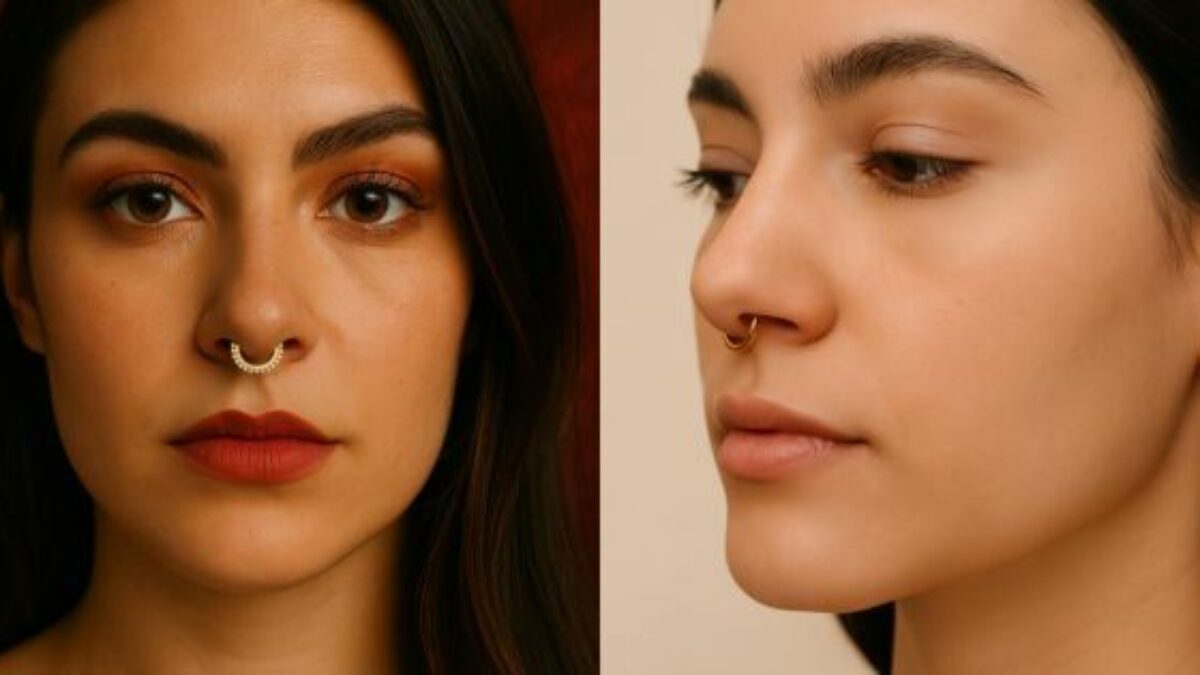
nose piercing in London
Part 1: The Nostril Piercing – The Epitome of Timeless Elegance
The nostril piercing is, without question, the most popular and universally recognised nose piercing. Its history spans thousands of years and crosses countless cultures, from its origins in the Middle East to its modern status as a global style staple.3 Its enduring appeal lies in its incredible versatility; it can be as subtle as a tiny, barely-there sparkle or as noticeable as a bold, decorative ring.
Placement is Everything: The Art of the Perfect Nostril Piercing
The difference between a nostril piercing that looks “okay” and one that looks truly stunning lies in a matter of millimetres. A professional piercer is an expert at finding the perfect placement that complements your unique facial features.
- Finding the “Sweet Spot”: The ideal placement for a nostril piercing is typically in the natural crease or curve of the nostril, known as the suprasalar groove. Placing the piercing in this groove allows the jewellery to sit snugly and comfortably against the curve of your nose. A piercing placed too high or too low can look awkward and may be more prone to snagging.
- Stud vs. Hoop Placement: The desired future jewellery also influences the placement. If your ultimate goal is to wear a snug-fitting ring, the piercing needs to be placed closer to the edge of the nostril. If you plan to always wear a stud, it can be placed slightly higher. A great piercer will have this conversation with you during the consultation to ensure the placement serves your long-term style goals. This level of foresight is a hallmark of a professional nose piercing in London.
- Considering Your Anatomy: A professional will assess the thickness of your nostril, the flare of your ala (the wing of your nose), and your overall facial symmetry to recommend the most flattering and viable position.
The Great Debate: Starting with a Stud vs. a Hoop
This is one of the most common questions we receive, and the professional consensus is unequivocal. For a healthy and successful heal, you must start with a stud.
- Why a Stud is the Professional Standard for Healing:
- Stability: A stud moves significantly less than a ring. This stability is crucial for the delicate new tissue (the fistula) that is trying to form. Constant movement from a ring will cause trauma, prolong the healing process, and can lead to the formation of stubborn irritation bumps.
- Prevents the “Cheesewire Effect”: A ring has a much thinner surface area putting pressure on the piercing channel. This can cause the ring to slowly cut through the tissue over time, especially if snagged, and can even change the angle of the piercing permanently.
- Easier to Clean: A stud is simpler to clean and is less likely to trap moisture and bacteria than the curve of a ring.
- The Best Style of Stud: We exclusively use flat-back labret studs for initial nostril piercings. The post is inserted from the inside of the nostril, and the decorative end is attached on the outside. This style is far superior to the old-fashioned “L-bend” or “corkscrew” studs, which can easily fall out and move excessively. The flat disc on the inside is comfortable, secure, and easy to clean.
- The Ring is Your Reward: The beautiful, snug-fitting ring is your prize for a patient and successful healing journey. You must wait until the piercing is fully, completely healed (typically 4-6 months) before swapping to a ring.
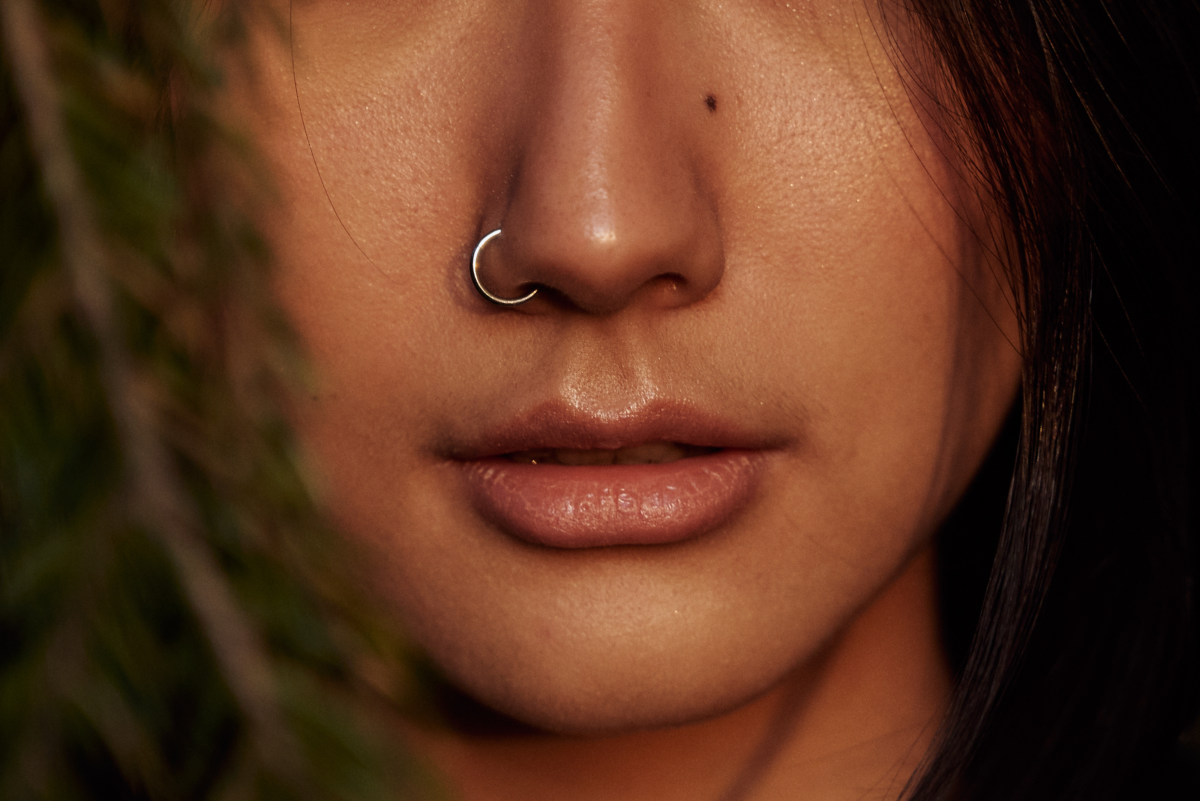
nose piercing in London
Styling a Healed Nostril Piercing: A World of Possibilities
Once healed, the nostril piercing offers endless styling options.6 You can switch between a subtle stud for a professional look and a bold ring for the weekend. The jewellery choices range from tiny, minimalist gold discs to sparkling diamond flowers and ornate, decorative seamless rings.
Part 2: The Septum Piercing – The Bold and Versatile Statement
The septum piercing has undergone a remarkable transformation. It has shed its purely punk-rock connotations and has been embraced by high fashion, becoming a symbol of confident, modern style. Its appeal lies in its perfect symmetry, its ability to dramatically frame the face, and its unique secret weapon: it can be completely hidden.
The Anatomy Litmus Test: The All-Important “Sweet Spot” (Columella)
This is the single most critical piece of information for anyone considering a nose piercing in London. A correctly performed septum piercing does not go through the thick, hard cartilage that separates your nostrils.7 Piercing this cartilage is excruciatingly painful, takes over a year to heal, and is the mark of an untrained, incompetent, and dangerous practitioner.
Instead, the piercing passes through a thin, soft membrane of tissue located at the very tip of your nose, just below the hard cartilage. This area is technically called the columella. It has very few nerve endings, which is why a correctly performed septum piercing is surprisingly low on the pain scale.
- How to Identify a Professional: A professional piercer will spend time gently feeling and palpating your nose to locate this sweet spot. They may use forceps (clamps) to isolate it. Their ability to confidently identify this area is the number one sign that you are in expert hands. If a piercer ever tells you that a septum piercing is the most painful piercing you can get, it is a huge red flag that they do not know what they are doing.
- The Deviated Septum: Many people have a slightly deviated septum. An experienced piercer can almost always still perform a beautiful piercing. They possess the skill to adjust the angle of the piercing channel so that, even if the internal structure is asymmetrical, the jewellery itself hangs perfectly straight.
The Ultimate Advantage: The Art of Concealment
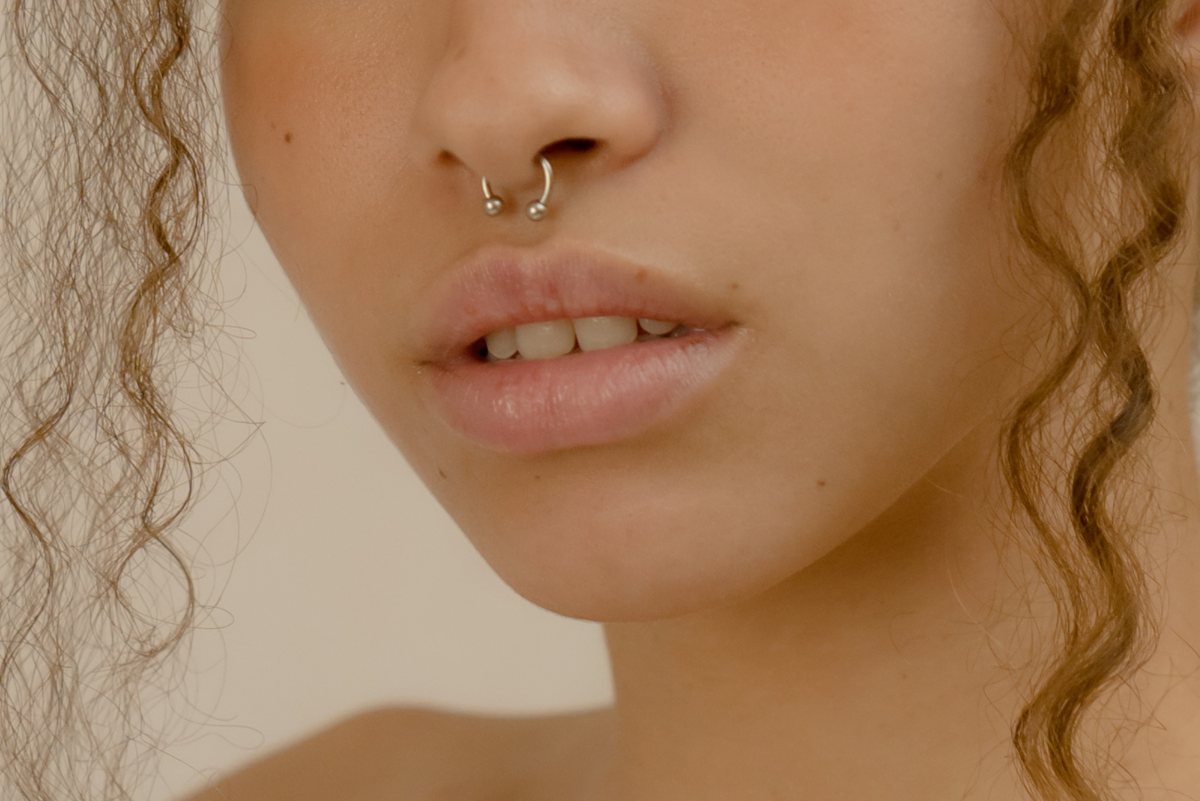
One of the septum’s greatest features is its versatility for a professional lifestyle. When pierced with a circular barbell (often called a “horseshoe”) or a septum retainer, the jewellery can be easily flipped up into the nostrils, becoming completely invisible. This makes it the perfect choice for students, professionals, or anyone who needs the option of a discreet look.
Styling a Healed Septum Piercing: From Subtle to Statement
The styling potential for a healed septum is immense.
- The Minimalist Look: A simple, snug-fitting seamless ring in a high-quality metal (like solid gold or polished titanium) offers a chic and understated look.
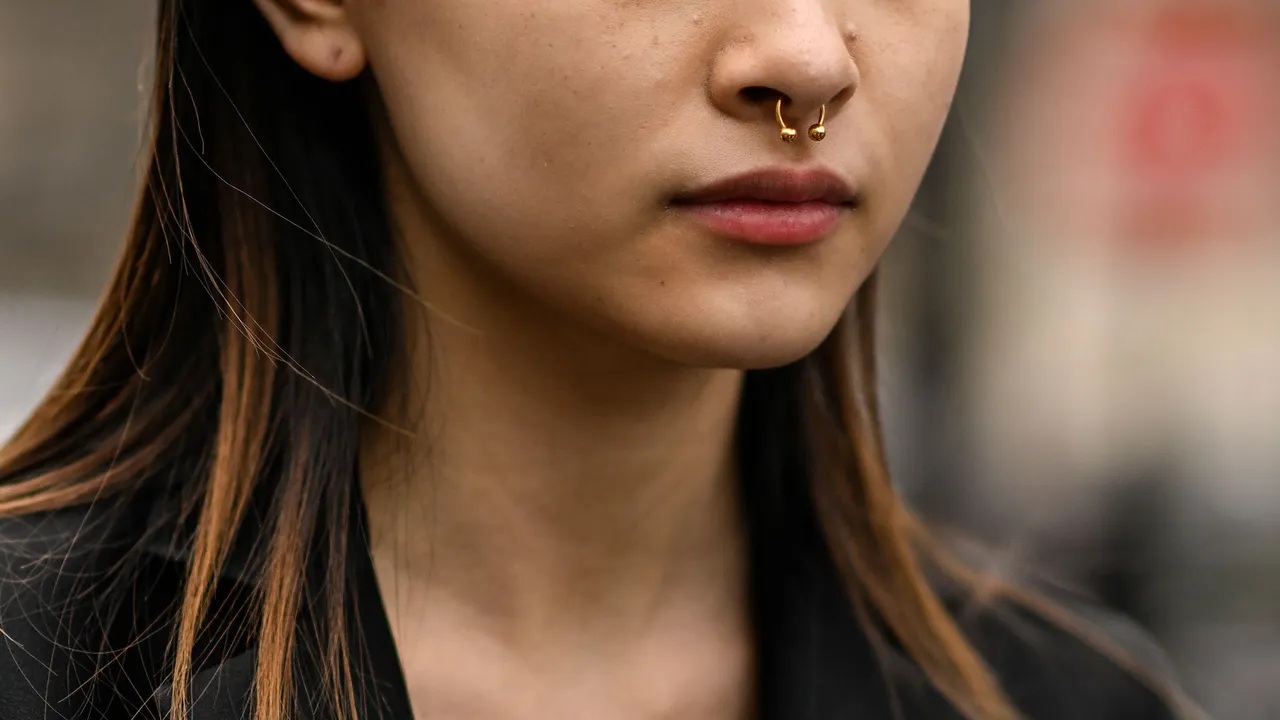
- The Classic Look: A circular barbell with simple ball ends is the timeless, classic septum style.
- The Statement Piece: This is where the artistry shines. A healed septum can be adorned with an ornate, decorative clicker.9 These are hinged rings that come in a huge array of designs, from rows of sparkling gems to intricate, filigree metalwork, allowing you to make a bold and beautiful high-fashion statement.
- Stacked Septums: For the true connoisseur, multiple septum piercings can be “stacked” to allow for the wearing of several thin rings at once, creating a unique, layered look.
The Professional Procedure: What to Expect at Our London Studio
Knowing what to expect can significantly reduce anxiety and empower you during the process. A professional piercing is a calm, clinical, and collaborative experience.
Finding Your Specialist in London
Your first step is research. The search for a studio to perform your nose piercing in London should be meticulous.
- Check Portfolios: Use Instagram to find artists. Scrutinise their portfolios for multiple examples of perfectly healed nostril and septum piercings. For nostrils, look for studs that sit flush and rings that fit snugly. For septums, look for perfect, straight angles.
- Verify Their Standards: Check the studio’s website. Do they proudly state that they only use needles? Do they talk about their sterilisation process? Do they stock high-quality, implant-grade jewellery?
nose piercing in London
A Step-by-Step Walkthrough of the Procedure
- The Consultation and Anatomy Check: Your appointment begins with a conversation. You’ll discuss your goals, and the piercer will assess your anatomy to ensure the piercing is viable and to determine the perfect placement.
- Meticulous Marking: The piercer will thoroughly disinfect your nose. They will then use a sterile, single-use skin marker to place a small dot. This is a collaborative step. You will be given a mirror and as much time as you need to approve the placement.
- The Sterile Setup: You will see your piercer wash their hands, put on fresh gloves, and open all the sterile, single-use equipment—the needle, gauze, and jewellery packaging—in front of you.
- The Piercing Moment: You’ll be coached through your breathing. On a long, slow exhale, the piercer will pass the needle through in one smooth, quick, and controlled motion.
- Jewellery Insertion: The jewellery is then seamlessly inserted, the area is cleaned one final time, and the piercing is complete.
An Honest Assessment of the Pain
- Nostril Piercing: Generally considered low on the pain scale, around a 3-4 out of 10. The primary sensation is a very quick, sharp pinch that will almost certainly make your eyes water (this is a normal, involuntary reflex and not a sign of extreme pain).
- Septum Piercing: If done correctly through the “sweet spot,” it is also surprisingly mild, around a 3-5 out of 10. It feels like a very strong pressure and a pinch, and will also make your eyes water.
The Healing Journey: Your Guide to a Happy Healed Piercing
Proper aftercare is a commitment that ensures your investment heals beautifully.
Realistic Healing Timelines
- Nostril Piercing: Takes 4-6 months to fully heal. You should not change your initial stud to a hoop before this time.
- Septum Piercing: The initial healing is much faster, typically 4-8 weeks. However, for the tissue to fully mature and strengthen, it can take 6+ months.10
The Simple, Modern Aftercare Routine
- Clean 1-2 times a day with a sterile saline solution spray.
- Pat the area dry with a clean paper towel or use a hairdryer on a cool, low setting.
- LITHA (Leave It The Hell Alone): Do not touch, twist, or fiddle with your jewellery.
- Be Mindful: Be careful when washing your face, applying makeup (keep it away from the piercing), blowing your nose, and pulling clothing over your head.
Troubleshooting Common Issues
- The Dreaded Nostril Bump: The most common issue with a nostril piercing is the formation of a small irritation bump. This is not an infection. It is a granuloma, an inflammatory response to irritation (snagging, using a hoop too soon, low-quality jewellery, or moisture).11 The key is to identify and eliminate the source of the irritation and continue with your gentle saline cleaning.
- The “Septum Funk”: A healing septum can sometimes develop a distinct, slightly funky smell.12 This is normal and is caused by the natural build-up of skin cells and oil (sebum). Regular, gentle cleaning will keep it at bay, and it will disappear as the piercing matures.
nose piercing in London
Frequently Asked Questions (FAQ)
1. Can I hide a new nose piercing for work or school?
A new nostril piercing cannot be hidden. However, a new septum piercing can be hidden immediately if it is pierced with a circular barbell or a retainer, which can be flipped up into the nostrils.13 You must then leave it in the “up” position for the entire initial healing period.
2. When can I finally change my nostril stud to a hoop?
You must wait until the piercing is fully healed, which is a minimum of 4-6 months. Changing it too early is the number one cause of irritation bumps. It’s best to have a professional piercer do the first change for you to ensure it’s ready and to fit the perfect size ring.
3. What is the average price for a high-quality nose piercing in London?
For a professional nose piercing London in 2025, you should expect to pay a service fee of around £30-£55, plus the cost of the initial implant-grade jewellery, which typically starts around £25-£40.
4. Will a nostril piercing leave a big scar if I decide to take it out later?
If the piercing is healed correctly, and you remove the jewellery, you will be left with a very tiny, discreet mark, similar to a small pore or a faint chickenpox scar. It is generally not very noticeable.
5. I think my nose piercing is infected. What should I do?
First, don’t panic and do not remove the jewellery. Differentiate the symptoms: an infection involves thick, green/yellow pus, intense radiating pain, and heat, whereas irritation is localised redness and a fluid-filled bump. If you suspect an infection, see a medical professional. For irritation, book a check-up with your piercer to troubleshoot the cause.