
London Piercing Trends: The Hottest Styles for Autumn/Winter 2025

As the crisp autumn air settles over London, a familiar shift occurs. The vibrant, carefree energy of summer gives way to a more considered, layered, and introspective mood. This change is reflected not just in the falling leaves in Regent’s Park or the rich textures of fashion on the streets of Soho, but also in the way we choose to adorn ourselves. For Autumn/Winter 2025, the world of body piercing is mirroring this seasonal shift, moving away from loud, obvious statements and embracing a philosophy of intricate, personal, and beautifully curated details.
This season is all about “Considered Constellations & Hidden Gems.” It’s a sophisticated approach to ear styling that prioritises artistry, personal narrative, and the delight of discovery. As a leading studio at the forefront of the city’s style evolution, we have a unique insight into the most significant London piercing trends that are defining the look for A/W 2025.
This is your ultimate guide to the hottest and most influential piercing styles for the season. We will break down the key trends, explore the philosophy behind them, discuss the specific piercings and jewellery required to achieve the look, and explain how to integrate them into your personal style. Whether you are starting your ear curation journey or adding to an established collection, this is your blueprint for a modern, fashionable, and expertly executed look.
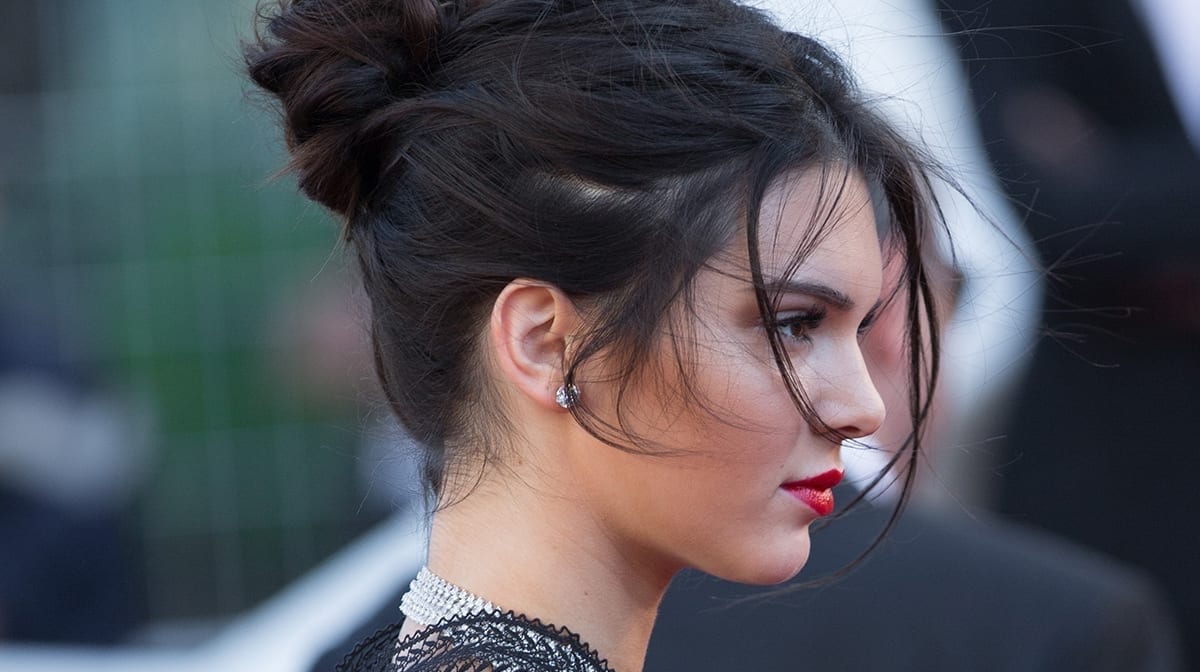
piercing trends
The Overarching Theme for A/W 2025: “Considered Constellations”
Before we dive into specific placements, it’s essential to understand the biggest meta-trend shaping all London piercing trends this season: the move from getting random, disconnected piercings to planning a cohesive, balanced, and thoughtfully curated ear project. The “poke-and-hope” approach is over. The modern client is an art director, and their ear is the canvas.
Moving Beyond Single Statements
For years, the focus might have been on a single, standout piercing—a bold daith ring or a sparkling conch stud. For A/W 2025, the focus is on the entire composition. A Considered Constellation is about how multiple piercings, even very simple ones, interact with each other to create a single, harmonious aesthetic. It’s about balance, flow, and telling a story through a collection of small, beautiful details. It involves thinking about a long-term project, planning future piercings that will complement the existing ones, and creating a look that is dynamic and personal.
The Art of Asymmetry: The Party Ear
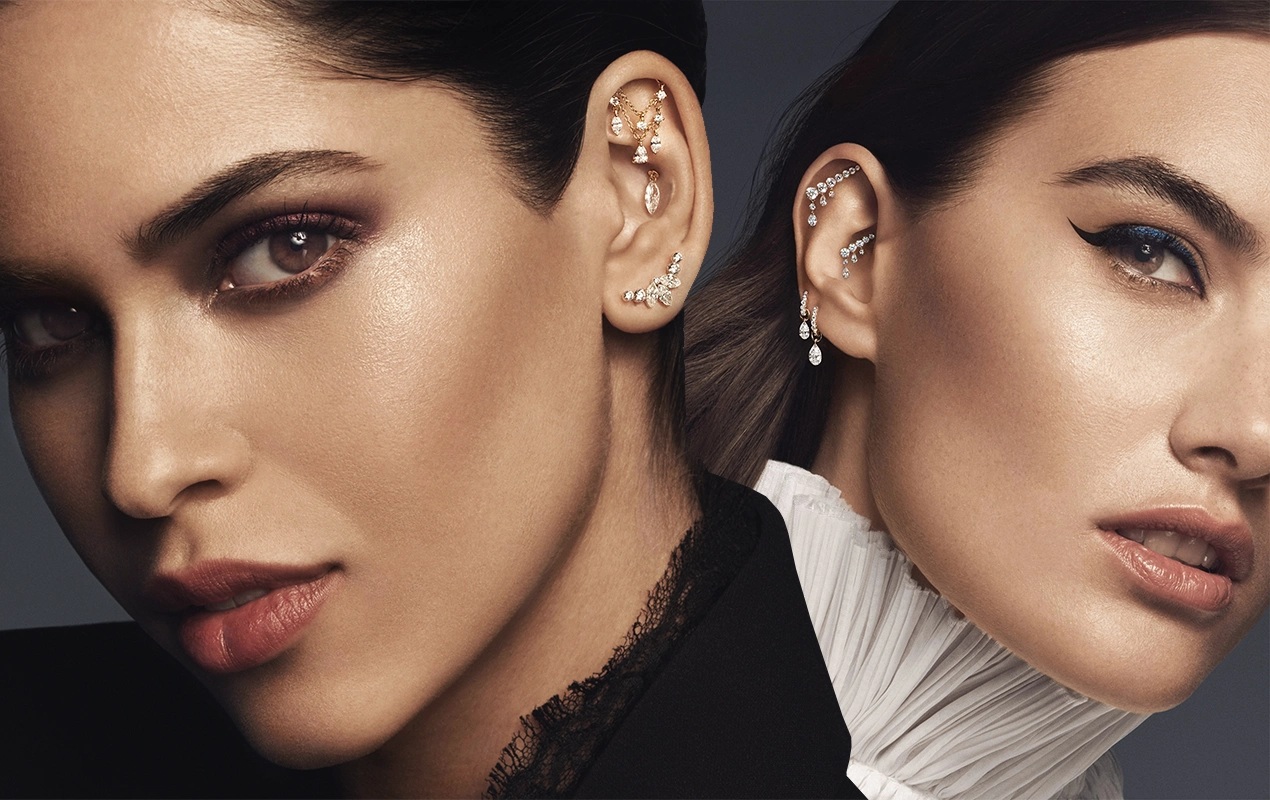
A key element of this curated approach is the embrace of deliberate asymmetry. The trend of having one heavily decorated, stylistically complex “party ear” while keeping the other ear more minimalist and simple continues to dominate. This creates a powerful and confident look, drawing the eye and making a deliberate style statement. It avoids the “perfectly matched set” feel, which can look dated, in favour of something more organic and personal. When planning your next piercing, consider which ear will be your statement ear and how the new addition will contribute to its overall narrative.
The Power of Texture: Mixing Chains, Shapes, and Metals
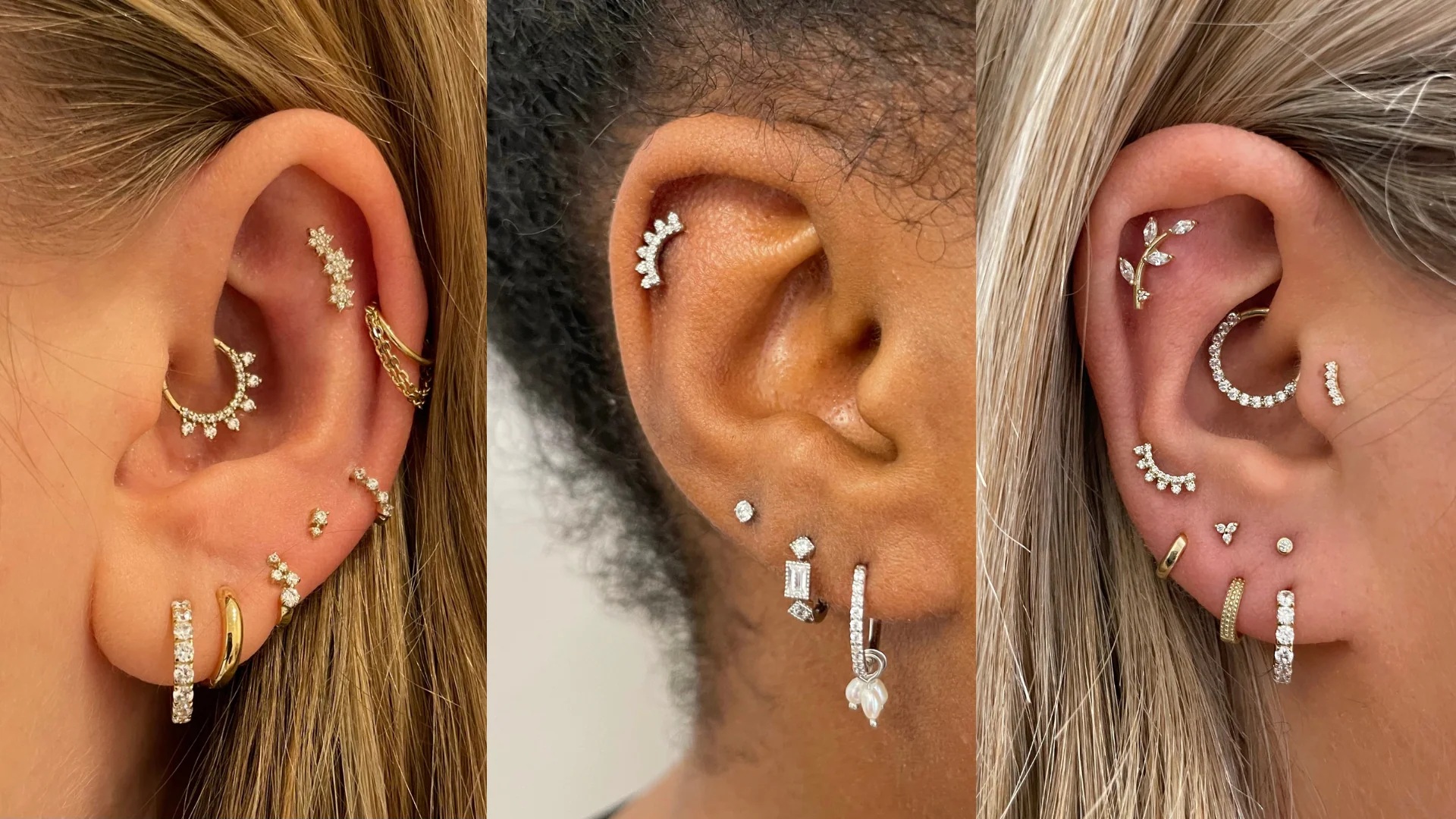
A successful constellation is rich in texture. The A/W 2025 look is all about mixing different elements to create visual interest. This involves:
- Combining Shapes: Moving beyond simple ball or gem studs to include different shapes—stars, daggers, moons, and marquise fans—within a single ear.
- Introducing Chains: Delicate chains are a huge part of the current London piercing trends. They can be used to connect two piercings (like a helix and a lobe), or simply draped from a single piercing to add movement and elegance.
- Mixing Metals: The old rule of “never mix gold and silver” is long gone. A high-fashion, confident look for this season involves deliberately mixing yellow, rose, and white gold (or high-quality, polished titanium) in a single ear project.
piercing trends
Trend : The Stacked Lobe Renaissance
For years, the earlobe was seen as the “boring” part of the ear, the traditional starting point before moving on to more exciting cartilage piercings. For A/W 2025, the lobe is having a major renaissance. The “Stacked Lobe” is perhaps the most accessible and popular of the new London piercing trends.
What is a Stacked Lobe?
A stacked lobe is not simply getting your second or third lobe piercings in a neat line. It’s a more artistic and clustered approach. It typically involves placing two or three very small, delicate piercings in a tight triangular or vertical arrangement, often floating just above an existing, traditional first lobe piercing. It’s about using the soft, fleshy real estate of the lobe to create a mini-constellation.
Why is it Trending Now? The “Hidden Gem” Philosophy
The stacked lobe perfectly embodies the “hidden gems” ethos of the season. It’s a subtle, intricate detail that rewards a closer look. It allows you to add multiple new “piercings” without the long and often difficult healing time of cartilage work. It’s highly customisable and deeply personal. You can create a unique pattern that no one else has. It’s an expert-level look that is surprisingly easy to achieve and heal, which adds to its immense appeal.
Anatomical Considerations and the Importance of Expert Placement
While the lobe is forgiving, a perfect stacked lobe requires a skilled piercer with a great eye.
- Anatomy: This trend works best on people with larger, fleshier earlobes that provide enough space to create a pattern without it looking cramped.
- Placement is Everything: A professional piercer will not just place a dot. They will discuss the jewellery you plan to wear in your first lobe piercing and in the new stack, and will map out the placement of the new piercings accordingly to avoid overcrowding and ensure a balanced look. They will consider the future, ensuring there is enough space for the jewellery to sit comfortably without overlapping.
Jewellery Styling for the Stacked Lobe: The Art of the Tiny
The beauty of the stacked lobe is all in the jewellery. This trend is driven by the availability of incredibly small, delicate, and high-quality threadless ends.
- Initial Jewellery: The initial piercings are typically done with very small, 1.5mm to 2.5mm, threadless ends. These can be simple polished balls, tiny discs, or petite bezel-set gems. The goal is for the initial jewellery to be as unobtrusive as possible to facilitate an easy heal.
- Healed Styling: This is where the magic happens. Once healed (typically in 3-4 months), the possibilities are endless. You can create a personal constellation using a mix of different tiny gem ends (e.g., a diamond, an emerald, and a black diamond). You can use different shapes (a star, a moon, and a dot). You can mix metals for a high-fashion look. This trend is all about curating a collection of tiny, precious details that tell your story.

piercing trends
Trend : The Hidden Helix & The Rise of the Flat
While the lobe gets a renaissance, the cartilage is all about surprise and subtlety. The traditional helix piercing on the very outer rim is a timeless classic, but the most fashion-forward London piercing trends are moving inwards, onto the flat plane of the ear.
Defining the “Hidden Helix” or “Faux Rook”
The Hidden Helix is a specific and highly sought-after placement. It is a helix piercing that is not placed on the outer curl, but on the flat shelf of cartilage just underneath the main helix ridge. The piercing is done from back to front, so that the decorative top of the jewellery peeks out from under the fold. It creates the visual illusion of a rook piercing, but without the difficult healing and strict anatomical requirements of a true rook.
The Appeal of the Unexpected
This trend is the epitome of the “Hidden Gem” philosophy. It’s a piercing that isn’t immediately obvious. It rewards a closer look, a secret sparkle that is only revealed from certain angles. For the discerning client in 2025, this subtlety is a mark of true style. It’s less about showing off and more about curating personal details. It’s an “if you know, you know” placement that signals a sophisticated understanding of modern piercing.
The Flat Piercing as a Canvas
The Hidden Helix is part of a broader trend of utilising the large, flat plane of cartilage in the upper ear.1 The “flat” has become a canvas for two main styles:
- The Statement Piece: Using the wide, open space to showcase a single, larger, and more ornate decorative end—such as a multi-gem cluster, a marquise fan, or an intricate gold design—that wouldn’t fit on the narrow rim of the helix.
- The Flat Constellation: A curated trio of small studs arranged in a triangular pattern on the flat. This creates a beautiful, celestial effect and is a very popular way to start a larger ear project.
Jewellery for the Flat and Hidden Helix
The jewellery for these placements is almost always a flat-back labret stud.
- For the Hidden Helix: A small, decorative end that can nestle perfectly under the cartilage ridge is ideal.
- For the Flat: This is where you can be bold. We are seeing a huge trend towards using larger, multi-gem clusters from high-end brands like BVLA and Anatometal for this placement. Alternatively, a curated trio of tiny, different-coloured gems allows for a more personal and unique statement.
piercing trends
Trend : For the Connoisseur: The Vertical Lobe & Contralobe
While stacked lobes and flats are accessible to most, the truly dedicated piercing enthusiasts in London are seeking out rarer, more advanced placements to create a look that is entirely their own. For A/W 2025, these niche trends are centred around the lower part of the ear.
What are Vertical and Contralobe Piercings?
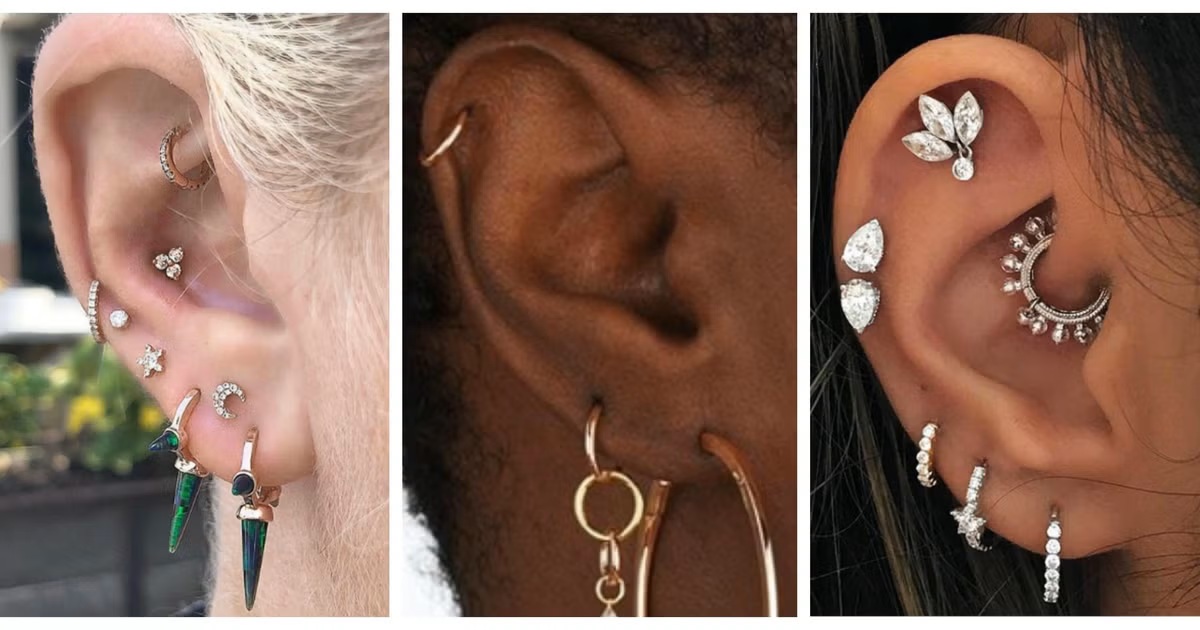
- The Vertical Lobe: Instead of passing through the lobe from front to back, this piercing goes vertically through the fleshiest part of the lobe. It is typically worn with a small curved barbell, so you see the two small ends of the jewellery, one on top of the lobe and one at the bottom. It’s an unexpected and unconventional take on the most traditional piercing.
- The Contralobe (or Anti-Tragus): The anti-tragus is the small ridge of cartilage directly opposite the tragus, just above the earlobe.2 A contralobe piercing is a specific, lower placement on this ridge. It’s a bold and anatomy-dependent piercing that acts as a beautiful anchor point for the lower ear.
Why Are These Niche Piercings Trending?
In a city like London, where even complex cartilage piercings are becoming commonplace, fashion-forward individuals are constantly seeking the next frontier of self-expression. These rarer placements are a way to stand out and demonstrate a deeper appreciation for the art of piercing. They are a sign of a true connoisseur. They perfectly align with the A/W 2025 theme of personal, considered details, and are a core part of the advanced London piercing trends.
Jewellery and Healing Considerations
These are advanced piercings that absolutely require an expert.
- Placement is Key: Both placements are highly dependent on having the right anatomy—a fleshy enough lobe for a vertical piercing, and a pronounced anti-tragus ridge for a contralobe.
- Specific Jewellery: They require very specific jewellery to heal well—typically a curved barbell for a vertical lobe, and either a curved barbell or a custom-bent ring for a contralobe. An expert piercer will choose the exact right piece for your anatomy.
- Healing: As with all piercings, they require diligent aftercare and patience to heal successfully.
Frequently Asked Questions (FAQ)
1. I love the stacked lobe trend, but I only have my first lobes done. Where do I start?
That’s the perfect place to start! The first step is to book a consultation. Bring the earrings you typically wear in your first holes. Our piercer will work with you to map out the perfect placement for a new stack that complements your existing piercing and your unique ear shape.
2. Are “hidden helix” piercings harder to heal than a standard helix?
The healing time is very similar (6-12 months). The main difference is that the hidden helix is more protected by the outer ridge of the ear, which can actually be a benefit as it’s less likely to get snagged. The key is proper aftercare and, crucially, getting the post downsized by your piercer after the initial swelling has gone down.
3. How do I start planning a full “ear curation” project instead of just getting one piercing?
Book a “Consultation / Styling” appointment. This is a dedicated time slot for you to sit with an expert piercer and have a conversation. We will discuss your goals, your anatomy, your lifestyle, and your budget, and help you create a long-term plan for your ear project, mapping out which piercings to get and in what order.
4. I’m seeing a lot of chains on ears. Can I add chains to a new piercing?
Chains are for fully healed piercings only. Adding a chain to a fresh piercing will cause movement and irritation, which can lead to serious complications and delay healing. Patience is key! Once your piercings are fully mature, we can help you style them with a beautiful array of chains.
5. Are these London piercing trends suitable for beginners, or are they only for people with lots of piercings?
The stacked lobe and the single flat piercing are fantastic options for beginners! They are relatively easy to heal (for a cartilage piercing, in the case of the flat) and are a great way to start your curation journey. The more advanced placements, like the contralobe, are better reserved for those with more healing experience.
piercing trends
Conclusion
The overarching theme for Autumn/Winter 2025 is clear: piercing has moved into a new era of artistry and personal expression. The focus is on creating considered, harmonious compositions that are rich in detail and personal meaning. The key London piercing trends—the Stacked Lobe Renaissance, the subtle allure of the Hidden Helix and Flat, and the connoisseur’s choice of the Vertical Lobe—all speak to this new philosophy. But the biggest trend of all is the one that never fades: the commitment to quality. Translating these beautiful ideas into reality requires the skill, knowledge, and eye of a true professional piercer who can adapt these trends to your unique anatomy.