
Stepping into a studio for a genital piercing is a deeply personal and often nerve-wracking experience. As an elite piercer and your consultant, my first priority is to validate those nerves and replace them with confidence. Before we ever discuss the physical procedure, we start with your unique anatomy. A premium Labia Piercing Service requires a profound understanding of how your body is built, ensuring a placement that is not only structurally sound but entirely complementary to your natural form.
Demystifying the Folds: Identifying the Inner (Minora) vs. Outer (Majora) Structures
Understanding the architectural differences of your vulva is the critical first step in planning a Labia Minora vs Majora piercing. The anatomy dictates exactly how the tissue will support a structural modification.
The labia minora are the inner folds. These structures are composed of mucosal tissue—similar to the inside of your lip—and do not contain hair follicles or underlying fatty layers. Because they are highly vascular and pliable, they naturally fold and shift with the body’s movements.
The labia majora are the outer folds that frame the vulva. In contrast to the inner folds, the majora consist of traditional skin, adipose (fatty) tissue, and hair follicles. This creates a thicker, more padded structure that acts as a natural cushion. Understanding these distinct tissue mechanics allows us to map out a precise entry and exit point that works in harmony with your body’s natural baseline.
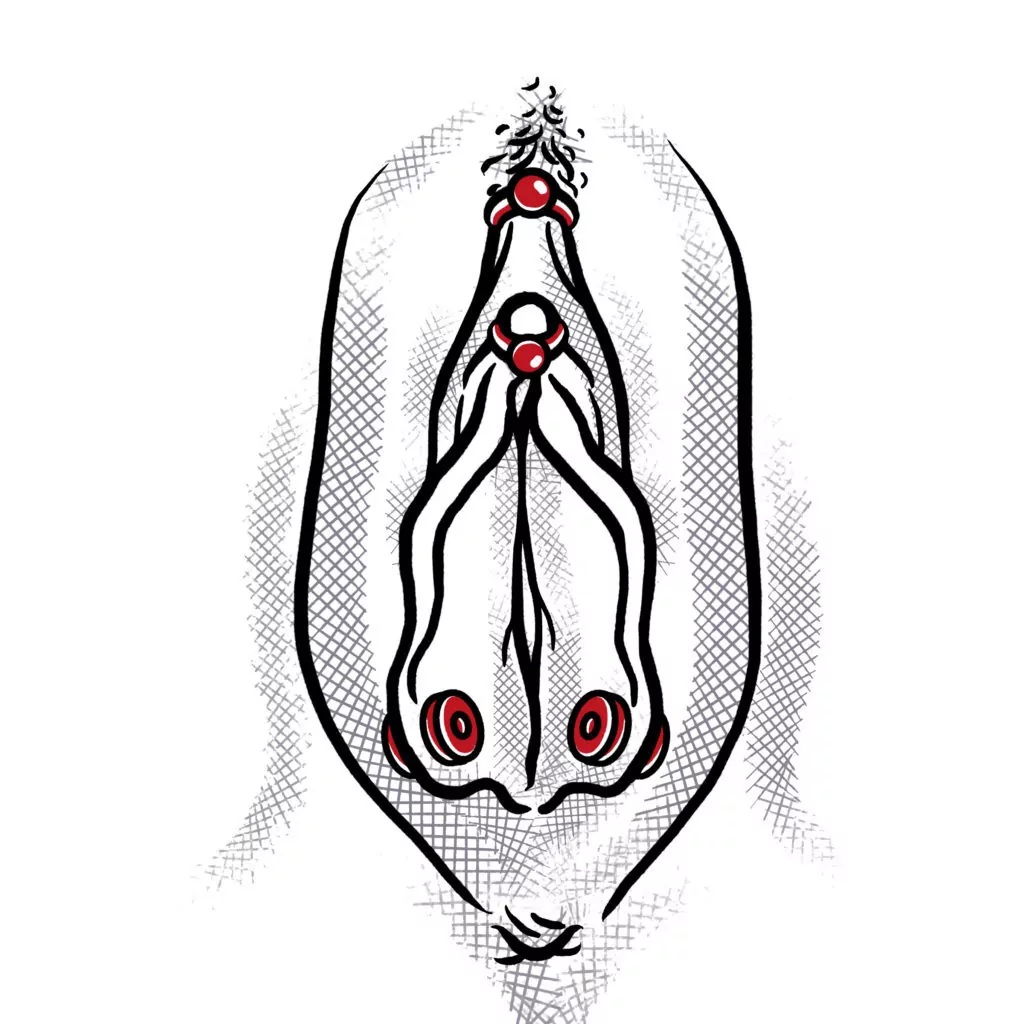
Labia Piercing
“Are My Labia Normal Enough?” – Normalizing Natural Asymmetry and Variations
As a professional who consults on intimate anatomy daily, I want to address the most common and deeply felt insecurity right away: there is no such thing as a “standard” vulva. The vast majority of clients sitting in my chair worry that their anatomy is too asymmetrical, too prominent, or too subtle for a piercing.
Let me be entirely clear—asymmetry is the biological rule, not the exception. It is completely natural for one side of the minora to be longer, thicker, or differently colored than the other. The majora can also vary in fullness from side to side. We do not look for perfect symmetry; instead, we look for structural integrity. Your anatomy is uniquely yours, perfectly normal, and highly capable of supporting beautiful modifications.
Anatomical Comparison – Minora vs. Majora Tissue Mechanics
| Anatomical Feature | Labia Minora (Inner) | Labia Majora (Outer) |
| Tissue Composition | Mucosal membrane lacking hair follicles and adipose tissue | Standard skin containing adipose (fatty) tissue and hair follicles |
| Structural Variance | Highly variable in length, width, prominent ridges, and color | Generally thicker, pad-like structure providing a cushioned base |
| Placement Mechanics | Requires a distinct, pronounced fold or ridge to safely support the channel | Requires sufficient outer tissue depth and volume to securely anchor the points |
Assessing Tissue Suitability for a Labia Minora vs Majora Piercing
Finding the perfect placement is a collaborative, clinical process. During your physical anatomy check, I assess the specific characteristics of your tissue to determine viability.
For the inner folds, I examine the prominence and thickness of the ridge. The tissue must have enough distinct surface area to comfortably support the entry and exit points without the risk of structural thinning. For the outer folds, I assess the depth of the adipose tissue to ensure there is a stable, secure base to anchor the modification safely. If one specific anatomical route is not structurally viable for your unique build, we will openly discuss alternative placements that better suit your natural framework.
The pinktatpier Promise: A Judgment-Free, Empowering Consultation Environment
At pinktatpier, your Labia Piercing Service begins long before you enter the procedural room. We have cultivated an environment built entirely on empathy, privacy, and clinical transparency.
Your consultation is a protected, judgment-free space designed to dissolve anxiety. We will sit down together to review your anatomy, openly discuss your aesthetic goals, and establish a foundation of mutual trust. There are no rushed decisions and absolutely no silly questions. My goal is to ensure you feel fundamentally safe, fully educated on your personal anatomy, and entirely empowered in the choices you make for your own body.
The Procedure and Pain Reality of Your Labia Piercing Service
The most common question that echoes through my piercing room is simply: “How bad is this going to hurt?” It is completely normal to feel a spike of adrenaline and anxiety when anticipating pain in such a sensitive area. As your consultant, I believe in absolute transparency. We are going to break down the exact sensory realities of the procedure so that you know precisely what to expect when you are on the table. Fear thrives in the unknown, and by understanding the mechanics of the sensation, we can significantly reduce that procedural anxiety.
The Minora Reality: Navigating the Quick, Sharp Pinch
When we discuss a Labia Minora vs Majora piercing, the sensory experiences are remarkably different due to the nature of the tissues involved.
Piercing the inner folds is universally described by clients as a very fast, sharp, and intense pinch. Because this tissue is highly vascular and relatively thin, the needle passes through with almost zero resistance. The peak sensation—that hot, sudden sting—lasts only for a fraction of a second. It is a brilliant, immediate flash of intensity that can make your eyes water, but it subsides almost as quickly as it registers. The anticipation leading up to the moment is almost always more intense than the actual, fleeting pinch itself.
The Majora Reality: Understanding Deeper Tissue Pressure
The sensory profile shifts entirely when we move to the outer folds. Because we are passing through a thicker, padded layer of skin and adipose tissue, the sensation is less of a razor-sharp sting and much more of a deep, concentrated pressure.
Clients often describe this as a heavy, dull push or an intense, localized pinch that takes a heartbeat longer to complete than the inner tissue. You will feel the physical pressure of the clamp securing the area, followed by a momentary deep resistance as the needle creates the channel. While it feels more substantial than the inner fold, it is highly tolerable and localized, leaving a warm, throbbing sensation immediately after the procedure is complete.
Pain Profile & Sensation Contrast – Inner vs. Outer Piercing
| Sensation Metric | Labia Minora (Inner) | Labia Majora (Outer) |
| Primary Sensation | Sharp, hot, and highly localized pinch | Deep, dull pressure and heavy clamping sensation |
| Resistance Level | Near-zero resistance; the needle glides through instantly | Moderate resistance due to thicker, padded skin layers |
| Duration of Peak Sensation | A fraction of a second (a sudden flash) | Slightly longer (a deliberate, pressurized push) |
| Immediate Post-Pierce Feeling | A light, localized sting that fades rapidly | A warm, heavy throb that settles into a dull ache |
Step-by-Step: The Swift, Clinical, and Secure Piercing Process
Understanding the physical choreography of your Labia Piercing Service takes the mystery out of the experience. Once you are comfortable on the table, the area is meticulously prepped and cleansed using a surgical-grade skin prep. I will then use a sterile, single-use surgical marker to place the tiny entry and exit dots, allowing you to confirm the exact placement before we proceed.
Depending on the specific tissue, I may use a sterile receiving tube or a specialized clamp to secure the skin, ensuring zero shifting during the needle’s pass. This is where you will feel the initial pressure. On my count, and synced perfectly with your breath, the specialized, razor-sharp piercing needle is guided smoothly through the tissue. The jewelry is immediately followed through the channel in a seamless motion, and the end is secured. The entire physical action takes only seconds.
Grounding and Breathing Techniques for the Highly Anxious Client
At pinktatpier, we recognize that an unregulated nervous system makes everything feel more intense. We do not rush you through this vulnerable moment.
Before I ever uncap a needle, we will practice guided breathing together. I instruct my clients to take deep, expanding belly breaths—inhaling through the nose to fill the diaphragm, and exhaling fully through the mouth. We will actively work on dropping your shoulders away from your ears and unclenching your jaw. When it is time for the piercing, I will have you take a deep, grounding inhale, and the needle will pass exactly as you release a long, forceful exhale. Pushing the breath out naturally relaxes the pelvic floor and disperses the focal point of the pain, making the entire experience surprisingly manageable and deeply empowering.
Precision Jewelry Dynamics and Materials
Choosing the right jewelry for your intimate piercing is never just about aesthetics; it is a critical matter of biological engineering. When you come in for a Labia Piercing Service, the metal and the shape we select will directly dictate your long-term comfort and safety. As your consultant, I want to alleviate any fears you might have about heavy, clunky pieces or the dreaded risk of jewelry snagging. We are going to explore exactly what goes into your body and why, ensuring you feel completely secure with the hardware sitting against your most sensitive tissues.
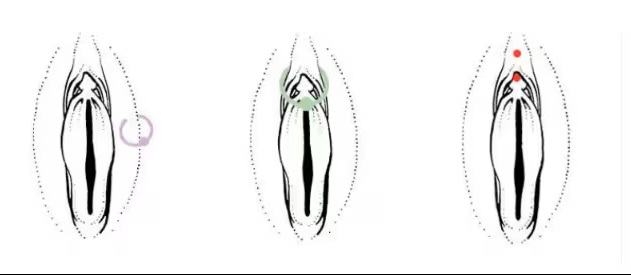
Labia Piercing
Implant-Grade Titanium: The Non-Negotiable Material for Intimate Placements
The foundation of a safe Labia Minora vs Majora piercing begins with the material itself. We exclusively utilize implant-grade titanium (ASTM F136). This is the exact same biocompatible metal used in surgical joint replacements. It is entirely nickel-free, remarkably lightweight, and highly polished to eliminate microscopic surface flaws where irritants could hide. For highly sensitive intimate placements, relying on standard “surgical steel”—which often contains trace amounts of nickel—is a massive risk for allergic reactions. Titanium is non-negotiable; your body deserves the absolute highest standard of medical-grade safety.
Captive Bead Rings (CBRs) and Circular Barbells for the Inner Folds
For the inner folds, the jewelry must flow seamlessly with the natural, dynamic draping of the tissue. This is why Captive Bead Rings (CBRs) and circular barbells (horseshoes) are the elite choices here. Because this specific tissue is thin and highly mobile, a ring allows for fluid, uninterrupted movement without causing rigid torque or awkward pressure points. Many clients worry about rings snagging, but when sized correctly by a professional, a CBR hugs the border of the fold closely enough to remain discreet and mechanically secure, drastically minimizing any catching hazard.
The Mechanics of Curved Barbells for the Outer Folds
The outer folds require an entirely different structural approach. Because this placement passes through thicker, padded skin, rings are generally inappropriate for initial wear; they can create a leverage effect that pulls on the entry points. Instead, we strictly utilize curved barbells. The gentle arc of a curved barbell perfectly mirrors the natural slope of the outer tissue, allowing the entry and exit beads to sit flush against the skin. This specific geometry distributes pressure evenly, preventing the jewelry from being pushed outward or catching on environmental friction.
Ideal Jewelry Architectures per Specific Placement
| Placement Focus | Recommended Initial Jewelry | Structural Benefit | Snag Prevention Strategy |
| Labia Minora (Inner) | Captive Bead Rings (CBRs) or Circular Barbells | Accommodates fluid tissue movement without creating rigid torque | Properly fitted diameters that naturally hug the tissue closely |
| Labia Majora (Outer) | Curved Barbells | Matches the natural arc of the outer pad, distributing pressure evenly | Low-profile beads that rest perfectly flush against the skin’s surface |
Sizing Up: Strategic Bar Lengths to Accommodate Initial Swelling
A common moment of panic occurs when clients first look in the mirror after their procedure and think, “Why does the jewelry look a little big?” At pinktatpier, we intentionally use longer barbells and wider-diameter rings for your initial installation. Your body’s immediate physiological response to a new piercing is to swell. If the jewelry is fitted to your “normal” baseline from day one, that swelling has nowhere to expand, leading to painful embedding. The extra length provides a mandatory, structural safety buffer. Once your body settles, you will return to the studio for a precise downsize, swapping the initial piece for a snugger, permanent fit that feels incredibly natural.
The Healing Timeline & Hygiene
Once the procedure is complete, your body begins the intricate biological process of “epithelialization”—creating a tunnel of new skin around your jewelry. Healing an intimate piercing requires patience and a strict adherence to hygiene, but it is often much more straightforward than clients anticipate. Because the pelvic area has such high vascularity (excellent blood flow), these piercings tend to heal predictably when given the right environment. At pinktatpier, we provide a clinical roadmap so you never have to guess if your recovery is on track.
The 4 to 8-Week Rapid Healing Cycle of Inner Mucosal Tissue
The labia minora are composed of mucosal tissue, which is biologically designed to repair itself at an accelerated rate. This is the same type of tissue found inside your mouth; it stays moist and regenerates quickly.
For a Labia Minora piercing, the initial “raw” phase usually subsides within the first 7 to 10 days. By week 4, the exit and entry points have often stabilized significantly. However, even if it feels “done,” the internal tunnel is still fragile. We consider these fully matured by week 8. This rapid turnaround is one of the primary reasons the minora is such a popular choice for a Labia Piercing Service—the “annoyance factor” of a new piercing is remarkably short-lived.
Managing the 3 to 6-Month Surface-Like Healing of Outer Tissue
The labia majora follow a completely different biological clock. Because the outer folds are essentially standard skin with an underlying fatty layer, they heal much like a navel or an ear cartilage piercing.
A Labia Majora piercing deals with more external friction from walking, sitting, and clothing. The skin here is tougher and thicker, meaning the needle channel is longer. You should expect a healing window of at least 3 to 6 months. During the first few months, it is common to see occasional “crusties” (lymph fluid) or slight redness if the area is bumped. Consistency is the key here; while the minora heals in a sprint, the majora is a marathon.
Healing Phases and Daily Care Regimens
| Healing Phase | Timeline (Minora) | Timeline (Majora) | Primary Goal |
| Inflammatory Phase | Days 1–5 | Days 1–14 | Manage swelling and localized tenderness |
| Proliferative Phase | Weeks 2–4 | Weeks 3–10 | Formation of the “fistula” (skin tunnel) |
| Maturation Phase | Weeks 6–8 | Months 3–6 | Tissue strengthening and permanent stability |
Mastering Sterile Saline Soaks for Optimal Cellular Recovery
The “Golden Rule” of hygiene at pinktatpier is: Leave It Alone (L.I.T.A.). Your body knows how to heal; our job is simply to keep the path clear.
We strictly recommend sterile saline 0.9% (wound wash) in a pressurized spray can. Twice a day, you will thoroughly saturate the area. You do not need to “rotate” or “twist” the jewelry—doing so actually tears the delicate new skin cells forming inside the channel. For a deeper clean, you can perform a “saline soak” by spraying the saline onto a sterile gauze pad and holding it against the tissue for five minutes. This softens any dried lymph fluid, allowing it to rinse away naturally without the need for harsh scrubbing or irritating soaps.
Dealing with Periods: Safe Practices for Pads vs. Menstrual Cups
One of the most frequent concerns regarding a Labia Piercing Service is how to manage a menstrual cycle during the healing phase. It is entirely manageable with a few tactical shifts.
Menstrual Cups/Tampons: These are the gold standard during healing. Because they collect fluid internally, they keep the piercing site dry and free from blood, which can harbor bacteria if left to sit against the skin.
Pads/Liners: If you prefer pads, you must be hyper-vigilant. Traditional pads can trap moisture and heat against the piercing, creating a “greenhouse effect” that invites irritation. If using pads, choose 100% organic cotton (unscented) and change them much more frequently than usual to ensure the piercing remains in a dry, breathable environment.
Lifestyle, Wardrobe & Intimacy
Integrating a new piercing into your daily life requires a few tactical adjustments, particularly during the first several weeks. Because a Labia Piercing Service involves a highly mobile and high-friction area of the body, being “piercing-conscious” in your wardrobe and activity choices is essential for a smooth recovery. At pinktatpier, we want you to enjoy your new aesthetic without the stress of accidental snags or irritation.
The Danger of Lace Underwear, Mesh, and Shower Loofahs
During the healing phase, your choice of fabric is your first line of defense. Lace, while beautiful, is the natural enemy of a fresh labia piercing. The intricate loops of the fabric can easily snag on the beads of a barbell or the gap in a ring, causing sudden, painful trauma to the healing tissue.
Similarly, mesh fabrics and synthetic “moisture-wicking” materials should be avoided as they trap heat and bacteria. In the shower, be extremely cautious with loofahs or mesh sponges; a single stray loop can catch the jewelry with surprising force. We recommend using only your clean hands or a smooth washcloth near the piercing site to ensure a snag-free experience.
Temporary Physical Restrictions: Navigating Cycling and Horseback Riding
For those with active lifestyles, some temporary modifications are necessary to prevent mechanical irritation. Activities that involve direct, prolonged pressure on the pelvic floor—specifically cycling, spin classes, or horseback riding—should be paused for the first 4 to 6 weeks.
The repetitive friction and “crushing” pressure of a bike saddle can cause the jewelry to migrate (shift position) or cause the tissue to become chronically inflamed. Once the initial healing phase is over and you have had your downsize at pinktatpier, you can gradually return to these activities, often using padded shorts or adjusted seating positions to ensure continued comfort.
Safe vs. High-Risk Wardrobe and Activity Matrix
| Category | Recommended (Safe) | Avoid (High-Risk) |
| Underwear | Loose-fitting, 100% breathable cotton | Lace, thongs, or tight synthetic fabrics |
| Clothing | Flowy skirts, loose trousers, or joggers | Tight-fitting leggings or “compression” gear |
| Physical Activity | Walking, upper-body lifting, light yoga | Cycling, horseback riding, or heavy squatting |
| Hygiene Tools | Hands only or smooth cotton washcloths | Loofahs, bath sponges, or textured exfoliants |
Modifying Intimacy to Manage Direct Friction and Pressure
We understand that intimacy is a natural part of life, but a healing piercing requires a “work in progress” boundary. For the first 4 weeks, we strongly recommend abstaining from any sexual activity that involves the piercing site. This isn’t just about pain; it’s about preventing the introduction of foreign bacteria (from saliva or partner fluids) and avoiding mechanical trauma.
As you reintroduce intimacy, communication with your partner is vital. Avoid “rough” friction and be mindful of positions that put direct weight on the labia. Using a barrier method (like a condom or dental dam) during the healing phase can provide an extra layer of protection against bacteria. If the area feels tender or looks red after intimacy, it’s a sign to scale back and give the tissue more time to stabilize.
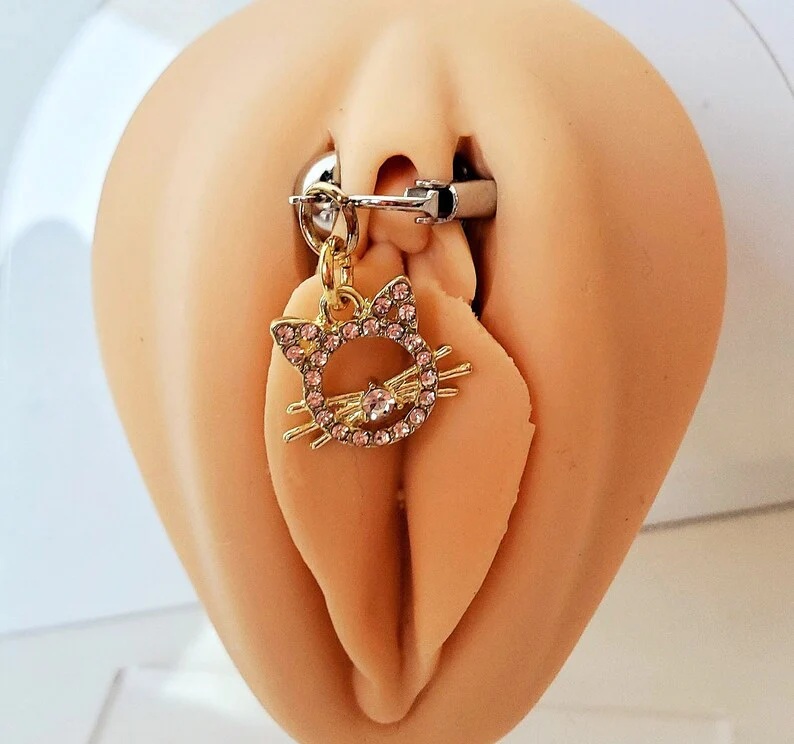
Labia Piercing
Strategic Daily Wardrobe Choices for Essential Breathability
The “Gold Standard” for a healing labia piercing is airflow. Tight clothing creates a warm, damp environment where bacteria thrive and healing stalls. For the first few weeks, opt for “breathable” outfits. If you must wear jeans, ensure they are a loose cut and not high-waisted styles that press into the pelvic region when you sit. Many clients find that switching to “boy-short” style cotton underwear or even going without underwear while sleeping provides the necessary relief and oxygen flow to speed up the cellular repair process.
FAQ & Local Consultation CTA
As you move beyond the initial healing phase, your Labia Piercing Service evolves from a new modification into a permanent part of your self-expression. Many clients at pinktatpier eventually find themselves curious about expanding their aesthetic or understanding how their piercings will behave over the years. This final chapter addresses the “what’s next” of intimate modifications and how to take the definitive step toward your own transformation.
Exploring the “Labia Ladder”: The Mechanics of Multiple Sequential Piercings
For those who find the initial result empowering, the “Labia Ladder” is a stunning advanced project. This involves a series of multiple piercings—usually on the labia minora—placed in a symmetrical, vertical row.
Achieving a ladder requires strategic planning. We do not perform multiple piercings in a row all at once; instead, we space them out over several months. This ensures that the blood flow to the tissue remains optimal and that each individual “rung” has a stable foundation before the next is added. During your follow-up at pinktatpier, we can map out a long-term plan to create this intricate, laddered aesthetic safely.
Long-Term Dynamics: Stretching and Gauging Over Time
Unlike earlobes, stretching a labia piercing is a much more delicate and slow process. Because the tissue is mucosal (inner) or soft-tissue (outer), it is quite elastic, but it is also prone to thinning if rushed.
If you decide you want a bolder look with thicker jewelry, “gauging” must be done in microscopic increments over years, not weeks. We recommend waiting at least one full year after the initial pierce before even considering a stretch. This allows the fistula to become incredibly tough and “leatherized,” ensuring it can handle the increased weight and tension of larger-gauge jewelry without migrating.
Single Placement vs. Complex Configuration Dynamics
| Feature | Single Labia Piercing | Multiple/Ladder Configuration |
| Healing Complexity | Low; body focuses energy on one site | Moderate; requires “staged” healing phases |
| Jewelry Coordination | Simple; focuses on one focal point | High; requires matching diameters for symmetry |
| Sensation | Localized to one specific nerve cluster | Distributed; creates a broader sensory profile |
| Maintenance | Standard daily hygiene | Requires careful cleaning between jewelry gaps |
Resolving Final Insecurities Before Taking the Next Step
It is perfectly normal to still have a lingering “What if?” in your mind.
What if I don’t like it? The beauty of labia piercings is that if you change your mind during healing and remove the jewelry, the tissue usually closes with virtually no visible scarring.
What if it affects my sensitivity? For most, these piercings enhance body awareness and confidence, which often leads to a more positive intimate experience.
What if I’m “too old” or “too young”? As long as you are a consenting adult with viable anatomy, there is no “perfect age” for self-empowerment.
Secure Your Safe Space: Booking Your Labia Piercing Service at pinktatpier
You deserve a piercing experience that is as premium as the jewelry we use. At pinktatpier, we don’t just “do a job”—we provide a sanctuary for body autonomy. Choosing a Labia Piercing Service is an act of reclaiming your body, celebrating your unique anatomy, and embracing your confidence.
Our doors are open for private, one-on-one consultations where your comfort is the only priority. Whether you are ready to start your “Labia Minora vs Majora piercing” journey today or just want to see if your anatomy is a fit, we are here to guide you with clinical expertise and genuine empathy.
The journey into body piercing is a deeply personal one, a way of adorning, claiming, and celebrating one’s own body.1 Nowhere is this more true than with intimate piercings. A labia piercing, in its beautiful variety, is a profound statement of self-love, sensuality, and personal empowerment. It is a hidden treasure, chosen not for public display, but for the wearer’s own sense of self and confidence.
However, the decision to get such an intimate piercing must be met with an unparalleled level of professionalism, discretion, and specialised expertise. Trust is not just a part of the process; it is the entire foundation. At PinkTatPier, we have built our reputation on being London’s most trusted sanctuary for these procedures. We recently had a consultation with a client who was exploring the idea of a labia piercing London. She came to her confidential appointment with a mix of excitement and apprehension, having read conflicting and often intimidating information online.
Our lead female specialist began their time together not with an examination, but with a quiet, compassionate, and unhurried conversation in our completely private consultation room. They took the time to listen to the client’s motivations, her lifestyle, and her specific questions about healing, sensation, and what to expect. Using anatomical diagrams, our specialist gently and respectfully explained the difference between inner and outer labia piercings, discussing the unique healing characteristics and jewellery options for each. The client visibly relaxed as her questions were met with calm, knowledgeable answers. “This is nothing like what I was scared of,” she said. “I feel like I’m talking to a healthcare professional who is also an artist.”
This is the experience we are committed to providing. A labia piercing is a collaboration built on trust, education, and mutual respect. This guide is an extension of that confidential, expert-led conversation. It is a comprehensive and honest resource, designed to provide you with the critical info you need and to explain how to contact our professional female piercers in London to begin your own safe, respected, and empowering journey.
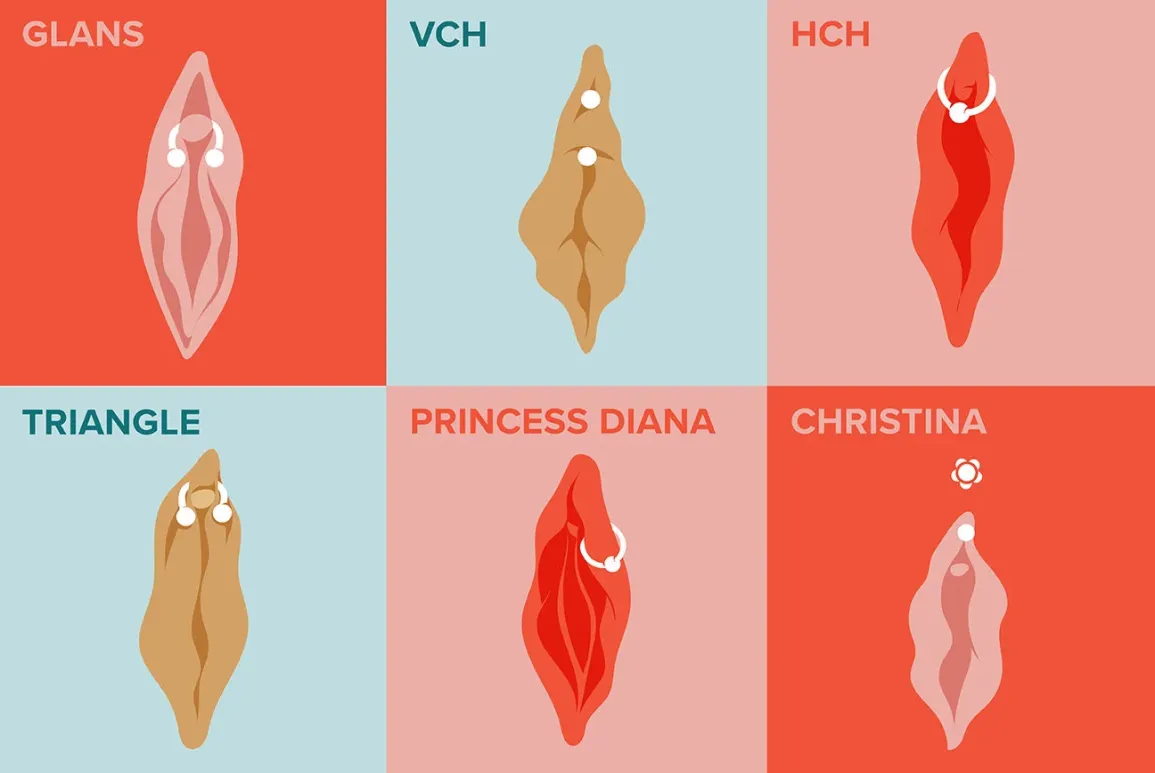
labia piercing
Understanding Your Anatomy: Inner Labia vs. Outer Labia Piercings
The term “labia piercing” is not a single category; it primarily refers to two distinct types of piercings, each with its own unique characteristics, healing process, and aesthetic possibilities. The choice between them is entirely dependent on your personal anatomy and your desired look.
Inner Labia Piercings (Labia Minora)
The inner labia are the thin, delicate folds of skin that are closest to the vaginal opening.2 Piercings in this area are some of the most popular and easiest-to-heal of all intimate piercings.
- Anatomical Suitability: The ideal candidate has inner labia that are pronounced enough to be comfortably pierced without putting pressure on surrounding structures. The tissue is thin, highly vascular (meaning it has an excellent blood supply), and very stretchy.
- Healing Process: Due to the incredible blood supply, inner labia piercings heal remarkably quickly. The initial healing period is often as short as 4 to 8 weeks, making it one of the fastest-healing piercings on the body.
- Aesthetic & Sensation: Inner labia piercings are most commonly adorned with captive bead rings or seamless rings, which can provide a beautiful, symmetrical look, especially when performed as a pair. For many wearers, the presence of the jewellery can add a new and interesting dimension to sexual sensation.
- Placement: They are typically placed towards the center or lower half of the labia to avoid any interference with the clitoral hood. They can be done as a single piercing or, very popularly, as a symmetrical pair.3
Outer Labia Piercings (Labia Majora)
The outer labia are the fleshier, thicker folds of skin on the outermost part of the vulva, where pubic hair typically grows.4 These piercings are bolder and have a different set of considerations.
- Anatomical Suitability: These piercings require a substantial “pinchable” amount of fleshy tissue. They pass through much thicker tissue than inner labia piercings.
- Healing Process: Because the tissue is thicker and has a less concentrated blood supply than the inner labia, the healing process for outer labia piercings is significantly longer and more comparable to a navel or nipple piercing. A full healing period of 6 to 12 months, or sometimes longer, should be expected.
- Aesthetic & Sensation: Outer labia piercings make a bolder visual statement. They can be performed as a single piercing, a symmetrical pair, or even in a “ladder” formation with multiple piercings running vertically.5 They can be worn with either rings or barbells. While they do not typically provide the same level of direct stimulation as an inner labia piercing, their presence can be enjoyed by both the wearer and their partner.
The PinkTatPier Professional Service: A Commitment to Your Dignity and Safety
Choosing to get an intimate piercing is a significant decision. Our entire service is structured around ensuring you feel safe, respected, and in complete control from start to finish.
Why Choose a Professional Female Piercer?
While all of our piercers are consummate professionals, we understand that for many clients seeking a labia piercing London, consulting with a female piercer provides an essential level of comfort and understanding. Our team of professional female piercers are not only masters of their craft but are also deeply committed to creating a compassionate, non-judgemental, and empowering environment for every client.
The Confidential Consultation: An Open and Honest Dialogue
Your journey starts with a private, in-person consultation. This is a mandatory step. During this session, we will:
- Have a Conversation: We will sit down with you in our private room to discuss your goals, answer your questions, and address any concerns you may have.
- Perform a Respectful Anatomical Assessment: Our piercer will conduct a quick and gentle examination to confirm that your anatomy is suitable for the piercing you desire. This is a simple visual check that takes only a few moments.
- Discuss Placement and Jewellery: We will discuss the precise placement to best suit your body and help you select the appropriate, high-quality initial jewellery.
- Provide a Clear Quote: We will give you a transparent, no-obligation cost quote for the entire procedure.
The Piercing Procedure: Clinical Precision, Compassionate Care
Our piercing procedure is performed with the highest standards of hygiene and technical skill. The room is a clinical-grade environment. All equipment is single-use or hospital-grade sterilised. The piercer will meticulously mark the placement, ensuring your full approval before proceeding. The piercing itself is performed swiftly and precisely to minimise discomfort, with your piercer talking you through the process to ensure you feel calm and in control.
Our Studio’s Philosophy on Intimate Piercing:
“Trust is the most sacred element in our studio, especially when performing intimate piercings. Our role extends far beyond the technical. We are confidantes, educators, and advocates for our clients’ autonomy and well-being. The consultation is a space free of judgement, where every question is valid and every concern is heard. A successful labia piercing isn’t just one that is straight and healthy; it’s one that makes the client feel beautiful, confident, and empowered in their own skin. That is the true measure of our professional service.” – Our Lead Female Specialist at PinkTatPier
The Healing Journey and Aftercare: A Guide to Comfort and Health
Proper aftercare is essential for a smooth and swift healing process.
The Healing Timeline: Inner vs. Outer Labia
The healing experiences are quite different. The table below provides a realistic overview.
Table: Labia Piercing Healing & Aftercare Guide
| Piercing Type | Timescale | What to Expect | Key Aftercare & Lifestyle Advice |
| Inner Labia (Minora) | Week 1-2 | Mild swelling, tenderness, and minor spotting are normal. Urination may cause a slight stinging sensation initially. | Clean twice daily with sterile saline solution. Abstain from sexual activity. Wear loose, breathable cotton underwear. Avoid baths and swimming. |
| Week 4-8 | For most, the piercing is fully healed. The tissue is highly vascular and recovers very quickly. | Once you feel comfortable, gentle sexual activity can be resumed. Always clean the piercing afterwards. A check-up is recommended to confirm healing. | |
| Outer Labia (Majora) | Month 1-3 | More significant swelling, bruising, and tenderness than inner labia. The piercing is very fragile. | Clean twice daily with sterile saline. Abstain from sexual activity. Avoid tight clothing (like skinny jeans or cycling shorts) that puts pressure on the area. |
| Month 3-12+ | The piercing will begin to feel much more stable, but the long channel through thicker tissue is still maturing internally. | Continue to be mindful of friction and pressure. A downsizing appointment for barbells may be necessary. Do not change jewellery yourself until a professional has confirmed it is fully healed. |
Cost & How to Contact Our London Team
A labia piercing London is a specialist procedure, and our pricing reflects the expert care, clinical environment, and high-quality jewellery involved.
Understanding the Cost
The cost will vary depending on whether you are getting an inner or outer labia piercing, a single or a pair, and your choice of initial jewellery. A precise, no-obligation quote will be provided during your mandatory, in-person consultation.
How to Contact Our Professional Female Piercers for Info
Your journey must begin with a private consultation. To start this process, you can:
- Contact Our London Team via our website’s secure contact form or by calling the studio to request a consultation for an intimate piercing.
- Book Online: Our online booking system may have an option for an “Intimate Piercing Consultation,” which is the most discreet and direct way to schedule your appointment.
Your 5 Most Important Questions Answered (FAQ)
1. How painful is a labia piercing?
For inner labia piercings, because the tissue is so thin, most clients report a very quick, sharp pinch that is surprisingly low on the pain scale—often less intense than a standard cartilage piercing. For outer labia piercings, the sensation is more of an intense pressure due to the thicker tissue, and the area will be more tender afterwards.
2. How soon can I have sex after getting a labia piercing?
You must abstain from all sexual activity, including oral sex, for the initial healing period.6 For fast-healing inner labia piercings, this is typically a minimum of 2-4 weeks. For slower-healing outer labia piercings, it is much longer, often 2-3 months or more. The key is to wait until you are fully healed and comfortable.
3. Will it affect childbirth or gynaecological exams?
Once healed, labia piercings typically do not interfere with routine gynaecological exams. For childbirth, it is a personal choice, but most medical professionals will advise you to remove the jewellery beforehand to prevent any tearing or complications. The piercing can usually be reinserted after delivery.
4. Can this piercing increase my risk of STIs?
During the healing phase, any open wound, including a new piercing, can theoretically increase the risk of transmission. It is essential to practice safe sex and abstain from sexual contact until the piercing is fully healed. Once healed, a labia piercing does not increase your risk of contracting an STI.
5. Why is it important to go to a female piercer for this?
While skill is not gender-dependent, for many clients, the process of getting an intimate piercing is a deeply vulnerable one. Choosing a professional female piercer can create an environment of shared understanding, comfort, and empathy that makes the entire experience feel safer, more respectful, and less intimidating. It’s about ensuring your complete emotional and physical comfort.
Conclusion: An Act of Personal and Empowered Adornment
A labia piercing is a beautiful, intimate, and profoundly personal act of adornment. It is a celebration of your body, chosen for your own pleasure and confidence. The success, safety, and comfort of this journey depend entirely on placing your trust in a true professional who approaches the procedure with the respect, discretion, and anatomical expertise it deserves.
Your Next Step: Begin a Confidential Conversation
Are you ready to explore this empowering and beautiful piercing for yourself?
We invite you to contact our professional female piercers in London to start a confidential conversation. Let us provide you with the detailed info and cost estimate you need in a safe, respectful, and expert environment.