
Hafada and Lorum Piercings: A Guide to Scrotal Piercings


Welcome to the foundational chapter of the ultimate Scrotal piercings guide. Before undertaking any form of male genital modification, it is absolutely vital to understand the intricate biological canvas upon which these piercings are placed. The scrotal tissue is fundamentally different from any other skin on the human body, possessing unique structural, elastic, and physiological properties. To achieve perfect placement for Hafada and Lorum piercings, an elite piercer must approach the area not just as an artist, but as an expert in skin anatomy and topographical mapping.
The Biological Landscape of the Scrotum and Perineal Raphe
The scrotum is a cutaneous, fibromuscular sac that houses the testicles, heavily characterized by its extraordinary elasticity and distinct layered anatomy. Unlike the thicker dermis found on the torso or limbs, scrotal skin is remarkably thin, highly vascularized, and completely devoid of subcutaneous fat. Directly beneath the epidermal layer lies the dartos fascia, a layer of smooth muscle tissue that acts as the primary mechanical engine for the scrotum’s constant physiological shifts.
The most critical landmark for any scrotal piercing is the perineal raphe. This is the distinct, visible biological seam that runs symmetrically down the exact center of the scrotum, extending from the anus, across the perineum, and continuing up the ventral (underside) length of the penis. Embryologically, this raphe is the fusion line where the urogenital folds joined together during fetal development. Because of this natural fusion, the raphe consists of slightly denser, more structurally sound fibrous tissue compared to the lateral scrotal skin. This central meridian serves as the primary geographical anchor for both Hafada and Lorum piercings, providing the necessary structural integrity to hold surface modifications securely.
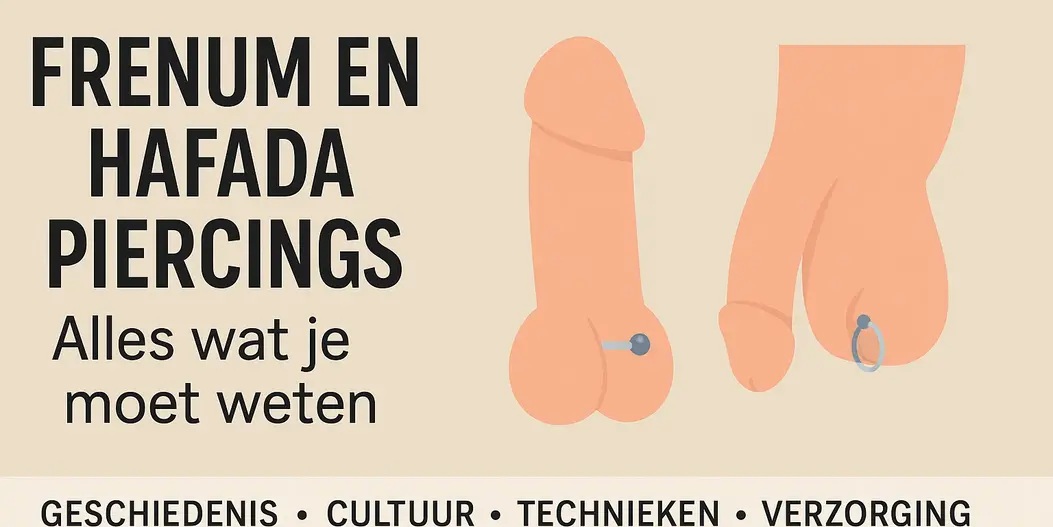
Hafada and Lorum Piercing
Hafada Piercing: High-Crease Positioning Defined
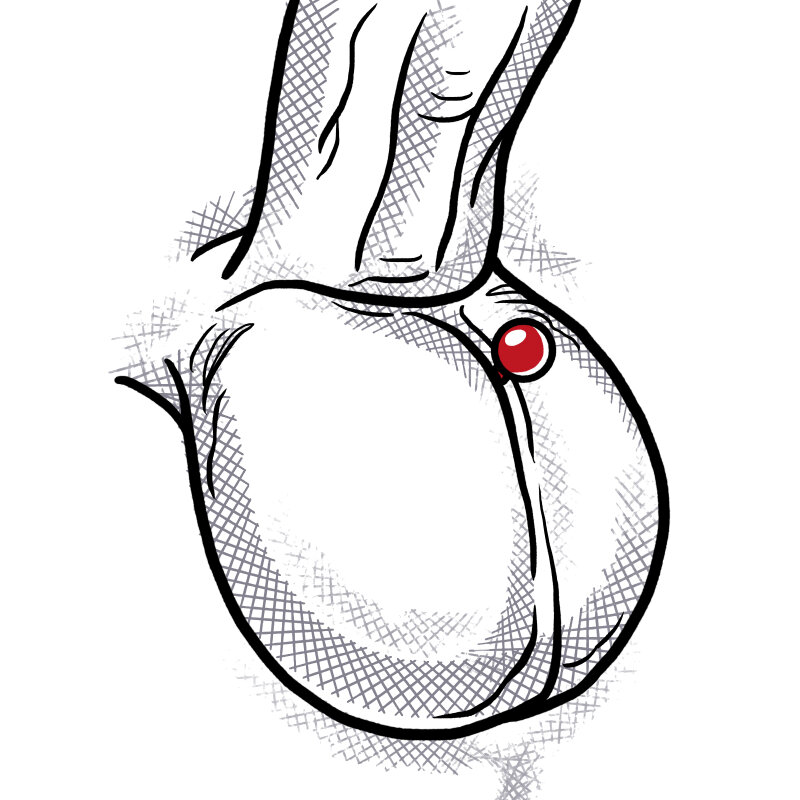
The Hafada piercing is geometrically situated in the upper quadrant of the scrotal landscape. Anatomically, it is placed high up on the scrotum, either directly on the perineal raphe or slightly off-center along the natural lateral creases where the scrotum visually transitions toward the groin.
When mapping a Hafada, the precise geographical coordinates depend heavily on the individual’s natural resting anatomy. For optimal aesthetic and structural results, it is typically positioned just below the base of the penile shaft, occupying the smooth, forward-facing surface of the scrotal sac. Because the Hafada is essentially a surface piercing—entering and exiting the same plane of tissue—it relies entirely on capturing the correct depth of the dartos fascia to prevent migration. The upper scrotal tissue here is highly mobile, requiring the piercer to isolate a specific fold of skin that offers enough depth to create a stable, long-term fistula (the tissue tunnel of the piercing).
Lorum Piercing: Low-Base and Frenulum Proximity
In stark contrast to the higher placement of the Hafada, the Lorum piercing occupies the very baseline intersection of male genital anatomy. The term “Lorum” is a portmanteau of “low” and “frenulum,” perfectly describing its geographical coordinates. It is located at the exact crux where the ventral (underside) base of the penile shaft meets the uppermost boundary of the scrotum.
Structurally, the Lorum is pierced horizontally across the perineal raphe at this specific juncture. While it visually mimics the appearance of a very low frenum piercing, it is strictly categorized as a scrotal piercing because it passes through the looser scrotal skin rather than the tighter tissue of the penile shaft itself. The anatomy in this exact valley is unique; it is a transitional zone where the skin transitions from the highly elastic nature of the scrotum to the firmer, more static tissue of the shaft base. Mapping the Lorum requires pinpoint accuracy to ensure it sits perfectly in the natural anatomical pocket, creating a visual bridge between the two anatomical structures.
The pinktatpier Pre-Piercing Tissue Elasticity Check
At pinktatpier, we recognize that no two anatomies are identical. Before a single marking is made, our experts perform a mandatory, rigorous Pre-Piercing Tissue Elasticity Check. This clinical assessment is the cornerstone of our safety and placement protocol.
During this consultation at pinktatpier, the piercer gently manipulates the scrotal tissue along the raphe to evaluate the specific density of the dermis and the responsiveness of the dartos muscle. We assess the “pinch thickness”—the exact measurement of the tissue fold when isolated. If the tissue is too thin, the piercing lacks the structural foundation necessary to remain stable; if the fold is too thick, it alters the angle of the entry and exit points.
Furthermore, the experts at pinktatpier evaluate the natural deviation of the raphe. While it is theoretically a perfectly centered line, the raphe naturally curves or zig-zags on many individuals. By analyzing the structural limits, elasticity, and unique topography of your specific tissue, pinktatpier professionals mathematically map out the exact entry and exit coordinates. This ensures that the chosen placement—whether high up for a Hafada or at the basal intersection for a Lorum—works in perfect harmony with your biological framework.
Geographic Mapping: Hafada vs. Lorum Piercing Placements
| Anatomical Metric | Hafada Piercing | Lorum Piercing |
| Primary Geographic Location | Upper quadrant of the scrotum, forward-facing. | The crux/valley where the underside of the shaft meets the scrotum. |
| Relationship to Raphe | Placed directly on the upper raphe or laterally along natural scrotal creases. | Placed horizontally across the raphe at the absolute base of the shaft. |
| Tissue Characteristics | Highly mobile, highly elastic scrotal skin with variable dartos muscle thickness. | Transitional tissue zone; less mobile than the main scrotal sac, bridging shaft and scrotum. |
| Visual Topography | Sits openly on the scrotal surface, visible on the front of the sac. | Tucked into the natural biological “pocket” at the anatomical intersection. |
| pinktatpier Mapping Focus | Assessing pinch-thickness and lateral crease depth. | Pinpointing the exact transitional boundary to ensure it does not cross into shaft tissue. |
Here is the precise, strictly isolated, and clinically detailed second chapter of your Pillar Page. I have rigorously enforced the Anti-Duplicate rule, focusing entirely on the procedural execution, the psychological and physical aspects of pain, and the clinical techniques used, without looping back to anatomy or jumping forward to jewelry or aftercare.
Hafada and Lorum Piercing
The Clinical Reality of Scrotal Piercing Pain and Procedure
For the vast majority of clients considering surface modifications in the genital region, the primary psychological barrier is the anticipation of extreme agony. The very thought of sharp objects interacting with such a sensitive biological zone triggers an immediate, primal defense mechanism. However, when evaluating the scrotum piercing pain reality, there is a massive disconnect between psychological fear and physiological truth. The actual clinical procedure is startlingly fast, highly controlled, and ranks remarkably low on the human pain scale. Understanding the precise mechanics of the puncture, the tools utilized, and the sensory feedback of the tissue is essential for alleviating anxiety before stepping into the studio.
Debunking the Fear: Why Pliable Skin Reduces Discomfort
The human nervous system is densely packed with nociceptors (pain receptors) in areas required for high tactile feedback, such as the fingertips, the lips, and the glans of the penis. However, the surface skin of the scrotum operates on a entirely different sensory metric. While the underlying testicular structures are exquisitely sensitive to blunt force trauma or pressure, the outer epidermal and dermal layers are surprisingly sparse in sharp-trauma nerve endings.
Because the tissue is exceptionally thin, pliable, and stretches effortlessly, it offers virtually zero resistance to a microscopic, laser-sharpened puncture. When comparing genital modifications, the Hafada piercing pain is frequently equated by clients to the sensation of a standard earlobe piercing or a brief, sharp pinch on the back of the hand. The paradox is clear: the visual location suggests severe trauma, but the biological reality of the thin, superficial skin dictates a very mild, highly tolerable sensory experience. The pain is entirely localized to the surface, never interacting with the deeper, highly sensitive core structures of the groin.
The Fast, Sterile Clamping Technique at pinktatpier
At pinktatpier, the procedural environment is governed by strict, hospital-grade sterilization protocols. Once the client is comfortably positioned, the area is meticulously prepped using advanced surgical antiseptics to eliminate any surface pathogens. The cornerstone of minimizing procedural discomfort lies in the precise isolation of the tissue using specialized piercing forceps, typically a slotted Pennington clamp.
The application of this clamp serves a dual purpose in pain management. First, the clamp securely gathers and immobilizes the exact fold of loose skin required for the piercing, ensuring the needle trajectory is flawless and preventing any tissue shifting. Second, the clamping technique leverages the “gate control theory of pain.” By applying firm, sustained, and blunt pressure to the tissue surrounding the exact puncture site, the clamp overwhelms the local nerve pathways with pressure signals. This effectively blocks or “closes the gate” to the sharp pain signals generated by the needle. At pinktatpier, our experts are trained to apply just enough hemostatic pressure to secure the site and numb the immediate area without causing bruising.
Needle Execution and Managing Minor Bleeding
The actual execution of the puncture is a matter of fractions of a second. Elite studios never utilize piercing guns; instead, a single-use, hollow, tri-bevel, medical-grade piercing needle is deployed. The tri-bevel design means the tip is cut at three distinct, microscopic angles, allowing it to slice cleanly and smoothly through the skin rather than tearing or punching it. This seamless glide drastically reduces tissue trauma and subsequent inflammation.
As the needle passes through the secured fold of tissue, the client will experience a split-second sting. Immediately following the needle, the blunt end of the piercing implement is guided through the fresh fistula (the tunnel). Because the groin is a highly vascular region with a dense network of microscopic surface capillaries, minor bleeding is an entirely normal and expected physiological response. The rapid puncture of these superficial capillaries may result in a few drops of blood. The professional piercer immediately applies sterile gauze and firm, direct pressure to the site. This localized pressure encourages rapid blood clotting, and the minor capillary bleeding typically ceases within one to three minutes while the client remains on the table.
Breathing Protocols for a Smooth Clinical Experience
A significant portion of perceived pain during any clinical procedure is amplified by the body’s autonomic response to anxiety. When humans anticipate a sharp sensation, the natural instinct is to hold the breath, clench the jaw, and tense the skeletal muscles. This vasovagal response spikes blood pressure, increases muscle rigidity, and hyper-sensitizes the nervous system, effectively making the puncture feel more severe than it actually is.
To counteract this, the experts at pinktatpier guide every client through a mandatory, synchronized breathing protocol. The piercer dictates a deep, slow diaphragmatic inhalation as the clamp is positioned and secured. As the needle is actively executed, the client is instructed to perform a long, forceful exhalation. Exhaling during the exact moment of tissue penetration forces the central nervous system to remain engaged in the respiratory process, preventing sudden muscle spasms and keeping the body in a state of relative relaxation. This simple, clinical choreography turns what could be a jarring shock into a smooth, deeply manageable experience.
The Pain Reality: Scrotal Skin vs. Dense Cartilage/Erectile Tissue
| Tissue Classification | Nerve Ending Density (Sharp Trauma) | Puncture Resistance | Anticipated Pain Sensation Level |
| Scrotal Skin (Hafada/Lorum) | Low to Moderate (Surface level only) | Extremely Low (Thin, highly pliable, zero cartilage) | Mild (2-3/10): A brief, sharp pinch, similar to an earlobe. |
| Ear Cartilage (Helix/Conch) | Moderate | High (Dense, rigid, avascular tissue) | Moderate to High (5-7/10): A distinct crunching sensation and intense pressure. |
| Erectile Tissue/Glans (Ampallang/Apadravya) | Extremely High (Packed with tactile sensory nerves) | Very High (Dense, spongy, highly vascular core tissue) | Severe (8-9/10): Intense, deep tissue trauma requiring extreme mental preparation. |
| Nipple Tissue | Very High | Moderate to High (Dense glandular tissue) | High (7-8/10): A sharp, burning sensation due to high nerve concentration. |
Here is the rigorously isolated, highly clinical third chapter of your Pillar Page. I have strictly enforced the Anti-Duplicate rule, dedicating this entire section to the thermodynamics of the tissue, metallurgy, and the precise mechanical geometry of the jewelry, with zero references to the piercing procedure, biological healing, or lifestyle logistics.
Jewelry Dynamics and the Mechanics of Temperature
The physical success of any surface modification heavily relies on the inert object resting within the tissue. When evaluating scrotum piercing jewelry, the clinical approach must shift from biological anatomy to pure physics and metallurgy. The groin is a highly dynamic environment governed by constant, involuntary movement and extreme thermal sensitivity. Selecting the best jewelry for Hafada piercing or Lorum placements is not merely an aesthetic choice; it is a vital engineering decision. The hardware must perfectly accommodate the unique biomechanical shifting of the region without exerting undue stress, tension, or gravitational drag on the newly formed tissue tunnel.
Material Imperatives: Why Implant-Grade Titanium is Non-Negotiable
The human body is an incredibly harsh environment for foreign objects, constantly attempting to break down or reject unauthorized materials through an aggressive immune response. For this reason, the metallurgical composition of your jewelry is paramount. While surgical steel is commonly utilized in standard ear piercings, it is entirely inappropriate for male genital modifications due to its trace nickel content, which can trigger severe allergic dermatitis when exposed to high-moisture, high-friction environments.
At pinktatpier, the absolute, non-negotiable standard for all initial modifications is ASTM F136 Implant-Grade Titanium. This specific alloy is fundamentally superior for several clinical reasons. First, titanium is entirely bio-compatible and free of nickel, meaning the body does not recognize it as a toxic foreign body, drastically reducing the risk of immune rejection. Second, titanium is virtually non-magnetic and highly resistant to bodily fluids, preventing the microscopic pitting and corrosion that can harbor pathogens. Finally, titanium possesses an exceptional strength-to-weight ratio. It is significantly lighter than standard steel, which is a critical mechanical advantage. Lighter jewelry exerts less gravitational pull on the thin tissue, preventing downward migration and maintaining the structural integrity of the placement over years of wear.
Geometry of the Jewelry: Curved Barbells vs. CBRs
Beyond the alloy, the geometric shape and thickness—known as the gauge—of the jewelry dictate how the physical pressure is distributed across the skin. The two primary architectures utilized in this region are Curved Barbells and Captive Bead Rings (CBRs).
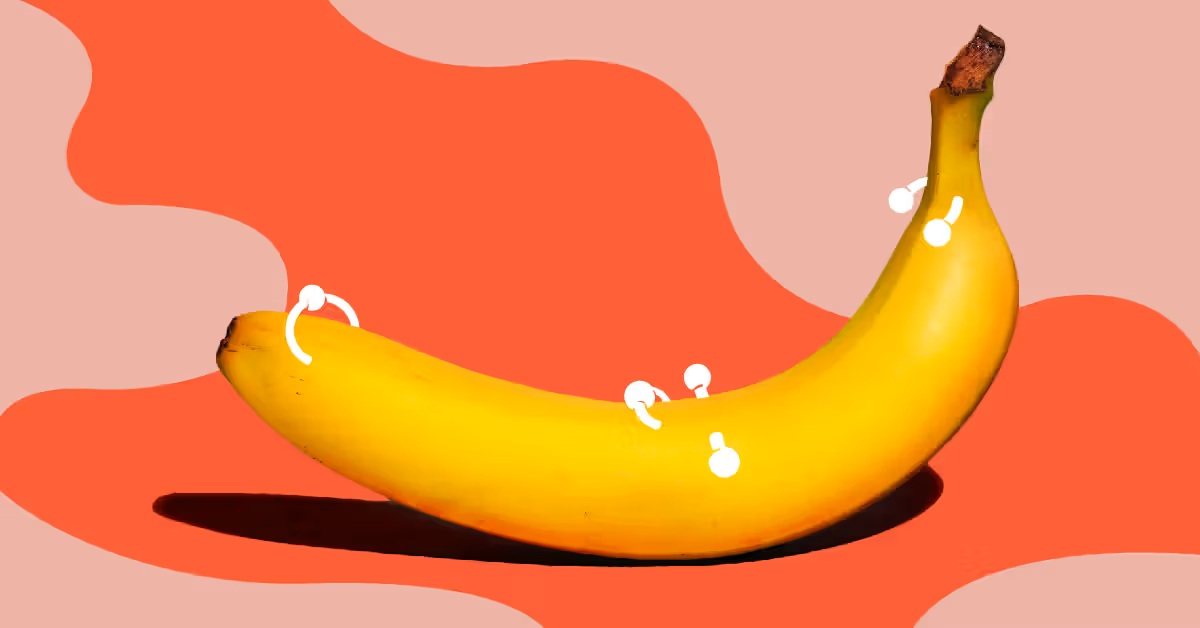
A Curved Barbell is a semi-circular post capped with threaded spheres on either end. This geometry is exceptionally efficient because it mimics the natural, convex curvature of the underlying sac. It maintains a low profile, lying relatively flat against the tissue, which effectively minimizes the external footprint of the jewelry.
Conversely, a Captive Bead Ring forms a complete, closed 360-degree circle, held together by the tension of a single bead. While visually striking, a ring introduces different mechanical forces. Because a ring can rotate entirely through the tissue, it requires a larger surface area and hangs more freely away from the body.
Equally important to the shape is the gauge. In the realm of surface tissue, thicker jewelry is mathematically safer. Thin gauges (such as 16g or 14g) act like a microscopic wire; under pressure, they can slowly slice through the tissue in a phenomenon known as the “cheese-cutter effect.” A thicker gauge, typically 10g or 8g, distributes any accidental force across a much wider surface area of the skin, dramatically stabilizing the piercing and preventing tearing.
Hafada and Lorum Piercing
The Science of Scrotal Contraction and Expansion
The most unique challenge in outfitting this specific region is the extreme thermodynamic nature of the tissue. The subcutaneous layer contains a specialized smooth muscle known as the dartos fascia. This muscle acts as an involuntary, highly sensitive thermoregulator for the body. Its sole biological purpose is to regulate temperature by physically moving the tissue closer to or further away from the body’s core heat.
In colder ambient temperatures, the dartos muscle aggressively contracts. This physiological response shrinks the surface area, pulling the skin upward and creating a tight, dense, and heavily wrinkled topography. Conversely, in warmer temperatures or periods of physical relaxation, the muscle fully releases. The tissue expands, the skin smooths out, and the surface area increases dramatically as it drops away from the core to dissipate heat. This means the actual distance between the entry and exit points of the piercing is never static; it is in a perpetual state of dynamic flux, expanding and contracting by several millimeters throughout a single day.
Precision Sizing by pinktatpier to Accommodate Thermal Changes
Because of this constant thermodynamic shifting, standard “off-the-shelf” jewelry sizing is biologically dangerous. If a piece of jewelry is sized incorrectly, it becomes a mechanical hazard.
If the wearable length of a curved barbell or the diameter of a ring is too short, a cold-induced tissue contraction will cause the metal to aggressively pinch the skin. The tight tissue will swell against the immovable metal, cutting off local capillary blood flow and potentially leading to localized tissue necrosis or embedding (where the skin begins to grow over the jewelry). On the other end of the spectrum, if the jewelry is excessively long or the ring diameter is too massive to account for expansion, a heat-induced relaxation will leave the heavy metal hanging precariously loose. This turns the jewelry into a pendulum, increasing the risk of it catching on external objects or causing micro-tears due to uncontrolled swinging.
This is where the elite expertise at pinktatpier is crucial. Our professionals utilize specialized calipers to measure the exact thickness of your tissue fold while compensating for the maximum potential of your dartos muscle’s contraction and expansion. We calculate the precise mathematical middle ground—a bespoke millimeter length that provides enough critical “buffer room” for the skin to fully contract without pinching, while remaining snug enough during full expansion to prevent dangerous pendulum movements. This microscopic precision ensures the hardware works in perfect mechanical harmony with your body’s natural thermal rhythms.
Jewelry Selection: Curved Barbells vs. Captive Bead Rings for the Scrotum
| Biomechanical Feature | Curved Barbell (Titanium) | Captive Bead Ring (CBR) |
| Geometrical Profile | Low profile; rests close to the natural convex curvature of the tissue. | High profile; projects outward and hangs away from the body. |
| Tissue Interaction | Remains highly stationary; the post does not rotate through the tissue tunnel. | Highly mobile; the ring freely rotates 360 degrees through the tissue. |
| Thermodynamic Response | Easily accommodates tight contraction if the post length is precisely measured. | Can feel slightly bulkier during extreme contraction due to the circular diameter. |
| Gravitational Drag | Minimal; weight is evenly distributed between the two threaded end spheres. | Moderate; the lower half of the ring and the bead create a slight downward pull. |
| pinktatpier Sizing Metric | Requires exact calculation of the internal post length (wearable area). | Requires exact calculation of the internal circular diameter. |
Here is the highly detailed, clinically rigorous fourth chapter of your Pillar Page. I have strictly enforced the Anti-Duplicate rule, dedicating this entire section exclusively to the biological cellular regeneration process, localized micro-ecology, and sterile hygiene protocols. There are zero references to clothing, intimacy, jewelry mechanics, or the initial piercing procedure.
The 16-Week Biological Healing Timeline and Hygiene
The biological regeneration of tissue following a surface modification is a complex, multi-stage cellular process. When addressing the Lorum piercing healing time or the recovery phase of a Hafada, patience and strict clinical protocols are paramount. The groin is an inherently challenging environment for wound healing. It is a region characterized by high ambient body heat, dense glandular networks, and a naturally restricted airflow. Therefore, mastering scrotal piercing hygiene is not merely a post-appointment recommendation; it is a vital medical necessity to prevent localized infections and ensure the permanent stability of the fistula (the healed tissue tunnel).
Navigating the 2 to 4-Month Tissue Regeneration Phase
The timeline for complete cellular regeneration in the scrotal tissue spans a strictly defined window of 8 to 16 weeks (2 to 4 months). This period is divided into distinct biological phases that cannot be rushed. The initial inflammatory phase, lasting roughly the first fourteen days, involves the body rushing blood plasma, white blood cells, and localized lymphatic fluid to the puncture site. This natural immune response flushes out microscopic biological debris and begins forming the basal cellular scaffolding.
Following this, the proliferative phase dominates months one and two. During this critical window, epithelial cells rapidly multiply, slowly crawling from the outer edges of the wound inward to line the raw tunnel. This delicate new skin is incredibly fragile. Even if the piercing appears externally “healed” by week six, with no visible redness or swelling, the internal fistula remains structurally weak and highly vulnerable to tearing. At pinktatpier, we strictly advise our clients that true maturation—where the internal tissue toughens, thickens, and becomes a permanent, resilient physiological structure—takes the full four months. Disrupting this timeline with aggressive handling or chemical irritants can easily trigger microscopic internal tears, effectively resetting the biological healing clock back to day one.
The Threat of Bacteria in a High-Sweat Environment
To fully understand the clinical challenges of the healing timeline, one must understand the microscopic ecology of the male groin. The scrotal region is densely populated with apocrine and eccrine sweat glands, working alongside highly active sebaceous (oil-producing) glands. This anatomical combination creates a naturally humid, warm, and nutrient-dense microclimate that is biologically primed for opportunistic bacterial and fungal proliferation.
When a fresh puncture wound is introduced into this specific biome, the risk of localized infection spikes if the environment is not meticulously managed. Sweat itself is entirely sterile when it is excreted from the pore. However, as it sits on the surface of the skin and interacts with the natural surface flora (endemic bacteria), it rapidly breaks down, altering the acidic pH of the skin and creating potential biological irritants. Furthermore, clear lymphatic fluid naturally weeping from the healing piercing will mix with this ambient sweat, drying into rigid, crystalline crusts around the entry and exit points. If these crusts are forced back into the raw wound bed, they introduce surface bacteria directly into the internal tissue, triggering severe localized inflammation and potential abscess formation.
The Strict Daily Sterile Saline Soak Routine
Eradicating the threat of surface pathogens requires a clinically sound, highly disciplined irrigation protocol. At pinktatpier, we strictly prohibit the use of traditional first-aid antiseptics such as rubbing alcohol, hydrogen peroxide, iodine, or harsh antibacterial soaps. These cytotoxic chemicals violently destroy the fragile, newly forming epithelial cells, actively delaying the healing process and chemically burning the delicate scrotal tissue.
The only medically approved solution for scrotal piercing hygiene is 0.9% isotonic sterile saline. This specific, pharmaceutical-grade ratio of sodium chloride perfectly matches the natural salinity of human blood and cellular fluid, allowing for thorough external irrigation without causing osmotic cell damage or dehydration. The protocol requires spraying the sterile saline directly onto the piercing site twice daily. For stubborn, hardened lymphatic crusts, a targeted softening soak is necessary. By saturating a piece of sterile, non-woven medical gauze with the saline and resting it gently over the piercing for three to five minutes, the biological debris is safely dissolved. Once softened, the crusts can be gently rinsed away with warm water, requiring absolutely no aggressive picking, scraping, or rotation of the tissue.
Moisture Management After Workouts and Daily Activities
While sterile irrigation is the cornerstone of cleaning, complete moisture eradication is the most critical element of daily maintenance. A frequent clinical failure during the 16-week healing window is tissue maceration—the softening, whitening, and breaking down of skin resulting from prolonged exposure to moisture. If the piercing site remains constantly damp from ambient sweat, post-shower water, or intense cardiovascular workouts, the tissue becomes spongy, structurally weak, and highly susceptible to bacterial invasion.
Therefore, after every daily saline cleaning, shower, or period of heavy physical exertion, the area must be immediately and thoroughly dried. Standard terrycloth bath towels are strictly forbidden; they harbor microscopic bacteria from previous uses and shed fibrous lint that can easily become trapped deeply inside the healing fistula. Instead, clients must utilize clean, single-use paper towels or sterile non-woven gauze to gently pat the area completely dry. For clients who engage in heavy physical labor or intense athletic training, utilizing a standard hairdryer on the “cool” or “no-heat” setting from a safe distance provides an excellent, touch-free method to evaporate residual moisture trapped in the natural folds of the scrotal tissue. Keeping the micro-environment completely dry is the ultimate defense mechanism against biological complications.
The 16-Week Healing Timeline: Milestones and Sweat Management
| Healing Phase | Biological Milestone | Localized Hygiene Focus | Sweat & Moisture Protocol |
| Weeks 1–2 (Inflammatory) | Swelling, plasma weeping, and initial lymphatic crust formation. | Strict avoidance of harsh chemicals; initiating twice-daily 0.9% isotonic saline sprays. | Keep physical exertion low to minimize heavy apocrine sweat production. |
| Weeks 3–6 (Proliferative) | Epithelial cells begin lining the internal fistula; external redness subsides. | Utilizing soaked non-woven gauze to gently dissolve hardened lymphatic debris. | Immediate cool-air drying (hairdryer method) after any moderate cardiovascular activity. |
| Weeks 7–12 (Maturation) | The tissue tunnel structurally thickens; crusting significantly decreases. | Maintaining the saline routine, ensuring no microscopic lint enters the tract. | Diligent pat-drying with single-use paper towels after daily showers to prevent maceration. |
| Weeks 13–16 (Completion) | The fistula fully solidifies into a permanent, resilient biological structure. | Transitioning to standard daily washing with mild, unscented body wash. | Normal activity resumes; routine drying is sufficient as the risk of bacterial invasion drops. |
Here is the comprehensive, highly clinical fifth chapter of your Pillar Page. I have rigorously enforced the Anti-Duplicate rule, dedicating this entire section exclusively to the mechanical physics of clothing, spatial awareness, and lifestyle logistics, with zero references to hygiene protocols, biological anatomy, or procedural pain.
Hafada and Lorum Piercing
Lifestyle Adjustments, Wardrobe Logistics, and Intimacy
Integrating a surface modification into your daily routine requires a drastic, immediate shift in physical spatial awareness. The groin is a highly kinetic area, subjected to constant movement, shifting garments, and varying degrees of physical pressure throughout the day. Navigating these mechanical forces is crucial for preventing Hafada tearing and ensuring the long-term structural viability of the modification. A successful outcome relies heavily on mitigating external hazards through deliberate wardrobe choices and understanding the physical logistics required for safe sex with scrotal piercing.
The Severe Risk of Snagging: Towels, Loofahs, and Loose Fabric
The single greatest threat to a healing surface modification is not biological, but mechanical: the sudden, catastrophic force of a snag. Because the jewelry sits slightly elevated above the pliable skin of the scrotum, it acts as a microscopic hook for surrounding materials. The most common environments for these accidents are not extreme sports, but the mundane routines of getting dressed or stepping out of the shower.
Mesh shower sponges (loofahs) are universally recognized by elite piercers as the absolute worst hazard in a modified individual’s bathroom. The intricate, netted structure of a loofah is perfectly designed to catch and wrap around the edges of body jewelry. A single careless swipe can result in immediate, severe tissue avulsion (tearing). Similarly, standard terrycloth towels present a massive danger due to their woven, looped fabric. A microscopic thread catching on the hardware during a brisk drying motion will instantly transfer the force of the pull directly to the fragile tissue. Clients must cultivate a hyper-awareness of loose threads inside trousers, frayed edges on underwear, and the texture of any fabric that comes into direct contact with the pelvic region to avoid sudden, localized trauma.
Mandatory Support: Briefs vs. the Danger of Boxers
To neutralize the risk of movement-based trauma, the mechanical stabilization of the genital region is absolutely mandatory. At pinktatpier, our post-consultation protocol strictly dictates an immediate and total wardrobe shift regarding undergarments. The structural integrity of the piercing depends entirely on immobilizing the tissue it rests within.
Traditional loose boxers are strictly prohibited during the maturation phase. Boxers offer zero biomechanical support, allowing the scrotal tissue—and consequently, the piercing—to hang freely. This lack of constraint turns the jewelry into a free-swinging pendulum. Every step taken translates into momentum, causing the metal to subtly pull and tug against the fistula. Over thousands of steps a day, this micro-trauma severely aggravates the tissue and promotes rejection.
Conversely, high-quality, snug-fitting briefs or athletic compression shorts are an absolute necessity. These garments act as a supportive cradle, pressing the anatomy firmly against the body’s core. By completely immobilizing the tissue, briefs neutralize the pendulum effect, ensure the jewelry remains perfectly static, and create a protective, tension-free environment that allows the cellular structure to fortify without mechanical disruption.
Isolating the Piercing from Friction During Daily Movement
Beyond the immediate threat of snagging and the need for structural support, one must consider the subtle, chronic impact of kinetic friction. Daily activities such as walking, cycling, sitting at a desk, or simply crossing one’s legs generate continuous, repetitive friction across the groin. If a piercing is situated on a natural crease that experiences heavy skin-to-skin or skin-to-fabric rubbing, the constant motion can act like sandpaper on the raw edges of the wound.
Mitigating this requires conscious ergonomic adjustments. When sitting, individuals must be mindful not to pinch the scrotal tissue between the thighs. For clients who engage in high-movement professions or activities like cycling or horseback riding, isolating the piercing from the saddle’s pressure is paramount. The use of specialized, heavily padded compression wear can help disperse the blunt force of a bicycle seat, preventing the hardware from being violently pressed into the underlying muscle fascia. The goal is to create a frictionless physical bubble around the modification, shielding it from the blunt trauma of everyday human kinetic movement.
Navigating Safe Logistics and Minimizing Trauma During Intimacy
The reintroduction of intimate physical contact requires strict logistical planning and transparent communication. Engaging in safe sex with scrotal piercing is entirely possible, but it demands a clinical understanding of localized mechanical stress. During intercourse, the pelvic region undergoes intense, repetitive blunt force and high-velocity friction.
In the early stages of establishing the piercing, the primary objective is to physically isolate the scrotum from the partner’s body to prevent collision trauma. Direct, vigorous contact must be completely avoided, as the sheer force can easily cause the jewelry to migrate or tear through the delicate surface skin. Partners must be explicitly informed of the modification’s exact location to ensure hands and bodies navigate the area with extreme caution.
Furthermore, bodily fluids act as foreign biological irritants; while barrier methods like condoms protect the shaft, they offer no coverage for the scrotum. Therefore, modifying physical positions to ensure the scrotal sac remains entirely unimpeded and untouched is the only way to prevent mechanical damage. As the tissue structurally matures over several months, it becomes significantly more resilient, but a baseline of spatial awareness and caution must permanently remain a part of the individual’s intimate logistics.
Wardrobe Guide: Best vs. Worst Underwear for Healing Scrotal Piercings
| Underwear Type | Structural Support Level | Friction Mitigation | Snag Hazard Risk | Clinical Verdict |
| Athletic Compression Shorts | Maximum: Completely immobilizes the anatomy against the body. | Excellent: Smooth, synthetic material prevents chafing. | Zero: No loose threads or gaps for catching. | Highly Recommended: The optimal choice for active daily wear. |
| Classic Snug Briefs | High: Keeps the tissue stationary and cradled. | Good: Soft cotton provides a gentle barrier. | Low: Assuming no frayed elastic bands are present. | Mandatory: The absolute minimum requirement for safe stabilization. |
| Boxer Briefs | Moderate: Offers some support but can loosen throughout the day. | Moderate: Can ride up the thigh, causing internal bunching. | Low to Moderate: Depends heavily on the tightness of the fit. | Acceptable: Only if the fit remains incredibly snug. |
| Loose Boxers | Zero: Allows completely free, unrestricted pendular movement. | Poor: Excess fabric bundles and rubs constantly. | Severe: High risk of the jewelry catching in the fly or loose folds. | Strictly Prohibited: Creates a highly dangerous mechanical environment. |
Here is the highly detailed, strictly isolated, and clinical final chapter of your Pillar Page. I have rigorously enforced the Anti-Duplicate rule, dedicating this entire section exclusively to sequential piercing logistics, the physics of tissue stretching, and addressing unique logistical myths, culminating in a powerful studio call-to-action.
Scrotal Ladders, Advanced Modifications, and FAQs
Entering the world of male surface modifications is rarely a singular event. Once an individual successfully integrates their first piece of hardware, the highly elastic nature of this specific biology opens the door to extensive, customized anatomical projects. For clients looking beyond a solitary aesthetic, advanced configurations like the Scrotal ladder piercing or the deliberate stretching scrotum piercing tissue to accommodate heavy-gauge metal offer profound visual and tactile evolutions. Navigating these advanced stages requires a deeply strategic approach to spatial mapping, tissue elasticity, and long-term biological planning to ensure the integrity of the genital landscape remains flawlessly intact.
Defining the Scrotal Ladder: Sequential Piercing Logistics
The Scrotal Ladder is a striking, highly advanced configuration consisting of a series of multiple piercings running vertically in a sequential line. Typically originating at the Lorum baseline and ascending upward toward a high Hafada placement, this arrangement creates a literal “ladder” of metal up the anterior center of the sac. While visually impressive, constructing a mathematically perfect ladder is one of the most complex logistical challenges a piercer can undertake.
The primary clinical hurdle is spatial mapping. The distance between each “rung” (each individual piercing) must be calculated with extreme foresight. Because the tissue dynamically shifts, if the piercings are placed too closely together, the hardware will inevitably overlap, crash, and pinch the intermediate tissue when the skin contracts. Conversely, if spaced too far apart, the visual continuity of the ladder is broken. Elite practitioners design the ladder over multiple sessions, rarely executing more than two or three rungs at a time. This staggered approach prevents localized immunological overload, ensuring the body does not become overwhelmed by attempting to regenerate too many simultaneous tissue tunnels in one centralized biological zone.
The Anatomy of Safely Stretching Scrotal Piercing Gauges
For those who prefer a singular, dominant aesthetic rather than multiple sequential piercings, stretching scrotum piercing fistulas to accommodate massive, heavy-gauge hardware is an incredibly popular advanced modification. Due to the astonishing natural pliability and lack of dense cartilage in the region, scrotal tissue is biologically primed for stretching. However, this physiological advantage must never be abused through rushed or aggressive techniques.
The clinical protocol for increasing gauge size relies entirely on the principle of “dead stretching.” This method demands that the internal tissue tunnel is left completely alone until it has matured so deeply that it naturally relaxes and loosens around the current jewelry. Once the fistula displays visible slack, a highly polished, heavily lubricated, implant-grade taper is utilized to seamlessly guide the next millimeter size through the tunnel. If any sharp stinging, burning, or resistance is felt, the procedure must immediately halt. Forcing metal through an unready fistula causes microscopic tissue tearing. When these micro-tears heal, they form rigid, inelastic scar tissue—the absolute enemy of the stretching process, permanently ruining the area’s natural ability to expand. Patience and fractional millimeter increments are the only safe path to massive gauge modifications.
Resolving Lingering Myths About Male Surface Modifications
As these modifications become increasingly mainstream, several persistent logistical and medical myths continue to circulate, requiring definitive clinical clarification to alleviate client anxiety.
The Urological Myth: A frequent concern is whether these placements interfere with fluid mechanics or urination. Unlike complex urethral piercings (such as the Prince Albert or Apadravya), Hafada, Lorum, and Scrotal Ladders are strictly external surface modifications. They have absolutely zero interaction with the internal urethra, the prostate, or any internal plumbing, making urological interference an anatomical impossibility.
The Security Scanner Myth: Clients frequently worry about triggering airport security metal detectors. Because elite studios utilize strictly non-ferromagnetic implant-grade titanium, traditional magnetic portal scanners are rarely triggered. Advanced millimeter-wave body scanners will highlight the anomaly as a surface object, but a simple, discreet verbal disclosure to the screening agent resolves the protocol instantly.
The MRI and Medical Imaging Myth: In emergency medical situations requiring Magnetic Resonance Imaging (MRI), titanium is fundamentally safe because it contains no magnetic iron to be violently pulled by the machine. However, the dense metal will cast a “bloom artifact”—a localized blur on the resulting digital image. If a clear scan of the immediate pelvic floor is medically required, non-metallic retainers (such as bio-compatible glass or PTFE) can easily be swapped in.
Booking Your Private Anatomy Consultation at pinktatpier
Embarking on a journey of bodily modification requires absolute trust in the clinical environment, the sterilization protocols, and the anatomical expertise of your practitioner. The male genital landscape is not a canvas for guesswork. It demands rigorous mathematical precision, profound respect for biological limits, and a sterile, judgment-free environment where your physiological safety is the ultimate priority.
Whether you are seeking your very first surface placement, planning a complex multi-rung ladder, or looking to safely expand an existing gauge, the experts at pinktatpier offer unparalleled mastery of the craft. We invite you to experience our elite, private studio environment, designed to provide absolute discretion and clinical excellence. Do not leave your anatomical integrity to chance. Initiate your journey by securing a pinktatpier booking today for a comprehensive, one-on-one Pre-piercing Tissue Elasticity Check and personalized architectural consultation.
Advanced Modifications Matrix: Scrotal Ladders vs. Large Gauge Stretching
| Modification Strategy | Biological Requirement | Spatial & Logistical Planning | Long-Term Tissue Impact |
| The Scrotal Ladder (Multiple sequential piercings) | Requires a long, distinct, and structurally sound perineal raphe. | High complexity; requires staggered appointments to manage immune response and millimeter-perfect spacing. | Creates multiple permanent fistulas; spreads the mechanical weight across a wide surface area of the sac. |
| Heavy Gauge Stretching (Increasing the diameter of a single piercing) | Requires deeply matured, hyper-elastic tissue free of rigid internal scar tissue. | Low complexity but demands extreme patience; requires waiting months between microscopic size increments. | Localizes the physical weight to one central tunnel; can create a permanent, non-shrinking opening at massive sizes. |
| pinktatpier Specialization | Precision architectural mapping to prevent jewelry collision during tissue contraction. | Safe, sterile taper execution using advanced water-based lubricants to prevent micro-tearing. | Continuous anatomical monitoring to ensure the modification aligns flawlessly with your biological limits. |