
The Londoner’s Guide to a Perfectly Healed Daith Piercing

In the world of ear curation, a landscape of infinite personal expression, some piercings are accents, and some are statements. The daith piercing belongs firmly in the latter category. Tucked away in the innermost fold of the ear’s cartilage, it is at once discreet and captivating, a secret piece of art that rewards a closer look. It is the perfect blend of subtlety and edge, which has made it one of the most enduringly popular and sought-after placements in the city. The search for a perfectly executed daith piercing London has become a rite of passage for the city’s most discerning piercing enthusiasts.
But the daith’s unique beauty is matched by its unique challenges. It is a piercing that is notoriously anatomy-dependent, has a reputation for a long and sometimes fussy healing process, and demands an exceptional level of skill from the artist performing it.1 This is not a piercing to be undertaken on a whim.
This is your ultimate guide. We have poured our years of professional experience into this comprehensive resource to demystify every aspect of the daith piercing journey. We will explore the critical importance of anatomy, provide a transparent step-by-step walkthrough of the professional procedure, offer a detailed timeline for the 9-12 month healing commitment, and delve into the beautiful world of styling this unique placement. Our goal is to empower you with the expert knowledge to make confident, informed decisions and to ensure your experience of getting a daith piercing London is safe, successful, and results in a stunning, lifelong piece of art.
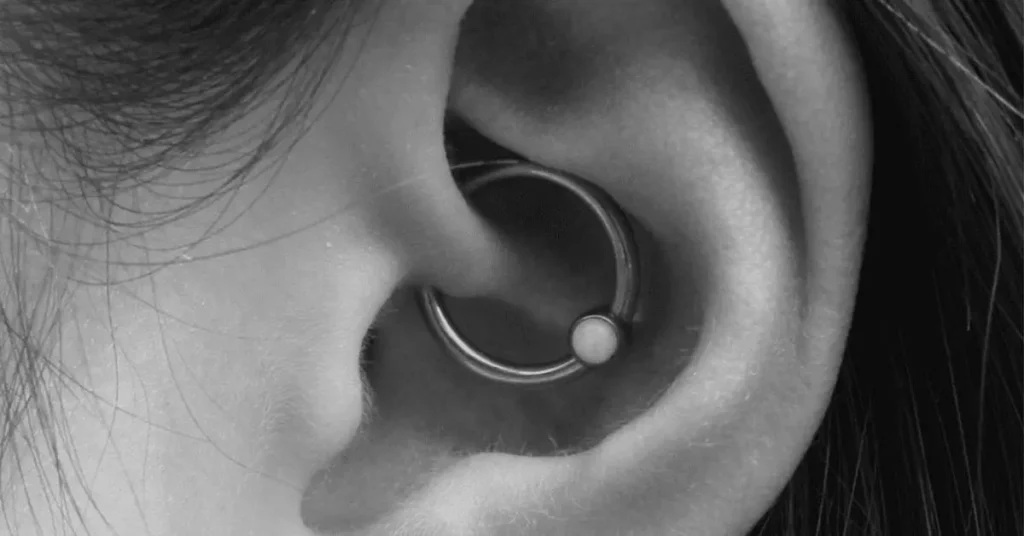
daith piercing London
Deconstructing the Daith: More Than Just a Piercing
Before you can even begin to think about jewellery, you must understand the unique placement and the specific anatomical requirements of a daith piercing. This foundational knowledge is what separates a successful project from a frustrating failure.
What is a Daith Piercing, Anatomically Speaking?
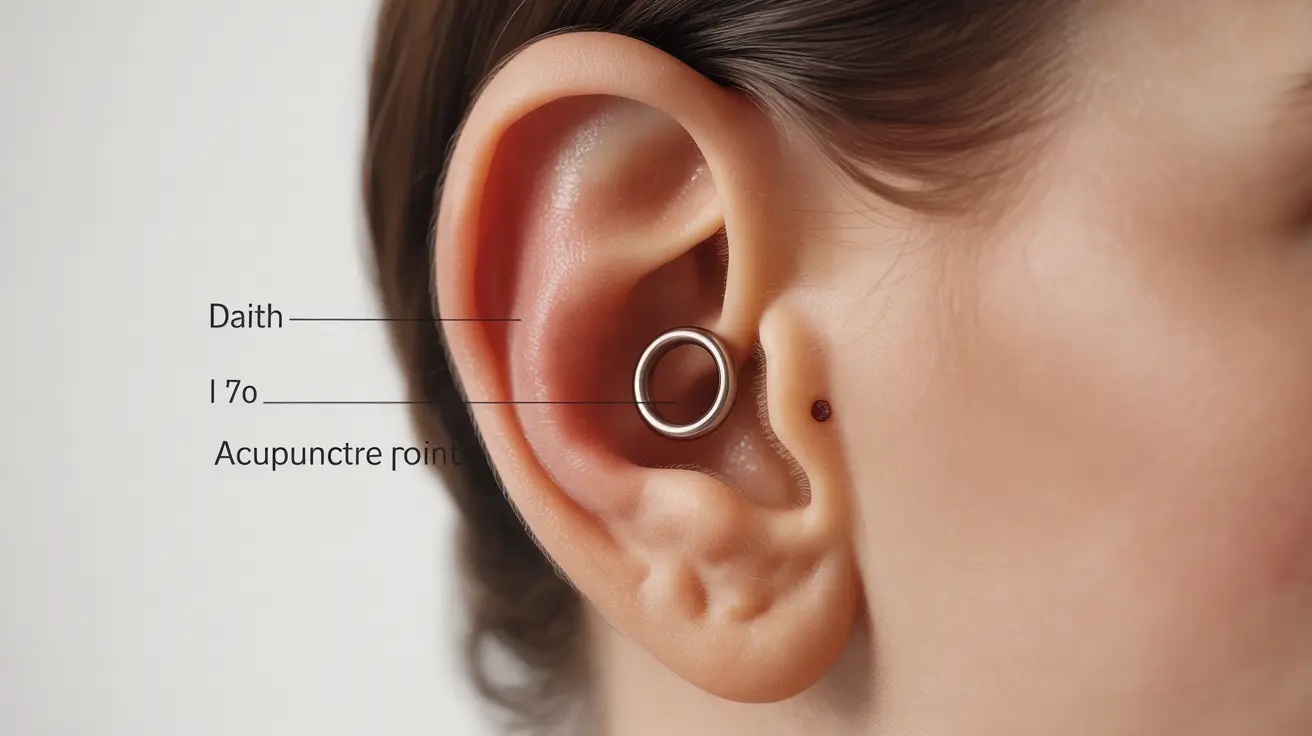
A daith piercing is a piercing that passes through the innermost fold of cartilage in the ear, the part known as the crus of the helix.2 This is the small, firm ridge that sits directly above the ear canal, forming a kind of internal archway within the conch of the ear. Its protected, nested location is what gives the daith its unique, “hidden gem” quality. It is less exposed to the outside world than a helix or a lobe, but this unique placement also brings its own set of considerations for both piercing and healing.
The Non-Negotiable Anatomy Check: Are You a Candidate?
This is the most critical and often overlooked aspect of the entire process. Not everyone has the right anatomy for a viable daith piercing. An ethical, professional piercer will always begin with a thorough anatomical assessment, and they will be honest with you if your ear is not suited for it. This honesty is not a disappointment; it is a mark of a true professional who prioritises your long-term health over making a sale.
- What a Professional Piercer is Looking For: For a daith piercing to be performed correctly and have the best chance of healing, the crus of the helix needs to be sufficiently pronounced. It needs to be a distinct, well-defined ridge that is large enough to support the jewellery. However, it cannot be too prominent or tight against the conch, as this will not leave enough room for the jewellery to sit comfortably without putting pressure on the surrounding tissue. In essence, they are looking for that “Goldilocks” anatomy—just right.
- The Consequences of Piercing Unsuitable Anatomy: An inexperienced or unethical piercer might attempt to perform the piercing on an ear with an underdeveloped crus. This will almost certainly lead to a host of problems. The piercing will likely be too shallow, causing it to migrate (move from its original position) and eventually reject, leaving you with a scar. If the area is too tight, the jewellery will put constant pressure on the surrounding cartilage, causing chronic pain, stubborn irritation bumps, and a piercing that will simply never heal.
A core reason that clients seek out a top-tier studio for their daith piercing London is for this expert, honest anatomical assessment. It is the foundation of a successful piercing.
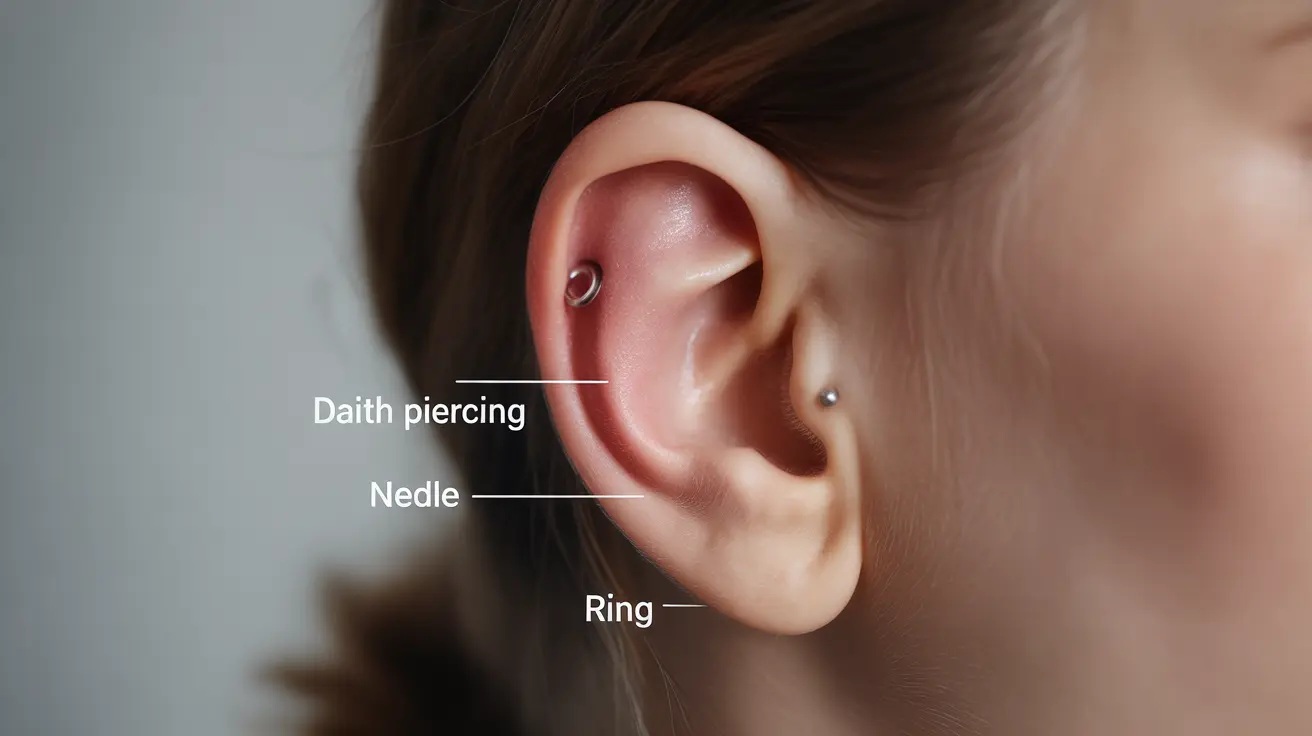
daith piercing London
The Migraine Myth: Separating Anecdote from Science
It is impossible to discuss the daith piercing without addressing the persistent claim that it can cure or reduce migraines.
- The Theory: The theory is based on the idea that the daith piercing passes through an acupuncture or acupressure point that is targeted to relieve headache pain. Some also speculate that it stimulates a branch of the vagus nerve.
- The Anecdotal Evidence: There are thousands of stories online from people who swear that their daith piercing has dramatically reduced the frequency and severity of their migraines.
- The Scientific Consensus: As of 2025, there is no scientific or clinical evidence to support this claim. The vast majority of medical professionals and neurologists believe the perceived benefit is due to the placebo effect.3 The strong belief that the piercing will work can, for some people, create a powerful and very real, but ultimately temporary, reduction in pain perception.
- Our Professional Stance: As responsible, professional piercers, we do not and cannot make any medical claims. We pierce for aesthetic reasons only. We advise all our clients to get a daith piercing because they love the way it looks and because it is a beautiful form of self-expression. If you happen to experience a reduction in migraines, consider it an unexpected and unproven bonus, but please do not get this piercing as a primary form of medical treatment.
The Procedure: A Guide to a Safe Daith Piercing in London
Once your anatomy has been deemed suitable, the procedure itself is a precise and technical process that requires a skilled and steady hand.
Finding the Right Artist: The Search for a Specialist
The daith is not a beginner’s piercing to perform. It is in a tight, difficult-to-reach spot, and achieving a perfectly straight, well-placed channel requires significant experience. When you are looking to find a piercing artist in London for your daith, their portfolio is your primary tool.
- Look for Healed Daith Piercings: Scrutinise their Instagram feed. Look for multiple examples of beautifully healed daith piercings. The ring should look snug and comfortable, with no signs of irritation bumps.
- Check the Angles: The ring should appear to emerge straight out of the tissue, not at an odd, tilted angle. The entry and exit holes should be neat and well-placed within the crus.
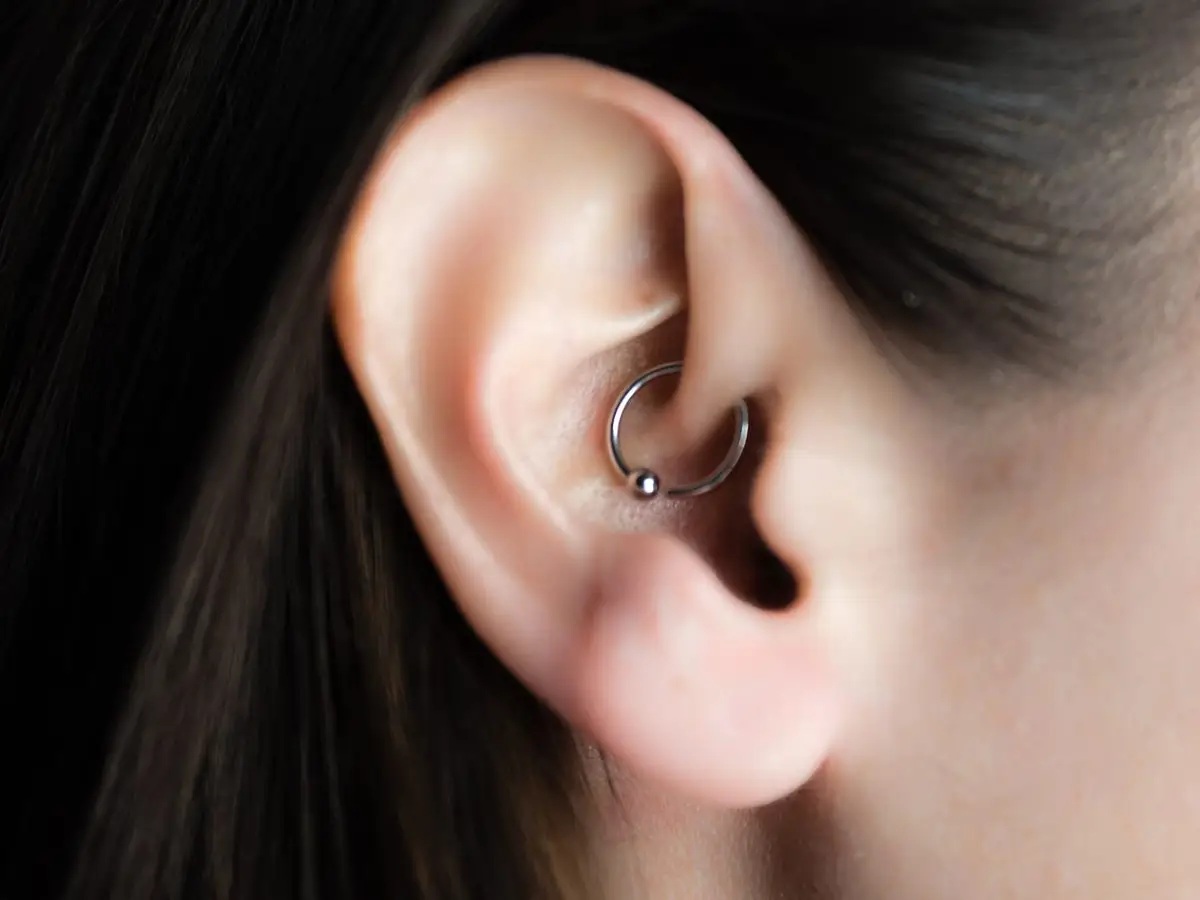
daith piercing London
A Step-by-Step Walkthrough of the Professional Procedure
- Consultation and Jewellery Selection: Your appointment will begin with a final confirmation of your anatomy and a discussion about jewellery. For a daith, the initial jewellery is almost always a ring-style piece (like a captive bead ring or a circular barbell) to accommodate for swelling.4 You will select a piece from our collection of sterile, implant-grade options.
- The Sterile Setup: You will be taken to a clinical-grade procedure room. The piercer will wash their hands, put on fresh gloves, and set up a sterile field with all the necessary single-use supplies.
- The Marking Process: Due to the internal location, marking a daith is tricky. The piercer will use a sterile skin marker to place small dots indicating the entry and exit points, ensuring the piercing will be perfectly vertical. You will be shown this in a mirror for your approval.
- The Receiving Tube: For a daith piercing, a professional will almost always use a tool called a receiving tube. This is a hollow, sterile tube that is placed in your ear canal to support the tissue from behind as the needle passes through. This ensures a clean, straight exit and protects your ear canal from the needle.
- The Needle: Curved vs. Straight: You may see your piercer use a curved needle for a daith. This is a common and perfectly acceptable technique that allows for easier access to the tight space. Some highly skilled piercers may also use a straight needle. Both are valid techniques in the hands of a professional.
- The Piercing Moment: You’ll be coached through your breathing. On a long, slow exhale, the piercer will pass the single-use, sterile needle through the crus and into the receiving tube in one smooth, controlled motion.
- The Jewellery Transfer: The jewellery is then seamlessly inserted into the new channel, often following the needle or a sterile taper pin to ensure a trauma-free transfer. The jewellery is secured, the area is cleaned, and the procedure is complete.
The Pain Factor: An Honest Assessment
The daith has a reputation for being one of the more painful cartilage piercings. Most people rate the pain at around a 6-7 out of 10.5 However, the sensation is often described differently from other piercings. Instead of a sharp, quick pinch, it is more of a deep, dull, and intense pressure. You may also hear a distinct “crunching” sound as the needle passes through the thick cartilage, which can be unsettling but is completely normal.6 The intense sensation is very brief, and it then subsides to a dull, throbbing ache.
The Healing Journey: A 9-12 Month Commitment to Patience
The daith is a notoriously fussy healer. Its location is both a blessing and a curse. While it is protected from accidental snags, its enclosed position means it can trap moisture and is difficult to clean, which can lead to complications. Patience is non-negotiable.
The Month-by-Month Healing Timeline
- Month 1 (The “Bubble” Phase): Your daith will be swollen, tender, and will feel like it’s taking up your entire ear. This is normal. It will secrete lymph fluid that will form “crusties.” Your job is to keep it clean and absolutely not touch it.
- Months 2-5 (The “Fussy” Phase): This is when most problems arise. The initial swelling will have gone down, but the piercing is still incredibly fragile. It is very common for irritation bumps to form during this period. These are small, fluid-filled bumps that are a reaction to moisture or movement. They are NOT infections and are best treated by diligent, gentle aftercare and a lot of patience.
- Months 6-12+ (The Maturation Phase): By this point, your piercing will likely look and feel healed. It may not be tender anymore. However, the internal fistula is still strengthening. It can still flare up if you get sick, sleep on it, or wear earbuds. You should not attempt to change the jewellery yourself until it is at least 9-12 months old and has been given the all-clear by a professional piercer.
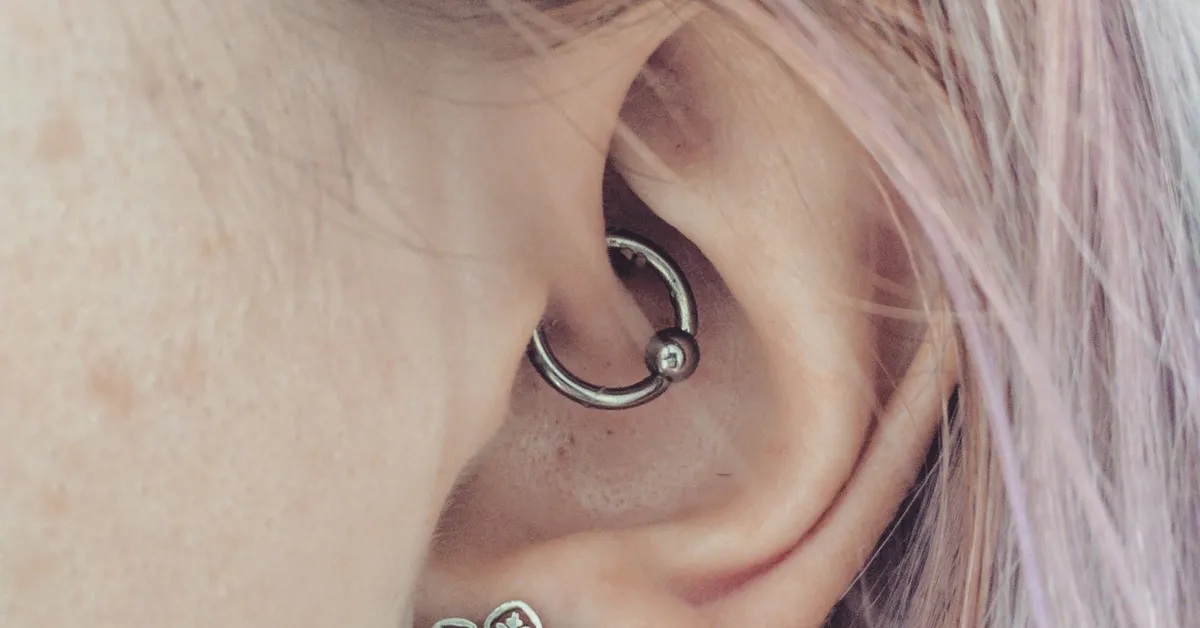
daith piercing London
The Ultimate Daith Aftercare Routine: Mastering the Challenges
- Cleaning: The biggest challenge is cleaning something you can’t easily see. The best method is to use a sterile saline solution spray. Twice a day, tilt your head, generously spray the solution, and allow it to run through the piercing, flushing out any debris.
- Drying (The Most Important Step): Because the daith is in a protected cove, it traps moisture, which can lead to irritation. After every cleaning and every shower, you must dry your piercing thoroughly. The best way to do this is with a hairdryer on its lowest, coolest setting, held at a distance.
- THE BIGGEST ENEMY: EARBUDS. This is a non-negotiable rule. You cannot wear an earbud (like an AirPod) in the ear with a healing daith piercing. The earbud will put direct pressure on the piercing, introduce a massive amount of bacteria, and will almost certainly cause severe complications. You must commit to not using an earbud in that ear for the entire 9-12 month healing period. Over-ear headphones that do not touch the ear are the only safe alternative.
- Sleeping: Avoid sleeping on the pierced side at all costs. A travel pillow is a lifesaver—place your ear in the hole to avoid any pressure.
Jewellery Styling: The Art of Adorning Your Healed Daith
The reward for your patience is getting to style your beautifully healed piercing.
Initial Jewellery: Rings are the Standard
Unlike most cartilage piercings, the daith is almost always pierced with a ring-style piece. This is because a ring allows the piercing to swell without the ends of a barbell becoming embedded, and it is generally easier to clean in such a tight space. Common initial options include:
- Captive Bead Rings (CBRs) or Fixed Bead Rings: A classic and secure choice.
- Circular Barbells (“Horseshoes”): Another simple and effective starting piece.
Styling a Healed Daith: From Minimalist to Ornate
Once your daith piercing London is fully mature, a world of beautiful styling options opens up.
- The Snug, Seamless Ring: For a minimalist look, a simple, seamless ring that fits snugly within the crus is an incredibly chic and popular choice.
- The Statement Clicker: This is where the true artistry begins. Daith clickers are hinged rings that come in a huge array of ornate designs, from simple gem-paved rows to elaborate, decorative gold patterns. These are the show-stopping pieces that make the daith such a desirable piercing.
Frequently Asked Questions (FAQ)
1. When can I wear an earbud in my ear again after getting a daith piercing?
You must wait until the piercing is fully, completely healed. This means a minimum of 9 months, and for many people, closer to 12 months. Attempting to wear an earbud before this will almost certainly cause a painful and frustrating setback.
2. My piercer said my anatomy isn’t right for a daith. Should I get a second opinion?
While you are always free to seek a second opinion from another reputable, high-end studio, you should take the first piercer’s advice very seriously. An honest piercer who turns you away is doing so to protect you from a piercing that is destined to fail. They are prioritising your well-being over their profit, which is the mark of a true professional.
3. I’ve had my daith for 4 months and a big bump has appeared. Is it infected?
While infection is possible, it is far more likely that you have a significant irritation bump. This is extremely common with daith piercings. The first steps are to be extra diligent with your saline cleaning and drying, and to ensure absolutely nothing is putting pressure on it (especially earbuds or sleeping). Book a check-up with your piercer so they can assess it in person.
4. Will my daith piercing affect my hearing or my ability to use stethoscopes/earplugs?
A well-placed daith piercing with appropriately sized jewellery should have no effect on your hearing. For professionals who need to use a stethoscope or custom-moulded earplugs, it is a critical consideration. You must discuss this with your piercer during the consultation. They can help you assess whether a daith piercing will interfere with your professional equipment.
5. How much does a high-quality daith piercing cost in London?
Due to the technical skill required, a daith is considered an advanced piercing.7 In 2025, you should expect to pay a service fee of around £40-£60 for a daith piercing London, plus the cost of the initial implant-grade jewellery, which typically starts around £30-£45 for a basic titanium ring.
daith piercing London
Conclusion
The daith piercing is a journey. It is a piercing that demands respect for anatomy, a commitment to patience, and the skill of a true professional artist. It is not the easiest piercing to get or to heal, but its unique, protected, and captivating beauty is an unparalleled reward. When performed correctly and cared for diligently, it becomes a stunning and sophisticated centrepiece of any curated ear, a permanent secret sparkle that is entirely your own.