
Comparing Piercing Studios in East London: A 2025 Guide to Price and Quality

East London is the beating heart of the capital’s creative culture.1 From the vibrant street art of Shoreditch to the independent boutiques of Hackney and the bustling markets of Brick Lane, it’s a landscape defined by a fierce commitment to self-expression and individual style. It is no surprise, then, that this area is a hotspot for body art, with a piercing studio on seemingly every corner. This incredible density of options is both a blessing and a challenge. How do you navigate this crowded marketplace to find a truly safe, professional, and reputable artist?
The sheer volume of choices can be overwhelming. You’ll find high-end, appointment-only ateliers, busy street-level tattoo parlours, and cheap-and-cheerful walk-in spots, all competing for your attention. This guide is designed to be your trusted companion in this search. This is not a directory or a list of paid-for recommendations. This is an insider’s guide on how to critically assess and compare piercing studios in East London based on the factors that genuinely matter: demonstrable quality, unwavering safety, and long-term value, not just a convenient location or a low price point.
We will equip you with a professional’s checklist, empowering you to ask the right questions, analyse portfolios with a critical eye, and identify the true hallmarks of a high-quality studio. By the end of this guide, you will be able to walk into any studio with the confidence of an informed client, ready to make the best possible decision for your body and your art.
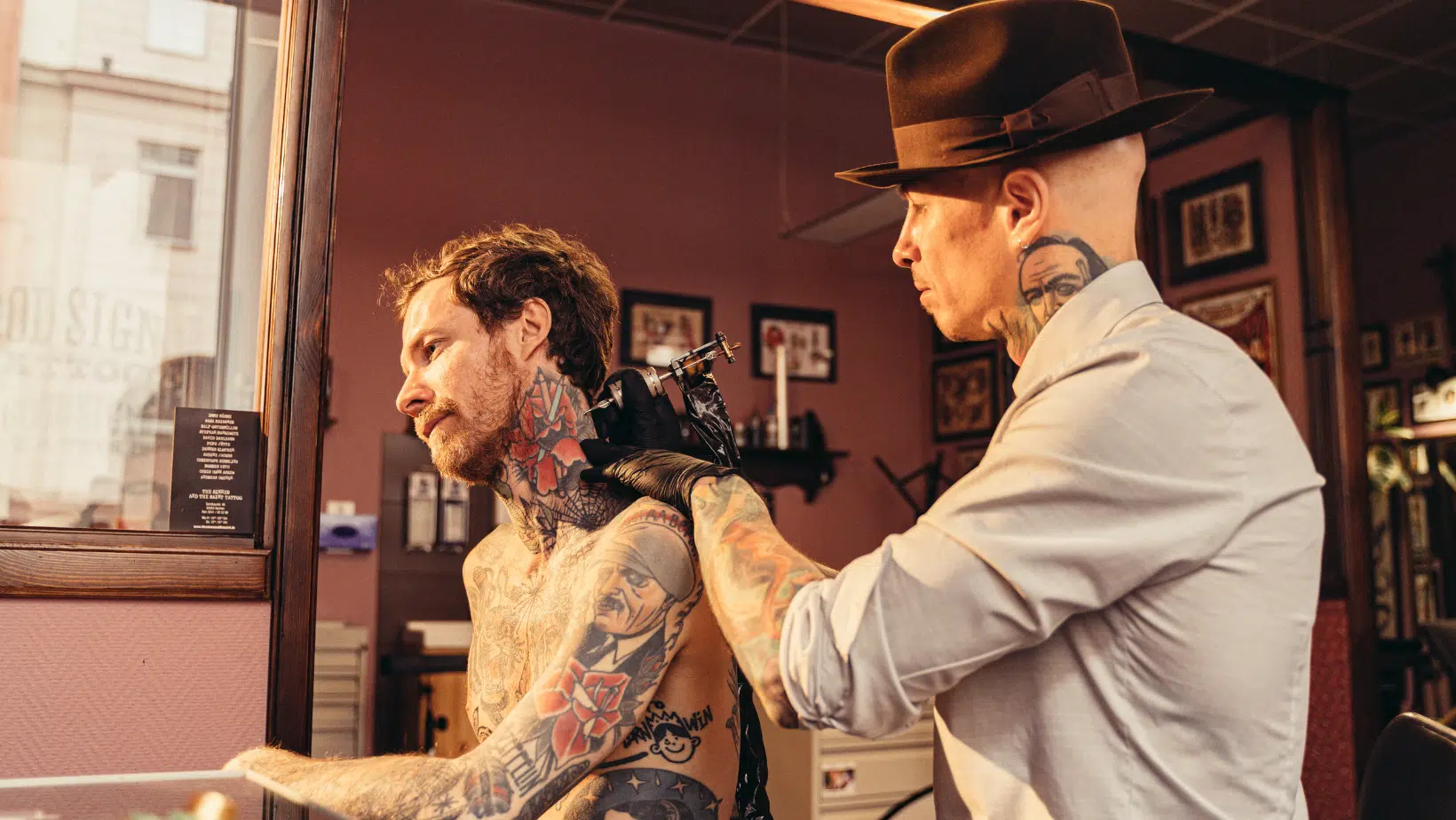
piercing studios in East London
The Price-Value Equation: Deconstructing Piercing Prices in East London
One of the most confusing aspects of comparing studios is the vast difference in price. You might see one studio advertising a helix piercing for £20, while another charges a £45 service fee plus the cost of jewellery. Understanding this difference is the first step in separating the professionals from the practitioners who cut corners.
The Red Flag of the £20 Piercing
Let’s be direct: a suspiciously cheap piercing is the single biggest red flag in the industry. It is simply not possible to offer a safe, professional piercing at such a low price point in London in 2025 without making significant compromises in critical areas. A professional studio has substantial overheads dedicated to your safety:
- Single-Use Equipment: Every piercing requires a brand new, sterile, single-use needle, a fresh pair of disposable gloves, sterilised marking pens, disinfectant, gauze, and other consumables. These items have a significant cost per client.
- Sterilisation Infrastructure: A medical-grade autoclave, the machine required for proper sterilisation, costs thousands of pounds to purchase and requires regular maintenance and weekly validation tests (spore tests) to ensure it is functioning correctly.
- High-Quality Jewellery: Reputable studios only use certified, implant-grade jewellery from trusted manufacturers, which has a much higher wholesale cost than low-grade, mystery-metal alternatives.
- Skilled Labour: Professional piercers are highly skilled specialists who have undergone years of apprenticeship and training.2 Their wages reflect this expertise.
- London Overheads: Rent, business rates, and insurance for a commercial property in East London are exceptionally high.
A £20 price point can only be achieved by compromising on one or more of these factors—most often by using cheap, unsuitable jewellery and by failing to invest in proper sterilisation equipment and single-use supplies. The initial “saving” is a gamble with your health.
The Professional Pricing Structure: Service Fee + Jewellery
All reputable piercing studios in East London and worldwide operate on a transparent, two-part pricing structure.
- The Service Fee: This is a fixed fee for the procedure itself. It covers the piercer’s time and expertise, and all the sterile, single-use equipment required.
- The Jewellery Cost: This is a separate cost because it is variable and based on your choice. A basic, implant-grade titanium stud will be the most affordable option, while a solid 18k gold piece with a genuine diamond will be a significant investment.
This model is a mark of a professional studio because it is honest. It allows you to see exactly what you are paying for and gives you the freedom to choose jewellery that fits your budget and style, without ever compromising the safety and quality of the piercing procedure itself.
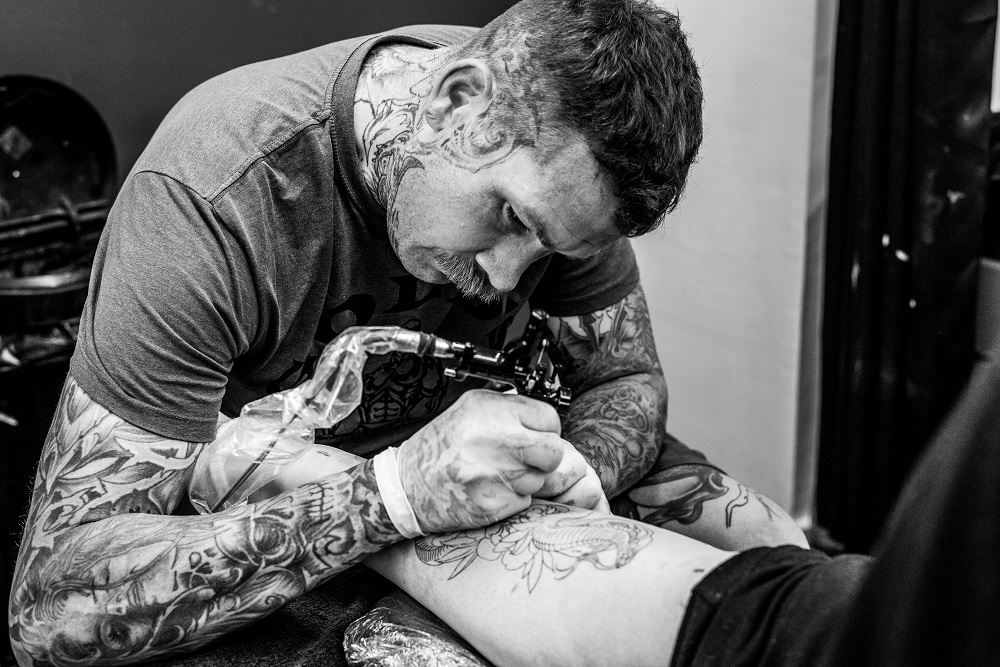
piercing studios in East London
Typical 2025 Price Ranges in Reputable East London Studios
While prices will vary, here are some realistic brackets for what you should expect to pay at a high-quality studio:
- Service Fees:
- Lobe Piercing: £30 – £45
- Standard Cartilage (e.g., Helix, Conch): £35 – £55
- Advanced Cartilage (e.g., Daith, Rook): £40 – £60
- Initial Jewellery Costs (Implant-Grade Titanium):
- Basic Stud/Ring: £25 – £40
- Decorative End with a simple gem: £35 – £70
Remember, the price represents value. The value is in the peace of mind that comes from a sterile procedure, the beauty of a perfectly placed piercing, and the long-term support offered by a dedicated professional.
The Non-Negotiable Litmus Test: How to Assess a Studio’s Hygiene
Before you even think about a piercer’s portfolio, you must assess the studio’s commitment to hygiene. This is a non-negotiable factor, and there are clear, tangible things you can look for.
The Visual Check: What to Look for When You Walk In
Your first impression is often the most accurate. When you enter a studio, take a moment to observe your surroundings with a critical eye.
- Overall Cleanliness: The floors should be spotless, surfaces should be dust-free, and the air should be fresh. A dirty, cluttered, or chaotic environment is a major red flag.
- Separation of Areas: A professional studio will have a clear and distinct separation between the public waiting area/jewellery counter and the private or semi-private procedure rooms.
- Procedure Room Standards: The procedure room itself should look clinical. Surfaces should be non-porous and easily cleanable. You should see a sharps container for needle disposal and touchless soap and paper towel dispensers.
Asking the Right Questions: Sterilisation and Aseptic Technique
You have the right to ask questions about your safety. A professional piercer will be proud to answer them. Empower yourself with this checklist of questions:
- “Could you please show me your autoclave?” A reputable studio will have a medical-grade autoclave on-site and will have no issue showing it to you.
- “Do you conduct regular spore tests, and could I see your most recent certificate?” This is the expert-level question. Spore testing is the only way to verify an autoclave is truly sterilising. An affirmative and confident “yes” to this question is one of the best signs you are in a top-tier studio.
- “Will you open the sterile needle and jewellery packaging in front of me?” The answer to this must be “yes, always.” There are no exceptions.
- “How do you clean your procedure area between clients?” The answer should involve the use of hospital-grade, virucidal disinfectants on all surfaces.
The piercer’s reaction to these questions is as important as the answers themselves. A true professional will be happy to educate you and demonstrate their commitment to safety. Any defensiveness or dismissal is a clear sign to walk away.

piercing studios in East London
The Piercer’s Personal Hygiene and Practices
Observe the artist themselves. They should exhibit excellent personal hygiene, including short, clean fingernails and tied-back hair. During the setup for a piercing, watch their discipline. Do they put on fresh gloves? Do they avoid touching non-sterile surfaces like their phone, computer, or hair once their gloves are on? This strict adherence to preventing cross-contamination is a hallmark of a well-trained professional.
Vetting the Artist: How to Spot a True Professional Piercer
Once you are confident in a studio’s hygiene standards, it’s time to assess the skill of the artist. The quality of piercing studios in East London can vary dramatically from one street to the next, and the artist’s portfolio is your primary tool for evaluation.
The Portfolio Deep Dive: Beyond Pretty Pictures
In 2025, an Instagram portfolio is a piercer’s CV. Learn to read it like a professional.
- Prioritise Healed Work: This is the most important rule. A fresh piercing is almost always swollen, which can hide crooked angles or poor placement. A portfolio that is proudly filled with photos of perfectly healed piercings—straight, flush with the skin, and with no lingering irritation bumps—is the number one sign of a skilled and confident artist. It is proof that their technique works in the long term.
- Critique the Placement and Angles: Look at their work with a critical eye. Is that septum piercing high, snug, and perfectly straight? Are the two holes of that industrial piercing perfectly aligned so the bar isn’t putting pressure on the ear? Is that navel piercing placed correctly for the client’s anatomy? Look for consistency and precision.
- Look for Specialisation: Great piercers often have specialities. If you are looking for an intricate ear curation project, seek out an artist whose portfolio is filled with beautiful, healed ear projects. If you want a daith piercing, find an artist who shows a dozen great examples of them. While a good piercer can do many things well, a specialist will deliver an exceptional result in their chosen area.
The UKAPP: Your Shortcut to Finding a Vetted Professional
The search can be daunting. One of the best shortcuts to creating a shortlist of high-quality artists is to consult the member directory of the UK Association of Professional Piercers (UKAPP). As a non-profit health and safety organisation, the UKAPP requires its members to meet stringent standards for hygiene, skill, and professionalism.3 Choosing a UKAPP member provides an independent, third-party verification of quality, which is an invaluable tool when researching piercing studios in East London.
The Consultation is an Interview (and They Should Interview You Too)
The consultation is your final and most important vetting tool. It is an opportunity to gauge the piercer’s professionalism and attitude. Crucially, a great piercer will also be interviewing you. They will:
- Assess Your Anatomy: A true professional will take a close look at the area you want pierced and give you an honest assessment of its suitability. They may even tell you “no” if they believe the piercing is not viable for your anatomy. This honesty is the ultimate sign of a professional who prioritises your well-being over making a sale.
- Ask About Your Lifestyle: They will ask questions to ensure the piercing will heal well with your lifestyle. Do you wear glasses? Play contact sports? Work in an environment that requires a helmet?
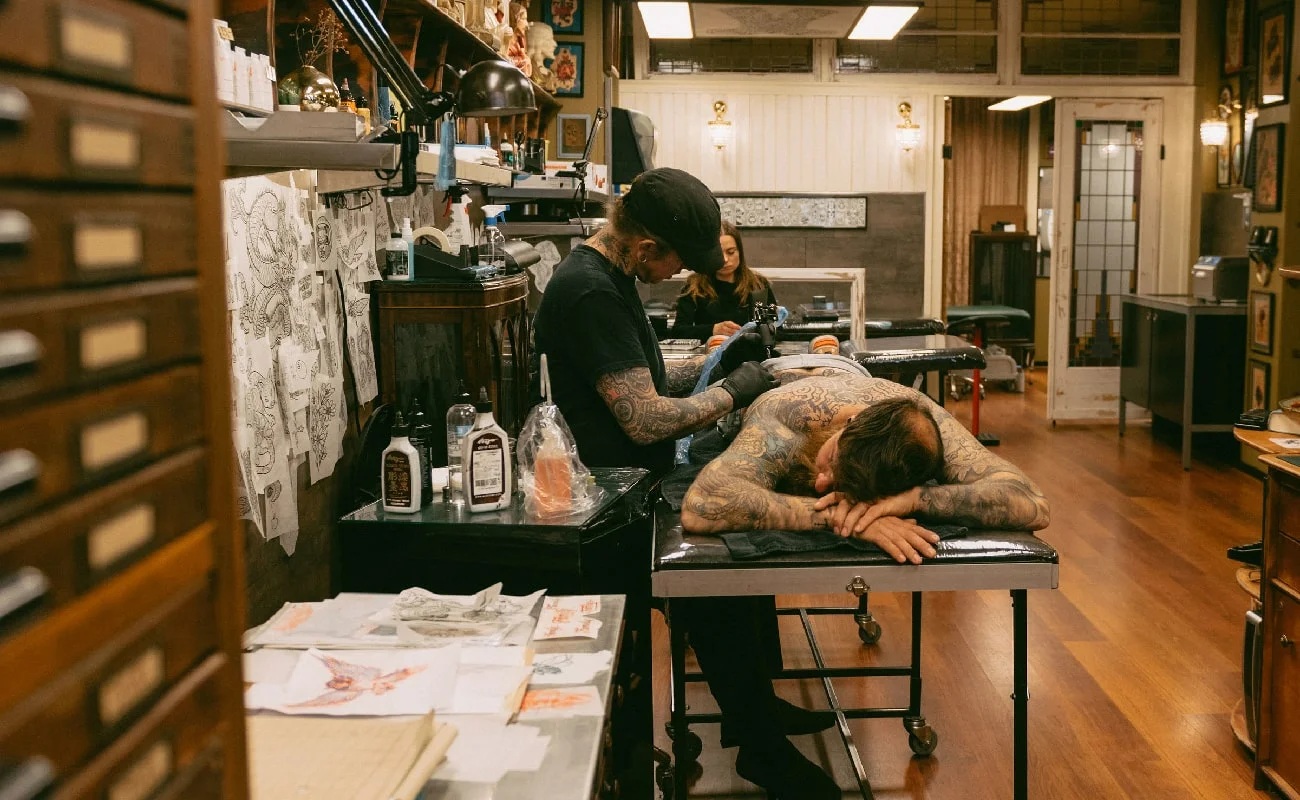
piercing studios in East London
Frequently Asked Questions (FAQ)
1. There are so many piercing studios in Shoreditch. How do I even start to choose?
Start with research, not walking around. Use the UKAPP member locator first. Then, use Instagram hashtags like #shoreditchpiercing or #eastlondonpiercer to create a shortlist based on portfolios that feature high-quality, healed work in the style you like. From there, visit their websites and read their Google Reviews before booking a consultation.
2. Is a more expensive piercing studio in East London always better?
Not always, but there is a strong correlation between professional pricing and professional standards. As we’ve detailed, the cost covers essential safety measures and high-quality materials. While a high price doesn’t automatically guarantee skill, a very low price almost certainly guarantees a compromise on safety.
3. I saw a studio offering a ‘2 for 1’ piercing deal. Is this a red flag?
Yes, this is generally a major red flag. Professional piercing is a skilled, clinical procedure, not a retail product to be discounted. These kinds of deals often pressure clients into getting more piercings than their body can comfortably heal at once and are a sign of a business model focused on volume over quality and safety.
4. What’s the difference between a tattoo studio that also does piercings and a piercing-only studio?
Neither is inherently better, as long as the standards are high. However, a piercing-only studio is often a sign of extreme specialisation. The piercers there dedicate 100% of their time and education to the craft of piercing. Often, you will find a wider selection of high-end body jewellery and a more focused expertise in complex piercings at a dedicated piercing studio.
5. How can I check if a studio is properly licensed by the local council (e.g., Hackney or Tower Hamlets)?
All legitimate piercing and tattoo studios in London must hold a “Special Treatment Licence” from their local council. They are legally required to display this certificate publicly in their studio. When you visit for a consultation, you can and should ask to see it. It should be current and clearly visible.
Conclusion
East London’s vibrant creative scene offers a fantastic array of piercing options, but this choice demands careful consideration. The best studio for you is not necessarily the closest, the cheapest, or the one with the most Instagram followers. The best studio is the one that can transparently prove its unwavering commitment to your health and safety. It’s the one with skilled, knowledgeable artists who respect your anatomy and your vision. It’s the one that invests in the highest quality materials because they know your body deserves nothing less.
You are now equipped with the knowledge to be your own best advocate. By using this guide as your checklist, you can confidently navigate the options and find a professional artist who will provide a safe, beautiful, and positive piercing experience from start to finish.