
There exists a realm within tattoo art that delves into the uncanny valley, a space where the organic and the artificial collide in a breathtaking and often unsettling fusion. It is a style born from the darkest corners of science fiction and the unsettling beauty of industrial decay. It imagines a future, or perhaps an alternate present, where the human form is no longer purely flesh and bone, but an intricate hybrid of biology and machinery. This is the world of the Biomechanical / Bio-organic Tattoo Style. It is an art form that peels back the skin to reveal a hidden, complex reality beneath—a world of gears, tubes, robotic details, pulsating muscles, and alien textures.
This is not a style for the faint of heart. Its overall vibe is undeniably dark, sci-fi, and industrial. It is a choice for the individual who is fascinated by the boundary between humanity and technology, who sees beauty in the intricate workings of a machine, and who wants a tattoo that is not just an image, but an immersive, three-dimensional illusion. Its origin is famously inspired by H.R. Giger’s artwork, particularly his nightmarish creations for the iconic Alien movie, and it carries that same sense of dark, futuristic wonder.
At PinkTatPier, we are a collective of artists who thrive on pushing the boundaries of the craft. Our pinktatpier studio services include dedicated specialists who are masters of this technically demanding and conceptually profound genre. We understand that a successful Biomechanical or Bio-organic piece requires not just flawless technique, but a powerful imagination. This is your definitive guide to the Biomechanical Tattoo Style. We will explore its groundbreaking origins, deconstruct its key aesthetic features, and explain how our expert artists in London can work with you to create a stunning, mind-bending masterpiece.
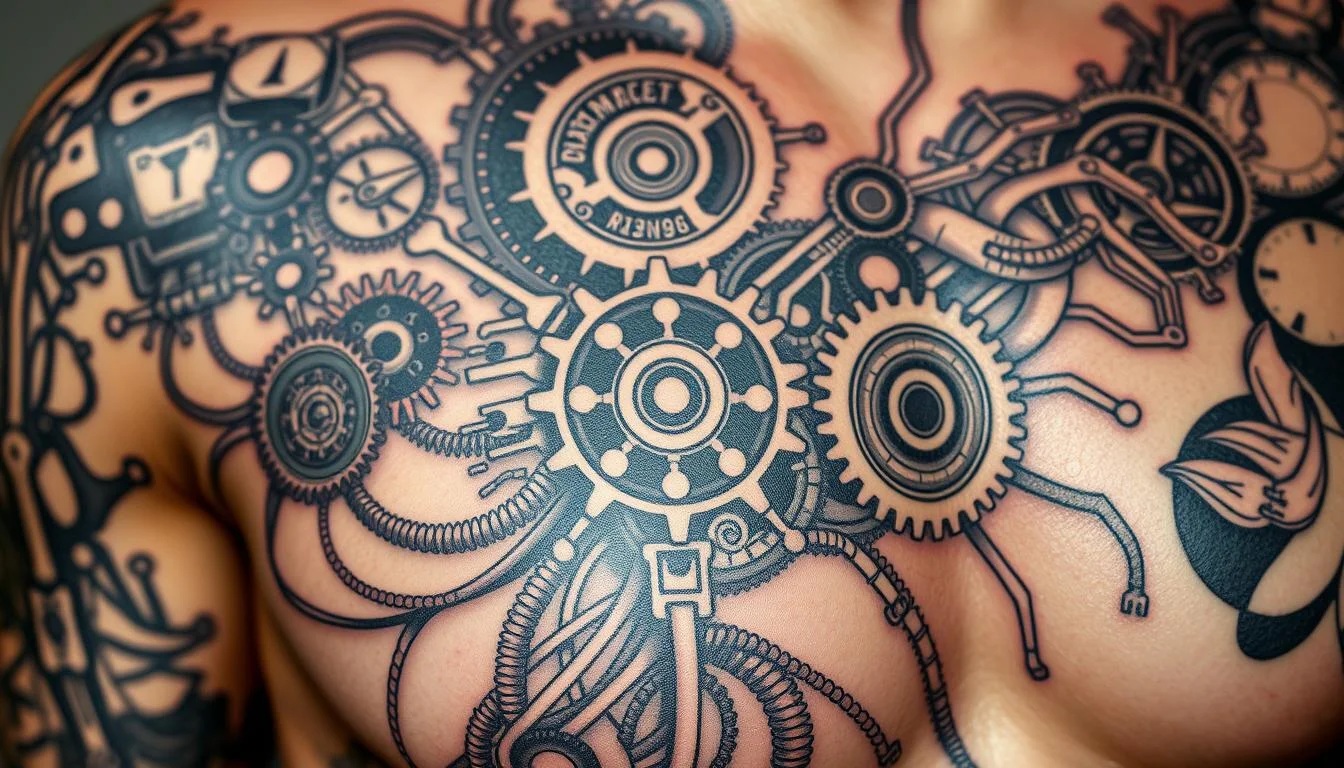
Biomechanical / Bio-organic Tattoo Style
A Nightmare Vision: The Origins Inspired by H.R. Giger
To understand the Biomechanical Tattoo Style, one must first pay homage to the visionary artist whose work provided its primary spark. This is a style that owes its very existence to the dark, surreal, and unforgettable creations of Swiss artist H.R. Giger.
The Alien Influence: The Birth of an Aesthetic
While the idea of fusing human and machine existed in sci-fi literature, it was H.R. Giger’s groundbreaking design work for Ridley Scott’s 1979 film Alien that truly brought the biomechanical aesthetic into the cultural consciousness. Giger’s creature, the Xenomorph, with its terrifying blend of skeletal structures, phallic shapes, and mechanical details, was unlike anything seen before. His broader designs for the film’s alien environments—landscapes of fused bone, sinew, and decaying technology—created a complete and terrifyingly beautiful visual language.
Tattoo artists, particularly in the burgeoning sci-fi and counter-culture scenes of the early 1980s, were immediately captivated by this aesthetic. They began translating Giger’s dark vision onto skin, mimicking his signature style of blending organic and mechanical forms. Early biomechanical tattoos were often direct copies or interpretations of Giger’s paintings and film designs.2 This marked the origin of the style, a direct homage to a singular artistic genius.
The Philosophy: Blurring the Lines Between Flesh and Machine
Beyond the visual influence of Giger, the Biomechanical Tattoo Style taps into a deeper philosophical fascination and anxiety about the relationship between humanity and technology. As our world becomes increasingly intertwined with machines, the style explores the potential—and sometimes terrifying—consequences of this fusion.
- The Cyborg Fantasy: It plays with the idea of the cyborg, the human enhanced or augmented by technology. A biomechanical tattoo can be seen as a visual representation of this potential future, a glimpse beneath the skin at the hidden machinery within.
- A Post-Industrial Landscape: The style often incorporates elements of decay, rust, and grime, reflecting a post-industrial aesthetic. It finds beauty not in pristine technology, but in the complex, often messy interface between the organic and the artificial. It speaks to a world where nature and industry are irrevocably intertwined. This dark, sci-fi, industrial vibe is central to the style’s power.
Defining the Two Branches: Biomechanical vs. Bio-organic
As the style evolved beyond direct Giger interpretations, it branched into two distinct but closely related sub-genres. Understanding this distinction is key to defining your own vision. Both styles share the core feature of a fusion of human anatomy and mechanical parts — skin peeled to reveal gears or muscle fibers, but they approach this concept from different angles.
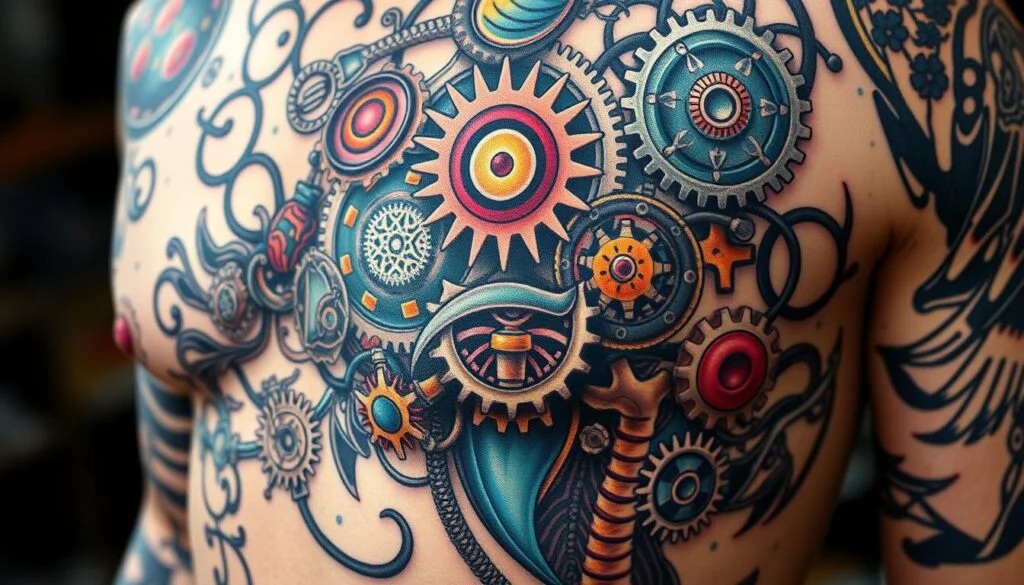
Biomechanical / Bio-organic Tattoo Style
Biomechanical: The Industrial Integration
This is the more classic and literal interpretation of the style. Biomechanical tattoos focus on the integration of distinctly mechanical parts into the human form.4
- The Aesthetic: The illusion is that the skin has been torn away to reveal a robotic or mechanical structure underneath. The components are clearly artificial: pistons pumping, gears turning, tubes and wires snaking through the tissue, metal plates bolted onto bone.
- The Texture: The focus is on rendering the textures of metal, plastic, and machinery convincingly. Think chrome, steel, rust, and complex robotic details.
- The Vibe: This branch feels more overtly sci-fi and industrial. It speaks directly to the themes of cybernetics and technological augmentation.
Bio-organic: The Alien Anatomy
The Bio-organic style takes a more abstract and fluid approach. Instead of revealing distinct machinery, it imagines a fusion where the organic and the artificial have become indistinguishable, creating a new, alien-like anatomy.
- The Aesthetic: The forms are smoother, more flowing, and less overtly mechanical. The illusion is one of stretched skin revealing pulsating muscle fibers, strange bone structures, glowing alien eyes, and sinewy, organic textures that may or may not be artificial. It often feels more monstrous or creature-like.
- The Texture: The focus is on rendering organic textures: wet, sinewy muscles, hard chitinous plating, translucent membranes, and glowing bio-luminescent elements.
- The Vibe: This branch feels darker, more mysterious, and often more disturbing. It taps into primal fears of mutation and the unknown, leaning heavily into the body-horror aspects pioneered by Giger.
While these two branches are distinct, many modern pieces creatively blur the lines between them, creating a truly unique Biomechanical Tattoo Style hybrid.
| Feature Comparison | Biomechanical | Bio-organic |
| Core Concept | Skin peeled to reveal mechanical parts (gears, tubes, robotics). | Skin peeled to reveal alien or mutated organic structures (muscles, bone, eyes). |
| Texture Focus | Metal, rust, wires, plastic, chrome. | Flesh, sinew, bone, chitin, wet surfaces, bio-luminescence. |
| Forms | Angular, structured, clearly artificial components. | Fluid, flowing, amorphous, often monstrous or alien-like forms. |
| Primary Vibe | Sci-fi, industrial, robotic, technological. | Dark, mysterious, monstrous, alien, primal. |
The Aesthetic Blueprint: Key Features of the Style
Whether Biomechanical or Bio-organic, the style is defined by a specific set of artistic principles designed to create a powerful, three-dimensional illusion.
The Defining Element: The Illusion of Depth and Structure Beneath the Skin
The absolute core feature of the Biomechanical Tattoo Style is the illusion that the Tattoo is not on the skin, but within the body. The artist uses a variety of techniques to create the sense that the viewer is looking through a tear or a window into a hidden, complex structure.
- The “Torn Skin” Effect: A classic technique is to render the edges of the design as if the skin has been peeled back, ripped, or surgically opened, revealing the mechanical or organic structures underneath.5 These torn edges are often rendered with incredible realism, complete with shadows and highlights to enhance the 3D effect.
- Creating Layers: A master artist builds the design in layers. There might be an outer layer of torn skin, revealing a layer of muscle or metal plating underneath, which in turn might reveal deeper structures like bone or intricate machinery. This layering creates a profound sense of depth and complexity.
The Technique: Mastery of Shading and Light
To achieve this illusion of depth and realism, the artist must be an absolute master of shading and light.
- Photorealistic Rendering: The style relies heavily on the techniques of Black & Grey Realism. The artist uses incredibly smooth gradients and a full tonal range to render the forms convincingly. They must have a perfect understanding of how light interacts with different surfaces—how it reflects off polished chrome, how it absorbs into porous bone, or how it creates highlights on wet, muscular tissue.
- High Contrast is Key: The style thrives on dramatic contrast. Deep, solid black shadows are used to create the illusion of depth and recession, while bright white highlights are used to make surfaces appear metallic, wet, or bio-luminescent. This powerful interplay of light and dark is what gives the style its signature eye-catching and realistic quality.
The Colour Palette: Monochrome vs. Muted Tones
While the style is often executed in pure Black & Grey, colour can be used to great effect.
- Black & Grey Dominance: The foundation of the style is almost always Black & Grey. This enhances the dark, industrial mood and allows the artist to focus entirely on form, texture, and light.
- Strategic Use of Muted Colours: When colour is used, it is typically not the bright, saturated palette of New School. Instead, artists often opt for more muted, earthy, or industrial tones—deep reds (suggesting muscle or blood), metallic blues and greens, ochres, and rust colours. These colours are used strategically to add accents, create focal points, or enhance the sense of organic or decaying texture.
The Vibe & Placement: Crafting an Immersive Artwork
The unique combination of these elements creates a very specific and powerful overall vibe that is designed to transform the body part into a piece of living sculpture.
The Feeling of Biomech: Dark, Sci-fi, Industrial
The Biomechanical Tattoo Style is unapologetically dark. It draws its inspiration from horror, science fiction, and the unsettling beauty of the uncanny valley. It has a distinctly sci-fi feel, exploring themes of cybernetics, artificial intelligence, and alien biology. And it is deeply industrial, finding aesthetic power in the cold precision of machinery and the gritty texture of decay. It is a style for those who are drawn to the shadows, the complex, and the thought-provoking.
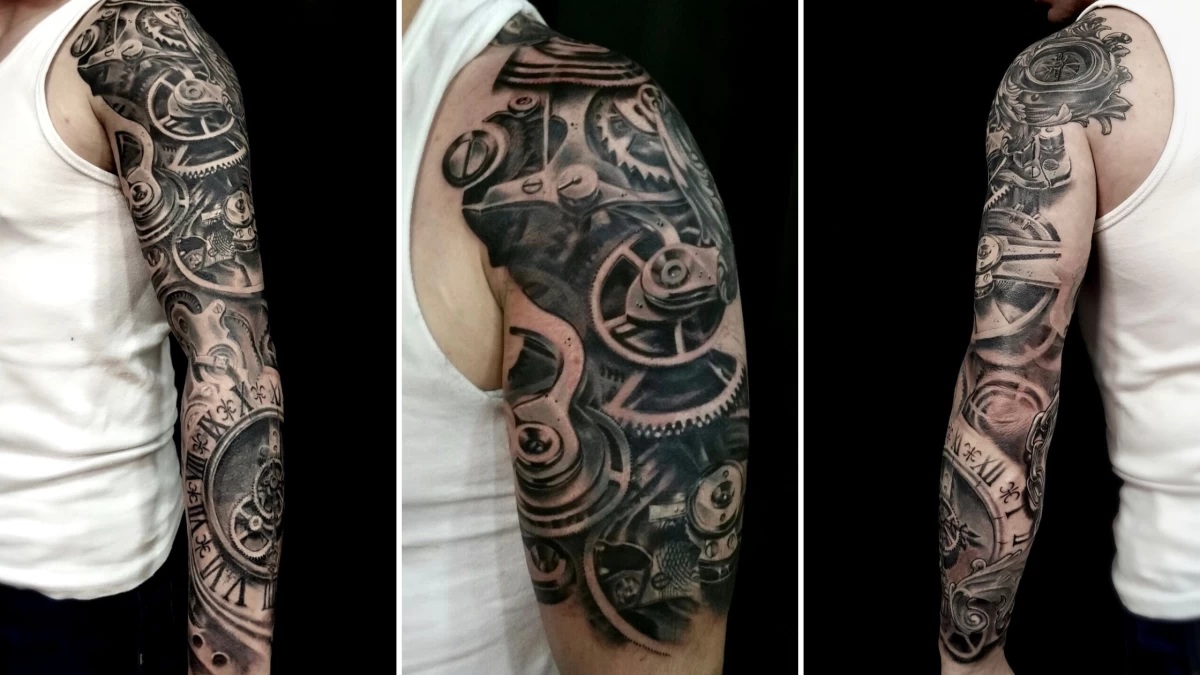
Biomechanical / Bio-organic Tattoo Style
The Ideal Canvases: Best Placements for Biomechanical Tattoos
Because the style relies so heavily on creating a seamless, three-dimensional illusion that flows with the body’s form, the best placement options are the larger, more muscular canvases that allow the design to wrap and move organically.
- The Arms, Legs, and Back: These are the quintessential locations. The arms (full or half sleeves) and legs (thighs or calves) provide a perfect, cylindrical canvas for creating designs that appear to integrate with the underlying musculature. The artist can design the piece so that the mechanical or organic elements seem to flex and move as the client moves their limb. The full back offers the ultimate, uninterrupted canvas for a truly epic, large-scale biomechanical or bio-organic masterwork, allowing the artist to create a complete, immersive anatomical transformation.
The PinkTatPier Experience: Your Biomechanical Tattoo Service in London
A perfect Biomechanical or Bio-organic tattoo is a testament to the artist’s technical mastery and their boundless imagination. At PinkTatPier, our pinktatpier studio services include dedicated specialists who excel in this unique and technically demanding art form.
Our Specialist Artists: Masters of Texture and Form
Creating a convincing illusion of flesh fused with steel or alien sinew requires an artist who is not only a master of realism techniques but also a brilliant conceptual designer. Our specialists have dedicated their careers to perfecting the art of rendering texture, light, and three-dimensional form on skin. They often have a background in fine art, sculpture, or special effects, bringing this deep understanding of form to the medium of tattooing.
The Custom Design Consultation: From Concept to Blueprint
Your journey begins with an in-depth, collaborative consultation. The Biomechanical Tattoo Style is deeply personal and often conceptual. Our process is designed to help you translate your vision into a powerful, bespoke design.
- The Dialogue: You will bring your ideas, your inspirations (perhaps specific Giger pieces, sci-fi films, or even industrial machinery). Our artist will work with you to understand the specific vibe you are after—more robotic or more monstrous? Sleek and futuristic or gritty and decaying?
- The Collaborative Creation: The artist will then begin the process of designing a piece that is perfectly tailored to flow with your specific anatomy. This often involves taking photos and measurements of the body part to create a digital mock-up, ensuring the final piece looks like an integrated part of you.
Frequently Asked Questions (FAQ)
1. Does a Biomechanical tattoo hurt more than other styles?
The pain level is generally comparable to that of a Black & Grey Realism tattoo. Because the style involves extensive, smooth shading and often covers large areas, the sessions can be long and require a high level of endurance. However, it does not typically involve the heavy colour packing of styles like New School, which some clients find more intense.
2. How well does the Biomechanical Tattoo Style age?
A well-executed Biomechanical or Bio-organic tattoo ages exceptionally well. Because it is built on a strong foundation of black and grey realism techniques, with a focus on high contrast, the design holds its structure and readability for decades. A master artist designs with the future in mind, ensuring the key elements will remain clear even as the skin naturally ages.
3. What is the difference between Biomechanical and Bio-organic again?
Think of it this way: Biomechanical looks like you have robot parts under your skin (gears, pistons, wires). Bio-organic looks like your skin itself is fused with or transforming into something alien or monstrous (strange bones, muscles, glowing textures). Biomechanical is more clearly artificial; Bio-organic is a more seamless, often disturbing, blend.
4. How much does a large Biomechanical piece cost?
A custom Biomechanical or Bio-organic tattoo is a work of fine art that requires a significant amount of conceptual and design time, as well as many hours of meticulous tattooing, from a specialist artist.6 You should expect the price to reflect this high level of bespoke, creative labour. Large pieces like sleeves or back pieces are significant investments, almost always charged at an artist’s full-day rate.
5. Is this style a good choice for a cover-up tattoo?
Yes, it can be an excellent choice, particularly the darker, denser Bio-organic style. The heavy use of black shading, intricate textures, and complex, flowing compositions can be very effective at completely concealing an old, unwanted tattoo. An expert artist can cleverly design the new piece to absorb the old tattoo into its shadows and textures.
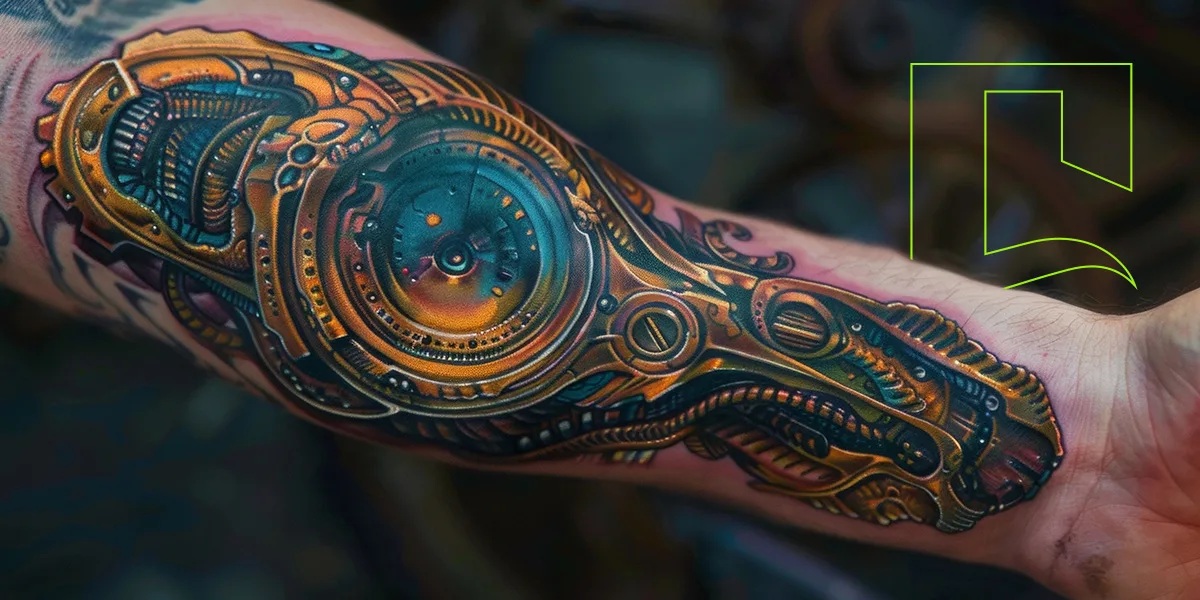
Biomechanical / Bio-organic Tattoo Style
Conclusion
The Biomechanical / Bio-organic Tattoo Style is a journey into the uncanny, a powerful exploration of the boundary between humanity and the machine, the real and the imagined. It is a choice for the individual who seeks a Tattoo that is more than just a beautiful image; they seek a transformation, a piece of art that challenges perception and sparks the imagination. It is a testament to the boundless creativity of the artist and the profound possibilities of the human body as a canvas.