
In an age of high-speed digital precision and the constant, powerful buzz of the modern tattoo machine, there is a growing movement that seeks a quieter, more intimate, and more fundamental connection to the art of tattooing. It is a return to the very origins of the craft, a celebration of the artist’s hand, and a testament to the profound beauty of a single, deliberate dot. This is the world of the Stick and Poke (Hand-Poked Tattoo). It is a method as ancient as humanity’s desire to mark the skin, now revived and re-envisioned for the modern collector.
This is a style defined by its process. It is created manually using a single needle or stick instead of a machine, with each dot applied by hand. This painstaking technique gives the final piece a soft, organic texture that is impossible to replicate with a machine.1 The overall vibe is undeniably raw, authentic, handmade, and artistic. It is a choice for the individual who values the process as much as the result, who seeks a tattoo that feels personal, grounded, and deeply connected to the ancient lineage of the craft.
At PinkTatPier, we are a studio that honours both the cutting edge of modern technology and the deep, rich history of our craft. Our pinktatpier studio services include a dedicated, specialist service for professional, and most importantly, safe hand-poked tattoos. This is your definitive guide to the Stick and Poke style. We will explore its ancient origins, deconstruct its unique aesthetic, have an honest conversation about the dangers of its DIY counterpart, and explain how our expert artists in London can create a beautiful, authentic, and lasting piece of hand-poked art for you.
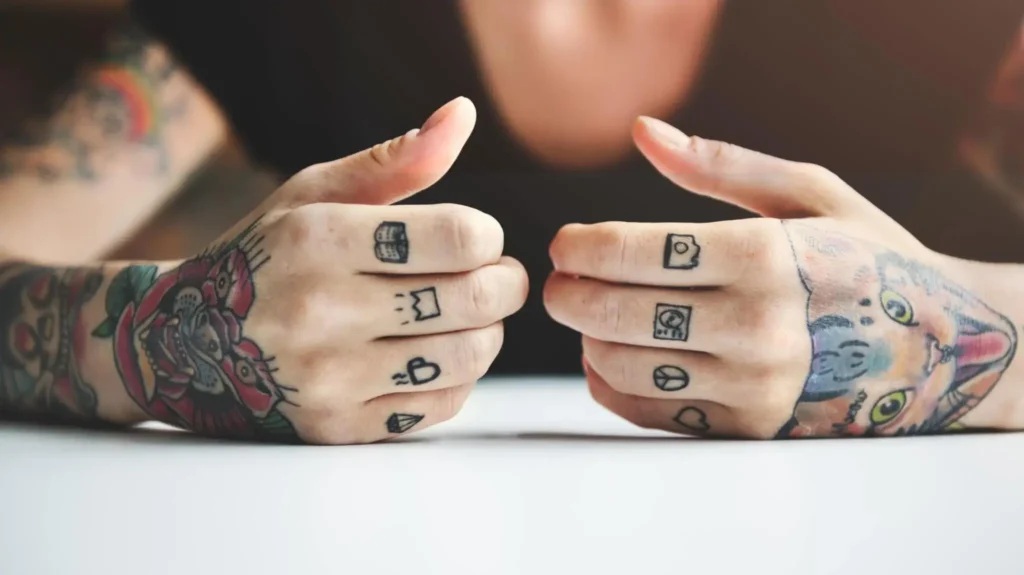
Stick and Poke (Hand-Poked Tattoo)
A Return to the Source: The Origins of the Stick and Poke Tattoo
To understand the modern appeal of the Stick and Poke tattoo, one must first appreciate its incredible historical depth. This is not a new trend; it is a revival of the very first and most widespread tattooing method in human history.
One of the World’s Oldest Tattoo Methods
The origin of this technique is global and ancient, practiced by ancient cultures for thousands of years. Long before the invention of the electric tattoo machine, every single tattoo was, in essence, a stick and poke.
- Ancient Evidence: The oldest known tattoos, found on the 5,300-year-old mummy of Ötzi the Iceman, were created by making small incisions and rubbing in charcoal—a primitive form of hand-poking. The dotted patterns on ancient Egyptian mummies and the intricate, symbolic tattoos of many indigenous cultures around the world were all created using manual, non-mechanised techniques.
- Polynesian Tatau: The legendary tatau of Polynesian cultures, while often using a “tapping” method with a comb-like tool, is part of the same family of manual tattooing. It was a rhythmic, ritualistic process that was deeply spiritual.
These ancient practices all shared a common thread: the artist’s direct, physical connection to the skin, creating an image one point at a time.
The Modern Revival: From Punk Rock to High Art
In the late 20th century, the Stick and Poke method was revived by modern minimalist and underground artists.
- The Punk and DIY Scene: In the 1970s and 80s, hand-poked tattooing had a raw resurgence within the punk and DIY subcultures. It was an anti-establishment act, a way to get a tattoooutside of the mainstream system, often using a simple sewing needle and India ink. The results were often crude, but they were authentic and rebellious.
- The Modern Artistic Embrace: In the 2010s and beyond, a new generation of professional tattoo artists, particularly those working in the minimalist and fine art genres, began to re-embrace the hand-poked method. They were drawn to its quiet, intimate process and the unique, soft aesthetic it created. They swapped the sewing needles for professional, sterile tattoo needles and the India ink for high-quality, safe pigments. They took the raw energy of the DIY method and refined it with the clinical safety and artistic precision of the professional studio, elevating the Stick and Poke style into a sophisticated and highly sought-after art form.
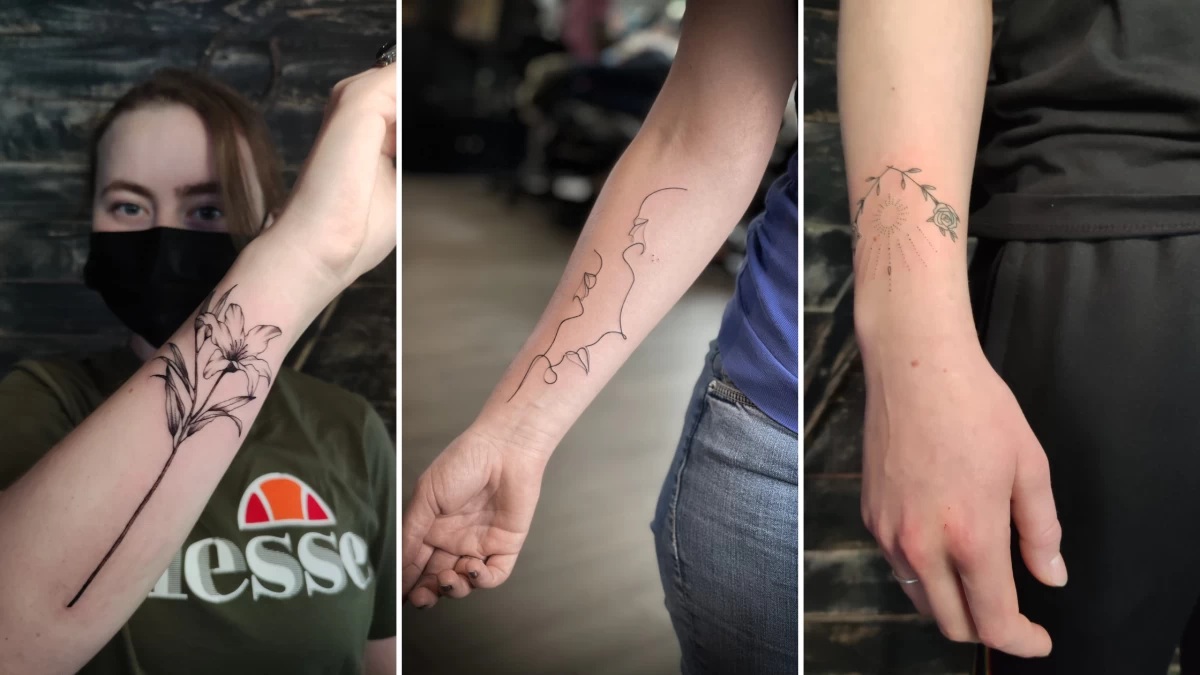
Stick and Poke (Hand-Poked Tattoo)
Deconstructing the Aesthetic: The Key Features of the Stick and Poke Tattoo
The visual language of a professional Stick and Poke tattoo is unique, subtle, and instantly recognisable. It is defined by its manual process and the beautiful “imperfections” that this process creates.
The Defining Element: Created Manually Using a Single Needle
This is the heart and soul of the style. A Stick and Poke tattoo is created manually using a single needle or stick instead of a machine.3
- The Process: The artist holds a sterile, professional tattoo needle (often attached to a special grip for ergonomic control) like a pen. They dip the tip of the needle into the ink and then, with a steady and practiced hand, gently “poke” or “push” the needle into the skin, depositing a single dot of ink.4 They repeat this process thousands of times, dot by dot, to form the lines and shading of the design. It is a slow, quiet, and incredibly focused process.
The Signature Look: A Soft, Organic Texture
The unique look of a hand-poked tattoo is a direct result of this manual process. Because each dot is applied by hand, the final result is not a perfectly solid, uniform line like one created by a machine.
- The Stippled Quality: A hand-poked line is, upon close inspection, a series of closely packed dots. This gives the entire tattoo a softer, stippled, almost “peppery” or pixelated quality. It is this soft, organic texture that is the signature of the style. It feels gentler and more integrated with the skin than the hard, graphic line of a machine. This is a deliberate aesthetic choice, a celebration of the handmade and the authentic.
The DIY Danger: Why a Professional Stick and Poke is the Only Safe Choice
The apparent simplicity of the Stick and Poke method has led to a dangerous trend of at-home, DIY tattoo kits, popularised on social media. As a professional and responsible studio, we must be unequivocally clear: performing a stick and poke on yourself or a friend at home is incredibly dangerous.
The Myth of the “Easy” DIY Tattoo
The internet is filled with tutorials that make hand-poked tattooing look simple and safe. This is a dangerous illusion. While the concept is simple, the execution of a safe, beautiful, and lasting tattoo is a professional skill that takes years to learn.
The Severe Risks of DIY Stick and Poke Tattoos
- Infection and Disease Transmission: This is the most serious risk. A home environment, especially a university dorm room or a bedroom, is not a sterile environment. Using unsterile needles (sewing needles are not sterile), the wrong kind of ink (pen ink is toxic and can cause severe reactions), and not following clinical hygiene protocols can lead to serious skin infections, such as staph or cellulitis. Worse still, sharing needles can transmit bloodborne diseases like Hepatitis C and HIV.
- Poor Quality and Blowouts: An untrained person has no concept of the correct depth to poke the needle. If you go too shallow, the ink will be in the top layer of the epidermis and will simply fall out as the skin heals, leaving you with a faded, patchy mess. If you go too deep, the ink will “blow out,” spreading under the skin to create a permanent, blurry, and ugly bruise-like effect.6
- Permanent Scarring: Using improper tools or a heavy hand can cause significant trauma to the skin, leading to raised, permanent scar tissue.
A professional Stick and Poke tattoo from a studio like PinkTatPier is a world away from this. It is a safe, clinical procedure that uses the same sterile, single-use professional needles, high-quality vegan inks, and uncompromising hygiene standards as any of our machine tattoos.
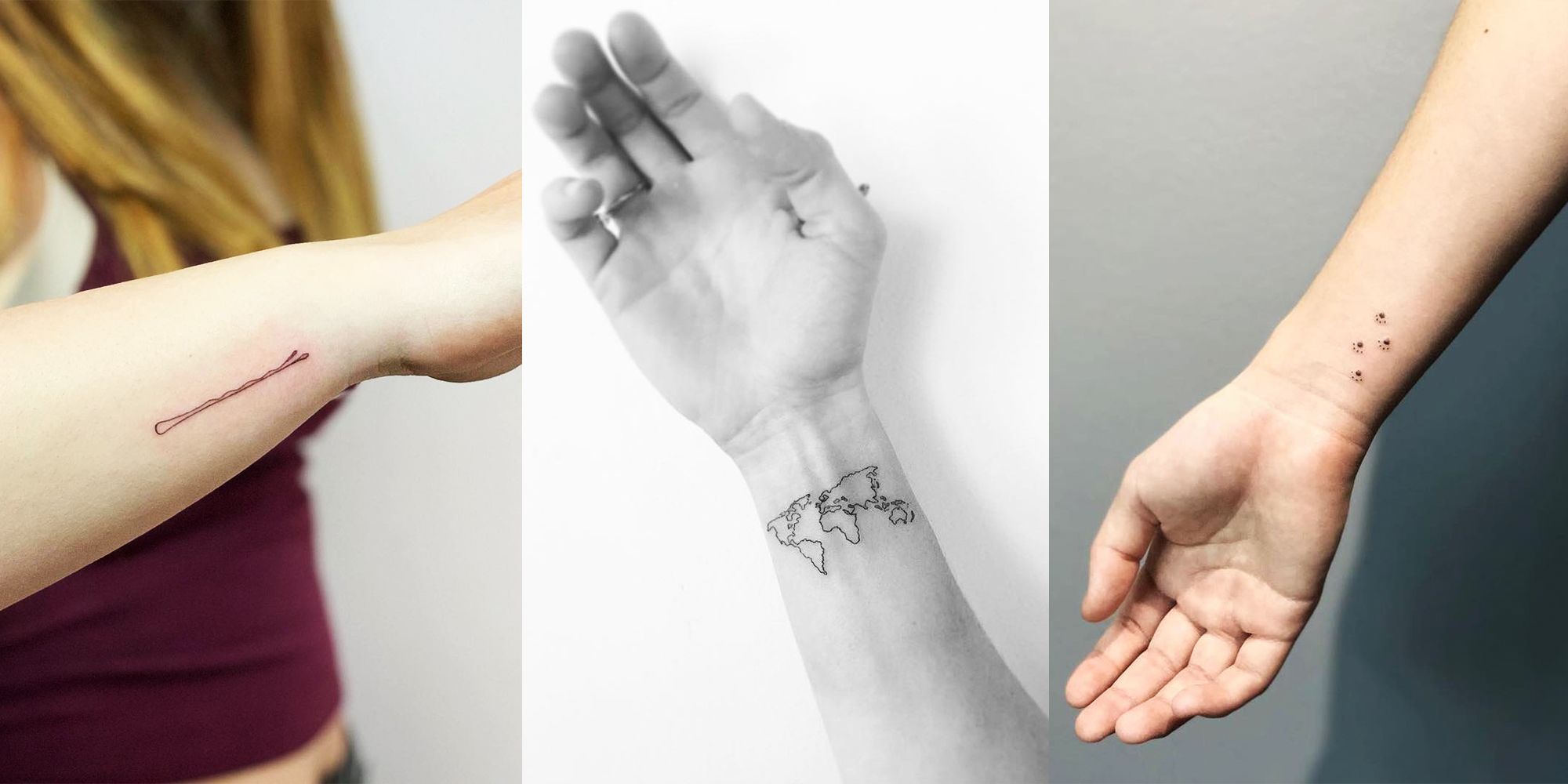
Stick and Poke (Hand-Poked Tattoo)
Stick and Poke vs. Machine Tattoo: A Comparative Guide
| Feature | Stick and Poke (Hand-Poked) | Machine Tattoo |
| Process | Created manually, dot by individual dot. The process is slow, quiet, and intimate. | An electrical machine rapidly pushes needles into the skin. The process is fast, efficient, and creates a loud buzzing sound. |
| Sensation / Pain Level | Often described as less painful and less intense. Feels more like a gentle, repetitive pricking or plucking. | A more intense, vibrating, and “scratching” or “stinging” sensation that can be more overwhelming for some. |
| Line Quality / Texture | Has a characteristic soft, organic texture, as the line is visibly made of individual dots. | Can create perfectly solid, crisp, and uniform lines, as well as a huge variety of smooth or textured shading. |
| Healing Process | Often less traumatic to the skin, which can lead to a quicker, easier, and less painful initial healing period with less swelling. | Can cause more initial swelling, redness, and trauma, especially with heavy linework or colour packing. |
| Overall Vibe | Raw, authentic, handmade, artistic. It is often chosen for its quiet, meditative, and personal feel. | Can be anything. The machine is a versatile tool that can be used to create any style, from hyperrealism to bold traditional. |
A World of Simplicity: Common Motifs in Stick and Poke Tattoos
The unique, soft aesthetic and the slow, deliberate process of the Stick and Poke style make it perfectly suited to a specific range of designs and common motifs.
The Power of the Symbol: Small Symbols and Minimalist Designs
The style is the perfect medium for creating small symbols and minimalist designs. The soft, organic lines give these simple designs a unique, hand-drawn character that feels less severe and more personal than a crisp, machine-made line.
Spiritual and Sacred Shapes
The quiet, intimate, and meditative process of a hand-poked tattoo lends itself perfectly to the creation of spiritual shapes. Many clients feel that the slow, rhythmic nature of the process is a better fit for a sacred symbol than the aggressive buzz of a machine. It is an ideal method for creating small mandalas, Buddhist or Hindu symbols, and other spiritual icons.
Geometric and Tribal Forms
The Stick and Poke style can be used to create beautiful, textured geometric or tribal forms. The dotted texture connects the tattoo back to its ancient, tribal roots, creating a look that feels incredibly authentic and grounded in history.
The PinkTatPier Experience: Your Professional Hand-Poked Tattoo Service in London
A professional hand-poked tattoo is a testament to the artist’s patience, precision, and incredibly steady hand. At PinkTatPier, our pinktatpier studio services include a dedicated, specialist service for this beautiful and ancient art form.
Our Specialist Hand-Poked Artists
Our studio is a curated collective of artists, and our hand-poked specialists have dedicated themselves to mastering this unique technique. They understand that it is a discipline of control and consistency. They have the skill to create lines that are both soft in texture and strong in their structure, and to pack in areas of solid black, dot by individual dot. Most importantly, they perform this traditional technique within a modern, clinical, and completely safe environment.
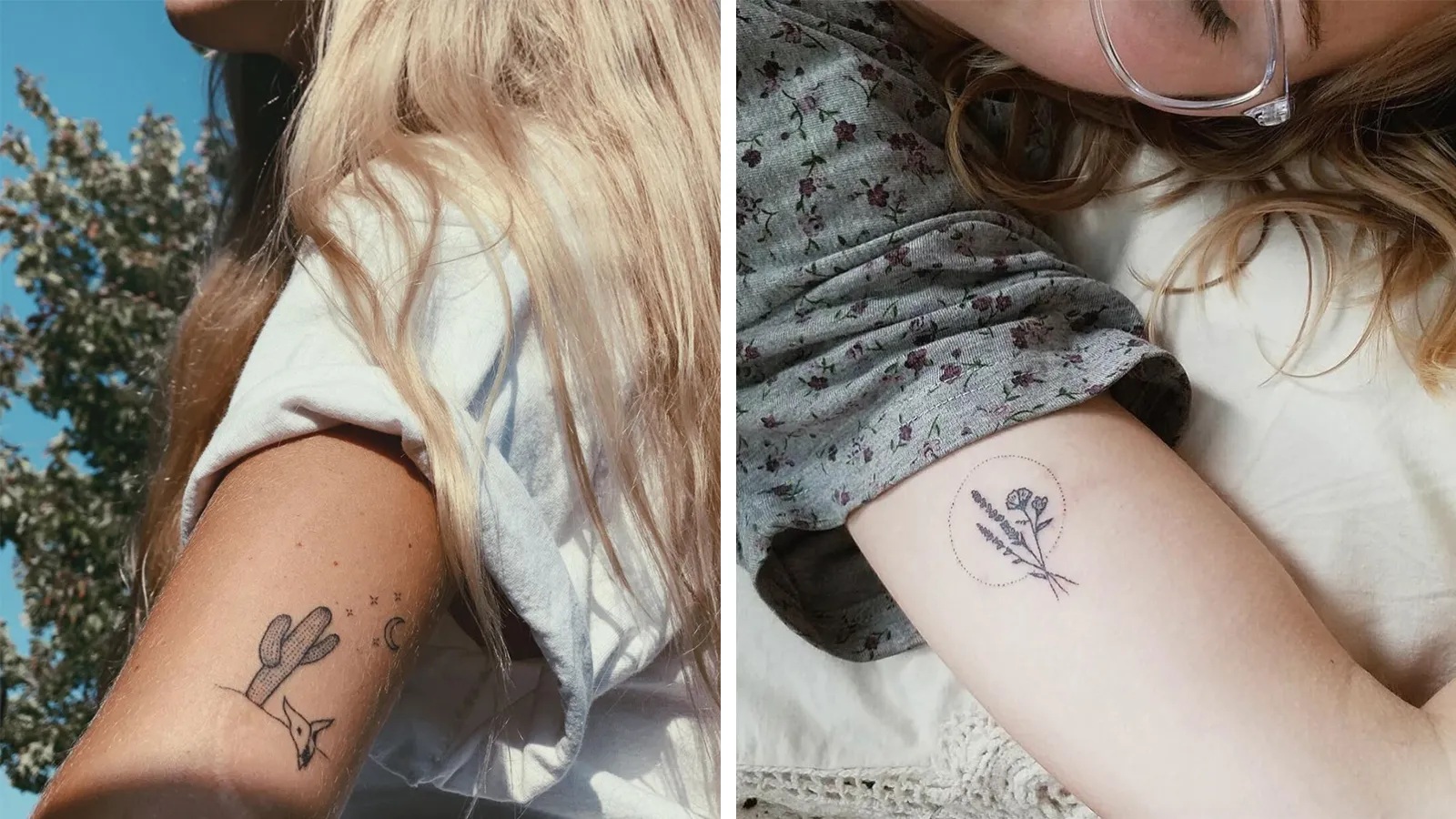
Stick and Poke (Hand-Poked Tattoo)
Frequently Asked Questions (FAQ)
1. Does a stick and poke tattoo hurt less than a machine tattoo?
Generally, yes. Most clients report that the sensation is much less intense. Because it is a slower, more gentle process without the constant vibration of a machine, the trauma to the skin is reduced, and the pain level is considered to be very low.7
2. Do stick and poke tattoos fade faster or are they permanent?
A professionally done stick and poke tattoo is 100% permanent and should not fade any faster than a machine tattoo. A professional artist has the skill to implant the ink at the perfect depth in the dermis to ensure its longevity.8 DIY stick and pokes, however, almost always fade or fall out because an untrained person does not go deep enough into the skin.
3. Is stick and poke the same as a dotwork tattoo?
No. This is a common point of confusion. Stick and Poke is a method of tattooing (by hand).9 Dotwork is a style of shading (using dots to create gradients).10 While a hand-poked tattoo is naturally made of dots, the term “Dotwork” in the tattoo world almost always refers to the intricate, geometric style of shading that is typically performed with a tattoo machine.
4. How much does a professional stick and poke cost?
The cost of any tattoo is based on the time it takes to complete. Because the Stick and Poke method is a much slower and more manual process, a hand-poked tattoo can often be more expensive than a machine-tattooed piece of the same size. You are paying for the artist’s time, focus, and the unique, handcrafted quality of the final piece.
5. Why shouldn’t I just do it myself at home with a kit?
For your safety. The risks of a DIY tattoo are enormous, including serious skin infections, the transmission of bloodborne diseases like Hepatitis C, permanent scarring, and a very high likelihood of a poor-quality tattoo that will either fade immediately or blow out into a blurry mess.11 A professional studio guarantees a sterile environment, the correct tools, and an artist with the skill to give you a beautiful and safe result.
Conclusion
The Stick and Poke (Hand-Poked Tattoo) style is a beautiful and profound connection to the most ancient roots of tattooing. It is a choice for the individual who values the quiet, the personal, and the authentic. It is a celebration of the artist’s hand and the simple, powerful beauty of a single dot. In a world of high-speed efficiency, it is a reminder that some of the most beautiful things in life are created with patience, focus, and a human touch.