
A tattoo, at its most profound, is a story. It is a narrative etched onto the skin, a permanent chapter in the biography of a life. While some styles tell this story through bold symbols or photorealistic copies of reality, there is one style that embraces the pure, unadulterated magic of the artist’s hand. This is the Illustrative Tattoo Style. It is a broad and wonderfully creative genre that does not seek to hide its origins as a drawing, but rather to celebrate it. It is a style that brings the techniques of pen and ink, charcoal sketching, and classical book illustration directly onto the skin, creating a work of art that feels personal, expressive, and full of character.
Born from a modern, art-focused movement with deep roots in Europe, the overall vibe of this style is undeniably artistic, expressive, and detailed. It is a choice for the individual who values the unique character of a hand-drawn image, who wants their tattoo to feel like a page torn from a beautiful, bespoke storybook. From whimsical animals and fantastical people to delicate flowers and complex story-based imagery, the possibilities are as limitless as the artist’s imagination.
At PinkTatPier, we are a collective of true artists, and our pinktatpier studio services are built on a foundation of artistic integrity and a deep passion for the craft of drawing. We are a premier destination in London for the Illustrative Tattoo Style. This is your definitive guide to this beautiful and diverse genre. We will explore its origins, deconstruct its key features and sub-genres, and explain how our expert artists can work with you to create a timeless, narrative-driven masterpiece that is as unique as your own story.
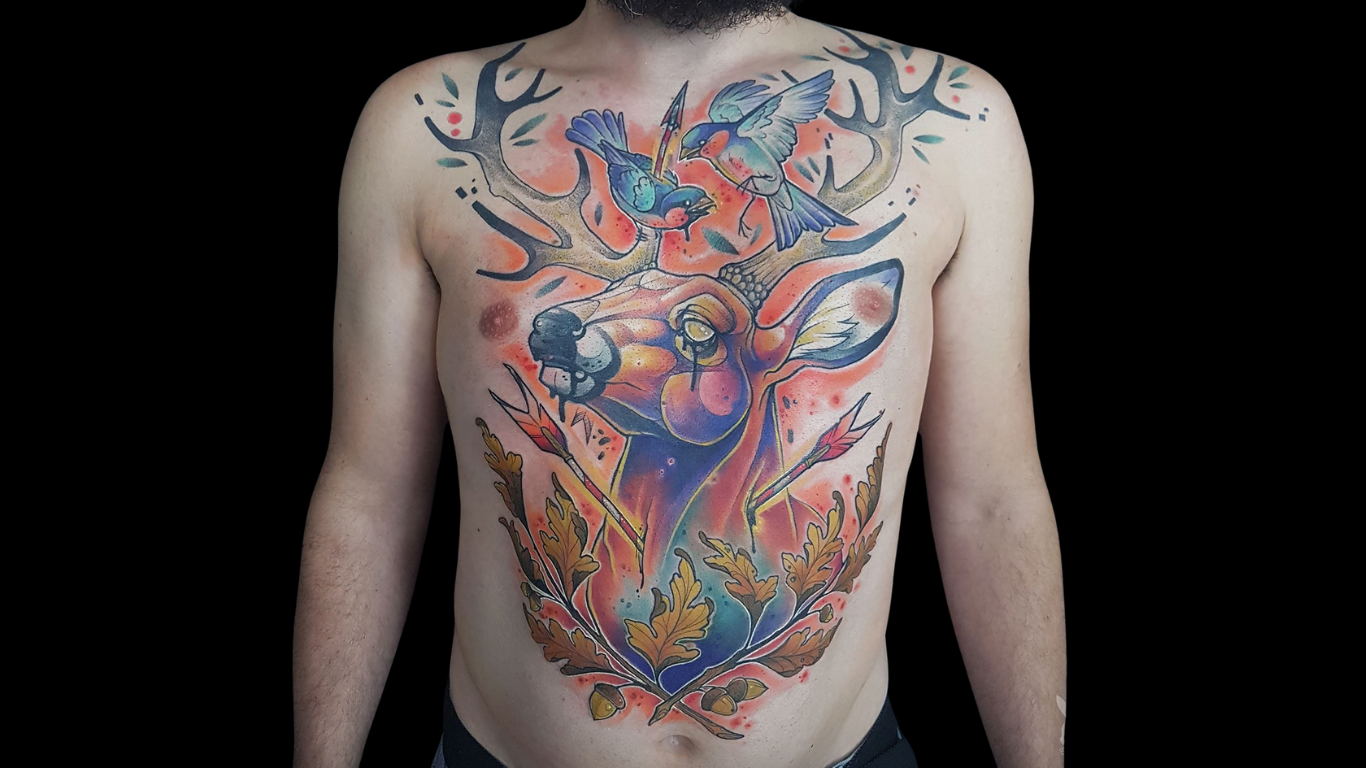
Illustrative Tattoo Style
A Canvas for Narrative: The Origins of the Illustrative Tattoo Style
To understand the Illustrative Tattoo Style, one must first understand its place in the timeline of tattoo history. It is not an ancient tradition with a rigid set of rules, but a modern and fluid genre born from a new generation of artists entering the industry.
A Modern European Movement, A Global Phenomenon
The primary origin of the illustrative style as a distinct and respected genre can be traced to the tattoo renaissance in Europe and America in the late 20th and early 21st centuries. During this period, tattooing underwent a profound cultural shift. It was no longer the exclusive domain of subcultures; it was embraced by the fine art world. A new wave of artists with formal training from prestigious art and design schools began to enter the tattoo industry.
These artists were not just trained as tattooers; they were trained as illustrators, painters, and printmakers. They brought with them a deep knowledge of art history and a mastery of techniques that went far beyond the classic tattoo rulebook. They began to ask a powerful question: “Why should a tattoo only look like a tattoo? Why can’t it look like a charcoal sketch, a woodcut engraving, or a watercolour painting?” This spirit of experimentation and the desire to fuse classical art techniques with the medium of skin gave birth to the broad and exciting genre we now know as the Illustrative Tattoo Style.
The Core Philosophy: Celebrating the Artist’s Hand on Skin
The fundamental philosophy of the Illustrative Tattoo Style is to celebrate, not hide, the fact that the image is a drawing. Unlike realism, which aims for a flawless, photographic illusion, the illustrative style often leaves in the “imperfections” and character that are the hallmarks of a hand-drawn image. It embraces the visible line, the texture of the shading, and the unique artistic “voice” of the person who created it. The goal is not to conform to a single set of tattoo rules (like American Traditional), but to replicate the specific look and feel of a hand-drawn illustration, with all its unique character, expressiveness, and narrative power.
Deconstructing the Aesthetic: The Key Features of the Illustrative Tattoo Style
The Illustrative Tattoo Style is a broad category, but its various sub-genres are all united by a set of key style features that are rooted in the principles of drawing and printmaking.
The Defining Element: Combining Illustration Techniques with Tattoo Linework
This is the heart and soul of the style. The artist is not just “colouring in”; they are drawing on the skin, using a diverse toolkit of techniques borrowed directly from the fine art world.
- Varied and Expressive Linework: Unlike the uniform lines of some styles, an illustrative tattoo can feature a huge variety of line weights. An artist might use fine, delicate lines to render details, and bold, heavy lines to create a sense of weight and emphasis, all within the same piece. The line itself can be expressive—clean and crisp in one area, soft and sketchy in another.
- A Spectrum of Shading Techniques: This is where the style truly shines. Instead of being limited to one type of shading, an illustrative artist will use the technique that best suits the desired look. This can include:
- Stippling (Dotwork): Using thousands of tiny dots to create soft, peppery gradients.
- Cross-Hatching: Using fine, overlapping lines to build up shadow and form, mimicking the look of an old etching or an ink drawing.
- Smooth Black and Grey Blending: For a softer, more realistic illustrative look, an artist might use the smooth gradients of black and grey realism.
- A Focus on Composition: An illustrative tattoo is composed like a classic illustration. It has a clear subject, a sense of background and foreground, and a narrative flow that guides the viewer’s eye through the piece.
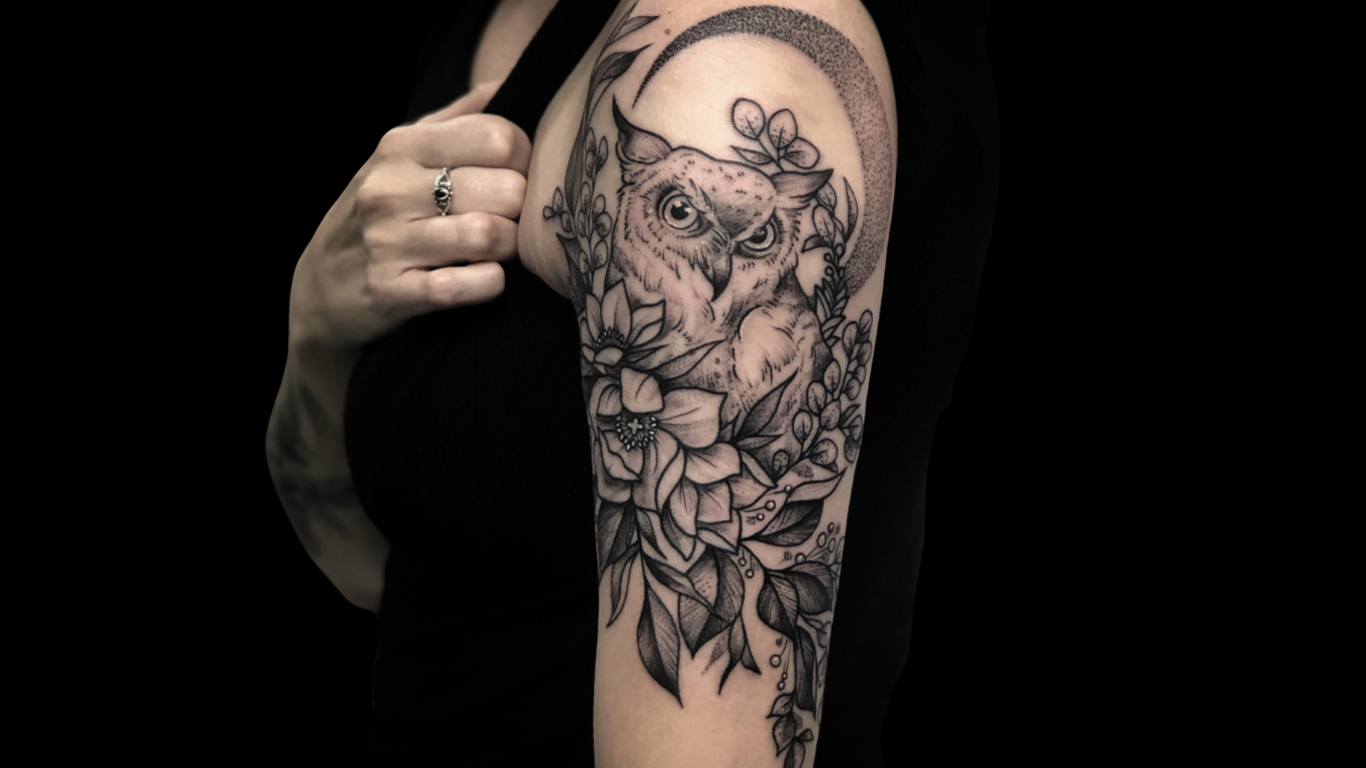
Illustrative Tattoo Style
The Many Chapters of Illustrative Art: Common Motifs and Sub-Genres
Because it is a style based on a technique rather than a specific set of images, the Illustrative Tattoo Style can be used to render almost any subject matter. However, its narrative quality makes it particularly well-suited to story-based imagery. The style can be broken down into several key sub-genres, each with its own distinct aesthetic.
| Sub-Genre | Key Characteristics | Common Motifs & Vibe |
| Etching / Engraving / Woodcut | Combines hand-drawn illustration techniques with tattoo linework to mimic the look of old woodcut prints or scientific illustrations from the Renaissance. It uses fine lines, parallel lines, and cross-hatching for shading, and has a very graphic, historical feel. | Botanical illustrations (flowers), alchemical symbols, medieval beasts, anatomical drawings. The vibe is intellectual, historical, and detailed. |
| Storybook / Fairytale | Whimsical, often colourful (but can be black and grey), with a clear narrative quality, reminiscent of a classic children’s book illustration. | Anthropomorphic animals (animals with human characteristics), fantasy figures, magical creatures, and scenes from literature or folklore. The vibe is imaginative, whimsical, and expressive. |
| Sketch Style / Avant-Garde | An intentionally “unfinished” or deconstructed look. The artist may leave in the rough construction lines, create “scribbled” shading, or use splashes of colour, as if you are looking at a page from their private sketchbook. | Human figures, portraits, architectural drawings, and abstract concepts. The vibe is raw, spontaneous, and highly artistic. |
| Dark Illustrative / Dark Art | A sub-genre that uses illustrative techniques to explore darker, more macabre themes. It often uses heavy black shading, fine-line details, and a moody, atmospheric composition. | Mythological monsters, surreal horror, and gothic-inspired imagery. The vibe is dark, dramatic, and emotional. |
The common motifs of people, animals, and flowers are popular across all these sub-genres, as the style allows the artist to capture not just their form, but their personality and a sense of movement and life.
The Vibe & Placement: Creating an Artistic and Expressive Masterpiece
The unique combination of these elements creates a very specific and powerful overall vibe that appeals to a client who is looking for a tattoo that is a true and unique piece of art.
The Feeling of Illustrative: Artistic, Expressive, Detailed
The Illustrative Tattoo Style is, above all, artistic. Its direct and unapologetic connection to the world of drawing and fine art gives it a sophisticated, gallery-worthy feel. It is deeply expressive, as the various techniques allow the artist to convey a huge range of emotions and moods, from the whimsical joy of a storybook scene to the dark drama of a gothic piece. And finally, it allows for an incredible level of detail. The use of fine lines, cross-hatching, and stippling means an artist can render intricate textures and create complex, narrative-rich compositions.
The Ideal Canvases: Best Placements for Illustrative Tattoos
Because the Illustrative Tattoo Style is so often used to create a full scene or a detailed composition, it requires a good amount of space to be truly appreciated.
- The Best Placements: The arm, thigh, and back are the perfect locations. The forearm and the upper arm provide a fantastic, wraparound canvas for a narrative piece that can be viewed from multiple angles. The thigh offers a large, relatively flat plane that is perfect for a full, vertical composition, such as a full figure or a large botanical piece. The back is the ultimate canvas for a truly epic, dramatic, and large-scale illustrative masterwork with a full background and multiple elements.
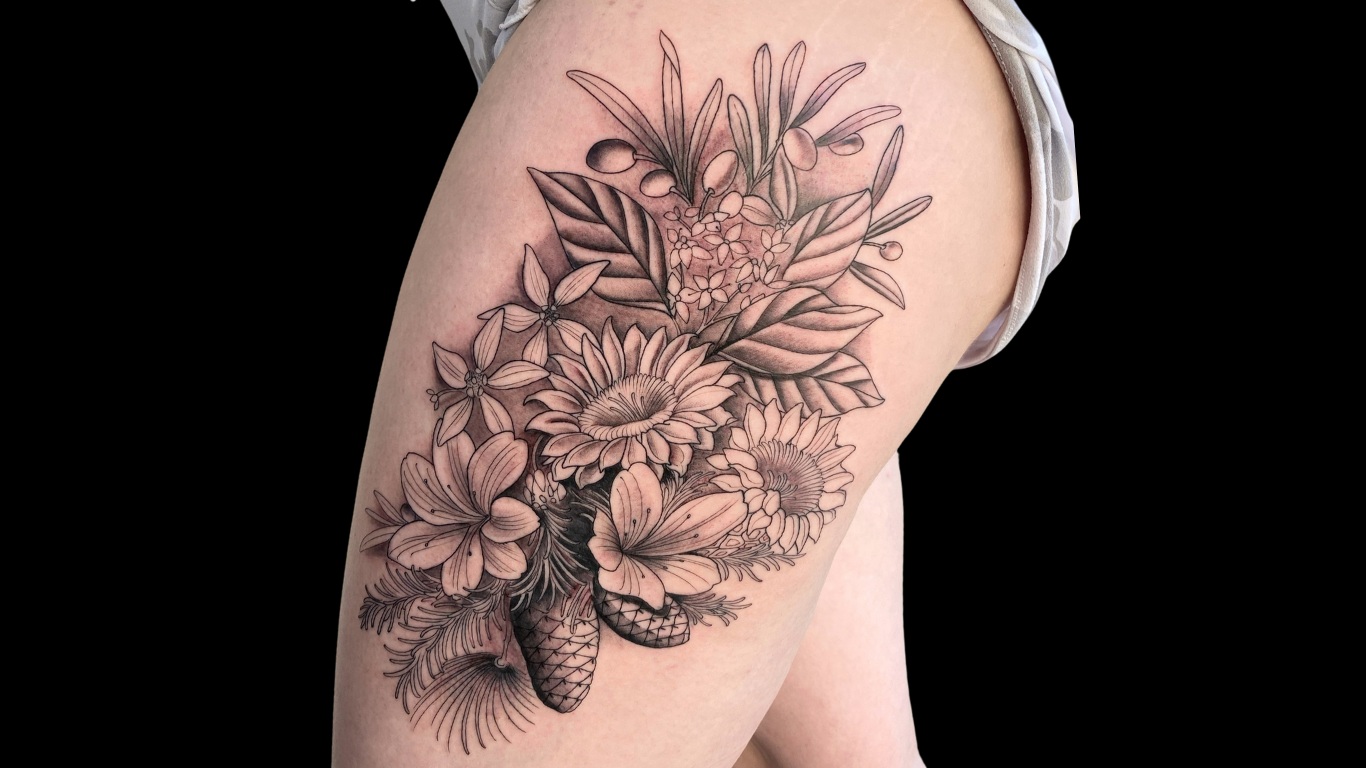
Illustrative Tattoo Style
The PinkTatPier Experience: Your Illustrative Tattoo Service in London
A perfect illustrative tattoo is a testament to the artist’s drawing skill and their ability to translate that skill onto the skin. At PinkTatPier, our pinktatpier studio services include dedicated specialists in this beautiful and technically diverse art form.
Our Specialist Illustrative Artists
Our studio is a curated collective of artists, and our illustrative specialists have a background in fine art and illustration. They are master draftspeople who live and breathe the principles of composition, light, and narrative. They are not just tattooers; they are illustrators whose chosen medium is the human body. This artistic foundation is what allows them to create truly unique, bespoke, and masterfully executed illustrative pieces.
The Custom Design Consultation: From Story to Stencil
Your journey begins with an in-depth, collaborative consultation. An Illustrative Tattoo Style piece is a personal story, and our process is designed to help you tell it. You will bring your concept, your story, your inspirations. Our artist will then work with you as a creative partner, sketching out ideas, discussing the composition, and deciding on the best illustrative technique (e.g., etching vs. smooth shading) to bring your vision to life in a way that is perfectly suited to your body.
Frequently Asked Questions (FAQ)
1. What is the main difference between the Illustrative style and Realism?
This is a great question. While they can overlap, the key difference is intent. The goal of Realism is to create an illusion of reality, to look like a photograph. The goal of the Illustrative Tattoo Style is to look like a drawing or a painting. It celebrates the linework, the cross-hatching, and the “hand of the artist,” rather than trying to hide it.
2. How well does the Illustrative Tattoo Style age?
This depends heavily on the sub-genre. An illustrative tattoo with a strong foundation of linework, such as in the etching or engraving style, will age exceptionally well. A more delicate, “sketch style” piece with very light lines and no black shading may soften and fade more over the decades, and may require a touch-up to keep it looking crisp.
3. Can you create a tattoo for me in the specific style of my favourite illustrator or artist?
We will never directly copy another artist’s work, as that is plagiarism. However, we absolutely can take inspiration from the style of an artist you admire. You can bring in examples of their work, and our artist can create a completely new, original design for you that captures the same mood, uses similar techniques, and pays homage to that style.
4. How much does an Illustrative tattoo cost?
The cost of any tattoo is based on the time it takes to complete. Because illustrative tattoos are often highly detailed and are always custom drawn for the client, they are a premium, bespoke service. You should expect the price to reflect the many hours of drawing time required before the tattoo session even begins, as well as the time it takes to execute the intricate design.
5. Is the Illustrative style a good choice for a cover-up tattoo?
It can be, but it depends on the sub-genre and the old tattoo. A dense, heavily shaded, dark illustrative piece can be very effective for a cover-up. A very light, airy, or “sketchy” illustrative design would not be suitable as the old tattoo would show through. A full, in-person consultation is essential to determine if it’s a viable option.
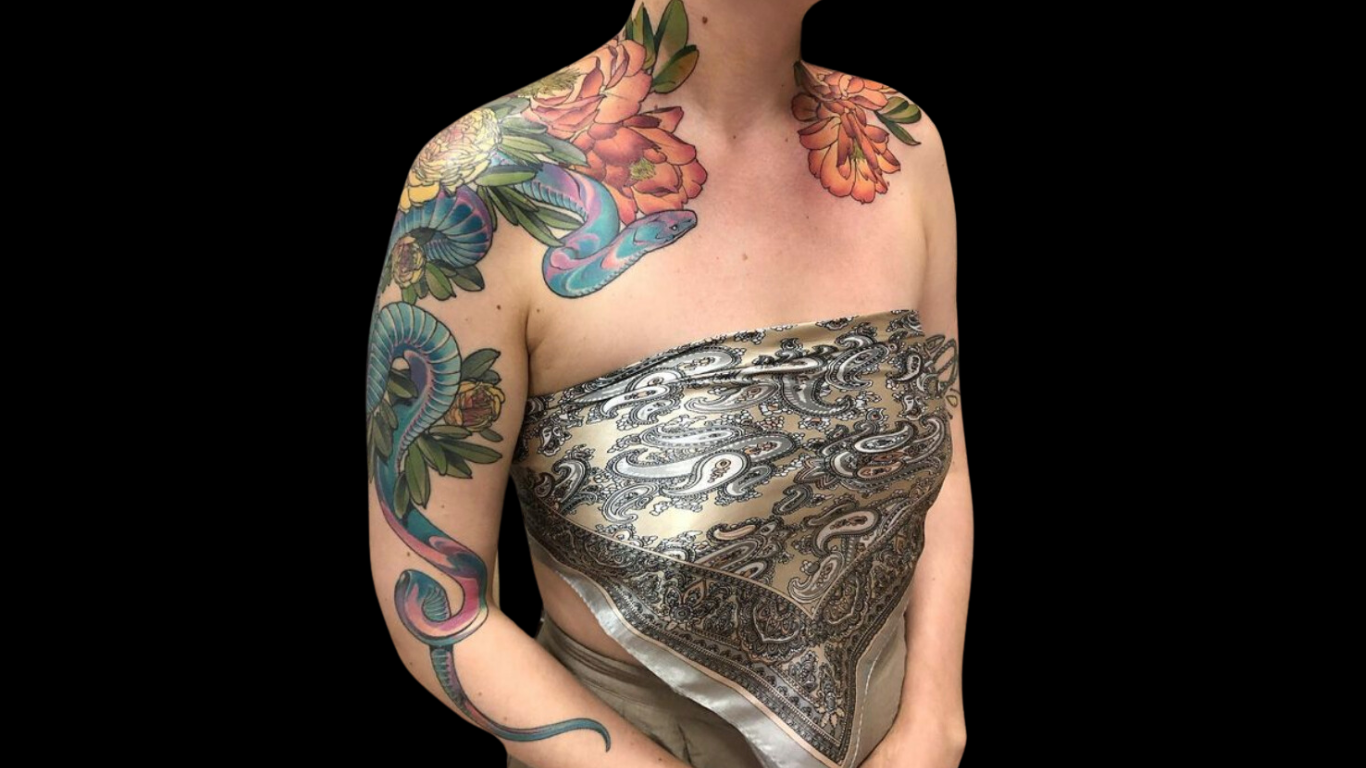
Illustrative Tattoo Style
Conclusion
The Illustrative Tattoo Style is a celebration of the tattoo as a true art form. It is a genre that prioritises creativity, personal narrative, and the unique, irreplaceable character of a hand-drawn image. It is a choice for the individual who wants to wear more than just a picture; they want to wear a story, a piece of art that is as expressive, detailed, and unique as they are.