
In the diverse and colourful world of tattoo art, there is a style that stands in stark, powerful, and beautiful opposition to all others. It is a style that does not seek to replicate the world in shades of grey or hues of the rainbow, but instead chooses to work with the most fundamental and potent element of all: pure, solid black. This is the world of the Blackwork Tattoo Style. It is a bold, primal, and unapologetically modern art form that uses the skin as a canvas for dramatic contrast, intricate patterns, and powerful silhouettes. A Blackwork tattoo is not just an image on the skin; it is a transformation of the skin itself, a new geography of light and shadow.
The overall vibe of this style is undeniably powerful, dark, and minimalist in its purest form. It is a choice for the individual who values bold statements, deep cultural history, and an aesthetic that is both ancient and avant-garde. From vast, solid black sleeves to intricate geometric patterns and modern interpretations of tribal designs, Blackwork is a broad and exciting genre. However, the execution of a flawless Blackwork tattoo, particularly one with large solid black areas, is a feat of immense technical skill, patience, and endurance.
At PinkTatPier, we are home to some of London’s most sought-after specialists in this demanding and beautiful art form. Our pinktatpier studio services are designed to provide a bespoke, master-level experience for clients seeking a sophisticated Blackwork piece. This is your definitive guide to the Blackwork Tattoo Style. We will explore its ancient origins, deconstruct its key features and sub-genres, and explain how our expert artists can work with you to create a timeless, powerful masterpiece.
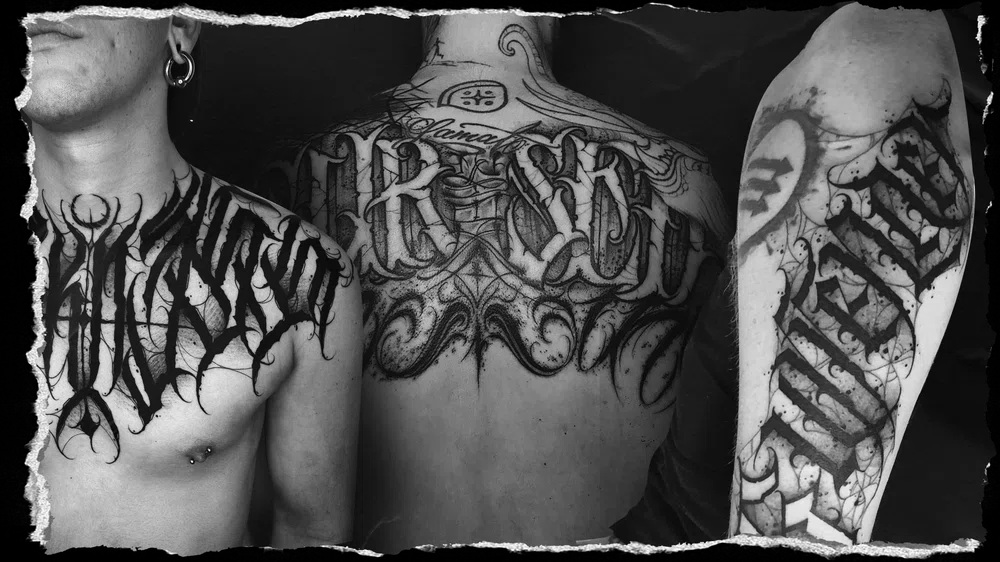
Blackwork Tattoo Style
A Legacy Etched in Black: The Origins of the Blackwork Tattoo Style
To understand the modern Blackwork Tattoo Style, one must look back not just decades, but thousands of years. It is an art form with a rich, global history, a modern interpretation of some of humanity’s oldest artistic impulses.
Ancient Roots and Tribal Influences
The true origin of Blackwork lies in ancient tribal tattoos. For millennia, cultures across the globe have used bold, black patterns to signify identity, status, spiritual beliefs, and tribal allegiance.
- Polynesian Tattoos: The intricate, flowing patterns of Polynesian tatau are one of the most famous examples.2 These designs, created with bold black lines and shapes, were used to tell the story of a person’s life, their lineage, and their place within their community.
- Bornean Tattoos: The traditional tattoos of the Iban people of Borneo, with their heavy, dark, and symbolic animal and plant motifs, are another powerful example of an ancient Blackwork tradition.
- Celtic Tattoos: The complex, interwoven knots and spirals of Celtic art, often rendered in solid black, are a form of intricate geometric Blackwork that has been popular for centuries.
These ancient traditions all shared a common understanding: that a bold, black design, created in stark contrast to the skin, was the most powerful and permanent way to mark the body.
The Modern Revival and Redefinition
The modern Blackwork Tattoo Style as we know it today is a reinterpretation and evolution of these ancient forms. In the late 20th and early 21st centuries, as tattooing experienced a massive cultural resurgence, artists began to look back to these tribal roots for inspiration. They were drawn to the power and purity of working only with black ink. They began to deconstruct these ancient patterns, combining them with modern aesthetics, geometric principles, and a minimalist sensibility. This fusion of the ancient and the avant-garde gave birth to the diverse and exciting genre we now know as Blackwork, moving it from a purely “tribal” category into a sophisticated and modern art form in its own right.
Deconstructing the Aesthetic: The Key Features of the Blackwork Tattoo Style
The visual language of the Blackwork Tattoo Style is defined by its powerful use of contrast and form. It is a style built on several key principles and style features.
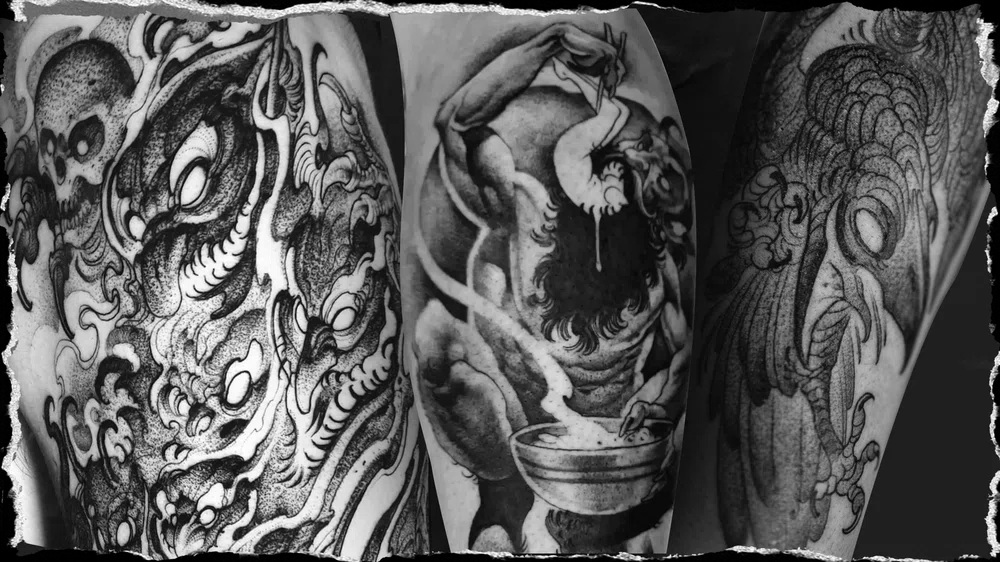
Blackwork Tattoo Style
The Defining Element: Large Solid Black Areas
This is the most fundamental feature. The Blackwork Tattoo Style is defined by its use of large solid black areas.
- The “Blackout” Technique: This involves using a tattoo machine to completely and perfectly saturate an area of skin with dense, solid black ink. This technique, often called “blacking out,” requires a huge amount of skill and patience from the artist. They must pack the ink in perfectly, without leaving any gaps or “holidays,” and without overworking the skin, which can lead to scarring. A perfectly healed, solid black area will have a smooth, velvety, and almost void-like appearance.
The Art of Negative Space: Designs Created by the Skin
Paradoxically, a Blackwork tattoo is as much about the skin that is left empty as it is about the ink. The artist is not just drawing a black image on the skin; they are using the black ink to carve a design out of the negative space of the skin itself.
- Contrast is King: The power of the style comes from the stark, graphic contrast between the deep, solid black and the brightness of the untouched skin. A great Blackwork artist is a master of composition, knowing exactly how to balance the black areas and the negative space to create a design that is dynamic, readable, and visually powerful.
A Fusion of Forms: The Broad Church of Blackwork
Blackwork is not a single, monolithic style. It is a broad category that often serves as a foundation for, or is combined with, geometric or tribal designs. An artist might use large solid black areas as a background to make an intricate geometric pattern pop, or they might create a design that flows from a bold tribal pattern into a solid black sleeve. This versatility is one of the style’s greatest strengths.
The Many Faces of Black: Common Motifs and Sub-Genres
The Blackwork Tattoo Style is a diverse genre that encompasses a wide range of aesthetics.5 While the common motifs often lean towards abstract shapes, patterns, and tribal influences, the style can be broken down into several key sub-genres.
| Sub-Genre | Key Characteristics | Common Motifs & Vibe |
| Modern Tribal | Takes inspiration from the bold, flowing lines and shapes of ancient tribal tattoos (e.g., Polynesian, Bornean, Maori), but deconstructs and reinterprets them with a modern, graphic sensibility. It is less about recreating a specific cultural pattern and more about capturing its powerful, organic flow. | Abstract shapes and patterns that flow with the musculature of the body. The vibe is primal, strong, and dynamic. |
| Geometric / Patternwork | A style built from geometric shapes and symmetry. It uses perfect lines, repeating patterns, and often incorporates intricate dotwork to create mesmerising and complex designs. | Mandalas, sacred geometry (like the Flower of Life), and other intricate, repeating patterns. The vibe is spiritual, precise, and balanced. |
| Blackout / Solid Black | The most extreme and minimalist form of Blackwork. This involves covering an entire limb or section of the body (e.g., a full arm, a full leg, a chest panel) in large solid black areas. It is the ultimate statement of commitment to the aesthetic. | The absence of motifs; the shape of the blackout is the design. Often, a “negative space” design is left in the skin. The vibe is incredibly powerful, bold, and minimalist. |
| Ornamental / Ornamental | Resembles intricate patterns from architecture, textiles, or jewellery. This style is often inspired by patterns found in mehndi, lace, or architectural filigree, but it is rendered in bold, graphic black. | Intricate, decorative patterns that are designed to adorn and flow with a specific body part, like a piece of permanent, bold jewellery. The vibe is elegant and decorative. |
| Etching / Engraving | A more illustrative sub-genre that uses fine lines, cross-hatching, and stippling to create the look of an old woodcut or an antique engraving. It is still done entirely with black ink but forgoes smooth shading for a more textured, hand-drawn look. | Illustrative, historical, or alchemical themes. Subjects like medieval art, botanical illustrations, and mythological beasts. The vibe is historic and artistic. |
The Vibe & Placement: Creating a Powerful and Bold Statement
The unique combination of these elements creates a very specific and powerful overall vibe that is not for the faint of heart. It is a style that is designed to make a significant and lasting impact.
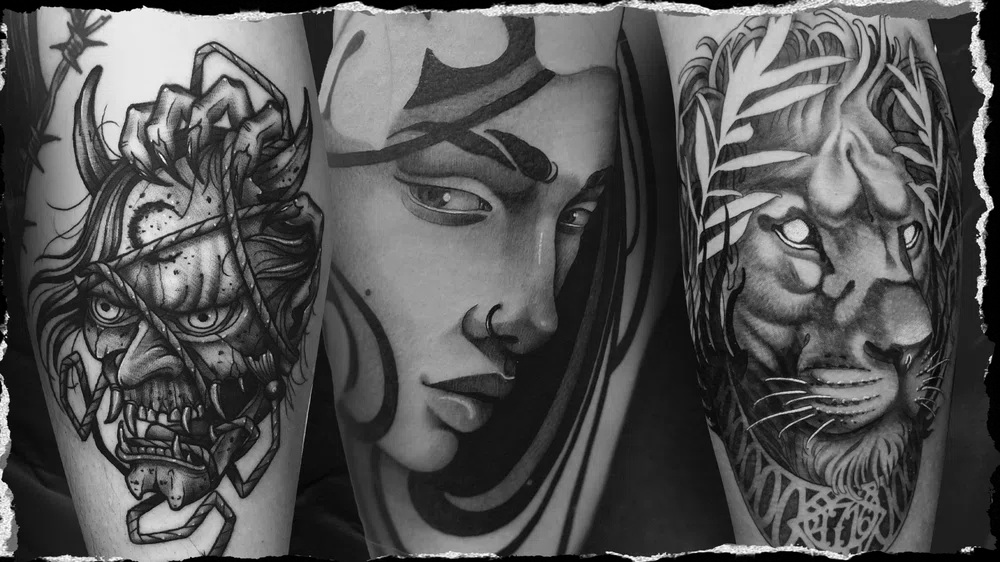
Blackwork Tattoo Style
The Feeling of Blackwork: Powerful, Dark, Minimalist
The Blackwork Tattoo Style is, above all, powerful. The heavy use of solid black creates a visual weight and density that is unmatched by any other style. It has an almost primal, visceral impact. It can also have a dark and dramatic mood, creating a sense of mystery and intensity. And yet, in its purest form, such as a solid blackout sleeve, it is the ultimate expression of minimalist art. It is a design reduced to its most essential elements: form, silhouette, and the pure, uncompromising power of the void.
The Ideal Canvases: Best Placements for Blackwork Tattoos
The Blackwork Tattoo Style is a genre of commitment, and it requires a significant amount of space to be truly effective. The best placement options are the larger canvases of the body that can accommodate the large solid black areas and bold patterns that define the style.
- The Arms, Legs, and Torso: These are the ideal locations. The arms and legs are perfect for full or half “blackout” sleeves, or for large-scale tribal or geometric patterns that can wrap around the limb and flow with the musculature. The torso, including the full chest or the full back, provides a massive, uninterrupted canvas for a truly epic, large-scale Blackwork masterwork, such as a huge mandala or an intricate pattern piece.
The PinkTatPier Experience: Your Blackwork Tattoo Service in London
A perfect Blackwork tattoo, especially one with large saturated areas, is a testament to the artist’s skill, endurance, and technical mastery. At PinkTatPier, our pinktatpier studio services include dedicated specialists in the art of Blackwork.
Our Specialist Blackwork Artists
Creating a perfectly saturated, smooth, and fully healed solid black area is one of the most technically difficult things to do in tattooing. It requires an artist with a deep understanding of machine tuning, needle configuration, and hand speed to pack the ink perfectly without chewing up or scarring the skin. Our Blackwork specialists have dedicated their careers to perfecting this demanding technique. They are also masters of the precision linework and compositional balance that is essential for the geometric and ornamental sub-genres of the style.
The Custom Design Consultation
Your journey begins with an in-depth, collaborative consultation. A Blackwork Tattoo Style piece must be perfectly fitted to your body’s unique contours. Our artist will work with you to create a completely original design that is not only beautiful but is also perfectly scaled and shaped to flow with your anatomy, ensuring the patterns are symmetrical and the negative space is used to its full potential.
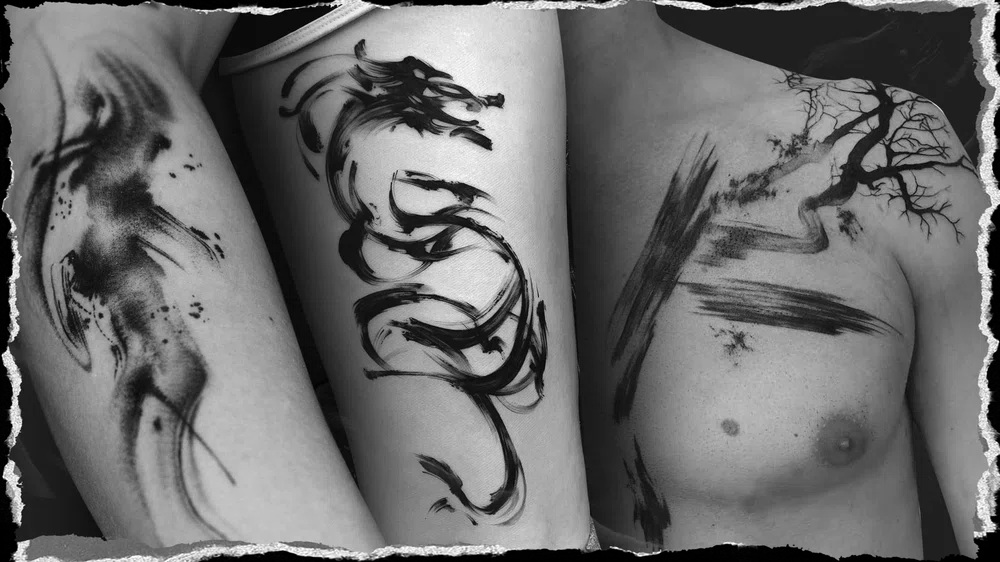
Blackwork Tattoo Style
Frequently Asked Questions (FAQ)
1. Does a Blackwork tattoo hurt more than other styles?
Yes, generally it does. The process of fully saturating large areas of skin with solid black ink is very intense. The skin is worked over repeatedly to ensure there are no gaps. The sessions are often long and can be a significant test of endurance. Most clients report that heavy black packing is more painful than standard shading or linework.
2. How well does the Blackwork Tattoo Style age?
It ages exceptionally well. In fact, it is arguably the most durable and long-lasting tattoo style of all. Solid black ink is the most resilient pigment and is the most resistant to fading from sun exposure. The bold lines and heavy saturation ensure that the design will remain powerful and readable for a lifetime.
3. Is Blackwork a good style for a cover-up tattoo?
It is the absolute best and most effective style for a cover-up. A dense, dark old tattoo that is impossible to cover with any other style can be completely and permanently obliterated by a well-executed Blackwork design, especially a blackout or a dense pattern.
4. How long does a Blackwork sleeve or large piece take?
It is an extremely time-consuming style. A full blackout sleeve, for example, can take anywhere from 20 to 40 hours or more to complete, spread out over many multi-hour or full-day sessions. The process is slow and meticulous.
5. How much does a Blackwork tattoo cost?
The cost of any tattoo is based on the time it takes to complete. Because Blackwork is so time-consuming and labour-intensive, a large-scale Blackwork piece will be a significant financial investment, often charged at an artist’s day rate.
Conclusion
The Blackwork Tattoo Style is more than just an aesthetic; it is a powerful and primal statement. It is a commitment to a bold, uncompromising, and timeless form of art. It is a style that connects the most ancient human traditions of marking the body with the most modern and avant-garde design sensibilities. It is a choice for the individual who is not afraid to make a powerful statement.