
In the world of tattoo art, there are styles that interpret reality, and then there is one style that seeks to perfectly replicate it. It is a style that transcends the traditional boundaries of tattooing and enters the realm of fine art photorealism. It is a discipline of such breathtaking technical skill and artistic precision that it can make a piece of art on the skin look as real as the skin itself. This is the world of the Realism / Realistic Tattoo Style. It is a style that aims to create highly detailed tattoos that look like photographs, a feat that requires an absolute mastery of shading and light, and an unwavering, patient hand.
The overall vibe of a realistic tattoo is undeniably eye-catching, elegant, and, of course, profoundly realistic. It is a style that stops people in their tracks, forcing them to do a double-take, to question what is ink and what is real. It is the chosen medium for the most personal and significant of tributes—immortalising the exact likeness of a loved one in a portrait, capturing the wild spirit of an animal, or recreating a cherished landscape on the skin.
At PinkTatPier, we are home to some of London’s most sought-after specialists in this demanding and beautiful art form. Our pinktatpier studio services are designed to provide a bespoke, master-level experience for clients seeking a sophisticated, hyperrealistic piece of art. This is your definitive guide to the Realistic Tattoo Style. We will explore its modern origins, deconstruct its technical artistry, showcase its most powerful motifs, and explain how our expert artists can work with you to create a timeless, breathtaking masterpiece.
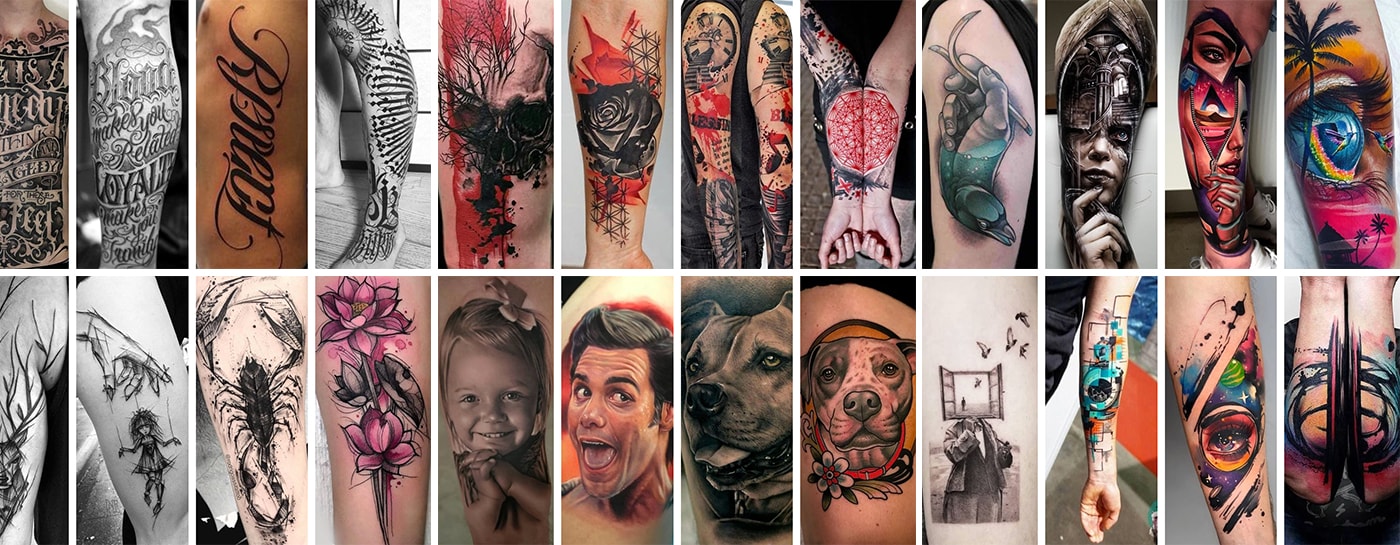
Realism / Realistic Tattoo Style
The Evolution of an Art Form: The Origins of Realism in Tattooing
Unlike ancient traditions like Japanese Irezumi or the century-old rules of American Traditional, the Realistic Tattoo Style is a distinctly modern phenomenon. Its origin is not in a single time or place, but in the fertile creative ground of modern European and American studios over the last few decades. The birth and rise of realism are inextricably linked to the technological evolution of the tattoo industry itself.
From Simple Portraiture to Photorealism
For many years, portrait tattoos were more caricature than reality. They were stylised representations, bound by the limitations of the available equipment and inks. The goal was recognition, not replication. However, from the 1980s onwards, a series of technological leaps revolutionised what was possible.
- Advancements in Tattoo Machines: The development of more stable, powerful, and tuneable rotary and coil machines gave artists an unprecedented level of control over their needles.
- The Explosion of Needle Configurations: The invention of a vast array of new needle groupings—especially curved magnums, soft-edge magnums, and a huge variety of shaders—allowed artists to create incredibly smooth, soft gradients that were previously impossible.
- The Pigment Revolution: The creation of more sophisticated, pre-dispersed ink pigments, including a full spectrum of vibrant colours and pre-mixed grey wash sets, gave artists a true painter’s palette to work with.
These technological advancements, in the hands of a new generation of artists with formal fine art training, created the perfect storm for the birth of modern realism. Artists began to move beyond the stylised and into the real, applying the classical principles of portrait painting, photography, and chiaroscuro (the use of strong contrasts between light and dark) to the medium of skin. What began as an experimental push for more realistic portraits has, as of 2025, evolved into the breathtaking photorealism and hyperrealism we see today.
Deconstructing the Aesthetic: The Key Features of the Realistic Tattoo Style
The Realistic Tattoo Style is a discipline of immense nuance and technical control. Its beauty lies in the artist’s ability to create a perfect illusion, to trick the eye into seeing a three-dimensional, living image on a two-dimensional, living canvas. This is achieved through a set of key principles that are often the direct opposite of other tattoo styles.
Beyond the Line: The Primacy of Shading and Light
This is the single most important feature of the style. Unlike many other styles that are built on a foundation of a bold black outline, realism often has no hard outlines at all. The form, the shape, and the dimension of the subject are created entirely through a masterful understanding of light and shadow.
- The Focus on Shading and Light: An expert realism artist is, above all, a master of shading. They use their full palette of grey washes or colours to create incredibly soft shading and gradients. They are not just colouring in a shape; they are rendering form. They are meticulously observing how light falls on a subject in a reference photo and perfectly replicating those highlights, mid-tones, core shadows, and reflected lights on the skin.
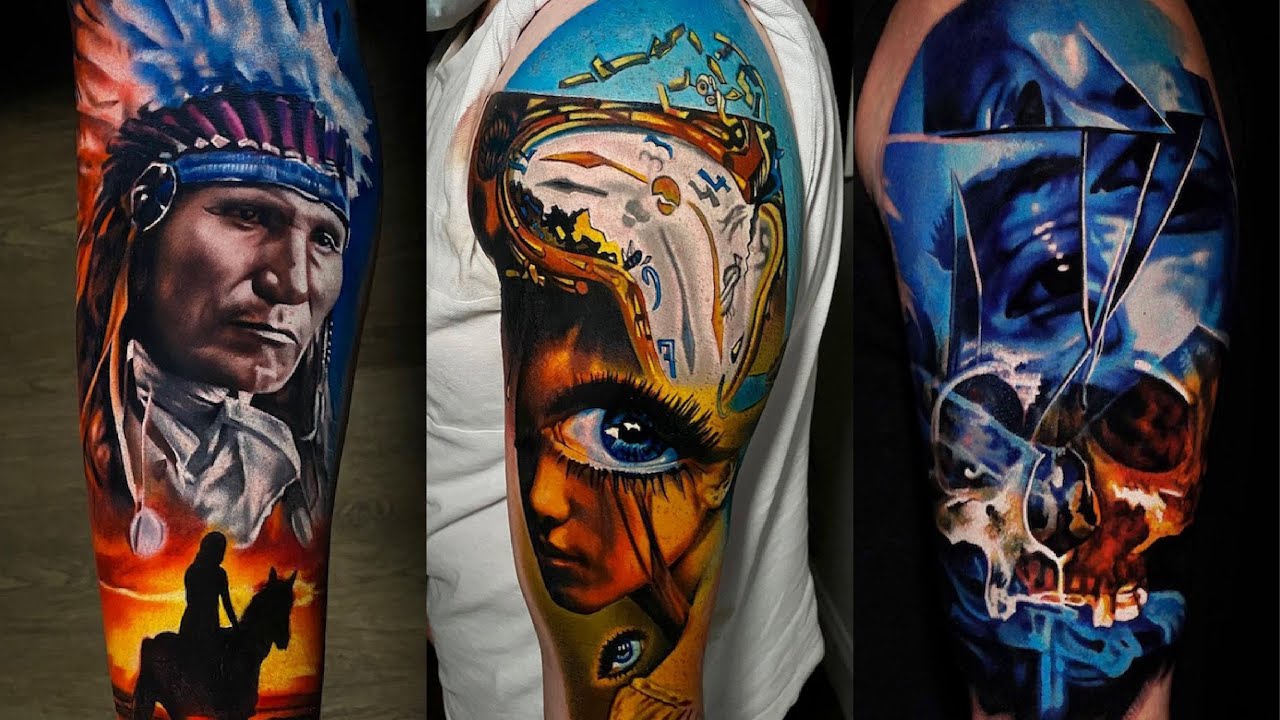
Realism / Realistic Tattoo Style
A Palette of Nuance: Creating Depth with Tone and Colour
A realistic tattoo is built in layers. The artist will build up the tones gradually, often working from light to dark, to create a sense of depth, texture, and translucency. This layering technique is what allows them to create the illusion of soft fur, the cold shine of metal, the delicate texture of a flower petal, or the subtle, complex tones of human skin. It is an incredibly patient and time-consuming process.
The Pursuit of Perfection: Highly Detailed, Photographic Quality
The ultimate goal is to create highly detailed tattoos that look like photographs. This requires an almost inhuman level of precision and attention to detail. Every tiny reflection in an eye, every single whisker on a cat, every pore on a human face is meticulously rendered. This is why realism is considered by many to be the pinnacle of technical tattooing skill. It is a style that leaves absolutely no room for error. A single misplaced shadow or an incorrect proportion can shatter the entire illusion of reality.
The Two Faces of Realism: Black & Grey vs. Colour
The Realistic Tattoo Style is broadly divided into two major categories: Black & Grey Realism and Colour Realism.2 While they share the same foundational principles of smooth shading and a focus on light, they offer vastly different aesthetics and present unique challenges for the artist. Our pinktatpier studio services include specialists in both of these demanding disciplines.
| Feature | Black & Grey Realism | Colour Realism |
| Aesthetic | Timeless, emotional, and dramatic. It has the classic, soulful feel of a fine art black and white photograph or a charcoal drawing. | Vibrant, dynamic, and hyper-vivid. It has the impactful, high-definition quality of a perfectly saturated colour photograph or an oil painting. |
| Technique | Uses only black ink diluted into various grey tones to create a full tonal range. The artist is a master of contrast and value. | Uses a full spectrum of coloured inks. The artist must be an expert in colour theory, understanding how to blend colours and how they will heal and interact with the client’s unique skin tone. |
| Longevity | Ages exceptionally well. Because it is based on a foundation of black ink, the strong contrast tends to hold up very well over decades. | Requires more diligent and lifelong sun protection. UV rays can cause vibrant colours to fade over time. A well-done colour piece will last, but it needs more care. |
| Best For | Portraits, statues, architectural scenes, religious images, and moody or dramatic animal portraits (like wolves or owls). | Vibrant nature scenes, colourful animals (like parrots or tigers), floral work, pop culture images, and any subject where colour is essential to its identity. |
The World in High Definition: Common Motifs in Realistic Tattoos
While any image can be rendered in the Realistic Tattoo Style, the style lends itself particularly well to certain subjects, allowing them to be imbued with a unique sense of life and depth. The common motifs often focus on subjects with rich texture, detail, and emotional resonance.
The Human Face: Capturing the Soul in Ink
The portrait is the ultimate test of a realism artist’s skill. A realistic portrait tattoo is a profound and deeply personal tribute. The goal is not just to capture a likeness, but to capture the soul of the person—the subtle expression in their eyes, the unique curve of their smile. These are often created as memorial pieces for loved ones or as tributes to iconic figures.
The Animal Kingdom: Fur, Feathers, and Ferocity
Realism is the perfect medium for rendering the incredible textures found in the natural world. An artist can capture the softness of a lion’s mane, the sharp detail of an eagle’s feathers, or the smooth, hard texture of a serpent’s scales with breathtaking realism. Animals are a hugely popular subject, chosen to represent power, freedom, loyalty, or a spiritual connection to nature.
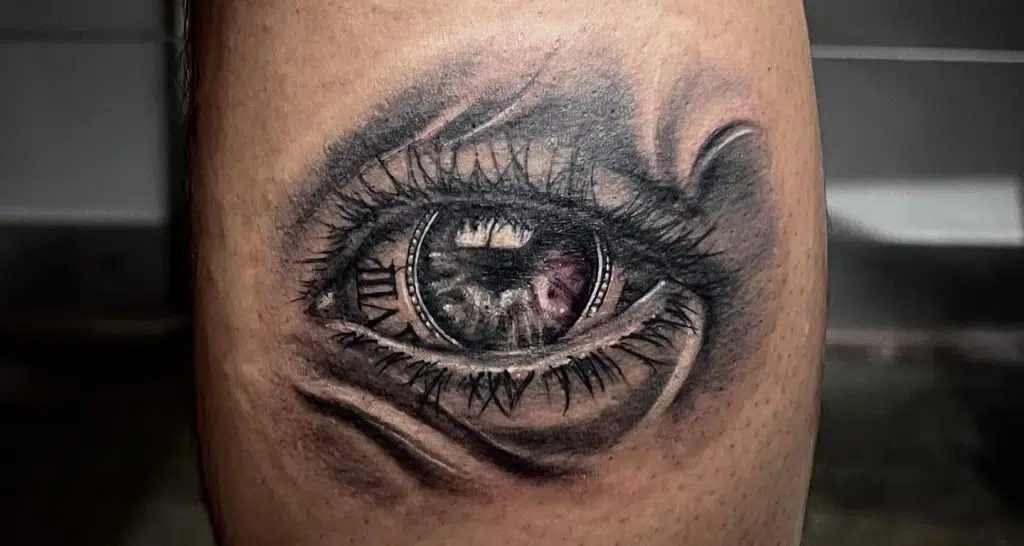
Realism / Realistic Tattoo Style
The Beauty of the World: Landscapes and Natural Scenes
A skilled artist can create stunningly realistic landscapes on the skin. This can be a dramatic, misty mountain range on a back piece, a serene forest scene on a sleeve, or a crashing ocean wave on a thigh. These pieces often evoke a sense of peace, adventure, or a connection to a specific place that is meaningful to the client.
The Still-Life Object: A Celebration of Form and Light
The Realistic Tattoo Style also excels at capturing the play of light and shadow on three-dimensional objects.4 These still-life tattoos are often deeply symbolic.
- Common Subjects: Clocks or compasses (symbolising time and direction), skulls (a classic memento mori), statues from antiquity (representing classical beauty and history), and realistic flowers (a symbol of life and delicate beauty).
The Vibe & Placement: Creating an Eye-Catching Masterpiece
The unique combination of technical precision and lifelike rendering creates a very specific and powerful overall vibe that has made this style a top choice for discerning collectors.
The Feeling of Realism: Realistic, Eye-Catching, Elegant
The Realistic Tattoo Style is, by its very definition, realistic. Its primary goal is to create a perfect illusion of reality. It is profoundly eye-catching; the high level of detail and three-dimensional quality naturally draws the viewer in, inviting them to look closer and marvel at the technical skill. And finally, it is inherently elegant. The smooth shading, the lack of harsh outlines, and the fine art quality of the rendering give it a sophisticated and refined feel that is a world away from more graphic or cartoonish styles.
The Ideal Canvases: Best Placements for Realistic Tattoos
The Realistic Tattoo Style is a discipline that requires space. The intricate details and the smooth, subtle gradients need a sufficiently large canvas to be executed effectively and to be readable.
- The Best Placements: For this reason, the best placement options are the larger, broader areas of the body. The arms (for full or half sleeves), the thighs, the chest, and the full back are the ideal locations. These areas provide the artist with enough space to create a full composition with a clear light source, deep shadows, and a breathtaking level of detail. A tiny, hyperrealistic portrait on a wrist is often not a viable or long-lasting option, as the details will blur together over time.
The PinkTatPier Experience: Your Realism Tattoo Service in London
At PinkTatPier, we are proud to have a team that includes dedicated specialists in the Realistic Tattoo Style. Our pinktatpier studio services are designed to provide a bespoke, collaborative, and master-level experience for clients seeking a sophisticated monochrome or colour realism piece.
Our Master Realism Artists
Our studio is a curated collective of artists, each with their own unique voice and area of specialisation. Our realism specialists have dedicated their careers to perfecting the art of smooth shading, photorealistic rendering, and powerful composition. They often have a background in fine art and photography, bringing this classical training to the medium of skin.
The Critical Role of the Reference Photo
The foundation of every great realistic tattoo is a great reference photo. For a portrait or an animal, the photo must be of a high resolution, with a clear, strong, and dynamic light source that creates distinct highlights and shadows. A blurry, low-resolution, or flatly lit photo cannot be transformed into a great tattoo. Part of our consultation process involves helping you to select or even take the best possible reference photos to ensure a breathtaking final result.
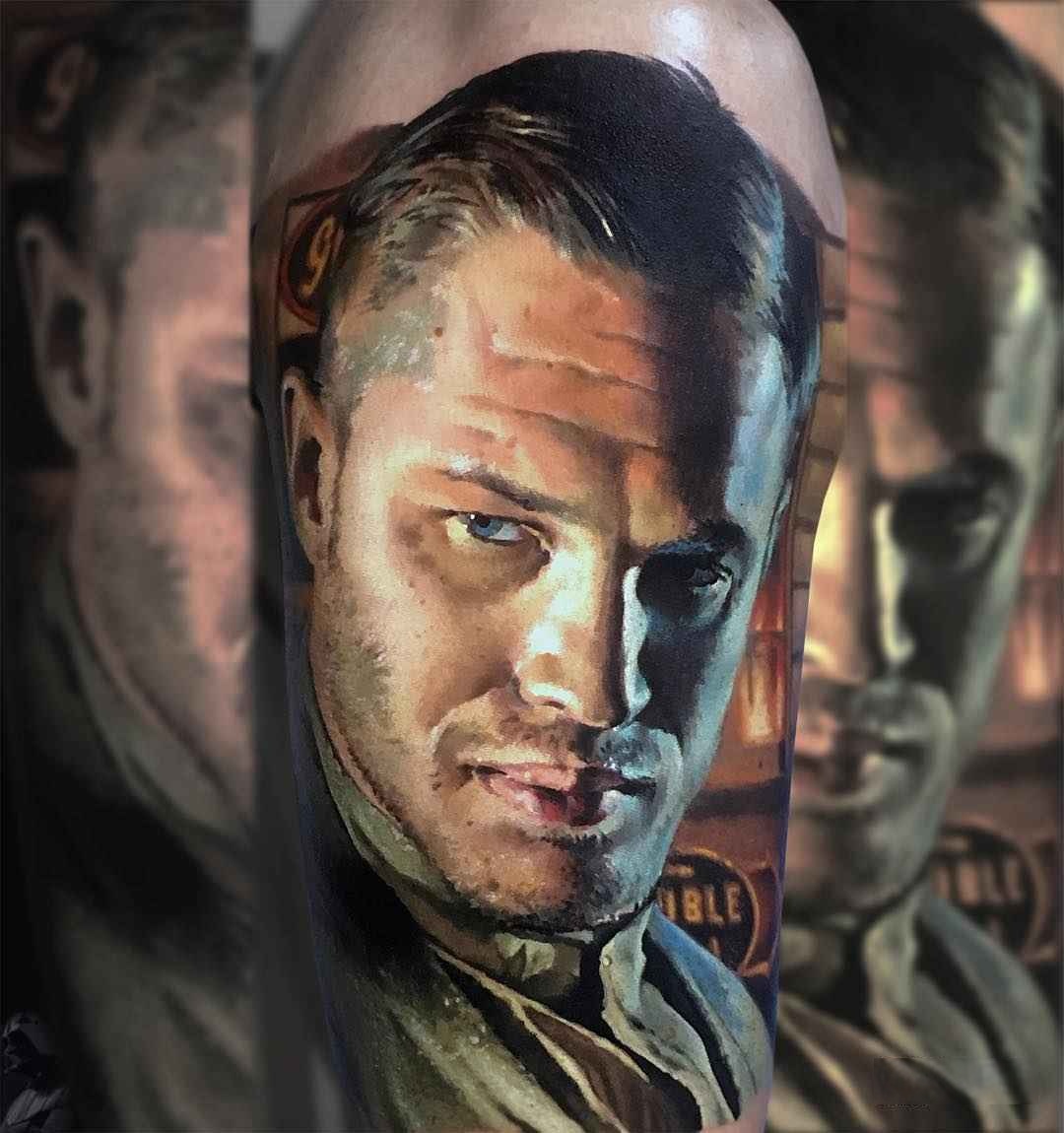
Realism / Realistic Tattoo Style
Frequently Asked Questions (FAQ)
1. How long does a realistic tattoo take to complete?
Realism is one of the most time-consuming tattoo styles.6 The process of building up layers of soft shading and intricate detail is slow and meticulous. A small, palm-sized realistic piece can take 4-6 hours. A full sleeve in realism can take 50-80 hours or more, typically spread out over a series of full-day sessions.
2. How well does the Realistic Tattoo Style age?
This is a very important question. A well-executed realistic tattoo from a master artist can age beautifully. The key is contrast. An expert artist will ensure that even in a soft-looking piece, there is a strong foundation of black and darker tones to provide the structure that will last for decades. Realistic tattoos without enough contrast can tend to soften and lose their “pop” over many years. Lifelong, diligent sun protection is also absolutely essential, especially for colour realism.
3. Is a realistic tattoo more expensive than other styles?
Yes, it is generally one of the more expensive styles. The cost of any tattoo is based on the time it takes to complete. Because realism is so meticulous and time-consuming, a realistic piece will take significantly more hours to execute than a simpler, more graphic tattoo of the same size. You are paying for the artist’s years of specialised training and the immense time and focus required.
4. Is realism a good style for a cover-up tattoo?
It can be, but it is very challenging. Because realism relies on soft tones and the use of the skin as a highlight, it can be very difficult to completely hide a dark, dense, or heavily scarred old tattoo. A successful realistic cover-up often requires several sessions of laser lightening on the old tattoo first, to fade it enough for the new, softer design to be applied effectively.
5. What makes a good reference photo for a portrait tattoo?
A great reference photo is high-resolution (you can zoom in and see the details of the eyes and eyelashes). It should be taken in good, dynamic lighting that creates clear highlights and shadows, not a flat flash photo. The subject should be in sharp focus, and the photo should capture the personality and expression you want to immortalise.
Conclusion
The Realistic Tattoo Style is the pinnacle of technical skill and artistic illusion in the modern tattoo world. It is a profound and powerful art form that allows for a level of detail and emotional resonance that is simply breathtaking. It is a choice for the individual who values timeless elegance, raw emotional power, and a classic, fine-art aesthetic. It is not just a tattoo; it is a permanent, photorealistic masterpiece on the most personal canvas of all.