
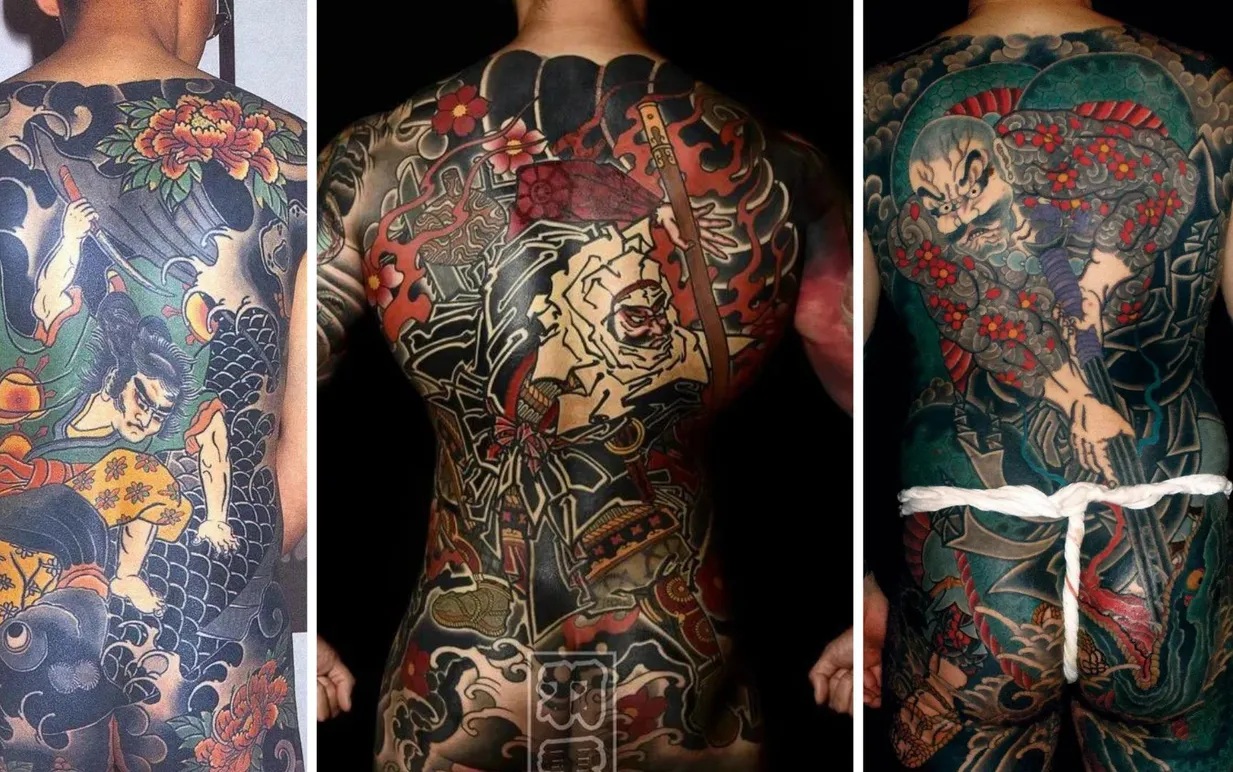
In the vast, global landscape of body art, few styles command the same level of respect, awe, and historical gravitas as the traditional Japanese tattoo. Known as Irezumi (literally “inserting ink”), this is not merely a style of tattooing; it is a profound cultural art form, a discipline governed by a rich tapestry of symbolism, unwritten rules, and a deep connection to centuries of Japanese history and mythology. It is an art of storytelling, where the entire body becomes a single, unified canvas for epic narratives of courage, nature, and spirituality. An Irezumi piece is not a collection of small images; it is a “second skin,” a complete and harmonious bodysuit of art that flows with the anatomy of the wearer.
This art form, with its strong outlines, vibrant colors, and mythological and nature-based subjects, is a commitment in its purest form. It is a journey that can take hundreds of hours and many years to complete, a testament to the wearer’s patience and the artist’s mastery. The overall vibe is not one of fleeting trends, but of something deeply spiritual, symbolic, and focused on storytelling.
At midnightt, our private, appointment-only studio in London is a space where the world’s most profound tattoo traditions are honoured with the deepest respect and executed with modern, clinical precision. We understand that a Japanese Tattoo Style (Irezumi) piece is a lifelong undertaking. This is your definitive guide to this breathtaking art form. We will delve into its fascinating and complex history, deconstruct its core aesthetic principles, and decode the powerful meanings behind its most common motifs, preparing you for a journey into one of the most significant and beautiful tattoo traditions in the world.
Japanese Tattoo Style (Irezumi)
A History Etched in Skin: The Ancient Origins of Irezumi
The history of tattooing in Japan is a long and complex story of shifting cultural attitudes, moving from ancient spiritual practice to a mark of punishment, and ultimately, to a powerful form of clandestine art and rebellion. Its origin is Japan, centuries old, stretching back thousands of years.
From Ancient Marks to Punitive Symbols
The earliest evidence of tattooing in Japan dates back to the Jōmon period (c. 10,000 BCE – 300 BCE), with clay figurines discovered featuring marks on their faces and bodies that are believed to represent tattoos. In later periods, historical texts describe the Wa people (the early inhabitants of Japan) as being heavily tattooed, likely for a combination of social status and spiritual protection. However, by the Kofun period (c. 300–710 CE), as a more centralized Japanese state began to form with strong influences from China, tattooing began to acquire a negative connotation.
This culminated in the Edo period (1603–1868), where tattooing took on a punitive role. Criminals were often marked with tattoos on their faces or arms (bokkei or irezumi-kei). These marks were a form of social exile, a permanent brand that made it impossible for the individual to reintegrate into society. It is this association with the criminal underworld that would, for centuries, cast a long shadow over the perception of tattooing in Japan.
The Edo Period Uprising: The Birth of Decorative Irezumi
Ironically, it was also during the Edo period that decorative tattooing as we know it today exploded in popularity as a form of rebellion and clandestine art. This uprising was driven by the lower classes, particularly the hikeshi (firefighters), manual labourers, and members of the merchant class. Under the strict rule of the shogunate, these classes were subject to sumptuary laws that forbade them from wearing ostentatious or colourful clothing like the elaborate silk kimonos worn by the ruling samurai class.
In a brilliant act of subversion, they began to commission elaborate, full-body tattoos that could be hidden beneath their simple work clothes. The tattoo became a secret, luxurious garment, a “second skin” of breathtaking art that declared their status and rebellious spirit in a way that defied the law. The firefighters, seen as heroic, masculine figures, were particularly known for their extensive tattoos of protective water dragons and other powerful myths, which they believed would guard them from harm.
The Ukiyo-e Connection: Woodblock Prints on Skin
The artistic explosion of the Japanese Tattoo Style (Irezumi) in the Edo period was inextricably linked to another popular art form of the era: ukiyo-e, or woodblock prints. The same artisans who carved the woodblocks for printing were often the ones who carved the skin with their tattoo tools. The themes, compositions, and characters were directly translated from print to skin.
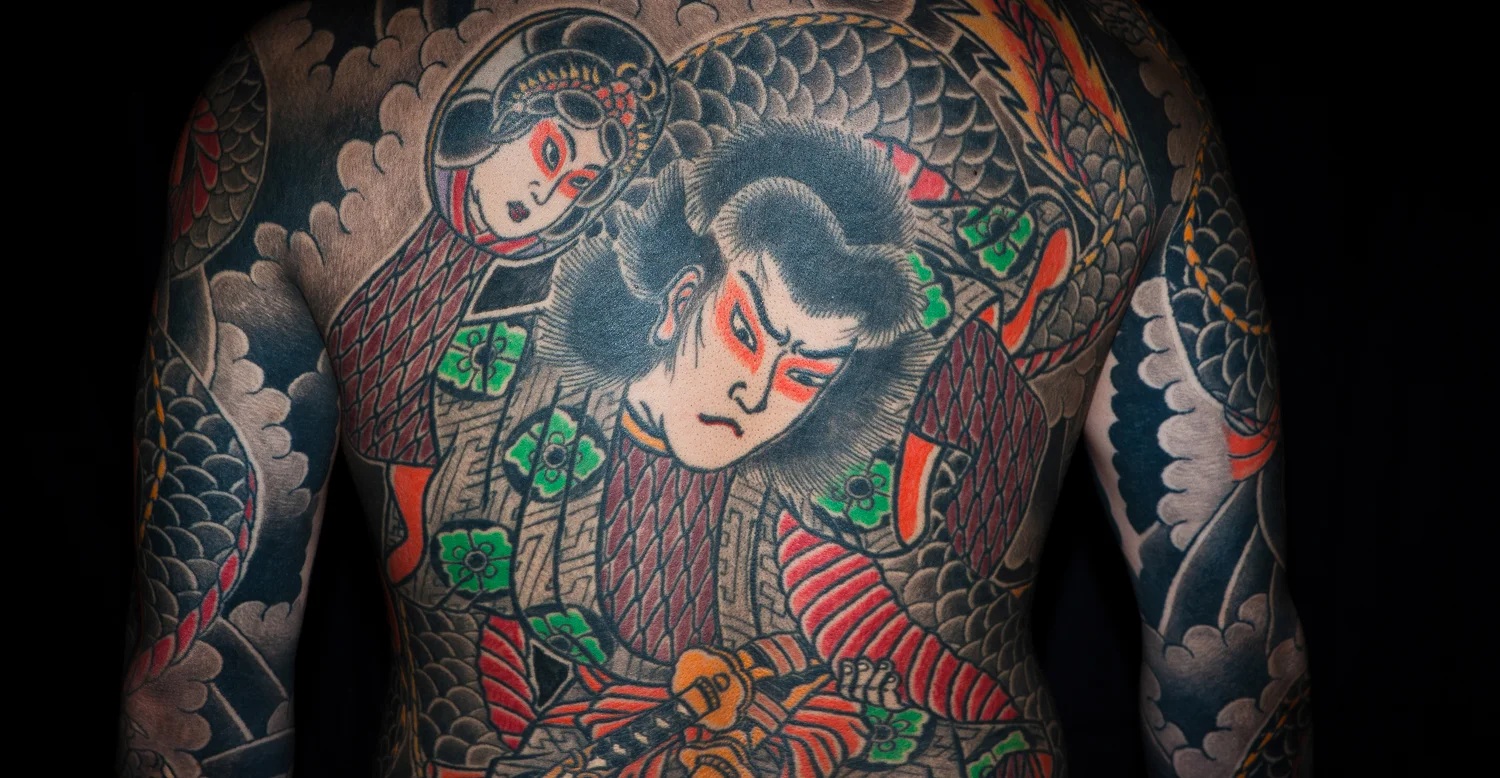
The most significant catalyst was a series of woodblock prints by the legendary artist Utagawa Kuniyoshi, illustrating the popular Chinese novel Suikoden (Water Margin). This epic tale featured 108 heroic outlaws, and Kuniyoshi depicted these heroes with magnificent, elaborate tattoos covering their bodies. These images were a cultural phenomenon and became the direct inspiration for the bodysuits that became the hallmark of Irezumi. Clients would request tattoos of the same heroes, or tattoos in the same powerful style, solidifying the link between the art form and a spirit of heroic rebellion.
Japanese Tattoo Style (Irezumi)
The Unwritten Rules: Deconstructing the Japanese Tattoo Style Aesthetic
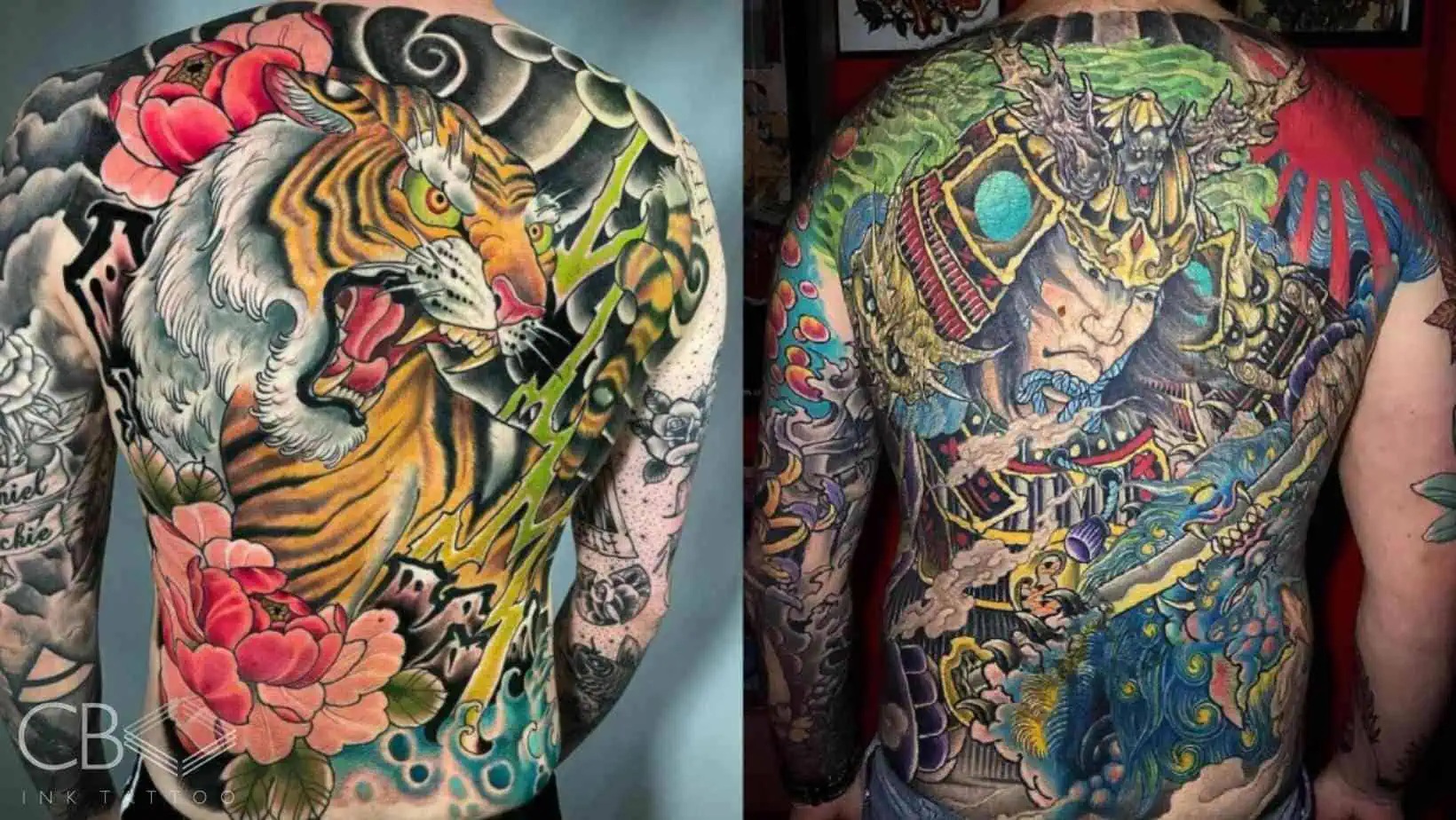
The Japanese Tattoo Style (Irezumi) is a discipline governed by a strict set of aesthetic rules and compositional principles. These rules are designed to create a single, unified, and harmonious work of art that flows perfectly with the contours of the human body.
The Power of the Background (Gakubori): Unifying the Canvas
This is perhaps the most important and defining feature of traditional Irezumi. The main motifs (like a dragon or koi fish) do not exist in a vacuum. They are always set against a consistent and powerful background, known as gakubori.
- The Elements of Gakubori: This background is typically composed of stylised clouds, wind bars, and, most famously, powerful, finger-like waves. This background is not just filler; it is a crucial element that unifies the entire piece.
- Creating a Single Garment: The gakubori flows across the entire area being tattooed, tying all the individual elements together into a single, cohesive “suit.” A Japanese sleeve is not a collection of separate images; it is one image, with a single, continuous background that gives the entire piece its characteristic density and power.18 The way this background is shaded (often with heavy black or grey) is what makes the colourful main motifs “pop.”
The Large-Scale Vision: The Concept of the Bodysuit
The Japanese Tattoo Style (Irezumi) is inherently designed for large-scale pieces.19 It is not a style that lends itself well to small, isolated tattoos. The entire philosophy is about creating a work of art that covers a significant portion of the body and is planned as a single composition from the very beginning.
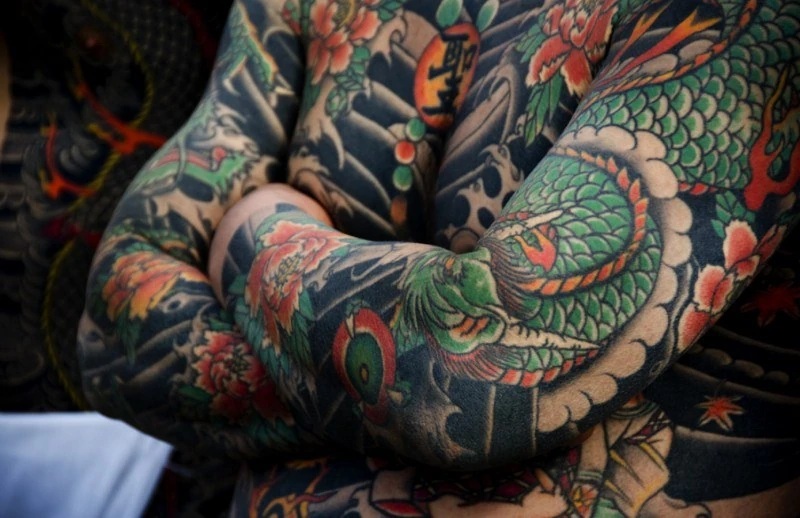
- Best Placements: The best placement for this style is on the large canvases of the body: the full back, the full arms (sleeves), and the full legs. These large areas allow the artist to create a powerful narrative scene with a clear focal point and a flowing, dynamic background.
- The Bodysuit: The ultimate expression of Irezumi is the full body suit (donburi soushinbori), a single, cohesive tattoo that covers the arms, back, chest, and legs.20 A traditional bodysuit has a specific structure, often leaving a clear “river” of untattooed skin running down the centre of the chest and torso. This was to ensure the tattoo could be completely hidden under a kimono.
Strong Outlines and Vibrant Colors: The Technical Foundation
Like its American Traditional counterpart, the Japanese Tattoo Style (Irezumi) is built on a foundation of strong outlines and vibrant colors.
- The Outline: A powerful black outline is used to define all the key elements of the design. This ensures the tattoo’s readability and, crucially, its longevity. These lines provide the structure that will hold the tattoo together for a lifetime.
- The Colour Palette: The traditional palette is simple but powerful, consisting of black for the outlines and background shading, and vibrant red, yellow, indigo blue, and green for the main motifs. The colour is packed solidly into the skin to create a rich, dense, and luminous effect that stands out powerfully against the dark background.
A Pantheon of Symbols: Common Motifs and Their Meanings
The Japanese Tattoo Style (Irezumi) is a rich and complex language of symbolism.22 Every single one of the common motifs has a specific, well-understood meaning, drawn from centuries of history, mythology, and folklore. The combination of these motifs is what creates the storytelling and spiritual vibe of the final piece.
Japanese Tattoo Style (Irezumi)
| Motif | Symbolism & Meaning |
| Koi Fish | The ultimate symbol of perseverance, strength, and courage. The Koi is famous for swimming upstream against the current. The legend states that if a Koi succeeds in swimming up the Dragon Gate waterfall on the Yellow River, it will transform into a powerful dragon. It therefore also represents ambition and transformation. |
| Dragons (Ryu) | Unlike the malevolent, fire-breathing dragons of Western mythology, Japanese dragons are benevolent and powerful forces for good, often associated with water, storms, and wisdom. They are considered protectors and bringers of wealth and good fortune. They are a symbol of wisdom, strength, and the power of the universe. |
| Tigers (Tora) | The tiger is a symbol of immense power, courage, and long life. It is seen as a protector, warding off evil spirits, disease, and bad luck. It is one of the four cardinal animals and represents the North and the season of autumn. |
| Samurais & Warriors | Tattoos of legendary samurais or the heroic outlaws from the Suikoden represent the ideals of the Bushido code: honour, bravery, loyalty, duty, and the acceptance of one’s fate. They are a symbol of masculine courage and strength. |
| Cherry Blossoms (Sakura) | The cherry blossoms are one of the most poignant symbols in Japanese culture. Because their beautiful bloom is so intense and so brief, they are a powerful symbol of the transient, ephemeral nature of life. They are a reminder of mortality and the importance of living in the present, a concept known as mono no aware. |
| Peonies (Botan) | Known as the “King of Flowers,” the peony is a symbol of wealth, elegance, prosperity, and good fortune. It is also often associated with a daring, “devil-may-care” attitude. |
| Chrysanthemums (Kiku) | This flower is a symbol of the Emperor and the Imperial family. It represents perfection, longevity, joy, and autumn. |
| Phoenix (Hō-ō) | A mythical bird that represents the imperial household, justice, fidelity, and the coming of a new era. Like the Western phoenix, it is also associated with rebirth and triumph. |
| Oni / Hannya Masks | These demonic masks are a common and powerful motif. They are used as protective talismans to ward off evil spirits and bad luck. The Hannya mask specifically represents a woman who has been consumed by jealousy and rage, symbolising the complexity of human emotions. |
Frequently Asked Questions (FAQ)
1. How long does a Japanese-style sleeve or back piece take to complete?
A large-scale Japanese Tattoo Style (Irezumi) piece is a massive commitment. A full sleeve can take anywhere from 40 to 80 hours or more, often spread out over a year or two in a series of full-day sessions. A full back piece can easily take 100 to 200 hours or more, representing a multi-year journey with your artist.
2. I’m not Japanese. Is it cultural appropriation to get an Irezumi tattoo?
This is a very important and respectful question. The key is to approach the art form with genuine respect, understanding, and a desire to honour the tradition, rather than simply taking the images without context. Choosing to work with a specialist artist who is a dedicated student of the style is the most important step. A good artist will guide you in choosing motifs that are appropriate and meaningful, ensuring your tattoo is an act of appreciation, not appropriation.
3. What is the difference between traditional Japanese “tebori” (hand-poking) and getting it done with a modern tattoo machine?
Tebori is the traditional Japanese method of tattooing by hand, using a set of needles attached to a long handle.24 It is a much slower and often more intimate process. The result can be a uniquely rich saturation of colour. A modern tattoo machine is much faster and can achieve a different kind of precision. Many modern artists, including those at midnightt, use machines to create their Japanese-style work, combining the traditional aesthetic with the safety and efficiency of modern technology.
4. How much does a large-scale Japanese tattoo cost?
It is a significant financial investment. The cost is based on the artist’s hourly or day rate, and the hundreds of hours required to complete the piece. You should expect a full back piece from a world-class artist to cost tens of thousands of pounds over the course of the project.
5. Can I get a small Japanese-style tattoo, or does it have to be a big piece?
While the Japanese Tattoo Style (Irezumi) is designed for large-scale pieces, you can absolutely get a smaller, “one-point” design that is created in the Japanese style. For example, a single, beautifully rendered koi fish, tiger head, or chrysanthemum can make a powerful tattoo on its own. A good artist can create a design that feels complete while still honouring the aesthetic rules of the style.
Japanese Tattoo Style (Irezumi)
Conclusion
The Japanese Tattoo Style (Irezumi) is so much more than a collection of images; it is a profound and disciplined art form, a lifelong commitment, and a deep dive into a rich cultural heritage. It is a partnership between an artist who has dedicated their life to mastering its rules and a client who is willing to commit their body and their time to a truly epic artistic journey. The result is a work of art of unparalleled power, a story that flows with your every movement, and a timeless testament to the enduring beauty of a tradition that is centuries old.