
A Londoner’s Guide to Piercing Aftercare: Navigating the City’s Climate

Getting a new piercing in London is an exhilarating experience. In one of the world’s great style capitals, a beautifully placed piece of jewellery is more than just an accessory; it’s a statement of personal identity, a part of the vibrant tapestry of self-expression that makes this city unique. You’ve braved the needle, you’re thrilled with the result, and you’ve left the studio with a stunning new addition.
But a successful piercing journey doesn’t end there. In fact, the most critical phase has just begun. The healing process is a delicate partnership between your body and your aftercare routine, and this journey is directly influenced by your environment.1 London, with its unique climate, fast-paced lifestyle, and specific urban challenges, presents a distinct set of factors that can affect how your new piercing heals.
This is not a generic aftercare leaflet. This is the definitive guide to piercing aftercare in London, tailored specifically to our city’s rhythm and seasons. We will go beyond the basics to provide you with a comprehensive lifestyle guide, covering the universal rules of healing, how to navigate seasonal challenges from damp winters to bustling summers, and how to manage London-specific issues like the Tube and our notoriously hard water. Our goal is to empower you with the expert knowledge to ensure your piercing heals beautifully, allowing you to enjoy your new art for a lifetime.
piercing aftercare
The Universal Foundations: The Core Rules of Piercing Aftercare
Before we delve into the London-specifics, it’s essential to master the fundamental, non-negotiable principles of modern, professional aftercare. These rules are backed by the global consensus of the professional piercing community and are designed to create the optimal environment for your body to do what it does best: heal.
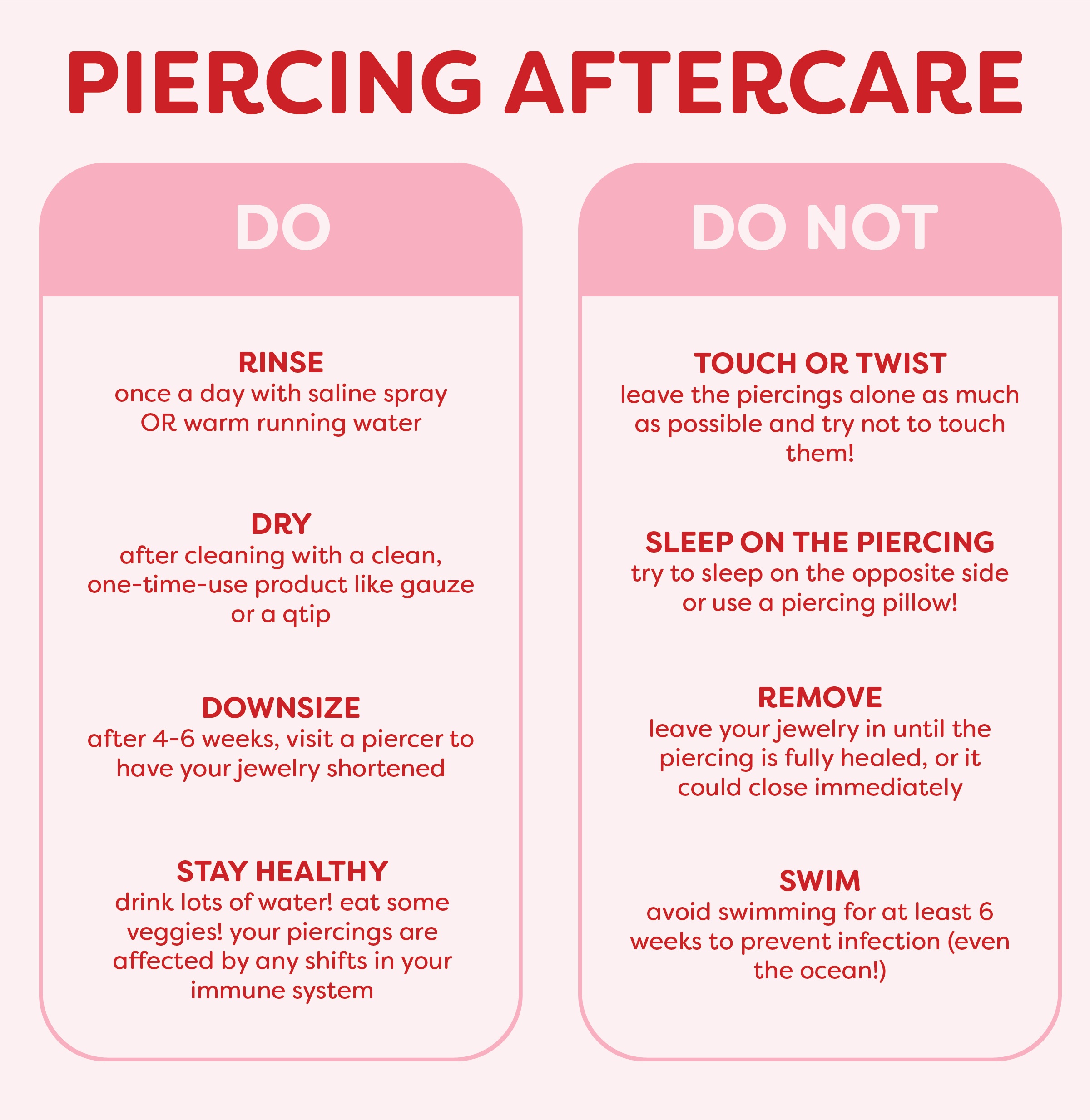
The “LITHA” Philosophy: Leave It The Hell Alone
This is the single most important concept in modern piercing aftercare. A new piercing is a puncture wound that your body is trying to heal by building a delicate tube of new tissue, called a fistula. The primary goal of your aftercare is to protect this fragile process from any and all interference.
- No Touching, Twisting, or Turning: The old, outdated advice to twist your earrings is not just wrong; it’s actively harmful.2 Twisting the jewellery tears the delicate new cells trying to form, introduces bacteria from your hands, and significantly prolongs the healing process.3 The only time you should touch your piercing is when you are cleaning it, and only with freshly washed hands.
- Your Body is the Healer: Your immune system knows how to heal a wound.4 Your job is not to force it with harsh chemicals, but to simply keep the area clean and protected, allowing your body to do its work undisturbed.
The Only Cleaning Agent You Need: Sterile Saline Solution
The days of using aggressive soaps, alcohols, or strange concoctions are long gone. The industry gold standard is simple, gentle, and effective.
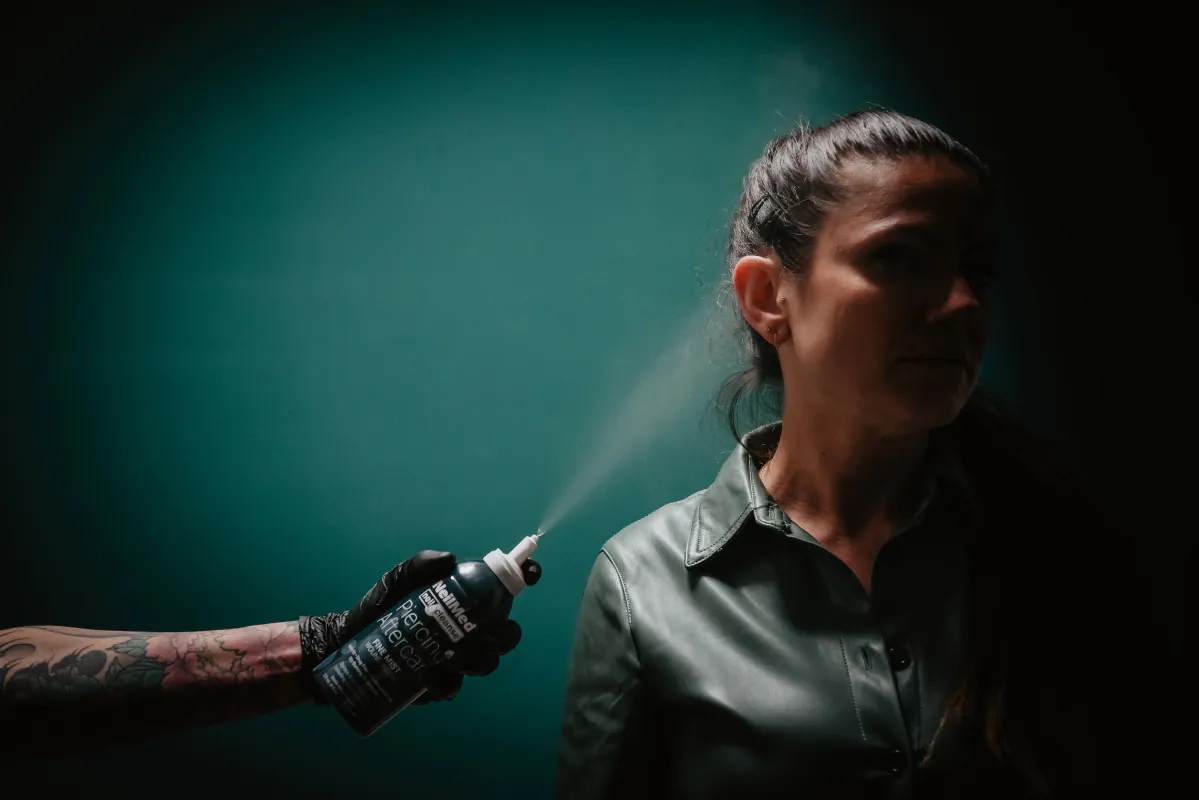
- Why Sterile Saline? A sterile saline solution (often sold as “wound wash” in a pressurised can) is simply a mixture of sterile water and 0.9% sodium chloride. It is isotonic, which means it has the same salt concentration as your own body fluids. This allows it to gently flush away debris, dried lymph fluid (“crusties”), and bacteria without drying out or irritating the delicate healing tissue.
- The Correct Application: The process is simple. Twice a day, spray the solution directly onto the front and back of the piercing. Wait a minute to let it soften any crusties, and then gently pat the area completely dry with a piece of non-woven gauze or a clean paper towel. Alternatively, you can use a hairdryer on its lowest, coolest setting. A dry piercing is a happy piercing.
piercing aftercare
The List of “Don’ts”: What to Absolutely Avoid
Using the wrong products is the leading cause of irritation and delayed healing. To ensure a smooth process, you must avoid:
- Harsh Chemicals: Never use rubbing alcohol, hydrogen peroxide, TCP, Dettol, Savlon, or tea tree oil on a healing piercing. These substances are cytotoxic, meaning they kill cells—and they don’t discriminate between bad bacteria and the new, healthy skin cells your body is working so hard to build.
- Soaps and Ointments: Avoid using bar soap or scented liquid soaps, as they can leave a residue and contain irritants. Thick antibacterial ointments should also be avoided, as they are not breathable and can trap moisture and bacteria against the piercing, leading to complications.
- Submerging the Piercing: For the first several months (the exact time depends on the piercing), you must not submerge your piercing in bodies of water.5 This includes baths, swimming pools, hot tubs, lakes, rivers, and the ocean. These are filled with bacteria that can cause serious infections. Showers are perfectly fine.
The Importance of the Downsize Appointment
For most piercings (especially cartilage and lip piercings), your artist will use initial jewellery with a slightly longer post to accommodate for swelling. After 4-8 weeks, this swelling will have subsided. At this point, it is crucial to return to your piercer for a downsize, where they will swap the long post for a shorter, perfectly fitted one.6 This prevents the jewellery from getting snagged and moving excessively, which is a major cause of irritation bumps and angle changes. This is a non-negotiable part of a successful piercing aftercare in London plan.
The London Climate Challenge: A Seasonal Approach to Healing
London’s climate is unique—rarely extreme, but often damp and changeable. Adapting your aftercare to the season is key to a smooth healing journey.
Autumn/Winter Aftercare: The Damp, the Cold, and the Layers
Many professionals consider the colder months to be the “healing season” for body piercings, and for good reason.
- The Advantage: You are sweating less, and the temptation to go for a swim is non-existent. This naturally creates a cleaner and more stable environment for a new piercing to heal.
However, a London winter brings its own set of challenges:
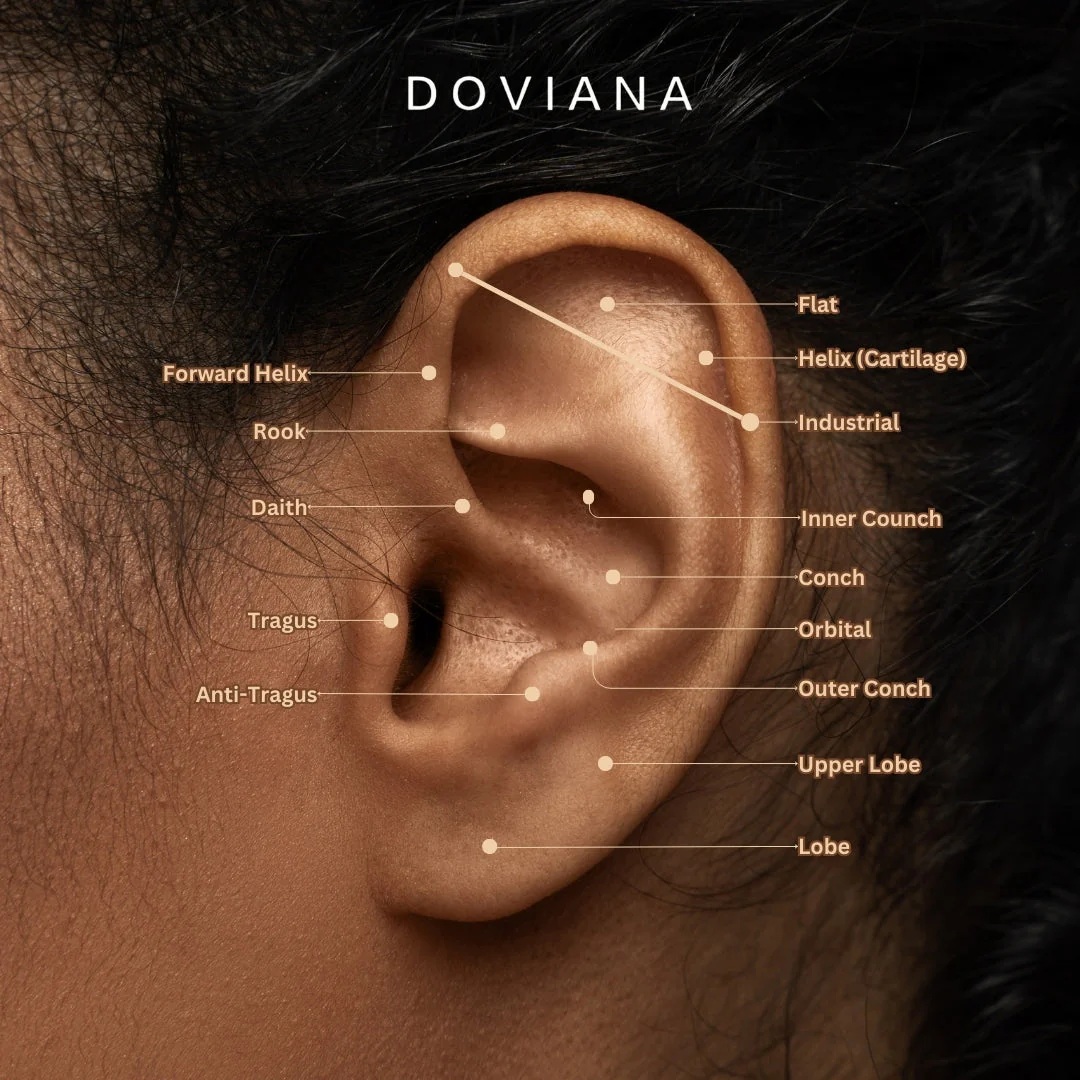
- The Snagging Hazard: This is the #1 enemy of a healing ear piercing. Chunky knit jumpers, scarves, and beanies can easily catch on new helix, conch, or industrial piercings. Be extremely mindful when getting dressed and undressed. When putting on a jumper, gently pull it over your ear rather than dragging it. Consider wearing your hair up to prevent it from getting tangled in your jewellery.
- The Damp Environment: London’s persistent dampness, both outdoors and in older flats, can mean that piercings take longer to dry after a shower. As moisture can lead to irritation, it’s crucial to be extra diligent about drying your piercing thoroughly. Using a hairdryer on a cool, low setting for a few seconds is an excellent way to ensure the area is completely dry.7
- Lowered Immunity: Cold and flu season is a reality. When your immune system is busy fighting off a virus, it has fewer resources to dedicate to healing your piercing. This can slow down the process or cause flare-ups. During winter, support your healing from the inside out by getting plenty of sleep, staying hydrated, and maintaining a healthy diet.
piercing aftercare
Spring/Summer Aftercare: Navigating Hay Fever, Sun, and Festivals
As the city comes alive in the warmer months, a new set of aftercare challenges emerges.
- The Hay Fever Problem: For those with healing nostril or septum piercings, London’s high pollen count in spring can be a nightmare. Constant sneezing and blowing your nose can be very irritating. Be extra gentle, use soft tissues, and consider cleaning the piercing an extra time with saline after a particularly bad allergy day.
- Sweat, Pollution, and City Grime: Spending more time outdoors, commuting on a hot Tube, and enjoying the city’s parks means more exposure to sweat and environmental pollutants. While you shouldn’t over-clean your piercing, a gentle rinse with clean water after a particularly sweaty day can be beneficial, as long as you pat it thoroughly dry afterwards.
- The Danger of Sun Exposure: The sun is the biggest threat to the long-term look of your piercing. You cannot apply sunscreen directly to a healing piercing, as it is full of irritants.8 For a new piercing in summer, your only options are to keep it covered with clothing or to wear a wide-brimmed hat to protect it. Even after it’s healed, applying a high-SPF sunscreen to your tattoos and piercings is essential to prevent fading and skin damage.9
- Festivals and Holidays: The temptation to take a dip in a pool or the sea on holiday is immense, but you must resist. A piercing is not worth a serious infection that could ruin your trip and your health.
The London Lifestyle Guide to Happy Piercings
Beyond the weather, the day-to-day reality of living in London presents its own unique set of considerations for your new piercing.
The Commute: Navigating the Tube and Crowds
The daily commute on the London Underground or a crowded bus presents a high risk of accidental snags and bumps.
- Be Mindful of Your Surroundings: When getting on or off a crowded Tube carriage, instinctively protect your new piercing. Turn your head or shield your ear with your hand to avoid it being knocked by someone’s bag or shoulder.
- Cover Up for Protection: For a fresh ear piercing, wearing a loose-fitting beanie or a hoodie can provide a useful physical barrier during a packed rush-hour commute.
- Hygiene is Key: The Tube is a germ-filled environment. This reinforces the most important rule: do not touch your piercing. Resist the urge to fiddle with it while you’re on your commute, and wash your hands as soon as you get to your destination.
London’s Hard Water: Is It a Problem?
Yes, London’s water is notoriously “hard,” meaning it has a high concentration of dissolved minerals like calcium and magnesium.10 This can potentially affect a healing piercing.
- The Issue: These minerals can leave a deposit (“limescale”) on your jewellery and can dry out the surrounding skin, leading to itchiness and irritation for some individuals.
- The Solution: This is another reason why using a sterile saline spray is superior to cleaning with tap water. The saline is pure and will not leave any mineral deposits. When you shower, it’s unavoidable that your piercing will be exposed to tap water. To counteract this, you can do a final rinse of the piercing with your saline spray right after your shower, or use bottled/filtered water for this final rinse, before patting it dry. This is a pro-level tip for perfect piercing aftercare in London.
Headphones, Helmets, and Glasses
- Headphones: For healing ear piercings, over-ear headphones that put pressure on a helix or industrial piercing are a definite no. On-ear headphones can irritate a conch or tragus.11 For the first few months, it’s best to stick to using an earbud in the non-pierced ear.
- Helmets: For the thousands of Londoners who cycle, this is a critical consideration. A helmet must be put on and taken off with extreme care to avoid snagging a new ear piercing. Ensure the straps do not sit directly on or rub against the piercing site.
- Glasses: If you wear glasses and are getting a piercing on the upper part of your ear, bring them to your appointment. A good piercer will mark the placement while you are wearing your glasses to ensure the piercing and the arm of your glasses do not interfere with each other.
piercing aftercare
Frequently Asked Questions (FAQ)
1. I’m going on holiday in a month. Is it a bad idea to get a new piercing now?
Yes, it is a very bad idea. A new piercing cannot be submerged in a pool or the ocean for several weeks or months.12 Getting pierced right before a holiday where you plan to swim is a recipe for infection and disappointment. It’s best to wait until you return.
2. My healing piercing feels totally fine and doesn’t hurt anymore. Can I stop cleaning it?
No. A piercing heals from the outside in. This means it can feel and look healed long before the internal tissue channel is strong and mature. You should continue your gentle cleaning routine for at least the first 2-3 months, and even after that, it’s good practice to rinse it in the shower.
3. Is it really that bad to twist my piercing? My mum/friend was told to do that years ago.
Yes, it really is that bad. The advice to twist jewellery is completely outdated and was based on a misunderstanding of the healing process. Twisting damages the new tissue, drags in bacteria, and prevents the fistula from forming properly.13 We now know that the “Leave It The Hell Alone” method leads to faster and healthier healing.
4. I think the hard water in my London flat is irritating my piercing. What should I do?
If you suspect this, the best course of action is to stop letting shower water run over your piercing altogether. Rely solely on your sterile saline spray for cleaning. After a shower, you can do a final rinse with a small amount of bottled water to remove any hard water residue from the surrounding skin, then pat it dry.
5. Can I use products like Savlon or TCP on my piercing?
Absolutely not. These are very common questions in the UK, as these products are staples in many first-aid kits. However, they are far too harsh for a healing piercing. Antiseptic creams and liquids are cytotoxic (they kill cells) and will destroy the delicate new tissue your body is trying to build, leading to severe irritation and delaying the healing process.
Conclusion
Successfully healing a piercing in London is a journey that requires combining the universal, gold-standard rules of aftercare with a mindful, adaptive approach to the city’s unique environmental and lifestyle challenges. From protecting your new helix from a woolly winter beanie to keeping your nostril piercing clean during the peak of hay fever season, being aware of your surroundings is key.
Patience and consistency are your two greatest allies. Your body is doing the hard work; your role is to provide it with a clean, dry, and undisturbed environment to do so. By following this guide, you are not just caring for a piercing; you are ensuring the longevity of a piece of art.