
Is Tattooing Art? A Debate in the Contemporary Art World

In the hushed, reverent halls of a modern art museum, a visitor might stand captivated before a centuries-old oil painting, admiring the artist’s masterful use of light and shadow. A few hours later, that same person might be in a coffee shop, their gaze drawn to the intricate, living masterpiece on the forearm of the person next to them—a vibrant sleeve of colour and form that moves and breathes with its owner. This simple, everyday contrast lies at the heart of one of the most dynamic and persistent questions in the contemporary creative landscape: is tattooing art?
For generations, this question was dismissed by the cultural gatekeepers. Tattoos were relegated to the worlds of sailors, soldiers, and subcultures—a craft, a trade, a mark of rebellion, but never “fine art.” Yet, as tattoo studios transform into high-end ateliers and artists gain international acclaim, the debate has shifted from the fringes to the very centre of artistic discourse. To answer this question definitively, we must move beyond outdated prejudices. We must deconstruct the medium through the rigorous lenses of its deep history, its demanding technical mastery, its place within art theory, and its recent, undeniable acceptance by the institutions that define what art is. This exploration will show that the answer is not just a simple “yes,” but an affirmation of tattooing as one of humanity’s oldest, most personal, and most powerful art forms.
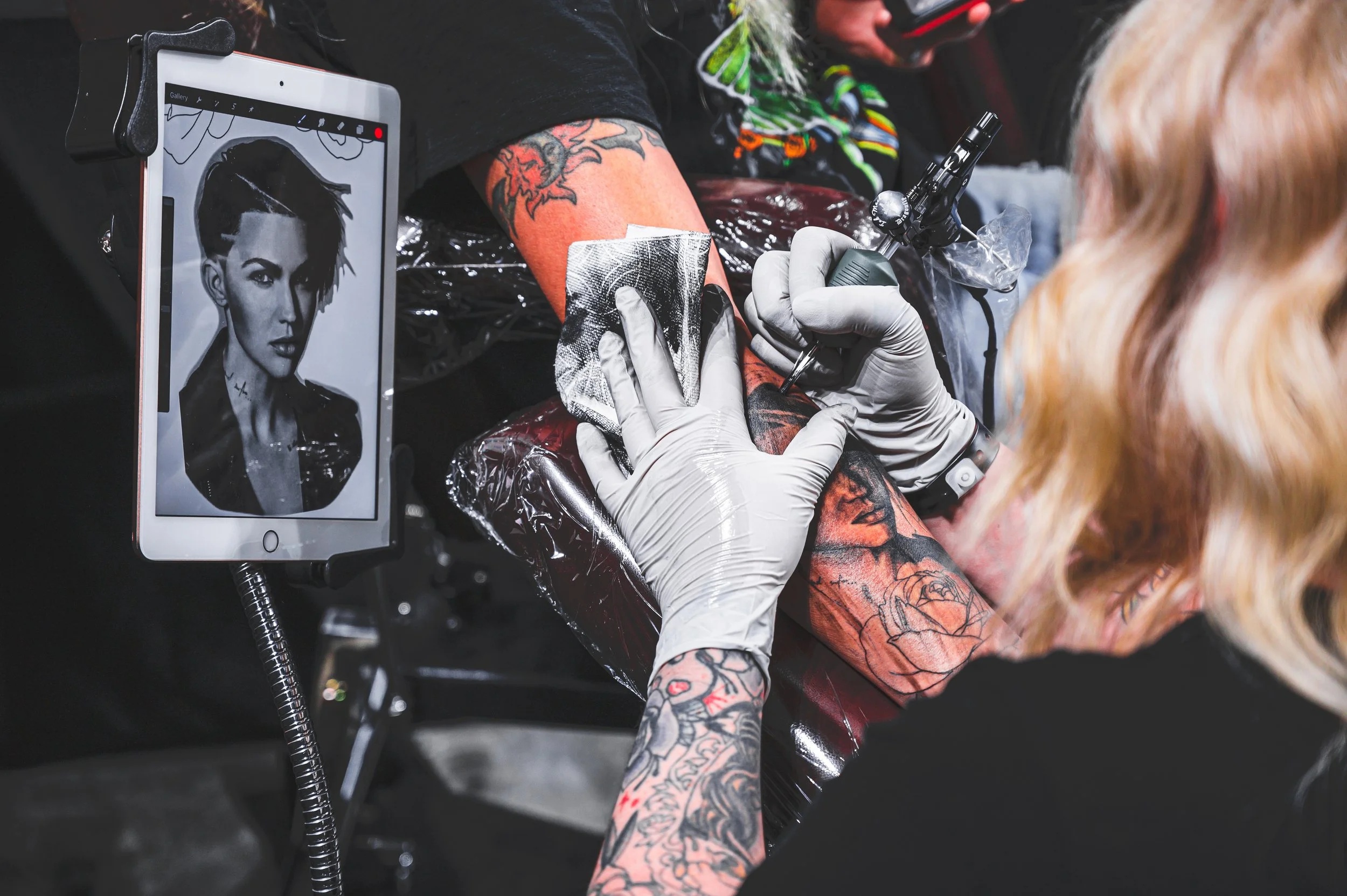
Is Tattooing Art
A Legacy Etched in Skin: The Deep History of Tattooing
To truly grapple with the question, is tattooing art, we must first understand that it is not a modern fad. It is an ancient, global tradition woven into the very fabric of human civilisation.1 Its history is not one of rebellion, but of ritual, identity, and sacred expression.
From Ötzi to the Pharaohs: Ancient Marks of Meaning
The human impulse to mark the skin is ancient.2 The most famous and oldest direct evidence we have is “Ötzi the Iceman,” a 5,300-year-old mummy discovered in the Alps. His body is adorned with over 60 simple, carbon-based tattoos. Researchers believe these marks, located on his joints and back, were not decorative but therapeutic, applied to alleviate the pain of arthritis. This suggests that one of tattooing’s earliest functions was deeply connected to healing and the human condition.
This practice was not an isolated incident. In ancient Egypt, tattoos were once assumed to be marks for lower-class entertainers or prostitutes.3 However, modern archaeological analysis has revealed them predominantly on the bodies of female mummies, many identified as priestesses or figures associated with religious rituals. These tattoos, often of the fertility god Bes, were likely worn as protective amulets during pregnancy and childbirth.5 Here, the art was a form of sacred protection.
The Language of the Skin: Polynesian Tatau and Japanese Irezumi
In many cultures, tattooing evolved far beyond simple marks into a highly sophisticated visual language.6 Nowhere is this more evident than in Polynesia, where the art of tatau reached an apex of complexity and cultural importance. The sacred Tā moko of the Māori people in New Zealand is a profound example. Chiseled into the skin with bone tools, the Moko is not merely a tattoo but a visual representation of a person’s genealogy (whakapapa), social standing, and life achievements.7 Every line and swirl is a chapter in a personal and ancestral story.
Similarly, the art of Irezumi in Japan boasts a rich and complex history. While it was at times used as a punitive mark for criminals, during the Edo period (1603-1868) it blossomed into a breathtaking, large-scale art form.8 Heavily influenced by the heroic narratives and dynamic compositions of Ukiyo-e woodblock prints, artists created full-body tattoos (horimono) depicting legendary heroes, dragons, and religious iconography.9 These were not random images; they were meticulously planned narrative masterpieces, designed to flow with the body’s musculature, turning the human form into a living canvas for epic stories. When we examine these traditions, the question of is tattooing art feels almost insulting; these are undeniably sophisticated art forms.
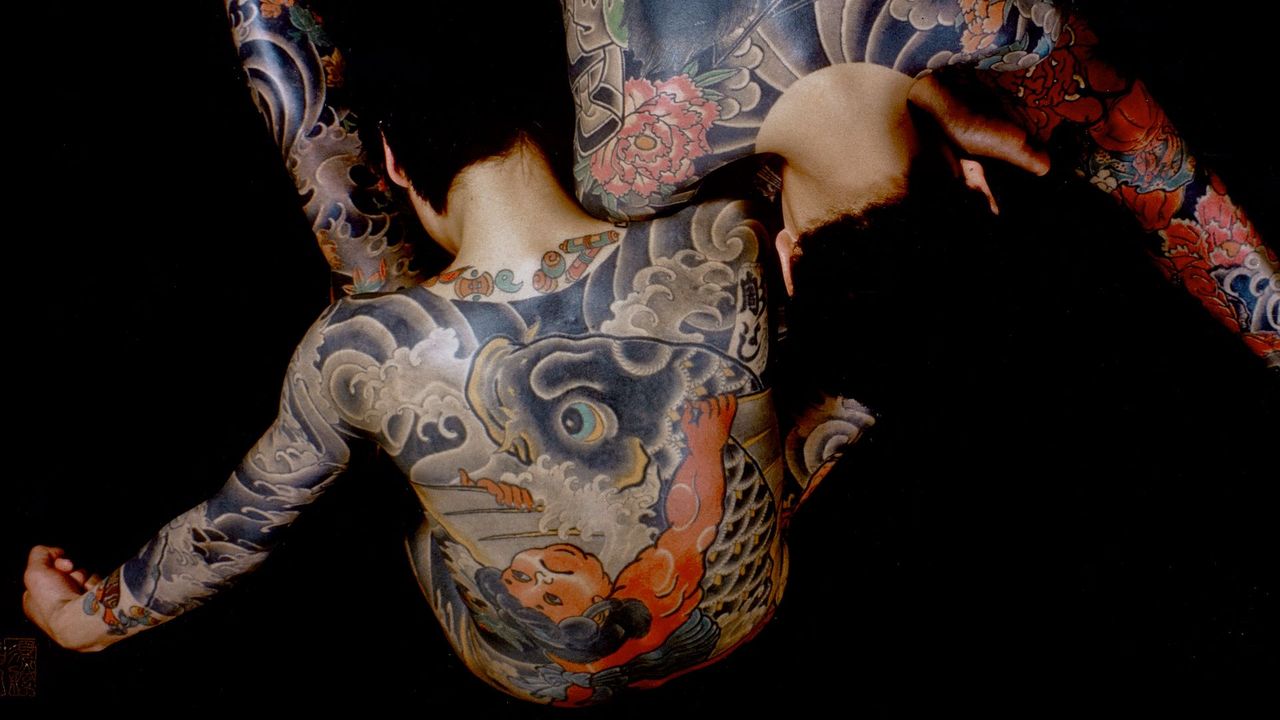
Is Tattooing Art
The Western Stigma and the 20th-Century Renaissance
In contrast, the Western world has long held a conflicted view of tattooing. The ancient Greeks and Romans used tattoos to mark slaves and criminals, creating a lasting cultural stigma.10 When European sailors re-encountered the practice in Polynesia, they brought it back not to high society, but to the port cities and military barracks.11 For centuries, it was associated with the working class and the counter-culture.
This perception began to change in the 20th century, thanks to the vision of artists who saw the medium’s potential. Norman “Sailor Jerry” Collins, a Honolulu-based artist, was a key figure.12 He innovated by creating his own vibrant pigments, introducing modern sterilisation techniques, and applying the artistic discipline of the Japanese masters he admired to his iconic American Traditional style. He elevated the craft. Following him was Don Ed Hardy, who brought a formal Bachelor of Fine Arts degree into the tattoo studio.13 He deliberately chose tattooing as his medium, seeing no distinction between it and painting or printmaking. These pioneers were crucial in transforming the public perception of the practitioner from a simple “tattooist” to a true tattoo artist.
The Artist’s Hand: Deconstructing the Technical Mastery of Tattooing
A powerful argument for defining a medium as “art” rests on the level of technical skill and creative vision required for its execution. By this measure, tattooing is one of the most demanding art forms in existence. It requires a unique fusion of disciplines, all performed under high-stakes conditions on a living, challenging canvas.
A Fusion of Disciplines: The Tattooist as a Multidisciplinary Artist
A professional tattoo artist is far more than a simple illustrator. To create high-quality, lasting work, they must embody the skills of several different professions:
- The Master Illustrator: Every great tattoo starts with a flawless design. An artist must possess an expert understanding of composition, perspective, colour theory, and form. They must be able to take a client’s abstract idea and transform it into a coherent, powerful image that is custom-designed to fit the unique contours of a human body.
- The Surgeon: The application of a tattoo is a delicate, invasive procedure. An artist needs a working knowledge of dermatology and anatomy to understand how skin varies in thickness, elasticity, and texture across the body.14 They must precisely control needle depth—too shallow and the ink will fade, too deep and it will blur or scar.15 This is all performed under medical-grade hygiene protocols, requiring the discipline and focus of a surgeon.
- The Painter on Skin: An artist working in colour must be a master of colour theory, with an added layer of complexity. They are not working on a white, inert canvas. They must understand how pigments will interact with the specific undertones of a client’s skin and, most importantly, predict how those colours will heal, settle, and age over the course of decades.
The Spectrum of Styles: A Language of Artistic Movements
The debate around is tattooing art often fails to appreciate the sheer diversity within the medium. Tattooing is not a single style but a collection of distinct artistic movements, each with its own history, rules, and technical demands.
- American Traditional: This style demands incredible precision to pull bold, single-pass lines and a deep understanding of colour packing to create its saturated, iconic look.16
- Photorealism: One of the most technically demanding styles, realism requires an elite understanding of light, shadow, and texture to replicate a photograph with near-perfect accuracy on skin.17
- Japanese (Irezumi): Creating a traditional Japanese bodysuit is a monumental undertaking, requiring not only artistic skill but also deep knowledge of mythology and the compositional rules that ensure the piece flows harmoniously across the entire body.18
- Fine-Line & Geometric: These modern styles demand absolute precision. A single shaky line or imperfect connection can compromise the entire piece, leaving no room for error.
The existence of such a wide and sophisticated range of genres is a powerful testament to the artistic depth of the medium.
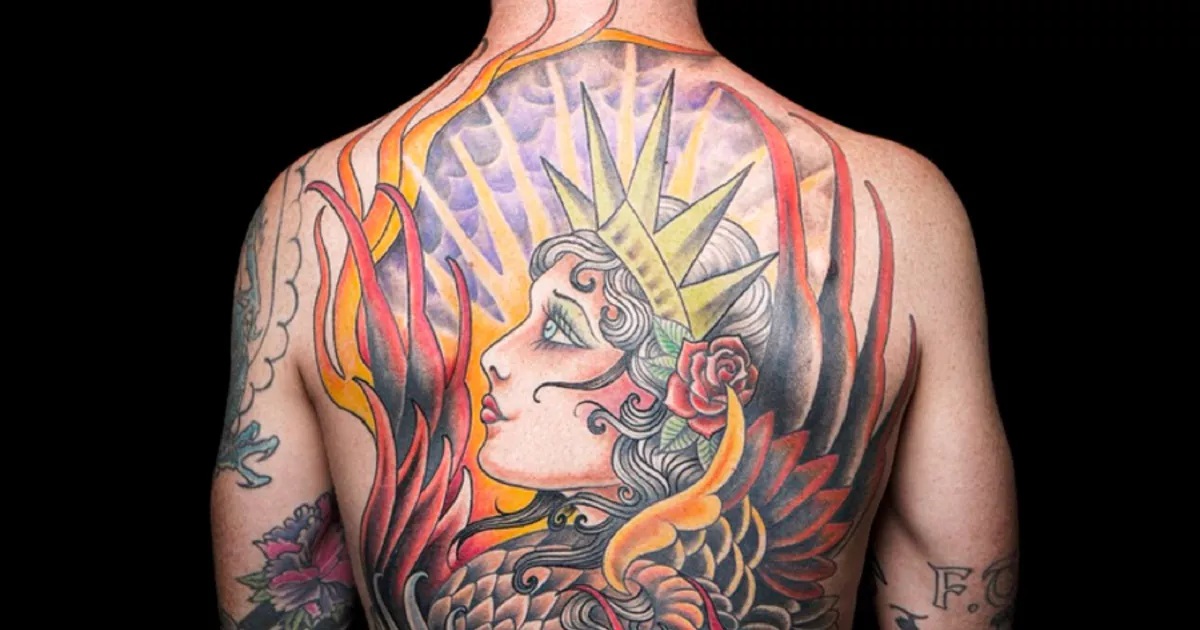
Is Tattooing Art
The Living Canvas: The Unique Challenge of Working with Skin
No other artist works with a medium as challenging as human skin. It is not a static surface. It is alive, it stretches, it scars, it wrinkles, and it changes over time. An artist must create a design that not only looks perfect on the day it’s completed but is also built to age gracefully with the person who wears it. This requires a level of foresight and technical mastery that is unparalleled in almost any other visual art form.
Breaking the Frame: Tattooing Through the Lens of Art Theory
Many of the historical arguments against tattooing are rooted in traditional, often elitist, art theories. When we apply the principles of contemporary art theory, however, these arguments quickly fall apart.
The Myth of Permanence: Ephemerality in Contemporary Art
The most common critique has always been the issue of permanence. A painting can hang in a museum for centuries; a tattoo lasts only as long as its owner. The contemporary art world, however, has long since abandoned permanence as a prerequisite for artistic value. From the performance art of Marina Abramović to the temporary installations of Christo and Jeanne-Claude, ephemeral art is a widely accepted and celebrated genre. In this context, the finite lifespan of a tattoo is not a weakness; it is a profound characteristic that adds to its meaning. It is an artwork that is truly lived.
Craft vs. Fine Art: Dissolving an Outdated Barrier
Historically, a rigid, class-based line was drawn between “fine art” (painting, sculpture—seen as intellectual and for the elite) and “craft” (pottery, textiles—seen as functional and for the masses).19 Tattooing was firmly placed in the “craft” category. This hierarchy has been systematically dismantled by modern art movements. When asking is tattooing art, we are often unknowingly referencing this false dichotomy. Today, an artwork’s value is judged on its concept, intent, and execution, not its medium. Tattooing, which masterfully blends high-level technical craft with powerful conceptual and personal meaning, is a perfect example of this modern fusion.
Art Beyond the Marketplace: The Uncollectible Masterpiece
Traditional fine art is deeply intertwined with the commercial art market. Artworks are bought and sold as assets, their value often dictated by market trends.21 Tattooing completely subverts this system. It is the ultimate uncollectible art. It cannot be sold, auctioned, or traded as an investment. Its value is purely intrinsic, measured in personal significance and aesthetic pleasure. In a world where art is often treated as just another commodity, tattooing represents a return to a purer form of artistic expression—one created solely for its owner.
Institutional Acceptance: From the Parlour to the Prestigious Gallery
While the theoretical arguments are compelling, the most concrete proof of tattooing’s changing status is its recent acceptance by the very cultural institutions that once shunned it.
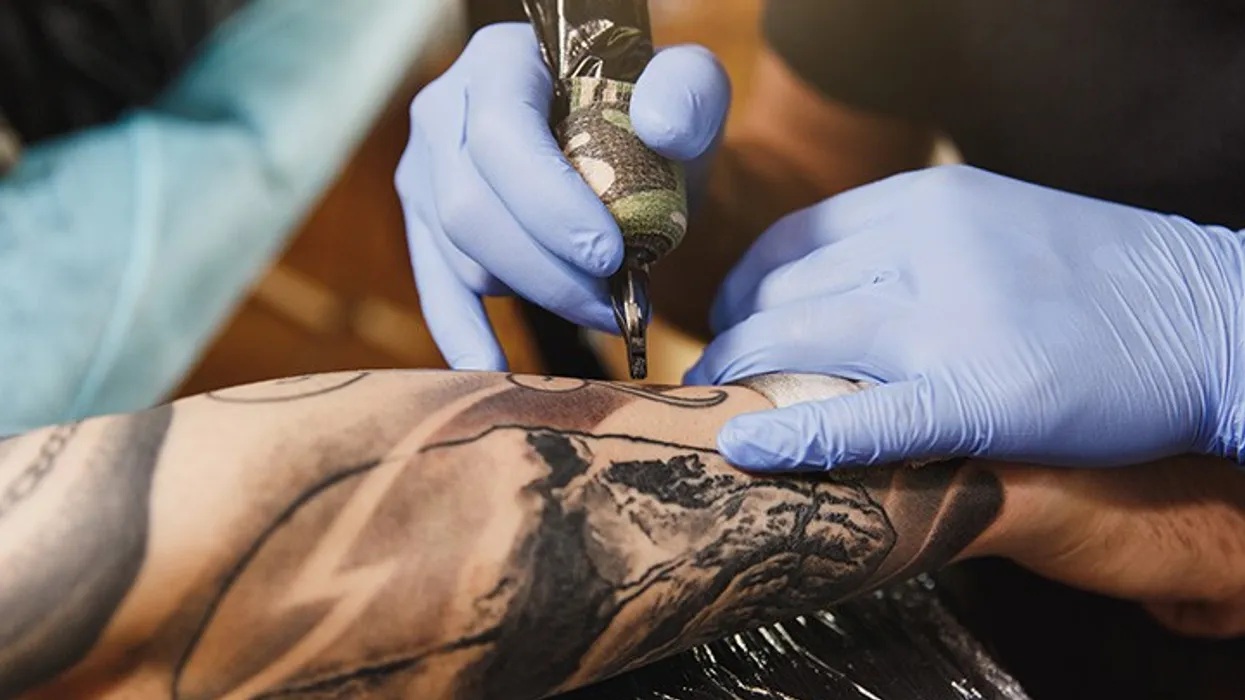
Is Tattooing Art
Tattoos Under the Museum Spotlight
In the last two decades, major museums worldwide have launched critically acclaimed exhibitions dedicated to the art of tattooing.22
- The Victoria and Albert (V&A) Museum in London hosted the “British Tattoo Art Revealed” exhibition.
- The Musée du Quai Branly in Paris curated the landmark exhibition “Tatoueurs, Tatoués” (Tattooists, Tattooed), a comprehensive exploration of the practice as a global art form.23
- The Field Museum in Chicago launched “Tattoo,” an exhibition that has since traveled to museums across North America.
When institutions of this caliber validate an art form, it marks a formal shift in the cultural consensus. It is the art historical world officially acknowledging that tattooing is worthy of serious study.
The Rise of the Artist as a Cultural Figure
This institutional embrace has been mirrored by the rise of elite tattoo artists who are now celebrated as contemporary artists in their own right. Figures like Dr. Woo, with his minimalist style, and Scott Campbell, who has held solo gallery shows and collaborated with luxury brands like Louis Vuitton, are treated as cultural figures, not just as tradespeople. Their work is sought after by celebrities and collectors, proving their status in the contemporary art world.
Conclusion: A Verdict Written in Skin
So, after this deep exploration of its history, technical demands, theoretical underpinnings, and institutional reception, is tattooing art?
The conclusion is clear and definitive. Yes. Tattooing is not just an art form; it is one of the most personal, challenging, ancient, and culturally significant art forms in human history. To deny its status is to cling to an outdated, elitist definition of what art can and should be. The debate is no longer about whether it qualifies as art, but about recognizing and celebrating the vast and diverse artistic movements that exist within it.
Tattooing challenges our notions of permanence, value, and ownership. It is an art form that is not merely observed but is truly lived—a permanent collaboration between the vision of the artist and the life of the canvas. The masterpiece is not on the wall; it is the body. In that simple, profound truth, tattooing finds its unique and powerful place in the ongoing story of human creativity.
Frequently Asked Questions (FAQ)
1. My tattoo is SUPER itchy! Is this normal and what can I do?
Oh yeah, it’s totally normal—in fact, it’s a great sign that your body is healing! The itch can be maddening, but whatever you do, don’t scratch it. You can gently tap or slap the area to get some relief. Keeping it lightly moisturized also helps reduce the sensation. Just hang in there; it usually only lasts intensely for a few days.
2. Can I go to the gym after getting a tattoo?
It’s best to take a few days off, especially from strenuous workouts. Excessive sweating can irritate the new tattoo, and gym equipment can be a source of bacteria. For the first week, avoid any exercises that cause the tattooed skin to pull or stretch significantly. After that, you can ease back into it, but be sure to clean the tattoo immediately after your workout.
3. Why does my new tattoo look faded and cloudy?
This is the “milky stage,” and it’s a completely normal part of the final healing phase (usually around week 3). A thin layer of new skin has formed over your tattoo, which temporarily obscures its clarity. Don’t worry, it’s not actually faded. As your skin continues to regenerate over the next month, the vibrancy will return. Just keep it moisturized!
4. How long until I can go swimming or have a proper bath?
You need to wait until the tattoo is fully sealed on the surface—meaning all scabs and peeling skin are gone. This typically takes a minimum of 3 to 4 weeks. Soaking a healing tattoo can lead to serious infections and pull the ink out, so showers are your only option until it’s fully healed