
UV or Blacklight Tattoo: Art That Glows in the Dark

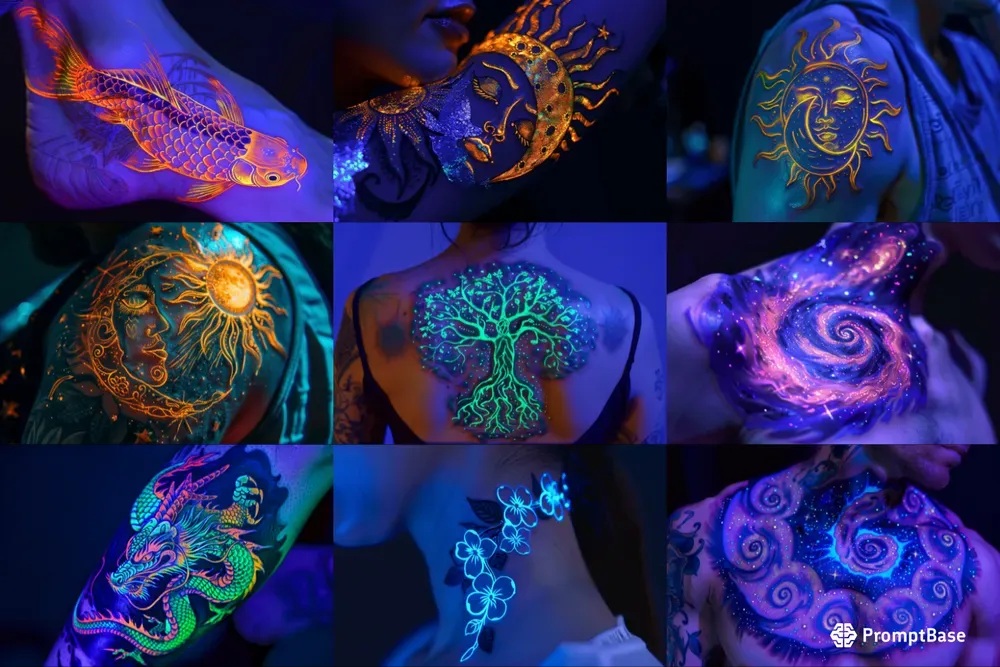
Imagine a tattoo that is almost imperceptible under normal lighting conditions, a subtle whisper of art against your skin. Then, step into a dimly lit space, and as the blacklight illuminates, your tattoo erupts into a vibrant, ethereal glow, transforming into a completely different piece of art. This is the captivating world of the UV or blacklight tattoo: a unique form of body art designed to reveal its true magic under ultraviolet light.
This specialised form of tattooing holds an undeniable allure for those seeking an extra layer of artistry and discretion—a secret piece of expression that comes alive only in specific environments. It’s a niche that demands a particular kind of expertise, not just in tattooing, but in understanding the unique properties and safety considerations of UV-reactive inks.
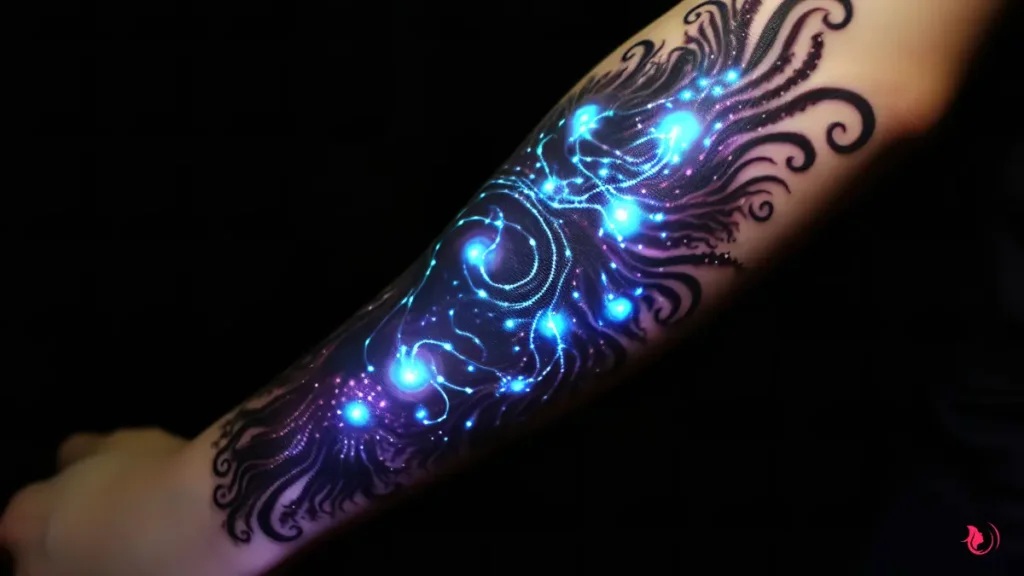
At PinkTatPier, we approach every tattoo, especially those involving specialised inks, with an unwavering commitment to both artistic excellence and client safety. We recently had a fascinating consultation with a client, Leo, who was deeply drawn to the concept of a UV tattoo London. He envisioned a series of intricate geometric patterns on his arm that would appear as subtle scarification during the day but would glow a vivid blue under blacklight, mimicking constellations. He had done extensive research, even asking about specific brands of UV ink he’d found online.
UV or Blacklight Tattoo: Art That Glows in the Dark
Our lead artist, a specialist in unique tattoo mediums, dedicated the consultation to a comprehensive discussion. We explained the subtle variations in UV ink visibility under daylight, the potential for very slight discolouration over time, and, most importantly, the critical importance of using only industry-approved, professional-grade UV inks—not the unverified products sometimes found online. We performed a patch test on a small, discreet area of Leo’s skin to ensure no adverse reaction. This meticulous process, from education to testing, ensured Leo felt completely confident and informed about his decision, ready to embark on a truly unique artistic journey with London’s top experts.
This guide is an extension of that expert-led dialogue. It is a comprehensive and honest exploration of UV or blacklight tattoos, designed to demystify this unique art form, discuss the safety considerations, and highlight why choosing a reputable and experienced studio like PinkTatPier is paramount for anyone considering this truly remarkable style of art that glows in the dark.
UV or Blacklight Tattoo
What is a UV or Blacklight Tattoo, Exactly?
To appreciate the magic and understand the nuances of this art form, it’s essential to grasp the science behind it.
The Science Behind the Glow
A UV or blacklight tattoo is created using a specialised ink that is formulated to be reactive to ultraviolet (UV) light.
- The Ink’s Properties: Unlike traditional tattoo inks, which are visible because they absorb and reflect visible light, UV inks contain pigments that are fluorescent. This means they absorb invisible UV radiation (blacklight) and then re-emit that energy as visible light, causing them to “glow.”
- Visible Light vs. UV Light:
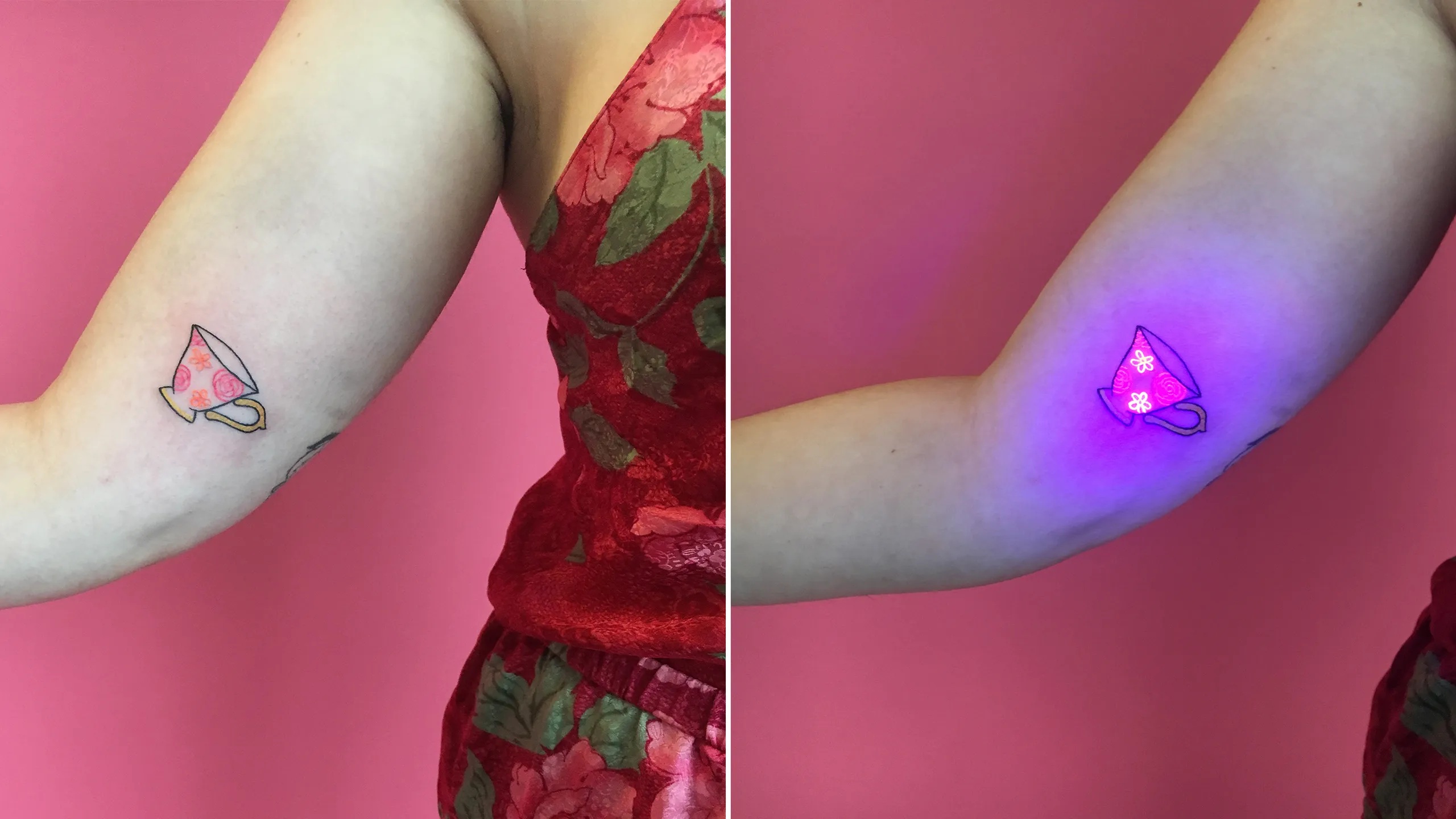
- Under Normal Light: Professional-grade UV tattoo inks are designed to be largely invisible or semi-invisible under regular incandescent or fluorescent lighting. Some may leave a very faint, almost imperceptible sheen or a subtle scar-like outline, while others are truly camouflaged. Certain colours, particularly brighter ones like pink or green, might have a very subtle pastel hue in daylight.
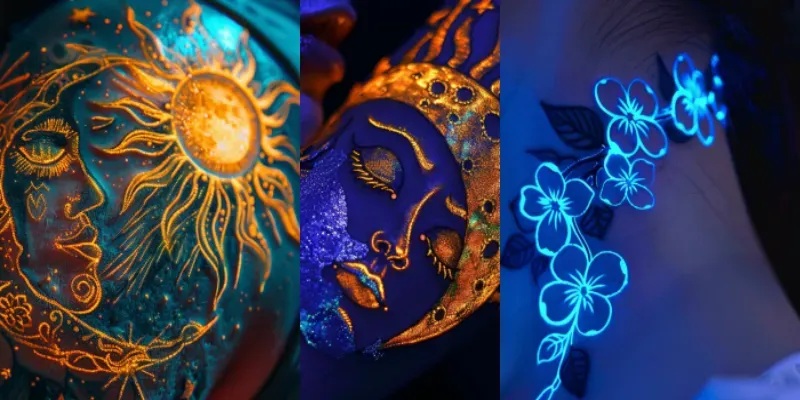
- Under Blacklight (UV-A Light): When exposed to a blacklight, the magic happens. The tattoo will fluoresce, emitting a vibrant glow in a spectrum of colours, typically ranging from blue, green, and yellow to red and purple.
The Appearance: Camouflage or Subtle Enhancement
The aesthetic goal of a UV tattoo can vary:
- Invisible Tattoo: The most common desire is for the tattoo to be virtually invisible during the day, only revealing itself in blacklight environments. This creates a secret, personal piece of art.
- Enhanced Outline/Highlights: UV ink can also be used in conjunction with traditional tattoo inks. For instance, a traditional tattoo of a night sky might have stars or nebulae done in UV ink, so they only glow under blacklight, adding an extra dimension to the art. This is a subtle and highly artistic way to incorporate the UV effect.
- Scarification Mimicry: Due to the slightly raised or faint quality of some healed UV tattoos in daylight, they can be used to mimic the look of subtle scarification, creating a textural element that then glows.
The Philosophy of the PinkTatPier Team:
“UV tattooing isn’t a gimmick; it’s a sophisticated art form that adds another dimension to self-expression. It demands an artist who not only understands traditional tattooing but also possesses a deep knowledge of light, pigment chemistry, and, most critically, the ethical responsibility that comes with using specialised inks. For us, it’s about crafting a piece that is as safe as it is visually spectacular, ensuring the client receives a truly unique and healthy piece of art that glows in the dark.”
UV or Blacklight Tattoo
The Critical Importance of Safety and Professional Expertise
While the allure of a glowing tattoo is strong, the safety considerations surrounding UV inks are paramount. This is a niche area where choosing a truly professional service and London’s top experts is not just recommended, it is essential.
The Ink Debate: Why Quality and Source are Non-Negotiable
The history of UV inks has been fraught with controversy, primarily due to past formulations containing phosphorus, which is toxic. Modern, reputable UV tattoo inks, however, have undergone significant advancements.
- Phosphorus-Free: All professionally produced and industry-approved UV inks today are phosphorus-free and do not contain radioactive materials. They typically use a base similar to traditional tattoo inks, but with added fluorescent pigments.
- FDA / EU Regulation (or Lack Thereof): It’s crucial to understand that no tattoo ink (traditional or UV) is currently regulated by the FDA in the United States, and regulations vary across the EU. This places the burden of due diligence squarely on the artist and the client.
- PinkTatPier’s Commitment: At PinkTatPier, we exclusively use UV inks from reputable, established manufacturers with a proven track record of safety and adherence to international health standards. We continually research and vet our ink suppliers to ensure they meet our rigorous ethical and safety protocols. We refuse to use any unverified or “bargain” inks.
Potential Risks and How Experts Mitigate Them
While modern UV inks are significantly safer than older formulations, potential reactions are always a possibility with any ink.
- Allergic Reactions: As with any tattoo ink, allergic reactions are possible. Symptoms can include persistent itching, swelling, redness, and the formation of raised bumps or granulomas.
- Ink Discolouration/Fading: Over time, some UV inks may develop a very subtle yellowish tint in regular daylight, or they may lose some of their fluorescent vibrancy. This is a possibility that a reputable artist will discuss with you transparently.
- Expert Mitigation:
- Patch Testing: At PinkTatPier, for any client considering a UV tattoo, we strongly recommend and offer a discreet patch test. This involves tattooing a tiny, hidden dot of the UV ink to monitor for any adverse reactions over several weeks. This is a critical step that demonstrates a commitment to client safety.
- Transparency: Our experts provide a completely honest discussion about the pros, cons, and potential long-term appearance of UV tattoos, ensuring you have realistic expectations.
- Aftercare Guidance: Meticulous aftercare is even more critical for UV tattoos, and our specialists provide comprehensive, detailed instructions.
UV or Blacklight Tattoo
The Process of Getting a UV Tattoo: From Concept to Glow
Choosing a UV tattoo London with PinkTatPier is a bespoke journey that prioritises safety, artistry, and a truly unique outcome.
The In-Depth Consultation: Your Vision Meets Our Expertise
Your journey begins with a mandatory, in-depth consultation. This is where your vision is matched with our artistic and technical expertise.
- Concept Development: We discuss your desired aesthetic—do you want a completely invisible tattoo, or a piece that enhances a traditional tattoo?
- Anatomical Suitability: We assess the area of your body for suitability, considering factors like sun exposure and skin type.
- Transparency and Education: We explain the properties of the inks we use, discuss potential outcomes, and address all your questions.
- Patch Test Recommendation: We will strongly recommend and schedule a patch test appointment to ensure no adverse reaction to the UV ink.
The Tattooing Process: Skill and Precision Under Specialized Lighting
The actual tattooing process for a UV tattoo requires an incredibly skilled and experienced artist.
- Specialised Lighting: Since the ink is designed to be invisible in normal light, the artist must work under a blacklight during the tattooing process to see the design being laid down. This requires exceptional precision, focus, and experience.
- Single-Use & Sterile: As with all our tattoos, we adhere to the highest standards of hygiene. All needles are single-use, sterile, and all equipment is medically autoclaved.
- Patience: The process can sometimes take slightly longer than a traditional tattoo of comparable size due to the unique working conditions.
Healing and Aftercare: A Critical Period
The healing process for a UV tattoo is similar to a traditional tattoo but requires even more diligent care.
Table: UV Tattoo Healing & Aftercare Guidelines
| Phase | What to Expect | CRITICAL Aftercare & Considerations |
| Days 1-7 | Redness, swelling, and tenderness, similar to a regular tattoo. The UV ink will be visible under blacklight immediately. | Strict adherence to professional aftercare instructions (gentle washing, moisturising with approved products). Avoid direct sunlight completely. Avoid prolonged exposure to blacklight environments. |
| Week 2-4 | Swelling and redness subside. The tattoo may begin to “flake” or peel. The visibility under normal light will continue to diminish. | Continue aftercare. Sun Protection is paramount: Always use high SPF sunscreen when exposed to the sun to protect the integrity of the UV ink. |
| Month 2-6 | The tattoo should be fully healed externally. The full effect under blacklight will be visible. In daylight, it should be mostly invisible or have a very subtle appearance. | Continued sun protection is vital for the longevity and vibrancy of your UV tattoo. Avoid excessive blacklight exposure, as prolonged exposure can potentially degrade the ink over time. |
UV or Blacklight Tattoo
Your 5 Most Important Questions About UV Tattoos (FAQ)
1. Is UV tattoo ink safe? I’ve heard they’re dangerous.
Modern, professionally manufactured UV tattoo inks are significantly safer than older formulations, as they are phosphorus-free. However, no tattoo ink (UV or traditional) is FDA-approved in the US, and regulations vary. At PinkTatPier, we prioritize client safety by exclusively using high-quality, reputable, and internationally compliant UV inks from trusted manufacturers, and we always recommend a patch test. The “danger” often comes from unverified inks or inexperienced artists.
2. How visible will my UV tattoo be in normal daylight?
This depends on the specific ink colour and your skin tone. Many UV inks are designed to be almost completely invisible in normal light, appearing as a faint, raised outline similar to a scar. Some colours, particularly brighter ones like pinks and greens, might have a very subtle pastel hue or a slight sheen. Your artist will discuss this transparently during your consultation.
3. Does a UV tattoo last as long as a regular tattoo?
With proper aftercare and sun protection, a UV tattoo can last for many years, similar to a traditional tattoo. However, the fluorescent properties of the ink can potentially degrade over very long periods, especially with excessive exposure to direct sunlight or even very frequent blacklight exposure, which may cause some fading or a reduction in vibrancy.
4. Can I get a UV tattoo on any part of my body?
Generally, yes, a UV tattoo can be placed on most areas of the body. However, areas that receive a lot of direct sun exposure (like the face, neck, or hands) might experience faster fading of the fluorescent properties due to UV light degradation. Your artist will advise you on the best placement for longevity and effect.
5. Why do I need to get a patch test?
A patch test is a crucial safety measure, especially for specialised inks like UV. It involves applying a tiny, discreet dot of the actual UV ink to your skin a few weeks before your full tattoo appointment. This allows us to monitor for any adverse reactions, such as allergies or unusual healing, ensuring your body reacts positively to the ink before proceeding with a larger tattoo. It’s a hallmark of a professional and responsible studio.

UV or Blacklight Tattoo
Conclusion: A Luminous Choice for the Discerning Collector
The UV or blacklight tattoo offers a truly unique and captivating form of self-expression—art that literally comes alive in the dark. It is a specialised art form that demands not just artistic flair, but a profound understanding of ink chemistry, light dynamics, and, above all, an unwavering commitment to client safety. When undertaken with London’s top experts at a reputable studio like PinkTatPier, it is a luminous choice for the discerning collector.
Ready to explore the magic of a tattoo that glows in the dark? We invite you to make an online reservation for a consultation with our experts at PinkTatPier. Let us help you illuminate your unique artistic vision with precision, professionalism, and unparalleled safety.