
Let’s be honest; the first question on almost everyone’s mind before getting a tattoo is, “How much does it hurt?” The internet is filled with exaggerated stories and videos that could make even the bravest person hesitate. This fear is completely normal and understandable. The decision to make a permanent change to your body is significant enough, and adding the anxiety of pain can make it feel even more daunting.
But here is the good news: the pain you’re imagining is often far more intense than the reality. Tattoo pain is real, but it is manageable, temporary, and, for millions of people worldwide, entirely bearable. This discomfort is part of a process that ultimately leads to the creation of a unique work of art on your body. We are here to dismantle that fear and replace it with clear information, practical solutions, and a sense of empowerment.
This article is your complete, uncensored guide to understanding and managing tattoo pain. We will tell you what it actually feels like, what factors influence it, and most importantly, what you can do to make the experience as comfortable and positive as possible.
What Does Tattoo Pain Actually Feel Like? (Beyond the Horror Stories)
The first step in overcoming fear is to understand the reality. Tattoo pain isn’t the acute, dramatic agony you might see in movies. Most people describe the sensation in one of the following ways:
- A Constant Scratch: Similar to the feeling of a cat continuously scratching one spot on your skin. It’s a little sharp at first, but you get used to it over time.
- A Vibration and a Stinging Sensation: Especially during shading, the feeling is more like a strong vibration combined with a mild sting, similar to a slight sunburn.
- An Annoyance, Not a Debilitating Pain: For most areas of the body, tattoo pain falls more into the category of “annoying” or “irritating” rather than “excruciating.” It’s a sensation you can cope with, not a pain that will overwhelm you.
It’s also important to know that after the first few minutes, your body begins to release endorphins (natural pain relievers), which significantly helps in managing the sensation.
Fear of Tattoo Pain
Key Factors That Influence Tattoo Pain Levels
Pain is a highly personal experience, and the intensity varies for every person and every Tattoo . These are the main determining factors:
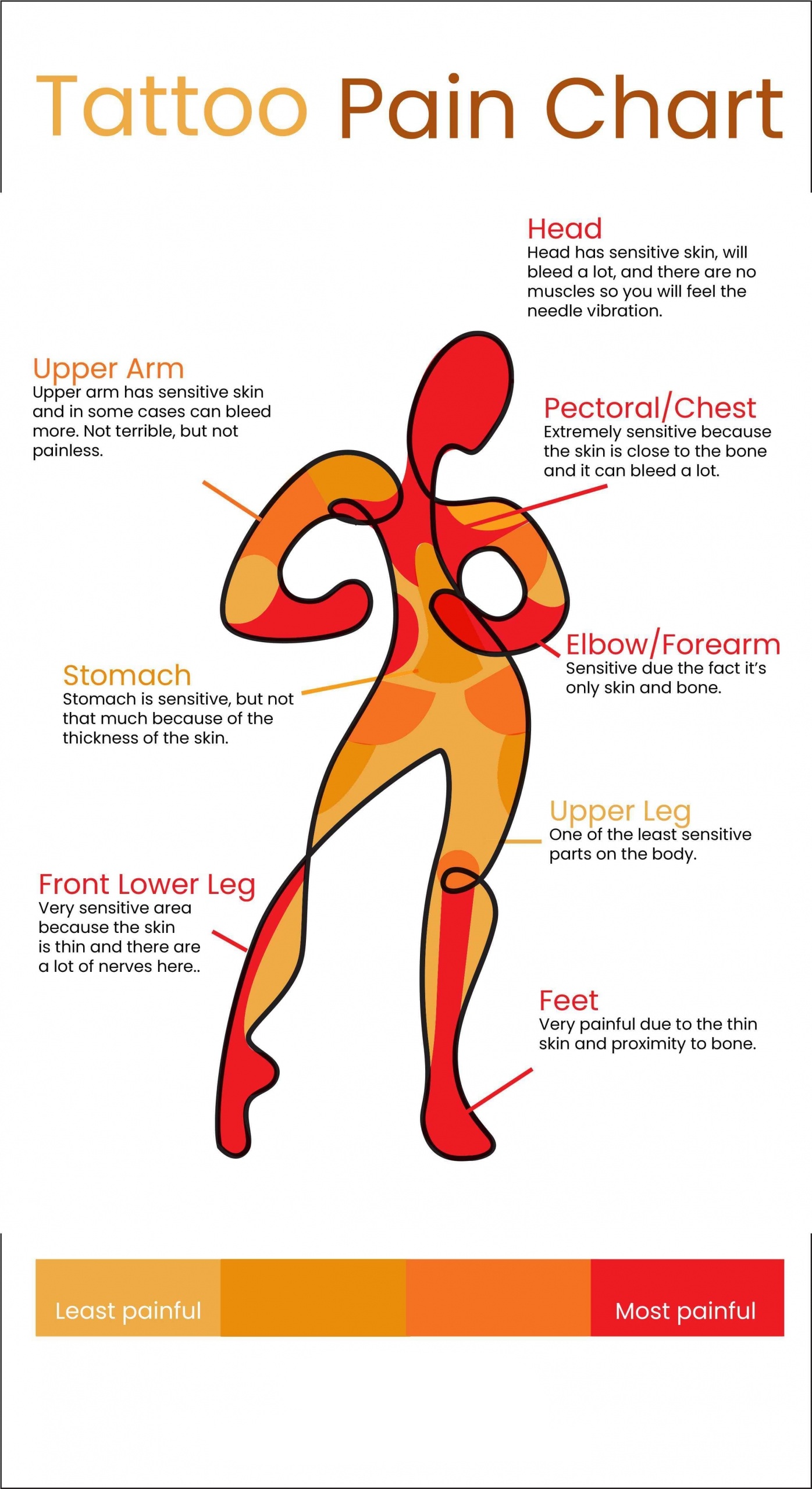
Placement: The Most Important Factor
Your skin does not have the same thickness all over your body, and the amount of fat, muscle, and the number of nerve endings differ in each area. As a general rule:
- Fleshy, muscular areas far from bone hurt the least.
- Areas with thin skin, close to bone, and with a high number of nerve endings hurt the most.
The Size and Complexity of Your Design
- Outlining: This is often the most intense part of the process, as one needle or a small group of needles creates precise lines.
- Shading: This tends to be less painful and feels more like a stinging abrasion, as a larger group of needles works over an area.
- Colour Packing: This can be intense, as the artist may need to go over an area multiple times to fully saturate the colour. Naturally, longer sessions will be more taxing and feel more painful over time.
The Skill and Technique of the Artist
This is a crucial, often overlooked factor. A professional, experienced artist works with a “light hand.” They know the precise depth the needle needs to penetrate and the optimal speed at which to work. The skilled artists at Pink Tatpier are not only masters of their craft but also have a deep understanding of skin anatomy and techniques to minimise trauma and pain for the client.
Your Personal Pain Threshold
Every individual is unique. Genetics, lifestyle, mental state, and even your previous experiences with pain all affect your personal threshold. Never compare your tolerance to anyone else’s.
Fear of Tattoo Pain
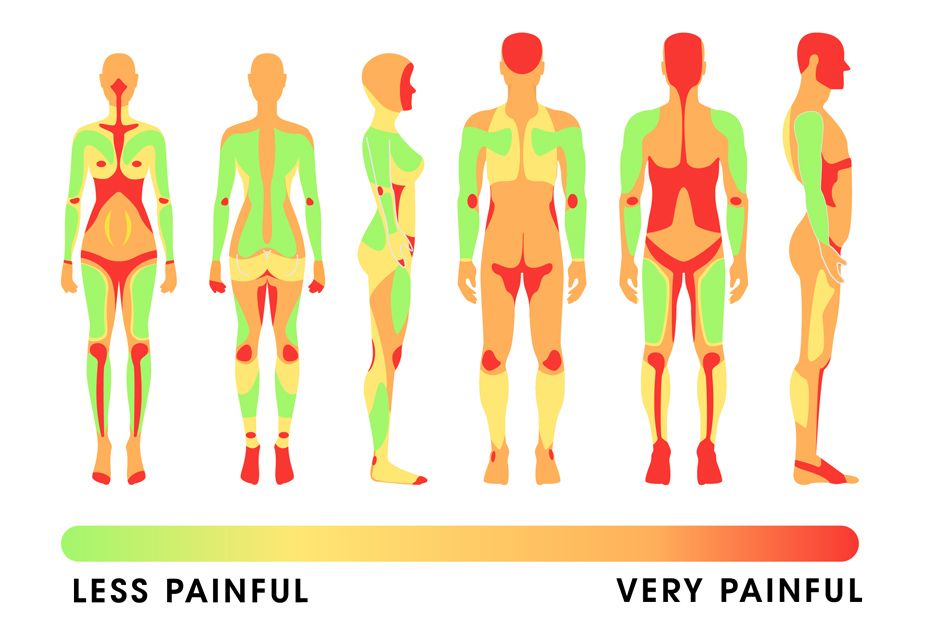
The Body’s Pain Map: Which Parts Hurt the Most and Least?
To help you with your decision, here is a general guide to pain levels across different parts of the body:
| Pain Level | Body Parts | Reason |
| Lowest Pain (Green Level) | Forearm, Outer Arm, Calves, Outer Thigh | Ample fat and muscle, thicker skin, distance from bones, and fewer nerve endings. |
| Medium Pain (Yellow Level) | Shoulders, Upper Back, Inner Arm, Buttocks | A mix of fleshy areas and slightly more sensitive spots. Entirely manageable for most. |
| Highest Pain (Red Level) | Ribs, Sternum, Spine, Elbows, Knees, Wrists, Ankles, Hands, Feet, Armpits | Thin skin, very close to bone, and an extremely high density of nerve endings. Not recommended for a first tattoo. |
How to Manage Tattoo Pain: The Complete Guide for Before, During, and After the Session
You have far more control over your pain experience than you might think. With the right preparation, you can make the process significantly more comfortable.
Smart Actions to Take Before Your Tattoo Session
- Get a Good Night’s Sleep: Aim for at least 8 hours of sleep the night before. A tired body is more sensitive to pain.
- Eat a Full Meal: About 1-2 hours before your session, eat a meal rich in carbohydrates and protein. This prevents low blood sugar and dizziness.
- Hydrate Your Body: Drink plenty of water in the days leading up to your appointment. Hydrated skin accepts ink better and is more resilient.
- Avoid Alcohol and Caffeine: For at least 24 hours prior, refrain from alcohol and excessive caffeine. Both can thin the blood and increase pain sensitivity.
- Moisturise Your Skin: In the days leading up to your session, moisturise the target area (but do not apply lotion on the day of the appointment).
Relaxation Techniques During the Tattooing Process
- Breathe Deeply: Focus on your breathing. Deep inhales and slow exhales can do wonders for regulating your nervous system.
- Distract Yourself: Bring your headphones. Listening to music, a podcast, or an audiobook can effectively divert your mind from the pain.
- Don’t Be Afraid to Ask for a Break: If you need a few minutes, just tell your artist. This is a marathon, not a sprint.
- Communicate with Your Artist (or Don’t!): Some people are distracted by conversation, while others prefer silence to focus. Do whatever makes you most comfortable.
The Numbing Cream Debate: Are They Really Effective?
Topical numbing creams can temporarily reduce pain, but they come with drawbacks:
- Temporary Effect: The creams typically wear off after an hour or two, which can be very unpleasant in the middle of a long session.
- Effect on Skin: Some creams can slightly alter the texture of the skin, making the artist’s job more difficult.
- Studio Policy: Many artists prefer not to work on skin that has been treated with numbing cream.
The Golden Rule: Never use a numbing cream without first discussing it with and getting approval from your artist.
The Role of the Artist and Studio in Creating a Calm Experience
The environment where you get tattooed has a direct impact on your comfort and perception of pain. A professional studio like Pink Tatpier provides a calm, clean, and private space where you feel safe and relaxed. A patient and experienced artist will talk you through the process, listen to your concerns, and reassure you that everything is under control. This psychological support can be as effective as any numbing cream.
For those seeking the ultimate in comfort and privacy, our VIP at-home service is an unparalleled option. You can go through the experience in the absolute tranquility of your own familiar environment, giving you complete control over your surroundings.
Frequently Asked Questions About Tattoo Pain
1. Does colour ink hurt more than black ink?
Not necessarily. The coloured ink itself doesn’t cause more pain. However, the technique of “colour packing,” which requires repeatedly working over an area to saturate the colour, can cause more irritation and soreness than the gentle shading of a black and grey piece.
2. What if I can’t handle the pain and need to stop?
That is perfectly okay. It is extremely rare, but if it happens, the artist will stop. You can always reschedule the session for another day. Your health and comfort are always the top priority.
3. Does tattoo pain feel different for men and women?
While some research suggests pain thresholds can be influenced by hormones and physiological differences, this is not a universal rule. Pain is a completely individual experience and is not determined by gender.
Fear of Tattoo Pain
Pain is Temporary, but Art is Forever
The fear of tattoo pain is an understandable hurdle, but it should not stop you from getting a piece of art that is deeply meaningful to you. Tattoo pain is a reality, but it is a manageable one. It is a fleeting part of a creative process. With the right preparation, the right artist, and a positive mindset, you will not only get through it but also transform it into part of the powerful story of your Tattoo .
Don’t let fear keep you from your masterpiece.
At Pink Tatpier, we prioritise your comfort and peace of mind at every step of the journey. To discuss your concerns and get advice from our compassionate and experienced artists, contact us today. Let’s begin this artistic journey together, with calm and confidence.